2026 Best Daily Goods Injection PE Masterbatch for Buyers

Time:2026-10-16 Author:Mason
0%

Daily Goods Injection Pe Masterbatch is becoming a sharper purchasing decision in 2026. Buyers now evaluate more than color, price, and delivery speed. They examine dispersion, carrier compatibility, odor, surface finish, and production stability. A small mismatch can leave black specks inside a white household container. It can also increase purge waste and rejected parts.

Market data explains this pressure. PlasticsEurope reported approximately 413.8 million tonnes of global plastics production in 2023. Grand View Research estimated the global masterbatch market at about USD 12.95 billion in 2023, with continued growth expected through 2030. Smithers’ masterbatch outlook also identifies packaging, consumer products, and processing efficiency as important demand areas. These figures are useful, but they are not perfect. Definitions and forecasting methods vary between reports.

Practical testing still matters most. Resin grade, injection temperature, mold design, pigment concentration, and recycled-content targets can change performance quickly. Patrick Thomas, former Covestro chief executive, once stated, “Plastics are too valuable to waste.” That principle fits this category well. A reliable Daily Goods Injection Pe Masterbatch should reduce scrap while delivering consistent color and processing behavior. Buyers should request technical data sheets, sample trials, migration information where relevant, and batch-to-batch quality records. Supplier claims deserve verification. Even a promising formulation may fail under actual shear, cooling, or storage conditions. This 2026 guide compares material performance, cost logic, supplier reliability, and application evidence, helping buyers choose with greater confidence and fewer expensive surprises.
2026 Best Daily Goods Injection PE Masterbatch for Buyers

What Is Daily Goods Injection PE Masterbatch?

Daily Goods Injection PE Masterbatch: What Is It?

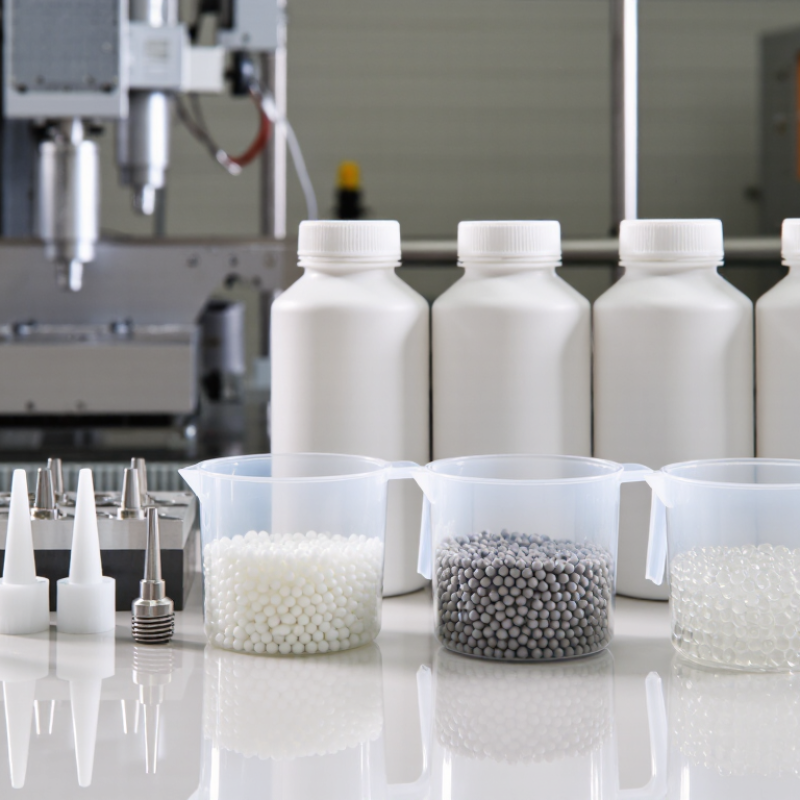
Daily goods injection PE masterbatch is a concentrated blend of pigments or additives carried in polyethylene resin. Manufacturers mix small pellets with natural PE during injection molding. The mixture then forms household containers, storage boxes, caps, and other frequently handled products. It is not simply “color in a bag.” Carrier compatibility, dispersion, dosage, melt flow, and cooling behavior all affect the finished part.

PlasticsEurope reported 413.8 million tonnes of global plastics production in 2023. This scale explains why small processing improvements can create meaningful material savings. For daily goods, a suitable masterbatch should disperse quickly, remain stable under processing heat, and avoid surface streaks or weak weld lines. A typical trial may compare 1%, 2%, and 3% addition levels. Lower dosage is not always better.

Testing remains essential. Mold temperature, screw speed, recycled content, and wall thickness can change the result. The OECD reported that only about 9% of global plastic waste was recycled in 2019. Therefore, buyers should request data on recyclability, pigment stability, and batch consistency. No formula works universally. That is the uncomfortable part. A masterbatch that performs well in a thick storage box may fail in a thin lid. Small production trials, color measurement, and impact testing are safer than relying on a technical datasheet alone.

2026 Best Daily Goods Injection PE Masterbatch for Buyers

What Is Daily Goods Injection PE Masterbatch? It is a concentrated color or additive blend carried in polyethylene and designed to disperse during injection molding. The chart shows typical processing-temperature ranges for common PE resin types used in household and daily-use molded products.

HDPE, LDPE, and LLDPE commonly require different processing windows. Buyers should match the masterbatch carrier and additive system with the selected PE resin, molding temperature, color concentration, and end-use performance requirements. Actual settings depend on the specific resin grade, machine, mold, and product design.

Which Performance Factors Matter Most for Buyer Selection?

For 2026, buyers should judge PE masterbatch by process stability, not color alone.

PlasticsEurope’s Plastics—The Fast Facts 2024 reports 413.8 million tonnes of global plastics production in 2023. Daily goods remain a high-volume market. Small dosing errors can create thousands of rejected parts.

Melt flow consistency is critical for injection molding. Compare the carrier’s MFR with the base resin under ISO 1133 or ASTM D1238 conditions. Poor compatibility may cause streaks, surface haze, or uneven gloss.

Check color strength through controlled let-down trials and measure ΔE values with CIELAB instruments. Heat stability also matters during repeated molding cycles.

Odor, migration, and contact suitability require documented test results for the intended use. The OECD’s Global Plastics Outlook reported that only 9% of plastic waste was recycled in 2019. This makes recycled-content compatibility increasingly important, although it can reduce color predictability. That trade-off deserves honest testing.

Tips:

Request a technical data sheet, safety data sheet, and batch certificate. Test three production batches, not one sample. Record screw speed, melt temperature, dosage, and cooling time. Inspect parts after 24 hours. Some defects appear later.

Ask for verified data, but question perfect claims. A practical trial often reveals more than a polished brochure. Ensure the masterbatch disperses without changing cycle time or increasing scrap. Supplier reliability matters, but process evidence matters more.

How to Match Masterbatch Formulas with Daily Goods Applications?

2026 Best Daily Goods Injection PE Masterbatch for Buyers

Matching a masterbatch formula to daily goods starts with the product’s real function. A storage box needs clean color, stable flow, and reliable impact strength. A thin cap needs good dispersion without slowing the injection cycle. Match the carrier resin with the base PE grade. Their melt flow rates should be reasonably close. Large differences may cause streaks, poor mixing, or surface defects. Color strength also matters. Excessive pigment loading can reduce toughness and create brittle edges.

Tips: Ask for the recommended dosage range and processing temperature. Test the masterbatch on your actual machine. Inspect thin walls, corners, and gate areas. Check odor, color consistency, and warpage after cooling. For products touching food or skin, confirm applicable safety documentation before purchasing. Do not rely on a color card alone.

Production experience shows that a formula performing well in thick baskets may fail in lightweight containers. The cooling design, screw speed, and recycled content can change the result. We sometimes adjust the dosage after trial shots, even when laboratory data looks convincing. This is not a weakness; it is practical control. One overlooked issue is shade variation between resin batches. Keep a retained sample, record processing settings, and compare every production lot against it. Small checks prevent expensive rework.

2026 Best Daily Goods Injection PE Masterbatch for Buyers - How to Match Masterbatch Formulas with Daily Goods Applications?
Typical technical starting points for injection-molded polyethylene daily goods. Final formulations should be validated through molding trials, color evaluation, and compliance testing.
Daily Goods Application Recommended PE Carrier Typical Product Melt Flow Rate
(190°C/2.16 kg)
Typical Masterbatch Let-Down Ratio Typical Pigment or Additive Loading in Masterbatch Key Formula Priorities Recommended Injection-Molding Conditions Important Performance Checks Buyer Matching Guidance
Household Storage Boxes and Baskets HDPE or LLDPE-compatible carrier 4–12 g/10 min 1.5–3.0% Organic or inorganic pigment: commonly 10–40%, depending on color strength and pigment type Good dispersion, low warpage, balanced stiffness, stable color, and low odor Approx. 180–230°C melt temperature; use moderate injection speed and sufficient cooling time Color uniformity, lid fit, impact resistance, shrinkage, surface streaks, and odor Choose a carrier with melt flow close to the base resin. Use a higher-strength concentrate for bright colors or thin-wall parts.
Caps, Closures, and Lids HDPE-compatible carrier; PP carrier only when the base resin is polypropylene 6–25 g/10 min 1.0–3.0% Typical pigment loading: 15–45%; slip or processing additives may be added when functionally required Fast dispersion, dimensional stability, low plate-out, and good torque or snap-fit performance Approx. 190–240°C melt temperature; optimize gate design and cooling for thread accuracy Thread fit, sealing performance, torque, stress cracking, pigment migration, and cap deformation Match the concentrate to the cap resin and molding cycle. Avoid excessive additive levels that can reduce sealing or printing adhesion.
Flip-Top Closures and Dispensers HDPE-compatible carrier 8–30 g/10 min 1.0–2.5% Pigment: commonly 10–35%; nucleating or slip additives should be used only after compatibility testing Living-hinge performance, clean appearance, low weld-line visibility, and consistent flexing Approx. 190–235°C melt temperature; maintain stable mold temperature and controlled filling Hinge fatigue, whitening after flexing, snap action, leakage, gloss, and stress-crack resistance Use a low-contamination formulation. Avoid fillers or additives that may reduce hinge life unless the design has been validated.
Laundry Baskets, Buckets, and Large Utility Items HDPE or LLDPE-compatible carrier 3–12 g/10 min 2.0–4.0% Pigment: commonly 10–40%; UV stabilizer may be required for outdoor or sun-exposed use Impact strength, stiffness, controlled shrinkage, weathering resistance, and cost efficiency Approx. 180–230°C melt temperature; use balanced filling and adequate packing pressure Drop impact, handle strength, warpage, weld-line strength, color retention, and outdoor aging For outdoor goods, specify a UV package based on exposure conditions and verify performance with accelerated weathering tests.
Waste Bins and Refuse Containers HDPE-compatible carrier 3–10 g/10 min 2.0–5.0% Pigment: commonly 10–35%; carbon black or light stabilizer packages may be selected for outdoor service High impact resistance, weatherability, stress-crack resistance, and consistent wall thickness Approx. 180–230°C melt temperature; control melt temperature to avoid polymer degradation and odor Impact at low temperature, handle and hinge strength, odor, color fading, and environmental stress cracking Use a robust outdoor-grade formulation when exposed to sunlight. Confirm compatibility with recycled PE if recycled content is used.
Crates, Trays, and Reusable Transport Boxes HDPE or LLDPE-compatible carrier 4–15 g/10 min 1.5–4.0% Pigment: commonly 10–40%; UV stabilizer may be required for repeated outdoor handling Impact strength, fatigue resistance, dimensional accuracy, color consistency, and weld-line strength Approx. 180–235°C melt temperature; optimize packing and cooling to limit distortion Repeated-drop performance, stacking load, corner impact, warpage, abrasion, and color stability Select a carrier that supports the base resin’s flow and recycled-content variation. Run repeated-use testing rather than one-time impact testing only.
Personal-Care Bottles and Small Containers HDPE-compatible carrier 5–20 g/10 min 1.0–3.0% Pigment: commonly 10–40%; use low-odor and low-migration components where contact or sensory requirements apply Surface appearance, low odor, chemical resistance, stress-crack resistance, and consistent opacity Approx. 180–230°C melt temperature; use clean processing equipment and stable residence time Leakage, squeeze or drop performance, chemical compatibility, color migration, odor, and print adhesion For cosmetic or personal-care packaging, request migration, odor, and chemical-resistance data suitable for the intended contents.
Toys and Children's Daily-Use Products HDPE-compatible carrier 4–18 g/10 min 1.0–3.0% Pigment: commonly 10–40%; select pigments and additives according to the applicable toy-safety requirements Low odor, low migration, impact strength, smooth surface, and stable color Approx. 180–230°C melt temperature; avoid excessive shear and prolonged residence time Impact, surface defects, extractables or migration, odor, color fastness, and edge integrity Do not select only by color price. Require documentation for the target market and test the finished article, not only the concentrate.
Thin-Wall Household Components High-flow HDPE or LLDPE-compatible carrier 10–35 g/10 min 1.0–2.5% Pigment: commonly 10–35%; high-strength concentrates can reduce dosing and improve filling consistency Rapid dispersion, high flow, low filter pressure, weld-line appearance, and short-cycle stability Approx. 190–240°C melt temperature; use controlled high-speed filling and suitable venting Short shots, flow marks, weld lines, burn marks, color streaks, and dimensional variation Match concentrate flow to the base material and machine. Confirm that the formulation does not increase pressure or reduce mold filling.
Translucent Containers and Semi-Transparent Parts Clear or natural HDPE-compatible carrier 5–20 g/10 min 0.2–1.5% Transparent or translucent colorants: generally lower than opaque pigment systems; exact level depends on shade depth Clarity, haze control, clean dispersion, low contamination, and consistent shade depth Approx. 180–230°C melt temperature; minimize moisture, contamination, and excessive shear Haze, black specks, color depth, transparency, surface flow lines, and batch-to-batch shade variation Use a dedicated translucent formulation rather than reducing an opaque concentrate. Confirm the visual standard under controlled lighting.
Antistatic Household Parts HDPE-compatible carrier 4–20 g/10 min 1.0–5.0%, depending on antistatic chemistry and required surface resistance Color pigment level is commonly 10–35%; antistatic additive dosage must be validated by surface-resistance testing Stable surface resistance, additive compatibility, low blooming, and acceptable color appearance Approx. 180–230°C melt temperature; avoid processing conditions that accelerate additive migration or degradation Surface resistivity, dust attraction, blooming, humidity dependence, color shift, and long-term performance Specify the required surface-resistance range and test humidity conditions. Antistatic performance can change with time, temperature, and relative humidity.
Food-Contact Household Containers Food-contact-suitable HDPE carrier 5–20 g/10 min 1.0–3.0% Pigment and additive levels must follow the applicable food-contact positive-list and migration limits Regulatory suitability, low odor, low migration, color stability, and chemical resistance Approx. 180–230°C melt temperature; use clean equipment and avoid unverified regrind or contamination Overall and specific migration, odor and taste, color transfer, dishwasher resistance, and stress cracking Requirements differ by market and food type. Obtain current compliance documentation and test the finished molded article under intended-use conditions.

What Injection Molding Conditions Ensure Consistent Results?

Consistent daily goods begin with controlled injection molding conditions. For PE masterbatch, confirm the carrier resin matches the base polyethylene. Incompatible carriers can create streaks, weak weld lines, or uneven color. Keep the masterbatch dosage accurate, usually within the supplier’s recommended range. Small dosing errors become visible on thin containers.

Set the melt temperature high enough for complete dispersion, but avoid unnecessary heat. A practical starting range is often 180–220°C, depending on the PE grade and pigment system. Use moderate screw speed and back pressure to improve mixing without causing excessive shear. Mold temperature should remain stable across the production cycle. Uneven cooling can produce warpage, gloss variation, or local shrinkage. Injection speed also matters. Very fast filling may trap air, while very slow filling can create flow marks. Trial runs are essential because one setting rarely fits every mold.

Tips: Check the actual melt temperature, not only the controller reading. Clean the hopper and feed throat before changing colors. Store masterbatch in sealed packaging and keep it away from dust and moisture. Inspect the first pieces after a full machine warm-up. I have found that rushed sampling often hides later defects. A short production pause can also change the result, so record barrel temperature, cycle time, and cooling time. Not every line runs perfectly. Review the process when results drift, rather than increasing pigment blindly.

How Should Buyers Compare Suppliers, Quality, Cost, and Compliance?

2026 Best Daily Goods Injection PE Masterbatch for Buyers

Buyers should compare suppliers beyond the price per kilogram. A suitable PE masterbatch must match the resin grade, injection temperature, screw design, and dosing system. Ask for a technical data sheet, safety data sheet, certificate of analysis, and batch traceability record. Check melt flow rate, moisture, pigment dispersion, carrier compatibility, and color consistency. A clean sample can hide unstable production. Test several batches.

Independent production trials matter. Measure color difference, surface defects, warpage, cycle time, and final-part strength. Agree on a practical color tolerance, such as ΔE limits, before ordering. ISO 2859-1 sampling methods can support consistent inspection, but they do not replace process testing. I have seen buyers accept a lower quote, then lose money through higher dosing and rejected parts. Cheap is not always economical.

Compliance requires documented evidence. For household or food-contact products, request declarations relevant to the destination market, restricted-substance statements, and migration test reports when required. The OECD Global Plastics Outlook reports that only 9% of plastic waste was recycled globally in 2019, so recycled-content claims deserve careful verification. Ask whether recycled PE is controlled by source, odor, contamination, and batch data. Review lead time, minimum order quantity, technical support, and complaint response together. One weakness can outweigh a small saving. Supplier comparison remains imperfect; real performance appears after repeated production.

FAQS

What is daily goods injection PE masterbatch?

It is a concentrated blend of pigments or additives in a polyethylene carrier. Manufacturers mix small pellets with natural PE during injection molding. The mixture forms containers, storage boxes, caps, and household parts.

Why is carrier compatibility important?

The carrier should match the base polyethylene and molding conditions. Poor compatibility may cause streaks, haze, uneven gloss, or weak weld lines. A bright color alone proves little.

How should buyers determine the correct dosage?

Run controlled trials at 1%, 2%, and 3% addition levels. Measure color, surface quality, cycle time, and rejected parts. Lower dosage is not always better.

Which processing factors can change the final result?

Mold temperature, screw speed, melt temperature, cooling time, and wall thickness matter. Recycled content can also change color and flow. Small settings matter.

How can buyers evaluate color consistency?

Use color measurements and compare ΔE values across several production batches. Inspect parts immediately and again after 24 hours. Some color changes appear later.

What documents should a buyer request?

Request a technical data sheet, safety data sheet, analysis certificate, and batch traceability records. For relevant products, request migration reports and restricted-substance statements. Documents support decisions, but they do not replace trials.

How should suppliers be compared beyond price?

Compare dosage, scrap rate, lead time, minimum order quantity, and technical support. Review moisture, dispersion, melt flow, and batch consistency. A cheaper pellet may create expensive rejects.

What should buyers know about recycled PE compatibility?

Ask how recycled PE is controlled for source, odor, contamination, and batch variation. Recycled content may reduce color predictability. That trade-off needs honest testing.

Can one masterbatch formula work for every daily product?

No formula performs perfectly across all parts and machines. A blend that works in a thick box may fail in a thin lid. Small production trials are safer than trusting claims alone.

Conclusion

Daily Goods Injection Pe Masterbatch is a concentrated additive and pigment system designed to provide consistent color, durability, processing performance, and functional properties in injection-molded everyday products. For buyers, the most important selection factors include dispersion quality, color consistency, thermal stability, compatibility with the base PE resin, odor control, migration performance, moisture resistance, and reliable batch-to-batch uniformity. The right formulation should be matched to the product’s application, surface requirements, mechanical performance, usage environment, and recycling goals.

Consistent results also depend on suitable injection molding conditions, including accurate dosing, proper drying and storage, controlled melt temperature, stable injection pressure, and adequate mixing. When comparing suppliers, buyers should evaluate technical documentation, quality-control systems, production capacity, sample performance, lead times, total cost, packaging, and regulatory compliance. A dependable supplier should provide clear specifications, traceability, application guidance, and responsive technical support, helping buyers achieve efficient production and stable product quality.


Mason

Mason

Mason is a seasoned marketing professional with a deep expertise in the company's offerings and a passion for driving brand awareness. With a strong background in digital marketing strategies, he has an innate ability to connect with diverse audiences and effectively communicate product benefits.......