Engineered for maximum pigment dispersion, melt-flow matching, and heat resistance up to 260°C across industrial film and molding processes.
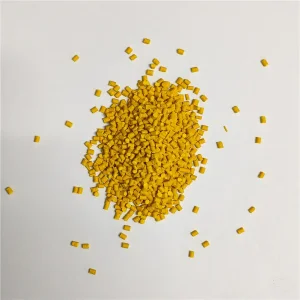
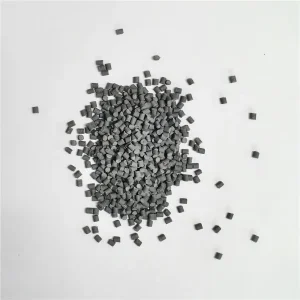
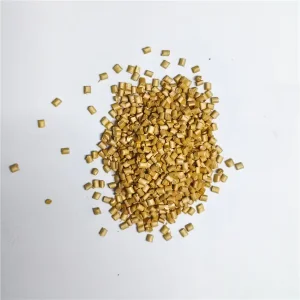
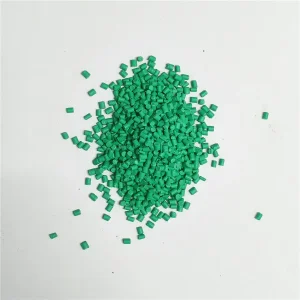
Understanding the modern polymer compounding paradigm: How carrier matrix optimization and dispersion thermodynamics drive efficiency for global plastic processing enterprises.
In modern industrial plastic processing, directly incorporating raw organic or inorganic pigments into polymer melts creates significant processing challenges, including agglomeration, filter blockage, uneven color distribution, and thermal degradation. Masterbatch technology solves this by pre-dispersing high concentrations of micro-milled pigments (up to 70% loading) into a compatible carrier resin matrix (such as Polyethylene or Polypropylene).
Polyethylene (PE) carrier systems have become the global standard due to their broad interfacial compatibility across low-density polyethylene (LDPE), linear low-density polyethylene (LLDPE), high-density polyethylene (HDPE), and polypropylene (PP) substrates. This universal compatibility minimizes polymer immiscibility, ensuring high mechanical integrity, puncture resistance, and seamless flow properties during high-speed extrusion processes.
Global plastic convertors are under intense margin pressure to down-gauge film thickness while maintaining opacity, color depth, and mechanical performance. Utilizing high-concentration color masterbatch (20% to 50% pigment density) allows convertors to reduce let-down ratios (LDR) to 1%–3%, reducing overall logistics volume, storage footprint, and raw material costs without compromising color matching tolerances (Delta E < 0.5).
Established in 2010 in Changzhou, Jiangsu Province, Changzhou Jiazhou Plastic Products Co., Ltd. operates a 6,000 m² advanced manufacturing center equipped with high-torque twin-screw extrusion lines and automated continuous compounding machinery. With 16 years of dedicated expertise, an ISO 9001 certified quality system, and export capabilities extending to over 100 countries, Jiazhou provides enterprise-grade color masterbatch, white TiO2 concentrates, high-loading carbon black masterbatch, and calcium carbonate (CaCO3) filler masterbatches tailored for global B2B procurement leaders.
Deconstructing the exact specifications required by tier-1 procurement managers, quality assurance leads, and plastic processing engineers worldwide.
For high-speed blown film line operators (producing films under 15 microns), pigment particle agglomeration leads to bubble breaks, pinholes, and equipment downtime. Global buyers demand masterbatches tested for low Filter Pressure Value (EN 13900-5 standard), guaranteeing sub-micron dispersion and particle size uniformity that protects melt screens and maintains film barrier properties.
Injection molding of thin-wall containers and technical extrusions require processing temperatures often exceeding 260°C. Standard commercial colorants volatilize or shift color tone at high thermal loads. Enterprise procurement specifies organic and inorganic pigments bound in high-thermal-stability PE carriers to prevent discoloration, gas streaking, or thermal degradation during extended residence times.
In outdoor agricultural films, geomembranes, and international logistics packaging, masterbatches must resist migration (blooming) and UV photo-oxidation. B2B buyers evaluate products against the Blue Wool Scale (target Grade 7-8) for lightfastness and Gray Scale (Grade 4-5) for weather resistance, ensuring long-term color integrity under intense solar radiation.
Masterbatch melt flow index (MFI) must match or slightly exceed the host polymer's flow properties (e.g., 2 g/10min to 20 g/10min at 190°C/2.16kg). Proper rheological matching reduces backpressure on extruders, decreases motor energy consumption, prevents die-swell distortion, and delivers shorter cycle times in automatic injection machines.
Custom-formulated color and filler masterbatch applications optimized for major plastic converting sectors.
Challenge: Maintaining bubble stability and uniform color intensity in ultra-thin shopping bags, agricultural mulch, and multi-layer co-extrusion films.
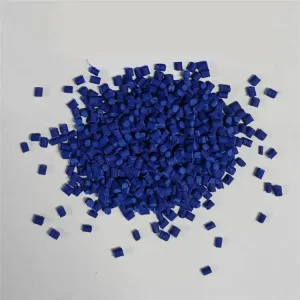
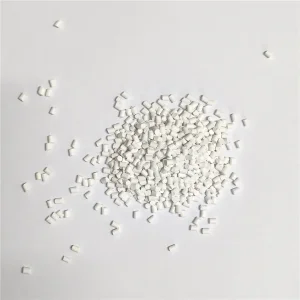
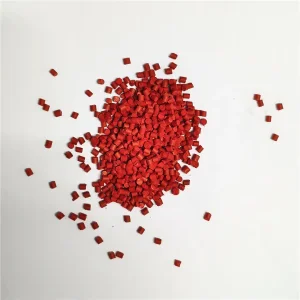
Solution: High-concentration PE Blue, White (TiO2 60-70%), Red, and Yellow masterbatches with narrow particle distribution. Delivers pinhole-free films, excellent heat-sealing strength, and anti-static properties.
Challenge: Preventing warpage, sink marks, and dimensional variation in daily consumer goods, automotive parts, and electronic housings.
Solution: Custom-matched color concentrates featuring organic anti-fading pigments and non-nucleating colorants that preserve isotropic mold shrinkage and produce vibrant, glossy surfaces.
Challenge: Long-term hydrostatic pressure resistance, soil chemical degradation, and UV protection for municipal conduits.
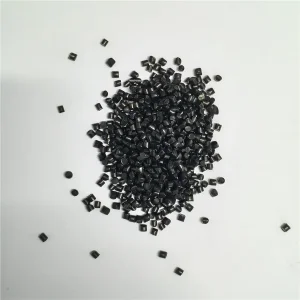
Solution: High-grade PE Black masterbatch formulated with P-type nano carbon black (20-25nm particle size) providing superior UV screening, smooth inner surface pipe walls, and compliance with ISO 4427 water standards.
| Masterbatch Series | Pigment / Filler Content | Carrier Resin | Heat Resistance | Lightfastness (1-8) | Primary Industrial Applications |
|---|---|---|---|---|---|
| PE White Masterbatch | 50% - 70% Rutile TiO2 | LDPE / LLDPE | 280°C - 300°C | Grade 8 | Food Packaging Film, Injection Bottles, Milk Pouches |
| PE Black Masterbatch | 30% - 50% Carbon Black | HDPE / LDPE | 260°C - 280°C | Grade 8 | Geomembranes, Irrigation Pipes, Drip Tapes, Bags |
| PE Blue / Green / Red | 25% - 40% Organic Pigment | PE / Universal | 240°C - 260°C | Grade 6 - 7 | Toys, Crates, Household Appliances, Woven Bags |
| Specialty Metallic (Gold/Silver) | 15% - 30% Metallic Flake | PE Matrix | 220°C - 250°C | Grade 6 | Cosmetic Packaging, Luxury Containers, Caps |
| CaCO3 Filler Masterbatch | 75% - 85% Fine CaCO3 | LLDPE / HDPE | 260°C | N/A | Cost reduction in Raffia, T-shirt Bags, Injection Molding |
Advancing sustainability, smart sorting compatibility, and bio-polymer integration in polymer colorant manufacturing.
Traditional black masterbatches using carbon black absorb NIR radiation, preventing automated sorting machines at MRF recycling plants from identifying the base resin. Future masterbatches utilize NIR-transparent black pigments, enabling circular economy sorting for post-consumer recycled (PCR) polyolefins.
To align with global single-use plastic restrictions, R&D is accelerating the development of masterbatches utilizing PLA (Polylactic Acid), PBAT, and PHA carrier resins. These allow 100% biodegradable color concentrates for organic waste bags and eco-friendly food packaging.
Integrating organo-modified nanoclays and graphene platelets within color masterbatches creates a tortuous path for oxygen and water vapor. This provides active barrier enhancement alongside visual aesthetics in food packaging containers.
Implementing real-time closed-loop color measurement during compounding allows instant adjustment of feeder speeds, achieving tight color tolerances (Delta E < 0.20) and eliminating lot-to-lot color variance in industrial supply chains.
Ensuring frictionless international trade, international environmental safety, and tailored B2B service networks.
Every Jiazhou masterbatch batch complies with international chemical regulatory frameworks:
• EU REACH (EC 1907/2006): SVHC heavy metal free.
• RoHS 3 Directive (EU 2015/863): Lead, Cadmium, Mercury & Hexavalent Chromium compliant.
• FDA 21 CFR 177.1520: Food contact compliance for food grade packaging films.
Operating near Shanghai and Ningbo maritime hubs, Jiazhou provides flexible Incoterms including FOB, CIF, CFR, and DDP. Fast lead times of 15 days ensure continuous production lines for global clients in Europe, North America, Southeast Asia, and the Middle East.
Our lab provides custom spectrophotometric shade matching within 3 to 5 business days based on Pantone, RAL codes, or physical target samples. We supply free engineering samples (1kg - 5kg) for customer trial runs on production machinery.
Comprehensive selection of weather-resistant, non-fading, and high-opacity plastic colorant formulations.
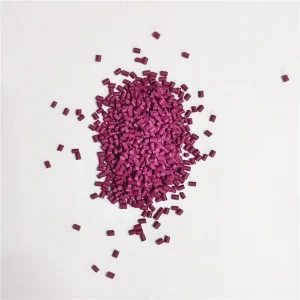
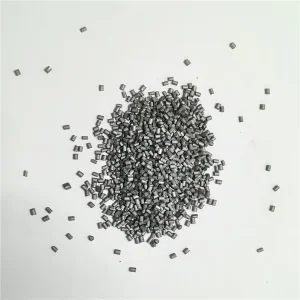
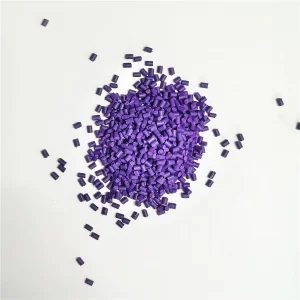
In-depth technical answers addressing common processing challenges, dosage calculations, carrier selection, and compliance requirements.
The recommended Let-Down Ratio typically ranges between 1% and 4% depending on the wall thickness of the finished article, pigment concentration, and desired color opacity. For film extrusion (15-50 microns), an LDR of 2% to 3% is standard. For heavy-duty injection molding, an LDR of 1% to 2% is generally sufficient due to greater wall thickness.
Yes. Low-density polyethylene (LDPE) carrier resins exhibit good polyolefin compatibility with Polypropylene (PP) due to similar aliphatic hydrocarbon structures. However, for specialized engineering plastics (such as ABS, PC, or PET), custom-matched carrier matrices (such as SAN, Universal acrylic, or EVA) should be specified to prevent delamination or loss of mechanical impact strength.
We utilize dual spectrophotometric testing (X-Rite Ci7800) under standard light sources (D65, TL84, A) to ensure color variance remains strictly within Delta E < 0.5. Furthermore, our automated gravimetric loss-in-weight dosing systems maintain compound precision to within ±0.1% during extrusion compounding.
When stored in original sealed moisture-barrier bags in a cool, dry warehouse away from direct sunlight, PE masterbatch has an official shelf life of 24 months. Pre-drying (at 70°C–80°C for 2 hours) is recommended if stored in high-humidity tropical environments prior to high-speed film blowing.
Rutile titanium dioxide features a denser crystal lattice structure, providing significantly higher refractive index, superior tinting strength, greater opacity, and superior outdoor UV resistance compared to anatase TiO2. Jiazhou uses 100% surface-treated Rutile TiO2 for all high-performance white masterbatches.
Enterprise clients can provide a Pantone/RAL color code along with base polymer specs (MFI, density) and processing method. Alternatively, send a 50g target plastic sample to our Changzhou laboratory. Our engineers will formulate a precise color match and dispatch 1kg-2kg trial samples within 3 to 5 working days.