Choosing an Injection Molding Pe Masterbatch supplier is not just a price comparison. A pigment that looks uniform in a sample jar can streak across a molded panel. A carrier that flows poorly can leave visible specks near a thin gate. Small details matter.
PlasticsEurope’s Plastics—the Fast Facts 2024 reports that global plastics production reached 413.8 million tonnes in 2023. That figure covers plastics broadly, not PE masterbatch alone, but it shows the scale of the materials supply chain. For buyers, the practical test is narrower: does the supplier provide consistent dispersion, reliable batch documentation, and technical support for the actual resin and molding conditions? John Bozzelli, an injection-molding consultant, is associated with a process-first approach. A concise paraphrase of that principle is: “Stabilize the molding process before chasing cosmetic fixes.” This is a paraphrase, not a verified verbatim quotation.
Look beyond color cards. Ask for trial samples, processing guidance, and clear tolerances. Check whether the supplier can explain how its carrier resin suits your polyethylene grade. Even a polished data sheet may leave questions unanswered. That is worth admitting. The ten suppliers in this guide are assessed through practical buying considerations, including product range, quality controls, customization, and responsiveness. The best fit depends on the part, the machine, and the production target—not just the brightest sample.
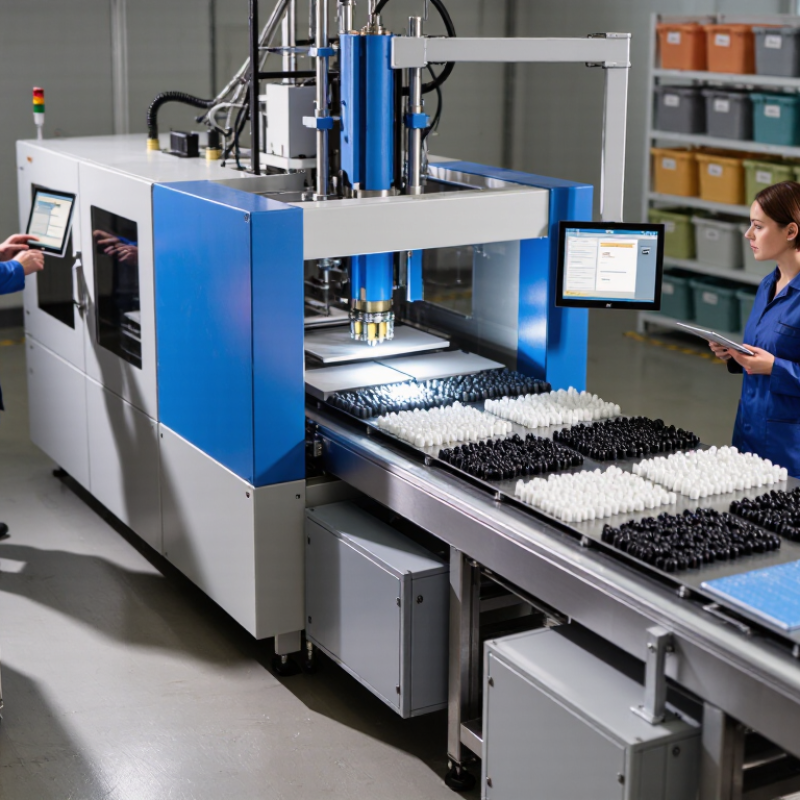
PE masterbatch is a concentrated blend of pigment or functional additives carried in a polymer base. During injection molding, it is mixed with natural polyethylene resin, usually at a measured let-down ratio. The carrier should suit the base resin, whether the application uses HDPE, LDPE, or another PE grade. A mismatch can cause uneven color, weak surface appearance, or inconsistent part performance. Small details matter.
Dispersion depends on both the formulation and the molding conditions. Poorly dispersed pigment may show as streaks or specks on a molded lid or container. Check the recommended dosage, pellet consistency, and compatibility with the resin’s melt flow. Then run a trial using the actual machine, mold, and cycle settings. A sample plaque alone may not reveal every issue in a complex part.
Higher pigment loading can reduce the amount of masterbatch needed, but it does not automatically improve results. Excessive addition may affect flow, weld lines, or mechanical properties. Ask suppliers for technical data, processing guidance, and batch-to-batch consistency records. Compare results under production conditions, not just in a bright showroom. Even then, color judgments can be imperfect; lighting and recycled content may shift the final shade, so define acceptable limits before scaling up.
Supplier-neutral comparison guide: the rows below identify ten technical capabilities to evaluate when selecting a polyethylene (PE) masterbatch supplier. They are not company rankings or supplier-specific claims.
| No. | Supplier Capability | Relevant PE Masterbatch Data | What to Verify Before Purchase |
|---|---|---|---|
| 1 | PE Carrier Compatibility | Masterbatch carriers commonly include LDPE, LLDPE, or HDPE. The carrier should be compatible with the PE resin used for the molded part. | Request the carrier type and confirm compatibility with the resin grade, processing temperature, and intended application. |
| 2 | Melt Flow Rate (MFR) Control | MFR is measured under specified temperature and load conditions; results are not comparable unless the test conditions are the same. ISO 1133 and ASTM D1238 describe test methods. | Compare the masterbatch and base-resin MFR using the same stated test conditions. Ask for a certificate of analysis and the method used. |
| 3 | Density Information | PE grades vary in density. Density measurement is covered by methods such as ISO 1183; the appropriate target depends on the selected polymer grade and formulation. | Request the measured density, test method, and tolerance for the carrier or finished compound where applicable. |
| 4 | Color Concentration and Let-Down Guidance | Colorant concentration and recommended let-down ratio depend on pigment, target shade, part thickness, and processing conditions. There is no single universal dosage for all PE masterbatches. | Ask for a recommended starting dosage and validate the final shade in trial parts made with the intended resin and molding process. |
| 5 | Pigment Dispersion | Dispersion quality affects color uniformity and the risk of visible specks or streaks. Performance depends on pigment type, particle characteristics, and compounding quality. | Review molded plaque samples and agree on a practical inspection method and acceptance criteria before production approval. |
| 6 | Color Consistency | Color can be assessed instrumentally using CIELAB coordinates and color difference (ΔE). A tolerance should be agreed between buyer and supplier for the specific application. | Request batch color data, measurement conditions, and the agreed ΔE tolerance; confirm results on representative molded samples. |
| 7 | Thermal and Processing Stability | PE masterbatch must withstand the actual melt-processing conditions. Processing temperature and residence time vary by resin, machine, and part design. | Check the supplier's processing recommendations and run a molding trial to assess color stability, plate-out, streaking, and surface appearance. |
| 8 | Moisture and Handling Controls | Moisture requirements depend on the formulation and packaging. A moisture test method, such as ISO 15512, may be specified where relevant. | Request storage and handling instructions, packaging details, and moisture data or limits when moisture control is important to the application. |
| 9 | Regulatory and Application Documentation | Food-contact, medical, toy, or other regulatory suitability is formulation- and market-specific; PE carrier alone does not establish compliance. | Obtain current declarations and supporting documents for the exact grade, intended use, and destination market. Confirm that the documents cover the complete formulation. |
| 10 | Quality Systems and Traceability | Lot identification and documented quality controls help link supplied material to production and test records. Certification scope and validity should be checked directly. | Review sample certificates of analysis, lot-traceability procedures, change-notification practices, and applicable quality-system certificates. |
Technical values and requirements are grade- and application-dependent. Confirm specifications with the supplier and validate the selected masterbatch through trials using the intended PE resin, tooling, and molding conditions.
Check carrier compatibility, pigment dispersion, and color consistency. Ask for technical data and batch-quality records.
Your resin and processing conditions affect the result. A sample may behave differently in your mold.
It may leave tiny specks or streaks on the molded surface. Inspect both the surface and color.
Mold a small batch and compare parts under the same lighting. Keep the machine settings noted.
Record dosage, melt temperature, screw speed, and visible defects. Note any streaking or deposits near the gate.
No. More pigment is not always better; the recommended addition rate should fit the part and process.
Request its carrier resin, pigment loading, recommended let-down ratio, and batch tolerances. Ask for test results using your base polymer.
No. A neat color chip can mislead; it cannot show behavior inside your mold. I would not trust one trial completely.
This article explores the role of Injection Molding Pe Masterbatch in producing consistent, high-quality plastic parts. It explains how masterbatch can influence color uniformity, dispersion, processing stability, and the appearance and performance of molded products. It also outlines key factors to consider when choosing a formulation, such as compatibility with the PE resin, required properties, molding conditions, and the intended application.
The article presents practical criteria for evaluating suppliers, including product consistency, technical support, customization options, quality control, and reliable delivery. It then profiles ten leading supplier options without focusing on brand promotion, highlighting the types of products and services buyers may encounter. A final comparison considers how supplier capabilities, application experience, and support can help manufacturers identify a suitable partner for their production needs.