Choosing a supplier for Food Bag Blown Film White Masterbatch is not just a price comparison. The right grade should disperse evenly, maintain a clean white appearance, and perform consistently during blown-film extrusion. A practical evaluation starts with the resin carrier, titanium dioxide content, dispersion quality, and compatibility with the intended film structure. Small differences can show up as streaks, gels, uneven opacity, or unstable processing at the die.
Quality matters at every stage. As quality-management expert W. Edwards Deming is widely quoted: “Quality is everyone’s responsibility.” That principle applies here: a supplier’s technical data, batch controls, and support should be checked alongside the product itself. Ask for a current technical data sheet, a sample for trial runs, and clear guidance on recommended let-down ratios. Then assess the film under real production conditions, including thickness consistency and printability.
There is no universal “best” grade. A formulation that works well in one line may need adjustment on another. This guide will examine supplier capabilities, material performance, and the questions buyers should ask before placing an order. It will also distinguish useful evidence from vague claims. One limitation deserves attention: test results from a laboratory may not predict every production line. Verify performance with your own process and specifications.
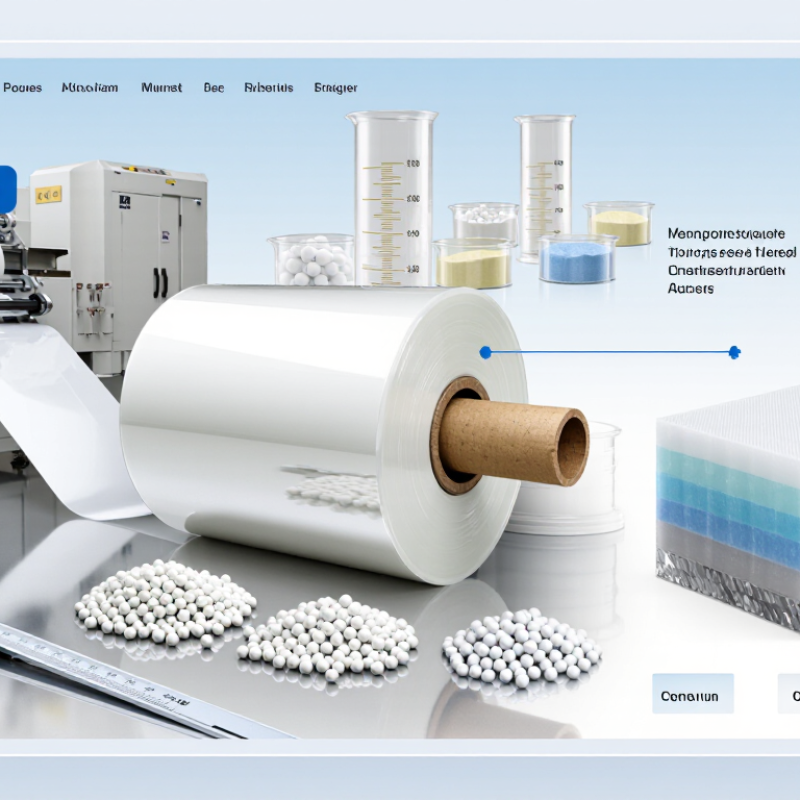
White masterbatch for food bag blown film is a concentrated blend of white pigment, carrier resin, and selected processing additives. It is mixed into the film resin before extrusion. In a blown-film line, good dispersion helps create an even white appearance, consistent opacity, and fewer visible specks. That matters.
The carrier should be compatible with the main film resin, often polyethylene. Pigment loading and particle dispersion can affect brightness, stiffness, and melt flow. Too much masterbatch may make the film harder to stretch or seal; too little can leave it looking patchy. A trial on the actual extruder is more useful than relying on a sample pellet’s color alone. Watch the bubble, film gauge, and sealing performance.
For food bags, suitability depends on the complete formulation and intended use, not simply on the word “food” in a product description. Request relevant composition and application information, then verify it against your packaging requirements. Keep batch records and test finished film where needed. One detail is easy to overlook: lighting changes how whiteness appears. A result that looks clean in the lab may look different on a shop floor, so color checks should use consistent conditions.
In blown film production, white masterbatch is added to the base polymer as concentrated pigment in a compatible carrier resin. The pellets feed into the extruder, where heat and screw action help disperse the pigment through the melt. That mixture passes through an annular die and forms a thin tube, which is inflated into a bubble, cooled, and collapsed into film.
Good dispersion matters. It helps create even whiteness and opacity across the web, while reducing visible specks and streaks. The addition rate affects more than appearance: too little may leave the film looking translucent, while too much can influence stiffness, sealing, or bubble stability. Not every line behaves alike. Resin choice, screw design, output, and cooling conditions all affect the result, so operators usually verify dosage through trial runs and checks on film samples.
A practical check is to inspect a folded sample under consistent lighting and compare its color, thickness, and seal performance. Food-bag applications also require suitable material selection and documentation for the intended use; a white appearance alone does not establish suitability. One recipe may not transfer perfectly between machines, and that uncertainty deserves attention. Small adjustments, recorded carefully, often reveal the cause more reliably than changing several settings at once.
China Best Food Bag Blown Film White Masterbatch Supplier?
Key Properties of White Masterbatch for Food Packaging
White masterbatch helps food packaging films achieve opacity, brightness, and a consistent appearance. In blown-film production, pigment dispersion matters. Poor dispersion can leave visible specks or streaks across a thin film. A compatible carrier resin also helps the concentrate blend evenly with the base polymer. Check processing recommendations against your resin and extrusion conditions.
Heat stability is important during extrusion. If the concentrate degrades under processing temperatures, film appearance and consistency may suffer. The formulation should also preserve practical properties such as film strength and reliable sealing. Higher loading is not always better; it can change stiffness, opacity, and processing behavior. Food-contact suitability depends on the formulation and the intended market, so review relevant supplier documentation and arrange appropriate testing for the finished packaging.
Tips: Test a small production run. Inspect opacity, surface appearance, sealing, and bubble stability. Keep samples for comparison. Results can vary with film thickness and processing settings, so a laboratory datasheet alone may not predict every line’s performance.
Rutile titanium dioxide is substantially denser than common polyolefin carriers. Values are approximate reference densities in g/cm³; actual values vary by grade, formulation, and measurement conditions. This chart is a material comparison, not a specification for a finished masterbatch.
China’s food-contact requirements begin with the finished bag, not a supplier’s claim that its white masterbatch is “food grade.” GB 4806.7-2023 sets safety requirements for plastic materials and articles intended for food contact. Buyers should check that the resin, pigment, carrier, and additives are suitable for the intended use, then assess migration using the relevant GB 31604 test methods. Conditions matter: hot filling, fatty foods, and long storage can change exposure.
A clean-looking pellet proves little. Request batch traceability, a current specification, and test reports that match the bag’s actual material and use conditions. Check overall and specific migration where applicable, plus sensory changes such as odor or color transfer. Keep the records. That is easy to overlook.
For blown-film bags, also review dispersion and let-down consistency. Poor dispersion can leave visible specks or uneven whiteness, even when paperwork looks complete. I would not treat one passing sample as a permanent guarantee: formulations, suppliers, and processing temperatures can change. Recheck documents and finished-film performance when any of those change. The detail is unglamorous, but important.
When evaluating a Chinese white masterbatch supplier for blown food-bag film, start with compatibility, not a bright color chip. Ask for the carrier resin, recommended let-down ratio, titanium dioxide content, and processing range. These details help predict opacity, melt flow, and film stability. Request a trial roll. Check for specks, streaks, and uneven whiteness under consistent lighting. Watch the bubble during extrusion; poor dispersion may show as rough film or unstable output.
Review recent batch data and ask how the supplier controls color and particle dispersion between lots. Request traceable technical documents and information relevant to the film’s intended food-contact use. Compare samples at your actual dosage and line speed, not only in a laboratory plaque. Check the edges, too. A supplier should explain what changes when resin grade, film thickness, or recycled content varies. Small details matter. A polished sample can still hide inconsistent production. I would treat one successful run as encouraging, not conclusive, and repeat the test with another batch before making a long-term decision.
It adds concentrated white pigment to a compatible base resin. Good dispersion helps create even whiteness and opacity.
Pellets enter the extruder. Heat and screw action disperse pigment through the melt, which forms an inflated tube at the die. It is then cooled and flattened.
Too little may leave the film translucent. Too much can affect stiffness, sealing, or bubble stability. Small adjustments are safer than changing several settings at once.
Inspect a folded sample under consistent lighting. Look for specks, streaks, and uneven color. Check thickness and seal performance too.
No. A clean-looking pellet proves little. Check that the resin, pigment, carrier, and additives suit the intended use.
Request batch traceability, current specifications, and test reports for the finished bag’s intended conditions. Relevant migration testing may apply. Keep the records.
Resin choice, screw design, output, and cooling can change the result. Watch the bubble and compare film samples at the actual dosage and line speed.
I would treat it as encouraging, not conclusive. Repeat the trial with another batch. One good roll is not much evidence.
This article explains how Food Bag Blown Film White Masterbatch is used to create white, functional films for food packaging. It describes how the masterbatch is blended with polymer resin and dispersed during blown film production, influencing the film’s color, opacity, and consistency. It also outlines key properties to consider, including dispersion, whiteness, processing stability, mechanical performance, and compatibility with the intended film structure.
The article also highlights the importance of food-contact safety and reliable quality control. Buyers should confirm that materials are suitable for their intended packaging application and request clear, relevant test documentation. When evaluating suppliers in China, consider product consistency, technical support, production controls, communication, and the ability to provide samples for processing trials. These factors can help buyers assess whether a supplier can meet their film requirements and support dependable production.