Shopping Bag Blown Film PE Masterbatch plays a practical role in the look, strength, and processability of polyethylene shopping bags. In a busy film line, the difference can show up as uneven color, unstable bubbles, or bags that tear when loaded. A suitable masterbatch should disperse evenly, match the resin system, and perform at the intended addition rate. Small trials matter.
For buyers comparing suppliers in China, a product name alone is not enough. Ask for technical data, recommended let-down ratios, sample rolls, and batch-to-batch quality information. Check whether the supplier can explain how pigment choice and carrier resin affect film appearance and processing. A reliable partner should discuss these details plainly, not promise that one formula fits every line.
No source or interview was provided for a verifiable industry expert’s name or quotation, so this introduction does not invent one. A sound technical principle is simple: “Test the masterbatch on the film line that will actually use it.” Still, testing has limits; one successful trial cannot prove long-term consistency. Buyers should review repeat batches and confirm performance under their own production conditions. This outline examines supplier selection, material compatibility, color consistency, and practical quality checks for Shopping Bag Blown Film PE Masterbatch.
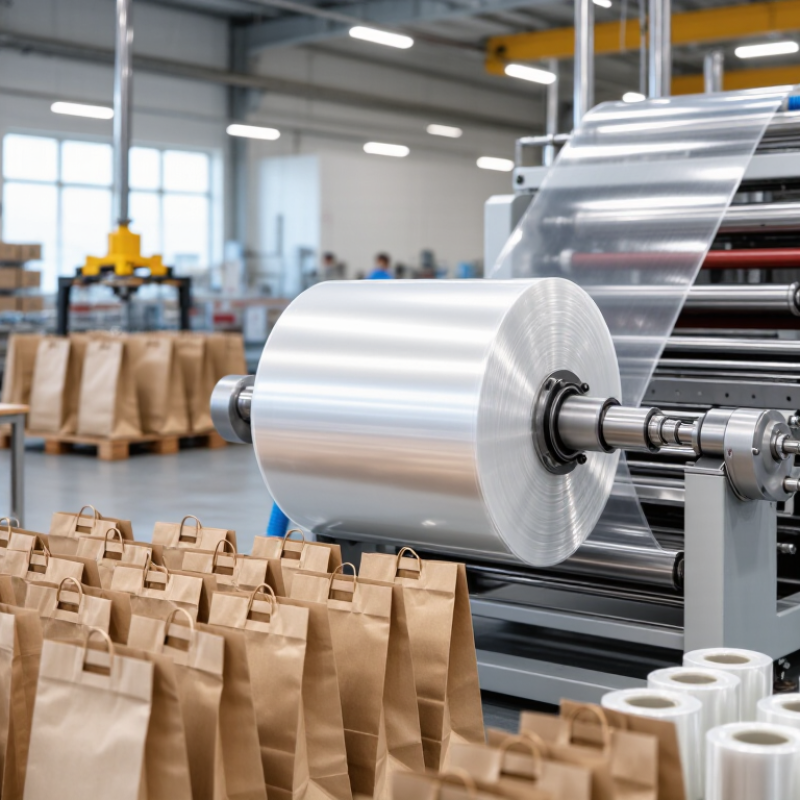
What PE Masterbatch Does in Shopping Bag Blown Film
In shopping bag blown film, PE masterbatch adds concentrated color or functional additives to a polyethylene base. It can support opacity, slip, or processing needs, depending on the formulation. PlasticsEurope’s Plastics—the Fast Facts 2023 reports 400.3 million tonnes of global plastics production in 2022. This scale makes consistent material selection important, but it does not guarantee a stable film bubble or uniform bag quality.
A masterbatch’s carrier resin should suit the film resin, and its dispersion should remain even through the melt. Poor compatibility or excessive loading may cause specks, uneven color, or changes in film strength. The right choice depends on line speed, film thickness, and the bag’s intended use. ASTM D882 provides a standard method for measuring tensile properties of thin plastic sheeting, helping converters compare trial films. Still, lab results do not always match every production line.
Tips: Test the masterbatch at the intended let-down ratio. Check color, bubble stability, sealing, and tensile strength on the actual line. Keep a control sample. Small trial differences can be easy to miss.
| Masterbatch Type | Typical Starting Addition Rate | Role in Blown-Film Shopping Bags | Practical Considerations |
|---|---|---|---|
| Color masterbatch | About 1–5% of the total blend | Provides the required bag color and can help improve color consistency between production runs. | Use a carrier resin compatible with the film resin. The required rate depends on pigment strength, film thickness, and desired color intensity. |
| Slip masterbatch | About 0.5–2% | Reduces film-to-film friction, helping bags separate and open more easily. | Slip additives can migrate to the film surface over time. Check the coefficient of friction after a suitable conditioning period, not only immediately after production. |
| Antiblock masterbatch | About 1–3% | Helps reduce film layers sticking together by creating microscopic surface texture. | Excessive addition may affect clarity, gloss, or surface smoothness. The appropriate level depends on film thickness and opening requirements. |
| Processing-aid masterbatch | Often about 0.5–2%; follow the product’s technical data sheet | May help reduce melt-fracture effects and improve processing stability in suitable formulations. | Performance depends on the active additive, carrier, and resin system. Confirm the dose through a controlled production trial. |
| Antistatic masterbatch | Often about 1–3%; formulation-dependent | Can reduce static charge on film, supporting easier handling and packaging. | Antistatic performance can depend on humidity, storage conditions, and additive migration. Verify performance under the intended use conditions. |
| UV-stabilizer masterbatch | Commonly about 1–3%; exposure-dependent | Can help protect bags intended for outdoor or prolonged light exposure from UV-related degradation. | Required protection varies with film thickness, pigment, climate, and exposure duration. Use the masterbatch supplier’s recommended loading and test the finished film. |
| Calcium carbonate filler masterbatch | Often about 5–30% for applicable bag grades | Can reduce resin usage and change stiffness, opacity, and film feel. | Higher loading can affect tensile strength, elongation, sealing, and tear behavior. Confirm bag performance against the required specifications. |
| Carrier-resin compatibility | Match the carrier to the film resin where possible | Supports dispersion and helps the masterbatch blend consistently into the PE melt. | Check compatibility with the specific LDPE, LLDPE, or HDPE blend and the extrusion process before full-scale production. |
| Blown-film process checks | Monitor melt temperature, output, bubble stability, and film gauge | Helps identify whether the masterbatch is dispersing and processing as intended. | Compare trial film with a control sample. Check thickness uniformity, appearance, sealing, tensile properties, and bag-opening behavior. |
Note: Addition rates are indicative starting ranges, not universal specifications. The correct dosage depends on the masterbatch formulation, active-additive concentration, base resin, film design, and end-use requirements. Always consult the technical data sheet and validate the formulation through production trials.
It adds concentrated color or functional additives to a polyethylene base. It can support opacity, slip, or processing.
Compatible resins can help the masterbatch disperse evenly in the melt. Poor compatibility may cause specks, uneven color, or weaker film.
Follow the recommended dosage, then test it at the intended let-down ratio. Too much can affect film strength or appearance. Small changes matter.
Ask for a recent technical data sheet and certificate of analysis. Check carrier resin, melt flow rate, additive content, dosage, test methods, and batch traceability.
Record dosage, extrusion temperature, film thickness, color, and dispersion. Watch bubble stability and sealing, too. Keep a control sample.
A sample may behave differently during continuous production. Check it at your normal line speed and film thickness. One roll is not proof.
Compare color, tensile strength, sealing, and bubble behavior under consistent conditions. Lab results may not match every production line.
Request data from multiple lots and compare them with your own trials. A single successful roll helps, but it is not conclusive. I would check again.
Shopping Bag Blown Film Pe Masterbatch is used to add color and functional properties to polyethylene film during blown film production. Understanding how the masterbatch is formulated, blended with resin, and processed can help manufacturers achieve consistent color dispersion and reliable film output. Its performance depends on factors such as compatibility, dosing accuracy, processing conditions, and the intended bag design.
When choosing a Chinese supplier, buyers can assess product consistency, technical support, production capacity, communication, and the supplier’s ability to meet specified quality requirements. Key film properties to review include strength, flexibility, appearance, and processability. Buyers should also clarify testing methods, packaging, lead times, and supply arrangements before placing an order. Careful evaluation of both material performance and supplier reliability supports more predictable production and helps ensure the masterbatch suits the intended shopping bag application.