Choosing a suitable High Dispersion Blow Molding Pe Masterbatch starts with the product, not the color sample. A bright chip may look impressive, yet still perform poorly in a bottle wall or molded container. The right grade should disperse evenly, suit the base resin, and process reliably on your equipment.
In practice, compare the carrier resin with your blow molding polymer. Check pigment or additive loading, recommended let-down ratio, melt flow behavior, and processing temperature. These details can affect color consistency, surface appearance, and production stability. Ask suppliers for current technical data and clear guidance on their test conditions. Small details matter. A result from another resin or machine may not predict yours.
Run a controlled trial using your own resin, target dosage, and production settings. Inspect the molded part for streaks, specks, uneven color, and surface defects. Watch for changes in parison stability, cycle time, and scrap rate. A slight shade shift may be acceptable for one application and costly for another. Not every grade fits. Record results, including failures, and discuss them with a qualified supplier before changing production settings. This approach takes more effort than choosing by price or appearance alone, but it gives buyers stronger evidence for a dependable decision.
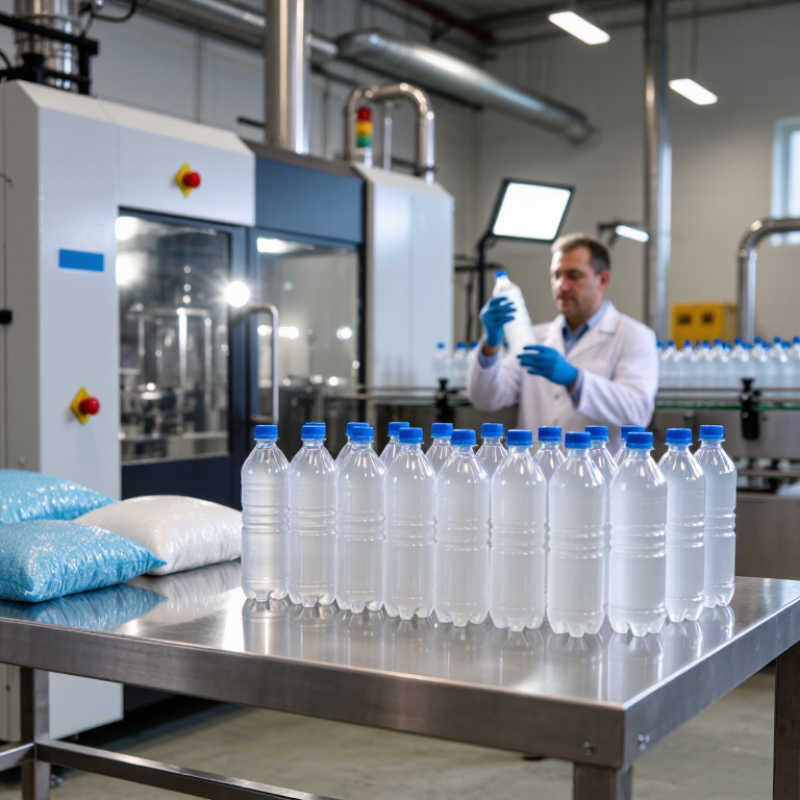
How to Choose High Dispersion Blow Molding PE Masterbatch?
What High-Dispersion PE Masterbatch Means in Blow Molding
In blow molding, high dispersion means color or functional additives are distributed evenly through the polyethylene melt. Well-dispersed particles are less likely to form visible specks, streaks, or concentrated patches in the finished bottle. The result can be more consistent color across thin corners and thicker handle areas. That matters. But dispersion alone does not guarantee a good part.
When choosing a PE masterbatch, check that its carrier suits your base resin and processing conditions. Ask for guidance on the recommended addition rate, then trial it on your actual machine. Inspect several molded pieces, not just one: look at the shoulder, pinch-off, and areas with changing wall thickness. Watch for color variation, surface defects, and changes in parison behavior. A neat sample sheet can be reassuring, but it cannot reproduce every production condition. That is worth remembering.
Tips: Keep resin, dosage, and settings steady during trials. Compare parts under consistent lighting. If results look uneven, check mixing and feeding before increasing the masterbatch level.
Choosing a high-dispersion blow molding PE masterbatch starts with the resin, not the color sample. Check the base resin’s density, melt flow rate, and type of polyethylene. A carrier that differs too much from the production resin may disperse poorly or affect parison strength. Compatibility matters. Ask for the carrier details and recommended let-down ratio, then compare them with your resin specification.
The molding process changes the choice. Extrusion blow molding exposes the blend to heat, shear, and repeated flow through the die. For fast cycles, confirm that the pigment disperses at the planned dosage without raising pressure or creating visible specks. On a thick-walled container, uneven color may be harder to spot, but weak dispersion can still cause streaks near the pinch-off. Small details matter. A tidy data sheet cannot capture every machine’s shear history.
Run a controlled trial on the actual line. Keep the resin lot, dosage, screw settings, and cycle conditions steady; inspect the parison and finished parts under consistent lighting. Record die buildup, surface marks, color uniformity, and any change in output. One trial may not tell the whole story. If results are mixed, adjust one variable at a time and check whether the carrier or dosage is responsible. A perfect match on paper can still need adjustment in production.
How to Choose High Dispersion Blow Molding PE Masterbatch?
How to Evaluate Pigment Dispersion and Color Consistency
Good dispersion shows up in the molded part, not just in a masterbatch sample. Look for uniform color across the bottle, especially near corners, the neck, and thin walls. Small defects matter. Streaks, specks, or cloudy patches can point to pigment agglomerates or uneven mixing. Inspect several parts under consistent lighting, since reflections can disguise color differences.
Compare samples made with the same resin, masterbatch dosage, processing settings, and mold. Keep the settings fixed. A spectrophotometer can record color values and help track batch-to-batch variation; agree on acceptable tolerances before production. Also note melt temperature and cycle conditions, because changes can affect shade and appearance. A lab plaque may look consistent while a blown part reveals streaking. That shortcut can mislead. Repeat runs are more informative than one attractive sample.
Check the inside and outside surfaces, and compare parts from different positions in the production run. If color shifts, review dosing accuracy, mixing, and material handling before changing pigment levels. Record what was tested, including any visual defects. Color is not the whole story. A practical evaluation may still miss issues that appear during longer production, so keep reviewing real molded parts and refine the acceptance criteria.
| Evaluation Dimension | How to Check | Suggested Acceptance Guide | Illustrative Sample Result | What the Result Indicates |
|---|---|---|---|---|
| Color difference (ΔE00) | Make test bottles using the same PE resin, dosage, molding conditions, and wall thickness. Measure at least five locations on each bottle with a calibrated spectrophotometer; compare against the approved standard using CIEDE2000. | Agree on a product-specific limit. A commonly used starting target is an average ΔE00 ≤ 1.0, with no individual reading above 1.5. | Average: 0.7 Maximum: 1.1 |
Lower and more consistent readings indicate closer color matching. The acceptable limit depends on the color, viewing conditions, and end-use requirements. |
| Color variation within a bottle | Measure the shoulder, body, and base at consistent locations and orientations. Avoid comparing areas with different thickness or surface texture. | Set a maximum location-to-location ΔE00 for the part; ≤ 1.0 is a practical initial target for many appearance-critical applications. | Maximum location-to-location ΔE00: 0.6 | Small variation suggests that pigment is distributed consistently through the molded part and that processing conditions are stable. |
| Visible specks and streaks | Inspect molded bottles and cut sections under consistent lighting. Check for pigment agglomerates, streaks, mottling, and color bands. | No objectionable visible defects under the agreed inspection conditions. Define defect size and viewing distance for production approval. | No objectionable specks or streaks observed in 10 inspected bottles | Visible defects can indicate poor pigment dispersion, inadequate mixing, contamination, or unsuitable processing conditions. |
| Dispersion under magnification | Examine thin sections or prepared specimens with a microscope using a documented magnification and scoring method. Compare samples using the same preparation and lighting. | No large agglomerates that cause appearance defects or compromise the product’s performance. Set a project-specific particle-size or defect-count limit where needed. | No large agglomerates observed at 100× in the inspected fields | A consistent, documented method is more useful than an isolated visual rating. Results depend on specimen preparation and the chosen assessment scale. |
| Batch-to-batch color consistency | Compare production lots against the same retained color standard using identical sample preparation, instrument settings, and measurement locations. | Use an agreed ΔE00 limit for lot release; a starting target may be ≤ 1.0 from the approved standard. | Three illustrative lots: ΔE00 0.5, 0.8, and 0.7 | Consistent results across lots help confirm repeatability of pigment dosing, dispersion, and manufacturing control. |
| Let-down ratio and color strength | Test the masterbatch at the intended addition rate in the actual blow-molding resin. If necessary, compare a small dosage series to check color strength and shade development. | Confirm the agreed dosage produces the target shade without excessive loading, process instability, or unacceptable changes to the part. | Target dosage: 2.0% by mass; match achieved at the target dosage | A dosage that works in one resin or process may not transfer directly to another; verify with the intended resin grade and equipment. |
| Melt mass-flow rate (MFR) | Measure using a documented test method and condition appropriate to the PE material; report the test temperature, load, and result in g/10 min. | Compare with the agreed specification and check compatibility with the base resin and molding process. | Illustrative result: 18 g/10 min at 190°C / 2.16 kg | MFR helps characterize flow behavior, but it does not by itself prove pigment dispersion or guarantee processing compatibility. |
| Bottle appearance and process stability | Run the colorant at the target dosage on the intended blow-molding line. Record cycle stability, parison appearance, surface finish, and color across the run. | No unacceptable changes to molding stability or product appearance versus the approved control; confirm using a representative production trial. | Illustrative trial: stable color and surface appearance over a 30-minute run | A production trial can reveal interactions that may not appear in laboratory plaques or small-scale samples. |
Important: Sample results are illustrative examples, not measured supplier data or universal specifications. Establish acceptance limits with the end user, test with the intended PE resin and molding process, and keep sample preparation and measurement conditions consistent.
For high-dispersion blow molding PE masterbatch, check how evenly the colorant spreads through the resin. Ask for recommended let-down ratios and test samples in your own PE grade. Look for streaks, specks, and color shifts on a molded bottle’s shoulder and base. These areas can reveal dispersion problems quickly. Also check melt flow, impact strength, and wall-thickness consistency. A color match alone is not enough.
Request current technical data, safety information, and documentation relevant to the product’s intended market and end use. If the container will contact food, verify that the specific formulation and use conditions meet applicable requirements. Check batch traceability and confirm that documents match the supplied grade. During a trial, record processing temperature, screw speed, and dosage. Results from one machine may not transfer perfectly to another, so repeat the test at normal production settings.
Tips: Keep a plain-resin sample beside each trial for comparison. Inspect molded parts under consistent lighting, and save a sample from every approved batch. Small details matter. If a result looks nearly right, investigate before increasing dosage; extra colorant can affect flow, cost, or part performance.
To validate a high-dispersion PE masterbatch, run a controlled production trial on the intended blow-molding line. Keep the base resin, recycled content, machine settings, and target dosage consistent. Record the actual feed rate; a small dosing error can distort the comparison. Compare the trial material with your current control, using the same mold and production conditions.
Watch the process, not just the finished color. Check for streaks, specks, uneven wall appearance, die buildup, and changes in parison stability. Collect bottles from the start, middle, and end of the run. Measure key requirements, such as wall-thickness consistency, drop performance, and color variation. A bottle that looks uniform under factory lighting may show defects in daylight. One short run can also mislead, especially before the line reaches steady output.
Tips: Purge the system fully before sampling, label each sample with its time and dosage, and keep a control set. Repeat the trial if results shift between samples. That extra run takes time, but skipping it can leave an uncomfortable question: was the masterbatch consistent, or was the process simply having a good hour?
Check the neck, corners, and thin walls. Look for streaks, specks, or cloudy patches. Small defects count.
Use the same resin, dosage, machine settings, and mold. Keep settings fixed. Compare several molded parts under consistent lighting.
Not by itself. A plaque may look even while a blown bottle shows streaks. Check real molded parts.
Use a spectrophotometer to record color values. Set acceptable tolerances before production, and note melt temperature and cycle conditions.
Watch for streaks, specks, die buildup, uneven walls, and changes in parison stability. The process matters too.
Collect bottles at the start, middle, and end. Label each sample with its time and dosage.
Keep the base resin, recycled content, dosage, and machine settings consistent. Record the actual feed rate. Small dosing errors matter.
Not always. A short run can be misleading before output stabilizes. One good hour proves little; repeat the trial if samples vary.
Choosing High Dispersion Blow Molding Pe Masterbatch involves more than selecting a color. The masterbatch should disperse evenly in the finished product and be compatible with the polyethylene resin, processing temperature, and blow molding conditions. Consider the carrier resin, recommended dosage, and how the additive may affect melt flow, parison stability, surface appearance, and finished-part properties.
Evaluate dispersion and color consistency using representative samples, checking for specks, streaks, and variation between molded parts. Also review relevant performance needs, such as weatherability or impact resistance, and confirm that product documentation meets the intended application’s requirements. Before full-scale use, conduct production trials with the actual resin and equipment. Record processing behavior, appearance, and quality results, then adjust the dosage or process settings as needed. This step-by-step assessment helps identify a suitable masterbatch and supports reliable, repeatable production.