Choosing the right Silver Pe Masterbatch is not simply a color decision. It affects appearance, processing stability, packaging performance, and possible recycling outcomes. A reliable selection begins with the finished package, not the additive catalogue.
Dr. Edward Kosior, a recognized plastics-recycling expert and founder of Nextek, emphasizes, “Design for recycling must begin with the material, not the decoration.” This principle matters when selecting a silver effect for polyethylene film. A strong metallic appearance may require higher loading, yet excessive loading can reduce flexibility, alter sealing behavior, or create processing instability. The best result is often less dramatic than expected.
Check the carrier resin first. It should match the PE grade used in the film. Compare melt flow rate, pigment dispersion, recommended dosage, and processing temperature. Then test a small production sample. Look closely at the film surface under warehouse lighting, retail lighting, and direct sunlight. Silver may appear bright on a thin blown film but dull on a thicker section.
Ask for migration, heavy-metal, and food-contact documentation when the package requires them. Confirm each claim against the destination market and the final application. Do not rely on a certificate designed for another polymer or dosage level.
Some trials will fail. The silver can streak. Seals may weaken. Recyclability assumptions may prove incomplete. That is useful evidence, not wasted material. A careful supplier should explain test methods, batch consistency, and technical limits. The right Silver Pe Masterbatch balances visual impact with stable production, verified compliance, and responsible package design.
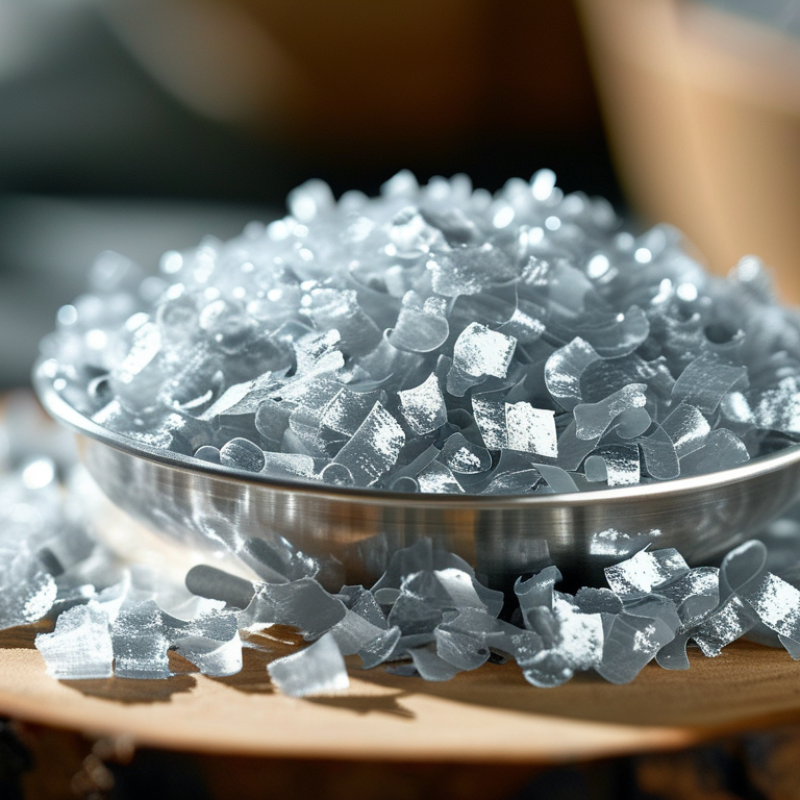
Silver PE masterbatch is a concentrated additive blended into polyethylene during film, bag, or container production. It usually contains silver-colored pigments, carriers, and dispersing agents. It is not automatically an antimicrobial material. That distinction matters. Some suppliers use metallic-looking pigments for visual appeal, while others formulate functional additives for microbial control. Always confirm the technical purpose before selecting a grade.
Packaging consumes a large share of global plastics. The OECD Global Plastics Outlook reports that packaging generated about 40% of plastic waste in 2019, equal to roughly 141 million tonnes. This pressure makes material efficiency important. A suitable silver PE masterbatch should disperse evenly, maintain film strength, and support the required opacity or shine. Check the recommended let-down ratio, carrier compatibility, moisture content, and processing temperature. Small test runs reveal problems quickly.
The first trial may look perfect and still perform poorly on a filling line. A glossy sample can mislead. Review haze, blocking, seal strength, and color variation after printing or heat exposure. Request migration and safety documentation for the intended packaging application. Testing should follow relevant packaging standards and local requirements. The PlasticsEurope Plastics—The Fast Facts 2024 report records global plastics production at about 414 million tonnes in 2023, showing the scale of material decisions. Cost per kilogram is useful, but cost per finished package is more practical. That calculation is often overlooked.
How to Choose Silver PE Masterbatch for Packaging?
Which Packaging Requirements Should Guide Your Masterbatch Selection?
Packaging performance should guide silver PE masterbatch selection, not appearance alone. Start with the film structure, thickness, and processing method. Blown film and cast film may require different dispersion behavior. A trial sample should show an even silver tone, without streaks, specks, or pigment settling.
Consider the package’s function. A snack pouch may need strong opacity, stable sealing, and controlled friction during high-speed filling. A shopping bag may prioritize surface appearance, tear resistance, and low dosage. Check the masterbatch carrier’s compatibility with the polyethylene grade. Poor compatibility can create gels or weak spots. It may also reduce clarity around seals.
Processing conditions matter. Review extrusion temperature, screw design, and recommended addition rates. Excessive heat can change the shade or affect additives. Test the finished film after printing, folding, and storage. Silver pigments can influence ink adhesion and seal strength. A bright lab plaque means little if the pouch wrinkles under real production tension.
For regulated packaging, request technical data, safety information, and applicable food-contact or migration documentation. Verify testing against the intended market and packaging use. Do not assume compliance from a color sample. Recyclability also deserves attention. Heavy pigment loading may affect material identification or downgraded recycled quality. A lower dosage often looks attractive, but it may not provide enough coverage. That trade-off needs measurement, not guesswork. In practice, the first formulation is rarely perfect. Review color, sealing, odor, dispersion, and production waste together.
| Packaging Requirement | Practical Target or Typical Range | Masterbatch Selection Guidance | Recommended Verification |
|---|---|---|---|
| Silver appearance | Metallic silver, satin silver, or gray effect according to the package design | Choose a pigment system designed for polyethylene film, sheet, blow molding, or injection molding. Larger platelet pigments generally provide stronger sparkle, while finer pigments provide a smoother and more uniform appearance. | Compare molded or extruded samples under the intended lighting conditions and evaluate color difference against an approved reference. |
| Polyethylene compatibility | Stable dispersion in LDPE, LLDPE, HDPE, or compatible PE blends | Select a PE-based carrier with melt flow behavior suitable for the processing resin. Avoid a carrier that causes gels, poor wetting, or visible streaks. | Check melt flow, dispersion, surface defects, and compatibility at the actual extrusion or molding temperature. |
| Recommended let-down ratio | Common starting range: 1%–5% by weight; final dosage depends on pigment strength and required coverage | Use the lowest dosage that achieves the required silver effect without reducing film strength, increasing brittleness, or creating excessive surface roughness. | Prepare a dosage ladder, such as 1%, 2%, 3%, and 5%, and compare appearance, mechanical properties, and process stability. |
| Film thickness and coverage | Thin films may require higher pigment efficiency or a co-extruded opaque layer; thicker parts usually provide better visual coverage | For thin packaging film, select a highly dispersible grade with strong hiding power. For multilayer film, confirm which layer contains the masterbatch and whether the silver layer remains visually continuous. | Measure thickness uniformity and inspect the package against light for pinholes, shade variation, and transparent areas. |
| Processing temperature | The masterbatch should remain stable throughout the selected PE processing window, commonly about 160–230 °C depending on the process and resin | Confirm the carrier and pigment system can withstand the actual barrel, die, or mold temperature and residence time. Avoid unnecessary overheating and long residence times. | Run a heat-history trial and check for color change, gas, odor, plate-out, deposits, and loss of metallic effect. |
| Dispersion quality | No visible agglomerates, streaks, black specks, or pigment-rich spots in the finished package | Prefer a grade with consistent pigment distribution and good dilution performance at the intended screw design and output rate. | Inspect film or molded parts under reflected and transmitted light; use microscopy or image analysis when tighter quality control is required. |
| Mechanical performance | Maintain the package’s required tensile strength, elongation, tear resistance, impact resistance, and seal performance | Avoid excessive pigment loading, which can increase stiffness or act as a stress concentrator. Select a formulation validated for the target PE grade and dosage. | Test tensile properties, elongation, tear or impact performance, heat-seal strength, and drop resistance on finished packaging. |
| Sealability | Seal initiation temperature and seal strength must remain within the packaging line specification | For heat-sealable films, place the silver masterbatch in a suitable layer or use a compatible formulation that does not interfere with the sealant layer. | Measure seal strength across sealing temperature, pressure, and dwell-time settings used in production. |
| Coefficient of friction | Typical packaging-film targets are often about 0.2–0.4, but the correct value depends on the filling and packaging equipment | Confirm that the masterbatch does not disturb slip, antiblock, or film-to-film friction behavior. Evaluate the complete additive package rather than the silver concentrate alone. | Test static and kinetic friction on the finished film and conduct a machine trial at the intended line speed. |
| Light protection and opacity | Select opacity according to the product’s sensitivity to visible light and ultraviolet exposure | Do not assume a decorative silver effect automatically provides sufficient barrier protection. Use a validated opaque or barrier structure when light protection is critical. | Measure opacity or optical density and perform light-transmission testing on the complete package structure. |
| Food-contact suitability | Must comply with the regulations applicable to the destination market and the intended food-contact conditions | Request regulatory documentation for the exact formulation, including carrier, pigments, additives, impurities, and intended use conditions. Compliance is formulation- and market-specific. | Review declarations and supporting migration data, then conduct testing through an accredited laboratory where required. |
| Odor and taste neutrality | No unacceptable odor or sensory transfer under the intended storage and use conditions | Choose a low-odor formulation and control thermal degradation, contamination, and excessive residence time during processing. | Perform odor and sensory evaluations on the finished package when the application involves food, beverages, or other odor-sensitive products. |
| Migration and rub resistance | No unacceptable transfer to the product, adjacent layers, handling equipment, or printed surfaces | Select a pigment and additive system with suitable fixation in the PE matrix. Evaluate friction, abrasion, condensation, and contact with oils or chemicals where relevant. | Conduct rub, tape, abrasion, storage-contact, and applicable migration tests on finished packaging. |
| Recyclability | Maintain compatibility with the intended PE recycling stream and avoid unnecessary non-PE components | Use a PE carrier and keep dosage as low as practical. Confirm that the pigment system does not prevent sorting, identification, or the intended recycling route. | Evaluate the complete package against applicable design-for-recycling guidance and test recycled-material properties where relevant. |
| Supply and quality consistency | Stable color strength, moisture level, pellet size, and batch-to-batch performance | Specify acceptance limits for color strength, moisture, bulk density, melt flow, ash or inorganic content, and dispersion. Use a retained reference sample for each approved lot. | Perform incoming inspection and periodic production audits using the same test methods and approved processing conditions. |
Note: The ranges above are general industry selection guidance. Final dosage, regulatory status, optical performance, and processing conditions must be confirmed using the exact resin, package structure, equipment, and destination-market requirements.
How to Choose Silver PE Masterbatch for Packaging?
Silver performance starts with pigment quality, not appearance alone. In production trials, I check pigment shape, surface treatment, thermal stability, and carrier compatibility. A bright silver flake can look impressive, yet create weak spots or uneven film coverage. For polyethylene packaging, request technical data showing pigment loading, recommended letdown, moisture content, and processing temperature. Do not trust color chips alone.
Dispersion needs practical testing. Examine a blown-film sample under reflected light and transmitted light. Look for specks, streaks, pinholes, and cloudy zones. A microscope can reveal agglomerates that normal inspection misses. ASTM D2244 provides a recognized method for calculating color differences. Record L*, a*, b*, gloss, and haze values across several film areas. The result should remain stable after extrusion, not only in the laboratory. Plastics Europe reported global plastics production at about 413.8 million tonnes in 2023, showing how small quality failures can affect large production volumes.
Color performance also depends on film thickness, cooling speed, resin grade, and recycled content. A masterbatch that performs well at 50 microns may look dull at 25 microns. Silver can shift toward gray after excessive shear. I have seen this happen. It was not a pigment failure alone; the mixing sequence was poorly controlled. ISO 11664-4 supports consistent CIELAB color measurement, but numbers still need visual review under standard lighting. Test multiple lots, retain molded samples, and compare them after aging. Perfect results are not guaranteed. Process discipline matters more than a bright sample.
Selecting a silver PE masterbatch starts with resin compatibility, not appearance. The carrier should match the polyethylene family used in production, such as LDPE, LLDPE, or HDPE. A mismatched carrier may cause streaks, poor dispersion, or unstable gloss.
Check melt flow rate before trials. A large difference between the masterbatch and base resin can create feeding problems, especially in thin films. Compare the supplier’s MFR test method with your own laboratory method. They may not be directly comparable. Start with a small trial, often at 1–3% let-down, then inspect silver distribution under reflected light. Look for specks, cloudy zones, and weak weld lines.
Processing temperature matters. Confirm that the pigment and carrier remain stable at the extruder’s actual melt temperature, including short-term overheating. Also test screen-pack pressure, screw speed, cooling, and residence time. The OECD’s Global Plastics Outlook reports that packaging represented about 40% of global plastic waste in 2019, making consistent packaging quality increasingly important. PlasticsEurope reported packaging as 39.1% of European plastics demand in 2022. These figures show the scale, but they do not replace plant testing.
Do not judge compatibility from a color card alone. Check tensile strength, seal performance, haze, and recyclability requirements after production. A perfect match is rarely guaranteed. Film structures, moisture, and dosing accuracy can change the result. Keep a retained sample from every trial. Small details matter.
How to Choose Silver PE Masterbatch for Packaging?
Safety starts with the finished package, not the color sample. I check the resin grade, pigment composition, carrier resin, and intended packaging use. Food-contact applications require appropriate migration data and supplier declarations. Medical and cosmetic packaging may need different evidence. Ask for a current safety data sheet, certificate of analysis, and traceable production lot. Test the masterbatch in the actual polyethylene film, bottle, or cap. Laboratory results can change with thickness, heat, and processing time. Do not rely on a bright silver appearance alone.
Compliance depends on the destination market and product category. Request written evidence for relevant chemical restrictions, heavy-metal limits, and packaging requirements. The documents should identify test methods, laboratory dates, and sample details. Vague certificates create delays. They also weaken internal quality reviews. I once focused too much on purchase price and overlooked rework caused by poor dispersion. That mistake cost more than the cheaper material saved. Compare total cost, including dosage, energy use, scrap, testing, and inventory.
Supplier reliability requires practical verification. Review batch consistency, production capacity, change-control procedures, and complaint response times. Ask for retained samples from several lots, not one perfect sample. A site audit or video inspection can reveal storage conditions and basic quality controls. Confirm whether technical support can troubleshoot streaks, filter pressure, or color drift. Keep written specifications and approval samples. No supplier is flawless. What matters is transparent correction, documented investigation, and repeatable performance. Recognize your own gaps, too, especially when converting unfamiliar equipment or recycled polyethylene.
A practical procurement model for verifying safety, compliance, cost, and supplier reliability before approval.
The suggested weighting prioritizes safety and regulatory evidence for packaging applications. Confirm food-contact suitability through applicable market regulations, formulation review, and migration testing in the final PE article. Cost should be evaluated by dosage, conversion efficiency, and total cost per packed unit rather than price per kilogram alone.
It is a concentrated additive blended with polyethylene during film, bag, or container production. It usually contains silver-colored pigments, a carrier, and dispersing agents. It is not automatically antimicrobial.
It can create a bright silver appearance, stronger opacity, or a controlled metallic effect. It may also support material efficiency when a lower dosage provides enough coverage. Appearance is only one purpose.
Not necessarily. Some grades provide visual effects only, while others contain functional additives. Confirm the technical purpose through documentation and testing. Do not assume protection from color.
Consider film structure, thickness, resin type, processing method, opacity, sealing, and appearance. A snack pouch may need strong seals and low friction. A shopping bag may prioritize appearance and tear resistance.
Yes. The carrier should suit the polyethylene family, such as LDPE, LLDPE, or HDPE. Poor compatibility can cause streaks, gels, weak spots, or cloudy seal areas. A color card cannot prove compatibility.
Review melt flow rate, extrusion temperature, screw design, dosing accuracy, cooling, and residence time. Short-term overheating may change the shade or damage additive performance. Small trials help.
Inspect dispersion under reflected light for specks, streaks, cloudy zones, and uneven silver tone. Also test tensile strength, haze, seal strength, ink adhesion, odor, and blocking. A glossy sample can mislead.
A small trial often begins around one to three percent let-down, depending on the formulation. Measure coverage, film strength, sealing, and waste at each dosage. Lower dosage may look economical but fail coverage.
Request technical data, safety information, migration results, and application-specific compliance documents. Verify requirements for the intended market and packaging use. Never treat a sample color as proof of compliance.
Compare cost per finished package, not only cost per kilogram. Heavy pigment loading may affect material identification or recycled quality. Keep retained samples from each trial. The first formula is rarely perfect.
Choosing the right Silver Pe Masterbatch is essential for achieving attractive, consistent, and functional packaging results. This additive combines silver-colored pigments with a polyethylene carrier, helping manufacturers create metallic visual effects while maintaining efficient film, bag, bottle, or container production. Selection should begin with the packaging’s appearance, opacity, flexibility, thickness, surface finish, and end-use requirements. Pigment quality, uniform dispersion, color strength, and resistance to fading or migration should also be carefully evaluated to ensure stable performance throughout production and use.
Compatibility with the selected PE resin is equally important. The masterbatch should disperse smoothly under the planned extrusion or molding conditions without causing defects, excessive pressure, or processing instability. Buyers should also review safety documentation, applicable packaging requirements, recommended dosage, and overall cost efficiency. A reliable supplier should provide consistent batch quality, technical guidance, test data, and responsive after-sales support. By assessing appearance, processing behavior, compliance, and supplier dependability together, manufacturers can select a silver masterbatch that delivers both visual appeal and dependable packaging performance.