Fluorescent Pe Masterbatch is a concentrated color additive designed for polyethylene products. It contains fluorescent pigments dispersed in a compatible polymer carrier. During extrusion, manufacturers blend it with natural or colored PE resin. The result can be a vivid yellow, orange, pink, or green appearance. Think of safety tape glowing under bright warehouse lights.
In practical production, dosage, mixing temperature, and residence time affect the final shade. A small adjustment may change brightness noticeably. The carrier should match the base resin whenever possible. Poor compatibility can create streaks, specks, or uneven color across a film or molded part. Experienced operators usually check a trial sample before full production. They also compare color under consistent lighting, because fluorescent shades can appear different indoors and outdoors.
This material supports packaging, warning labels, agricultural films, toys, and promotional products. However, its performance depends on pigment quality and processing conditions. Excessive heat may reduce fluorescence or damage the color. Extended sunlight exposure can also cause fading. That detail is sometimes overlooked.
Manufacturers should review technical data sheets, recommended loading levels, and application restrictions. Food-contact or children’s product applications require additional compliance verification. A bright appearance does not prove suitability. Reliable results come from testing the masterbatch with the exact PE grade, equipment, and end-use conditions. Even then, color matching may need refinement. That is normal. A careful technical evaluation remains more dependable than relying on a catalog image alone.
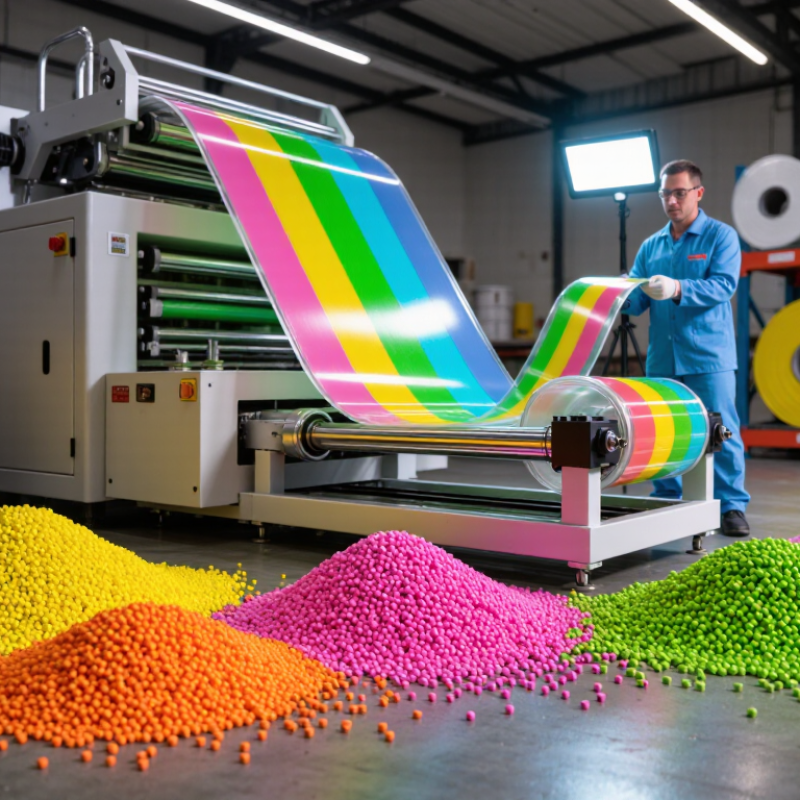
Fluorescent PE masterbatch is a concentrated color additive designed for polyethylene products. It contains fluorescent pigments dispersed in a compatible PE carrier resin. During processing, the carrier melts and distributes the pigment through the polymer. The result is a bright, high-visibility color with a vivid appearance under normal light. Some grades can also appear more striking under ultraviolet light, depending on the pigment chemistry.
Manufacturers use it in films, injection-molded parts, packaging, warning products, and household items. A small amount is blended with natural or colored PE pellets before extrusion or molding. Typical addition rates may range from 1% to 5%, but the correct level depends on pigment strength, product thickness, and the required shade. A clean mixing system helps prevent streaks. Poor dispersion can create cloudy patches or uneven color.
Processing temperature matters. Excessive heat or long residence time may reduce fluorescence and cause shade changes. In practice, the first trial is rarely perfect. A technician should check the color after cooling, not only during production. Testing under the intended lighting is also important. Fluorescent color can look strong beside white surfaces but weaker against dark materials. Suppliers should provide technical data, recommended dosage, heat limits, and compatibility information. Small trial batches remain useful, because recycled content, additives, and machine conditions can change the final result.
| Data Dimension | Typical Information | Practical Significance |
|---|---|---|
| Product Definition | A concentrated color additive containing fluorescent pigments dispersed in a polyethylene-compatible carrier resin. | It provides a convenient way to produce bright, high-visibility colors during plastic processing without handling loose pigment powder. |
| Primary Carrier | Polyethylene-based carrier, commonly selected to match the processing resin. | A compatible carrier promotes more uniform dispersion and helps reduce streaks, specks, and color variation. |
| Compatible Polyethylene Resins | Low-density polyethylene, linear low-density polyethylene, and high-density polyethylene, subject to formulation compatibility. | The selected masterbatch should be matched with the resin type and processing method used in the finished product. |
| Color Appearance | Bright, vivid shades such as fluorescent yellow, orange, red, pink, green, and blue. | Fluorescent colors are used where strong visual impact, product identification, or high visibility is required. |
| Color Mechanism | Fluorescent pigments absorb part of the ultraviolet or visible light spectrum and re-emit light at longer wavelengths. | This optical effect makes the color appear more brilliant than conventional non-fluorescent pigments under suitable lighting. |
| Typical Addition Rate | Approximately 1% to 5% by weight, depending on pigment strength, target shade, resin, and application. | The exact dosage should be established through trial batches and confirmed with color measurements or visual standards. |
| Recommended Feeding Method | Gravimetric or volumetric dosing into the polymer feed stream, followed by thorough melt mixing. | Consistent dosing and adequate mixing help maintain uniform color throughout the production run. |
| Common Processing Methods | Film extrusion, blown-film extrusion, sheet extrusion, injection molding, blow molding, and rotational molding when the formulation is suitable. | The masterbatch can be incorporated into several polyethylene manufacturing processes. |
| Typical Processing Temperature | Generally processed within the temperature range recommended for the selected polyethylene resin; many PE processes operate roughly between 160°C and 220°C. | Excessive heat or prolonged residence time can reduce fluorescent intensity or cause color degradation, so the supplier’s technical data should be followed. |
| Main Applications | Packaging films, shopping bags, warning and marking products, agricultural films, molded consumer goods, cable components, and promotional plastic items. | Applications are selected where vivid color, visual differentiation, or attention-grabbing appearance is important. |
| Advantages | High color intensity, easy handling, accurate dosing, reduced dust compared with loose pigments, and efficient color changeover. | Masterbatch simplifies production management and can improve workplace cleanliness and color consistency. |
| Dispersion Requirement | Good dispersion is required to prevent pigment agglomeration, streaks, surface defects, and uneven fluorescence. | Screw design, mixing capacity, dosing accuracy, and melt temperature all influence the final appearance. |
| Light-Fastness Limitation | Fluorescent pigments generally have lower long-term light stability than many conventional inorganic pigments. | Outdoor products may require a UV stabilizer package, protective additives, or a formulation specifically designed for exterior exposure. |
| Heat Stability | Heat stability varies by fluorescent pigment chemistry and should be checked against the intended processing temperature and residence time. | Using temperatures above the recommended range may cause fading, discoloration, or loss of fluorescence. |
| Transparency and Coverage | Fluorescent effects are often strongest in transparent or translucent polyethylene, while opaque formulations provide more coverage but may reduce brilliance. | Base resin clarity, film thickness, filler content, and addition rate affect the visual result. |
| Quality-Control Checks | Color shade, melt flow behavior, pigment dispersion, moisture condition, additive concentration, and compatibility with the base resin. | Routine testing helps maintain repeatable color and stable processing performance. |
| Storage Conditions | Store in sealed packaging in a cool, dry, shaded, and well-ventilated area away from direct sunlight and excessive heat. | Proper storage helps prevent contamination, moisture uptake, packaging damage, and unnecessary color degradation. |
| Handling Practice | Use clean equipment, avoid cross-contamination between colors, and follow the product safety data sheet. | Good handling practices reduce color contamination and support safe, consistent production. |
| Selection Criteria | Carrier compatibility, target color, dosage range, heat stability, light-fastness requirement, processing method, regulatory needs, and end-use exposure. | These factors determine whether a fluorescent PE masterbatch is suitable for a particular polyethylene product. |
It is a concentrated color additive for polyethylene products. It contains fluorescent pigment in a compatible polyethylene carrier. Small amounts create vivid, high-visibility colors. The first trial may fail.
It suits many polyethylene grades used in films, molded parts, packaging, and household products. The carrier should match the base resin’s melt behavior. Poor compatibility may cause uneven feeding or surface defects.
Common addition rates range from 1% to 5%. The correct dosage depends on pigment strength, product thickness, and target shade. Always confirm the ratio with a small trial. More is not always better.
Operators blend it with natural or colored polyethylene pellets before melting. The mixture can enter extrusion, injection molding, blow molding, or profile lines. Accurate feeding helps maintain consistent color. Small dosing errors show quickly.
Excessive heat or long barrel residence may reduce fluorescent intensity. Excessive shear can also affect appearance and material performance. Keep temperatures within the recommended range. Record actual machine settings.
Use clean mixing equipment and consistent pellets. Good dispersion reduces streaks, specks, and cloudy patches. Clean the hopper and screw between color changes. Contamination is easy to miss.
Check samples after cooling, not only during production. Inspect pellets, molded surfaces, weld lines, and film sections. Compare samples under the intended lighting conditions. White and dark backgrounds can change the visual impression.
Fluorescent shades may weaken after prolonged sunlight exposure. Moisture, recycled content, and additives can also change the final result. Review lightfastness and heat-stability data before production. A bright sample can mislead.
Fluorescent Pe Masterbatch is a concentrated color additive used to create bright, eye-catching shades in plastic products. It typically combines fluorescent pigments or dyes with a polyethylene-based carrier resin and selected processing aids. Its main properties include strong color intensity, good dispersion, heat resistance, and compatibility with common polyethylene processing methods. The final performance depends on pigment quality, concentration, carrier selection, and the stability required by the application.
During manufacturing, the ingredients are accurately dosed, mixed, melted, and formed into uniform pellets. In plastic processing, the masterbatch is blended with natural polymer at a controlled dosage before extrusion, injection molding, blow molding, or film production. Proper dispersion helps achieve consistent color and prevents streaks or uneven appearance. When selecting Fluorescent Pe Masterbatch, processors should consider the target polymer, processing temperature, desired brightness, weather and light exposure, dosage, product thickness, and required mechanical properties. Careful storage and accurate feeding also support stable results and efficient production.