Large Part Injection Pe Masterbatch plays a decisive role in the appearance, stability, and processing efficiency of oversized polyethylene components. Automotive panels, storage containers, industrial drums, and construction parts often require consistent color across thick and thin sections. They also face shear, cooling differences, warpage, and visible flow marks.
Robert A. Malloy, a recognized injection-molding author and consultant, offers a practical reminder: “The mold is part of the product design.” His view applies directly to masterbatch selection. A color concentrate cannot repair poor venting, uneven wall thickness, or an unsuitable melt temperature. It must work with the resin, screw design, mold, and production cycle.
This guide examines the Top 10 Large Part Injection Pe Masterbatch Types, including black, white, color, UV-stabilized, anti-static, slip, anti-block, flame-retardant, filler, and custom-effect grades. Each type serves a different production need. Carbon black may improve light protection, but excessive loading can increase dispersion problems. Calcium carbonate can reduce cost, yet it may affect impact strength and surface finish.
Small details matter.
A reliable evaluation should include let-down ratio, pigment dispersion, moisture control, carrier compatibility, and batch-to-batch consistency. Trial results should be checked on the actual machine, not only in laboratory plaques. This ranking is useful, but it is not universal. Resin grade, part geometry, customer expectations, and local processing conditions can change the best choice. Even experienced teams sometimes overvalue color strength and underestimate cooling behavior. That mistake deserves attention.
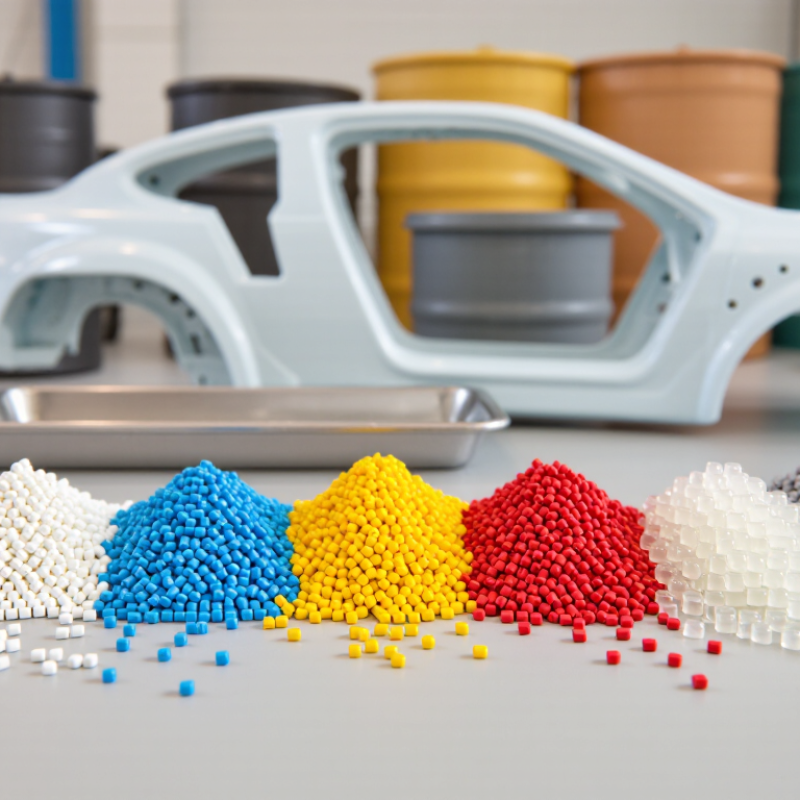
What Large-Part Injection PE Masterbatch Is and Why It Matters
Top 10 Large Part Injection PE Masterbatch Types
What Large-Part Injection PE Masterbatch Is and Why It Matters
Large-part injection PE masterbatch is a concentrated blend of pigments or additives carried in polyethylene. It is designed for heavy components, such as containers, pallets, bins, and automotive panels. These parts often require steady flow, controlled cooling, impact strength, and consistent color across thick walls.
Common types include color, black, white, UV, antioxidant, slip, antiblock, nucleating, processing-aid, and mineral-filled masterbatch.
The choice affects more than appearance. A poorly dispersed concentrate can create streaks, weak zones, or visible flow marks. Excessive additive loading may also change melt flow and increase warpage. PlasticsEurope reported global plastics production of 413.8 million tonnes in 2023. This scale makes material efficiency important. The OECD’s Global Plastics Outlook projects plastic waste could reach 1,014 million tonnes annually by 2060 under current policies. Durable, recyclable large parts therefore need careful formulation, not simply more additives.
Tips:
Match the carrier resin with the PE grade. Check let-down ratio, melt flow, moisture, and pigment dispersion before production. Test parts at the real mold temperature and cooling time. A laboratory plaque can look perfect, yet a 12-kilogram part may show shade variation. I would not treat a supplier’s technical chart as final truth. Validate impact, shrinkage, UV exposure, and color after molding. Small process changes matter. Recycled content can also alter odor, flow, and additive demand, so every batch deserves review.
How PE Masterbatch Types Are Classified for Large Injection Moldings
Top 10 Large Part Injection PE Masterbatch Types
Large injection moldings need more than strong color. They need stable flow, even cooling, and controlled shrinkage. PE masterbatch types are commonly classified by function, carrier resin, and processing performance. The ten practical groups include color, white, black, UV stabilizer, antioxidant, slip, antiblock, antistatic, nucleating, and processing-aid masterbatches.
A neat ten-type list is useful, but it is not universal. A black masterbatch may combine carbon black with UV protection, while a nucleating grade can improve cycle consistency in selected PE parts. The carrier should match the base resin, such as HDPE, LDPE, or LLDPE. Melt flow index also matters. A mismatch can create streaks, poor dispersion, or uneven gloss across a large panel. PlasticsEurope reported global plastics production of 400.3 million tonnes in 2022 in Plastics—The Fast Facts 2023. That scale explains why small formulation errors can create significant material waste. The report also reinforces the need for more efficient processing.
Tips: Check the masterbatch carrier first. Then test dosage, injection speed, mold temperature, and cooling time together. Do not judge dispersion from a small plaque alone. Large parts reveal problems differently. My practical concern is simple: suppliers often promise universal performance, yet every mold, pigment, and recycled-content level behaves differently. A short production trial remains more reliable than a perfect datasheet. Cite: PlasticsEurope, Plastics—The Fast Facts 2023.
Top 10 PE Masterbatch Types for Large Injection-Molded Parts
Large injection-molded PE parts need masterbatches that control appearance, stability, and processing. PlasticsEurope reported global plastics production at 400.3 million tonnes in 2022. Recycled plastics represented only about 8.9% of European demand, making consistency more difficult. Large parts also magnify warpage, color streaks, and cooling marks. Material selection matters.
The top 10 PE masterbatch types are white, black, colored, UV stabilizer, antioxidant, antistatic, slip, antiblock, nucleating, and processing-aid masterbatches. White and black grades support strong coverage in thick housings and containers. UV and antioxidant grades help protect outdoor parts and recycled feedstocks. Nucleating grades can improve crystallization and cycle control. Antistatic, slip, and antiblock types support handling and film-related surfaces, but their value depends on the final part. A 2024 report from the International Energy Agency notes that recycled plastics still face quality and collection limits. That warning applies here. More additive is not automatically better.
Tips: Start with a small trial plaque, then test a full-size part. Check melt-flow behavior, pigment dispersion, shrinkage, impact strength, and surface gloss. Follow the supplier’s let-down range. Keep the same PE carrier when possible. Review ISO 1133 melt-flow results and accelerated UV data. I would also inspect the gate area closely; it often exposes poor dispersion first. Some color decisions look correct in the lab, yet fail after cooling.
How to Select the Right Masterbatch for Performance and Processing
Top 10 Large Part Injection PE Masterbatch Types
Selecting a masterbatch for large PE parts requires more than matching a color chart. The ten common types include white, black, color, UV-stabilized, antioxidant, slip, antiblock, antistatic, processing-aid, and flame-retardant grades. Each changes performance, cooling behavior, or surface quality. For outdoor storage boxes, UV protection matters. For electrical housings, antistatic control may matter more.
Start with the resin grade, melt temperature, and injection speed. A carrier system compatible with polyethylene usually disperses more reliably. In one production trial, a large cover showed pale streaks near the gate. The dosage was correct, but mixing time was too short. The solution required better screw back pressure, not more pigment. That mistake was expensive.
Watch shrinkage and warpage closely. Large parts magnify small processing differences. A highly loaded black masterbatch can increase cooling variation, especially around thick ribs. A slip additive may improve release but weaken printing adhesion. UV additives can protect the part, yet excessive loading may affect impact strength. Run a small trial at the intended dosage, then inspect color, gloss, weld lines, impact resistance, and cycle time. Test after heat and weather exposure when durability matters. Do not trust appearance alone. A smooth surface can hide poor dispersion. Resin moisture, regrind percentage, and residence time also deserve records, although production teams sometimes overlook them.
Common Quality, Compatibility, and Application Considerations
Top 10 Large Part Injection PE Masterbatch Types?
Large-part injection molding needs more than attractive color. Ten common types include white, black, color, filler, UV, antioxidant, slip, antiblock, processing-aid, and nucleating masterbatches. Each serves a specific production need. White masterbatch requires high opacity and clean dispersion. Black grades need stable carbon dispersion, especially in thick panels. Filler grades can reduce cost, but excessive loading may reduce impact strength.
Compatibility starts with the polyethylene carrier. A carrier that matches the base resin usually disperses more evenly and reduces unmelted specks. Check melt flow, moisture, pigment concentration, and thermal stability before production. A masterbatch may look excellent in a small plaque, yet streak across a 1.5-meter panel. That happens.
Quality testing should include color difference, ash content, filtration pressure, warpage, surface gloss, and impact performance. In practical trials, use the actual machine, screw speed, mold temperature, and wall thickness. Test both the first shot and later shots. Long residence times can darken some formulations. UV and antioxidant grades also require dosage control; more is not always better. Overdosing may cause plate-out, odor, or weaker mechanical performance. Recheck recycled resin content too, because its history is often uncertain. A careful technician records every setting, although production rarely stays perfectly consistent. That limitation deserves attention.
FAQS
They are commonly classified by function, carrier resin, and processing performance. Common groups include color, white, black, filler, UV stabilizer, antioxidant, slip, antiblock, processing-aid, and nucleating masterbatches. The list is practical, not universal.
The carrier should match the base polyethylene, such as HDPE, LDPE, or LLDPE. A suitable match usually improves dispersion and reduces unmelted specks. Poor compatibility can create streaks.
Check carrier type, melt flow index, moisture, pigment concentration, and thermal stability. Also review the part’s wall thickness and expected cooling behavior. Small details matter.
White masterbatch supports opacity and clean coverage. Black masterbatch needs stable pigment dispersion across thick panels. Color masterbatch controls the final shade and gloss. Large surfaces expose small defects.
It can reduce material cost in suitable applications. However, excessive filler may lower impact strength and change shrinkage. Test a molded panel, not only a small plaque. That assumption can fail.
UV grades help protect parts exposed to sunlight. Antioxidant grades support stability during heat and processing. Slip grades can reduce surface friction. Antiblock grades help prevent film surfaces from sticking, where relevant. More additive is not always better.
Test dosage together with injection speed, mold temperature, screw speed, and cooling time. Overdosing may cause plate-out, odor, or weaker mechanical performance. Record the first shot and later shots. Production is rarely perfectly consistent.
A small plaque may look uniform while a 1.5-meter panel shows streaks or uneven gloss. Use the actual machine, mold, resin, and wall thickness during testing. Check color difference, warpage, ash content, filtration pressure, gloss, and impact. A datasheet is not enough.
Conclusion
Large Part Injection Pe Masterbatch is a concentrated additive system designed to improve the appearance, durability, and processing performance of large polyethylene injection-molded parts. Because these components often require consistent color, reliable surface quality, impact resistance, weatherability, or controlled shrinkage, selecting the correct masterbatch is essential. The main types can be classified by their functions, including color, white, black, UV-stabilized, antioxidant, slip, anti-block, processing-aid, flame-retardant, mineral-filled, and impact-modifying masterbatches.
Choosing among these ten types requires careful consideration of the polyethylene grade, molding temperature, part thickness, cooling conditions, required mechanical properties, and final-use environment. Processors should also evaluate dispersion, carrier compatibility, dosage accuracy, moisture control, and the possibility of additive interactions. A well-matched masterbatch supports stable production, uniform color, fewer surface defects, and dependable long-term performance. Quality testing through trial molding and relevant mechanical, thermal, and weathering evaluations can help confirm that the selected formulation meets both processing needs and product specifications.