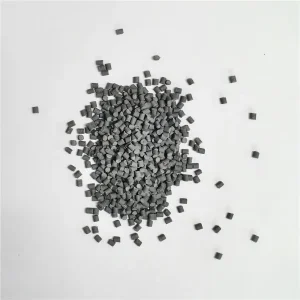
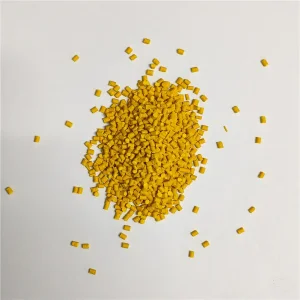
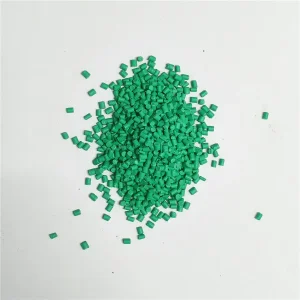
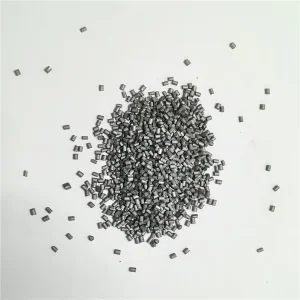
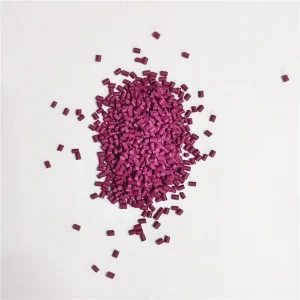
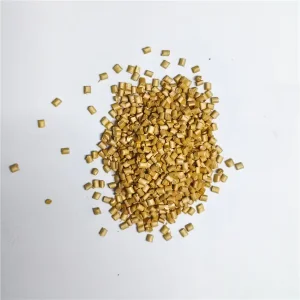
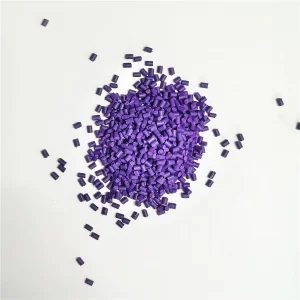
Engineered for precision automotive injection molding, blown film, and technical profile extrusion.
An engineering analysis of low-cost, high-dispersion polyethylene color concentrates for automotive tier-1 and tier-2 accessory manufacturing.
In global automotive component manufacturing, the query term "Cheap Auto Plastic Accessory PE Masterbatch Company & Companies" represents a crucial commercial requirement: total cost of ownership (TCO) optimization without compromising stringent OEM performance standards. Far from denoting inferior quality, cost-effective PE masterbatch engineering relies on high pigment loading efficiency, optimized melt flow index (MFI) matching, and streamlined continuous extrusion technology.
Polyethylene (PE) carriers—encompassing LLDPE, LDPE, and HDPE resins—serve as the foundation for exterior trims, under-the-hood ducting, interior trim fasteners, wire harnesses, and mudguards. Procuring masterbatch directly from specialized Chinese manufacturing hubs like Changzhou Jiazhou Plastic Products Co., Ltd. allows international automotive molders to reduce raw material expenditures by up to 28% while meeting rigorous ISO 9001 and IATF 16949-compatible quality metrics.
| Parameter | Standard PE Masterbatch | Jiazhou Auto-Grade PE Masterbatch | Testing Standard |
|---|---|---|---|
| Pigment Loading (%) | 20% - 35% | 40% - 75% High-Concentration | ISO 3451-1 |
| Thermal Stability (°C) | 200°C - 220°C | Up to 260°C - 280°C | DIN EN 12877-2 |
| Color Fastness (Light) | Grade 4 - 5 | Grade 7 - 8 (Blue Wool Scale) | ISO 105-B02 |
| Melt Flow Index (MFI) | 5 - 15 g/10min | Tailored 10 - 45 g/10min | ASTM D1238 / ISO 1133 |
| VOC & Fogging Values | Uncontrolled | Low VOC / Condensable Volatiles <2mg | DIN 75201 / VDA 278 |
| Delta E Color Tolerance | < 1.2 | < 0.5 CIELAB Precision | ASTM E308 |
By increasing pigment concentration up to 75% using ultra-fine nano-scale dispersion techniques, injection molders can achieve target opacity and shade depth at let-down ratios (LDR) as low as 1% to 2%. This directly slashes freight costs, storage footprints, and overall per-part coloring expense.
Tailored formulations designed to withstand mechanical stress, UV degradation, thermal cycles, and chemical exposure in modern motor vehicles.
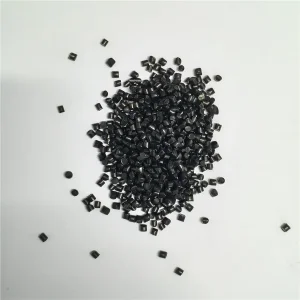
Polyethylene components such as fluid reservoirs, air intake blow-molded ducts, and protective wire conduits demand extreme thermal resistance. Our high-concentration black PE masterbatch features heat-stabilized carbon black that prevents polymer chain scission under sustained 260°C processing conditions.
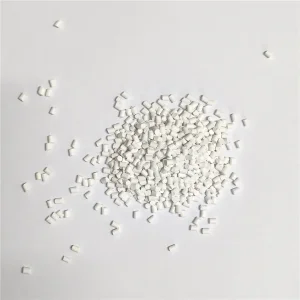
Wheel arch liners, mud flaps, side cladding, and bumper brackets are subject to relentless environmental exposure, impact, and UV radiation. Utilizing Rutile TiO2 and specialized HALS (Hindered Amine Light Stabilizers), our white and color masterbatches ensure zero chalking, anti-fading, and superior weatherability over a 10-year vehicle lifespan.
Car cabin acoustics and aesthetics require strict volatile organic compound (VOC) control. Our low-odor, low-fogging PE masterbatches provide flawless surface finishes for interior clip fasteners, trunk liners, seatback panels, and floor mat covers without releasing harmful aldehyde emissions.
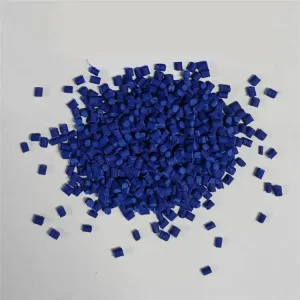
With the global transition to Electric Vehicles (EVs), high-voltage cable jacketings and battery module housing require specialized orange, blue, and grey PE masterbatches. These formulations incorporate flame-retardant synergists and electrical insulation grade pigments to maintain dielectric integrity.
Luxury and sport auto accessories increasingly utilize metallic silver and gold masterbatches for emblem surrounds, dashboard bezels, and roof rail endcaps. Micro-encapsulated mica pigments yield high-gloss metallic sheen without the cost of electroplating.
Flexible TPE/PE blend weatherstripping profiles rely on non-migratory color masterbatches. Our colorants ensure zero pigment bleed into contiguous automotive clear coats, maintaining crisp color lines around windows and door frames.
Pioneering smart coloring systems, circular economy PCR integration, and micro-dispersion compounding.
Traditional carbon black absorbs Near-Infrared (NIR) light, preventing automated optical sorting at automotive recycling facilities. Next-generation PE black masterbatches utilize specialty organic pigments that reflect NIR rays, facilitating 100% closed-loop recycling of end-of-life auto parts.
Aligning with OEM sustainability mandates (such as EU End-of-Life Vehicles Directive updates), our R&D team formulates masterbatches using Post-Consumer Recycled (PCR) and Post-Industrial Recycled (PIR) PE carrier resins, lowering carbon footprint by up to 45% per ton.
Utilizing high L/D ratio co-rotating twin-screw extruders with liquid injection dosing, we eliminate pigment agglomeration down to sub-micron particle sizes. This prevents die build-up, thread breakage in film extrusion, and surface pinholes in thin-wall injection parts.
Leveraging Changzhou's world-class polymer manufacturing cluster for speed, scale, and cost resilience.
Situated in the heart of Jiangsu's chemical and plastics manufacturing belt, Changzhou Jiazhou Plastic Products Co., Ltd. benefits from direct raw material pipeline access. By sourcing high-purity Titanium Dioxide (Rutile), premium carbon black, and prime-grade virgin PE carrier resins in bulk volume, we eliminate intermediary markups.
Our 6,000 square meter standardized facility operates multi-extrusion production lines around the clock, yielding an annual capacity that guarantees short lead times. For international automotive component suppliers searching for "cheap auto plastic accessory PE masterbatch companies," Jiazhou offers direct-from-factory pricing that significantly lowers BOM costs.
Navigating international trade dynamics, OEM specifications, and cost optimization strategies for plastics processors.
Demand for cost-competitive PE color concentrates in North America is driven by aftermarket body kit manufacturers, pickup truck bedliner extruders, and agricultural vehicle trim processors. Importers prioritize suppliers capable of offering heavy-metal-free, REACH-compliant masterbatch with bulk container logistics support.
European Tier-1 suppliers mandate non-toxic, phthalate-free, and SVHC-compliant masterbatches. Polyethylene masterbatch exported to the EU must adhere strictly to REACH Annex XVII and SVHC updates, requiring comprehensive SDS documentation and third-party lab testing certifications (SGS, Intertek).
With automotive assembly plants expanding across Mexico, Vietnam, Thailand, and Brazil, localized plastics molders seek long-term masterbatch partnerships. Direct export from China provides the ideal balance of cost savings, rapid sample dispatch, and technical support across time zones.
Full regulatory documentation and hands-on technical guidance for seamless manufacturing integration.
All Jiazhou PE color masterbatches are rigorously tested to ensure complete compliance with EU RoHS Directive 2011/65/EU and REACH Regulation (EC) No 1907/2006. Heavy metals such as lead, cadmium, mercury, and hexavalent chromium are strictly prohibited in our raw material intake.
Interior automotive plastic accessories must not release volatile components that condense on windshield glass. Our specialized formulation selection guarantees ultra-low condensable volatiles, meeting DIN 75201 gravimetric and reflectometric fogging criteria.
Encountering color streaks, die drag lines, or mechanical property drop? Our team of polymer engineers provides remote and on-site technical assistance, adjusting let-down ratios, carrier resin compatibility, and processing temperatures to maximize your yield.
Premium color concentrates, functional additives, and cost-reducing filler masterbatches.
Expert responses to critical engineering, purchasing, and application queries for automotive PE masterbatch.
Polyethylene (PE) carrier masterbatches offer exceptional chemical resistance, high impact toughness at low temperatures, and outstanding flexibility required for parts like mud flaps, underbody shields, fluid tanks, and weatherstrips. Furthermore, low-density PE (LDPE/LLDPE) carriers display superior melt compatibility across a wide range of polyolefin base resins (including PP, HDPE, and TPEs), ensuring seamless processing without phase separation.
True cost savings stem from high pigment loading and superior dispersion index rather than using low-quality fillers. When procuring from an ISO-certified supplier like Changzhou Jiazhou, "cheap" refers to the operational and scale efficiency of direct factory supply. Excellent dispersion prevents filter mesh clogging in extruders, eliminates specking or streaks on injection-molded parts, and minimizes mechanical degradation, lowering total scrap rates.
Automotive injection molding often operates at barrel temperatures between 220°C and 260°C. Our heat-resistant PE black, white, and color masterbatches are formulated with thermally stable organic/inorganic pigments and antioxidant packages that withstand up to 260°C - 280°C for extended dwell times without undergoing color shift, gas evolution, or polymer degradation.
Yes. Our laboratory is equipped with computerized spectrophotometers and sample injection molding presses. Customers can provide a Pantone code, RAL number, or physical plastic sample. We deliver a computer-matched masterbatch prototype along with Delta E color tolerance analysis within 48 hours for customer approval.
Unstabilized plastics degrade rapidly under ultraviolet light, resulting in embrittlement and color fading. Our exterior automotive-grade PE masterbatches integrate high-grade Rutile Titanium Dioxide or P-type Carbon Black combined with Hindered Amine Light Stabilizers (HALS) and UV absorbers. This delivers UV resistance rated up to Light Fastness Grade 8, ensuring the accessory retains color intensity and mechanical strength over 10+ years outdoors.
Thanks to our high-concentration pigment loading strategy, the standard recommended Let-Down Ratio (LDR) ranges between 1% and 4% depending on part wall thickness, opacity requirement, and base resin transparency. For thick-walled automotive injection parts, an LDR of 1.5% to 2% is typically sufficient, maximizing cost economy.