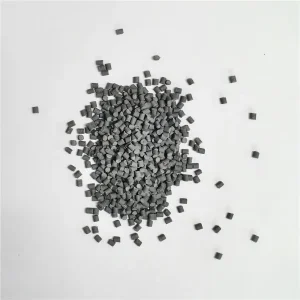
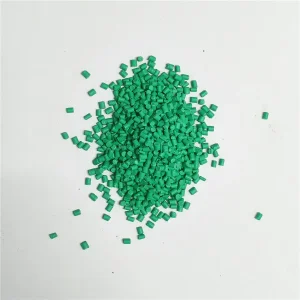
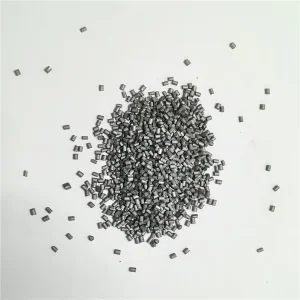
Engineered with high pigment dispersion, non-migration guarantees, and thermal endurance up to 280°C for global industrial convertors.
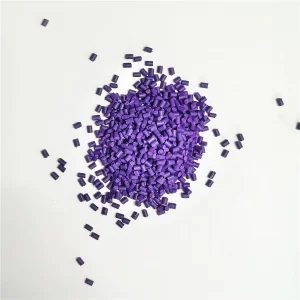
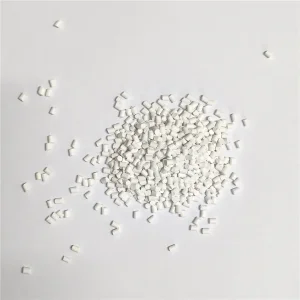
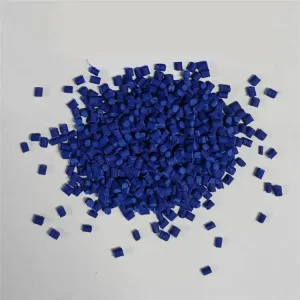
How modern twin-screw compounding & direct feedstock synthesis allow global buyers to cut unit cost without compromising Delta E consistency or mechanical integrity.
In global B2B plastics manufacturing, sourcing a "Cheap Blue PE Masterbatch Company & Factory" does not mean compromising on chromatic purity, Filter Pressure Value (FPV), or melt stability. Rather, true cost reduction—or "structural economy"—stems from advanced chemical formulation, carrier resin matching (LDPE, LLDPE, HDPE), and continuous extrusion efficiency engineered at scale.
Polyethylene (PE) serves as the primary matrix carrier for over 65% of global flexible packaging and industrial molding applications. Blue masterbatch formulations rely primarily on Phthalocyanine Blue pigments—specifically Pigment Blue 15:1 (Alpha form, heat-stabilized) and Pigment Blue 15:3 (Beta form, green-shade non-flocculating). Achieving an economical price point requires optimized pigment loading ratios (typically 20% to 50% active content) coupled with high-efficiency dispersion waxes and polyolefin processing aids.
Selecting a direct Chinese manufacturing partner eliminates intermediary distributor markups of 25%-40% while granting direct access to customized Melt Flow Index (MFI) matching, ensuring zero screw buildup and uniform color tinting at Let-Down Ratios (LDR) as low as 1% to 2%.
When procurement teams and polymer engineers search for affordable blue masterbatches, their underlying requirements cover three core pillars:
Agglomerated phthalocyanine particles cause filter clog, blown film pinholes, and fiber breakage. A factory-grade low-cost masterbatch must utilize twin-screw compounding with L/D ratios of 44:1 or higher to achieve particle micro-dispersion under 5 microns.
A mismatch between the carrier resin (e.g., using a high-density carrier in a low-density blown film line) leads to phase separation and surface streaking. Factory custom tailoring ensures MFI parity between masterbatch and virgin resin.
Rigorous quantitative parameters verified by ISO 9001:2015 quality testing protocols and CIELAB colorimeter evaluation.
| Property / Parameter | Standard Blue Masterbatch Grade | Premium Anti-Fading Grade | Film & Fiber Grade (Ultra-Fine) | Testing Standard |
|---|---|---|---|---|
| Carrier Base Polymer | PE / LLDPE Matrix | HDPE / Polyolefin Alloy | Virgin LDPE (High MFI) | ASTM D1238 / ISO 1133 |
| Pigment Content (%) | 20% - 30% PB 15:3 | 35% - 45% PB 15:1 / PB 15:3 Blend | 40% - 50% Ultramarine / Phthalocyanine | ISO 3451-1 (Ash/Extraction) |
| Melt Flow Index (190°C/2.16kg) | 8.0 - 15.0 g/10min | 4.0 - 10.0 g/10min | 15.0 - 35.0 g/10min | ASTM D1238 |
| Heat Resistance (°C) | 220°C - 240°C | 260°C - 280°C | 260°C - 300°C | DIN EN 12877-2 |
| Lightfastness (Blue Wool Scale) | Grade 6 - 7 | Grade 7 - 8 | Grade 8 (Maximum) | ISO 105-B02 |
| Filter Pressure Value (FPV) | < 1.5 bar/g (140 Mesh) | < 1.0 bar/g (200 Mesh) | < 0.5 bar/g (500 Mesh) | EN 13900-5 |
| Moisture Content (%) | < 0.15% | < 0.08% | < 0.05% | Karl Fischer Titration |
| Heavy Metal Compliance | RoHS 3 / REACH compliant | FDA Food Contact Safe | EN71-3 Toy Safety Standard | ICP-OES / GC-MS |
By controlling carrier resin molecular weight distribution, factory engineers prevent die lip buildup (drool) during high-speed extrusion lines.
Specialized low-molecular-weight dispersants bind pigment crystals tightly to the PE matrix, preventing surface blooming or color migration into food contact media.
Incorporation of HALS (Hindered Amine Light Stabilizers) and UV-absorbers shields both the blue shade and the host polymer from solar photo-oxidation.
From agricultural irrigation networks to maritime fisheries, discover how tailored blue masterbatch formulations drive product reliability worldwide.
In arid and tropical agricultural zones across Latin America, the Middle East, and Southeast Asia, blue PE pipes are widely used for water transportation and drip irrigation. Masterbatches used here require exceptional UV resistance (UV-9 or HALS additives) to prevent pipe embrittlement and sun-induced discoloration. High-concentration blue masterbatch provides complete opacity, suppressing algae growth inside the piping network.
Heavy-duty shipping sacks (FFS bags), stretch hoods, and blue protective stretch films require consistent blue tinting without compromising film puncture strength or dart drop impact. Using a micro-dispersed blue masterbatch ensures ultra-thin multi-layer film co-extrusion (down to 15 microns) without forming pinholes or bubble instability on high-speed blown film towers.
Blue 200L L-ring drums and IBC tanks for chemical storage rely on blue PE masterbatches with high chemical resistance. Phthalocyanine blue pigment remains completely inert when exposed to acids, alkalis, and organic solvents. Direct factory formulations ensure zero environmental stress cracking (ESCR reduction = 0%), preserving drum structural integrity during maritime transport.
In logistics centers and cold-chain distribution, blue plastic crates, beverage totes, and pallets endure severe mechanical impacts at sub-zero temperatures. Low-cost blue masterbatches compounded with linear low-density polyethylene (LLDPE) carriers maintain impact strength, preventing warpage or shrinkage variations across large mold cavities.
Oceanic fishing nets, marine buoys, and aquaculture ropes are continuously subjected to saltwater corrosion, high shear forces, and intense UV radiation. Specialized blue masterbatches incorporate anti-fading marine-grade colorants that prevent salt leaching and maintain color intensity even after thousands of hours of sea immersion.
Food processing plants demand blue plastic wrap and gloves because blue is a non-naturally occurring color in food products, making accidental plastic contamination instantly visible on optical sorting lines. Factory-certified blue masterbatches comply with FDA 21 CFR 177.1520 and EU No 10/2011 regulations for safe food contact.
Pioneering sustainable, circular, and smart colorant solutions for the next generation of polyolefin processing.
Traditional carbon black and certain deep blue pigments absorb Near-Infrared (NIR) radiation, making plastic sorting machinery in municipal recycling facilities blind to dark blue containers. The industry roadmap focuses on NIR-detectable blue masterbatches. By using non-absorbing phthalocyanine crystal structures, post-consumer blue HDPE and PP containers can be automatically identified and sorted by optical sorting robots, achieving true closed-loop circular recycling.
As global regulations tighten around fossil-fuel plastic usage, masterbatch manufacturers are transitioning to 100% bio-based PE carriers derived from Brazilian sugarcane ethanol, as well as high-purity PCR-PE (Post-Consumer Recycled Polyethylene) carriers. Modern bio-carrier blue masterbatches achieve identity parity with fossil carriers, guaranteeing identical tensile strength, dispersion index, and melt rheology.
How Changzhou’s masterbatch industrial cluster creates unbeatable cost advantages, high production capacity, and export reliability.
Located in Changzhou, Jiangsu—the heartland of China's chemical and polymer manufacturing hub—factories enjoy direct pipeline and bulk-tanker delivery of primary PE resins (SINOPEC, PetroChina) and pigment feedstocks. Direct sourcing eliminates domestic freight markups, reducing raw material procurement costs by 12%–18% compared to overseas compounders.
Modern factories utilize fully automated, continuous twin-screw extruders equipped with loss-in-weight gravimetric feeders. Continuous high-shear mixing guarantees micro-pellet uniformity (pellet size 2.0–2.5 mm) while lowering energy consumption per ton of finished masterbatch by up to 25%.
Proximity to Shanghai and Ningbo ports allows direct ocean container loading (20GP / 40HQ) with rapid customs clearance. Factories maintain 1,000+ metric tons of safety stock across standard color grades, enabling 15-day lead times from order placement to port departure.
Ensuring full regulatory compliance across North American, European, Latin American, and Asian markets.
Demand for blue PE masterbatch varies distinctly by economic region:
Factory-direct masterbatches are certified against international environmental and chemical safety frameworks:
Expert answers from senior polymer engineers addressing common procurement, technical, and processing inquiries.
Factory-direct pricing, high pigment concentration, and global export delivery for all major plastic manufacturing processes.