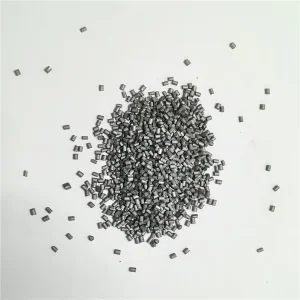
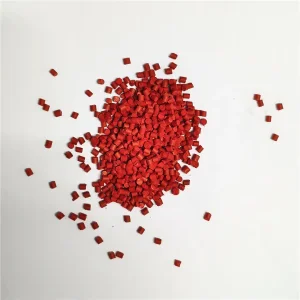
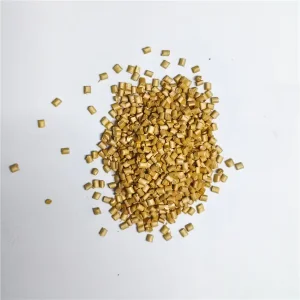
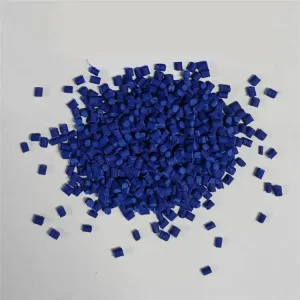
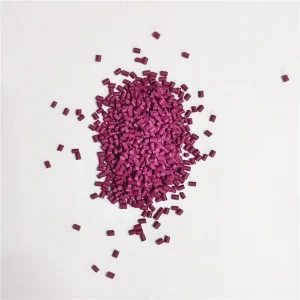
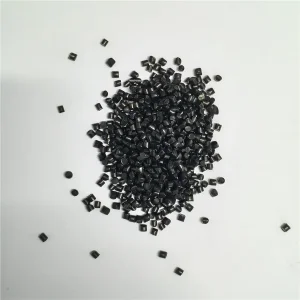
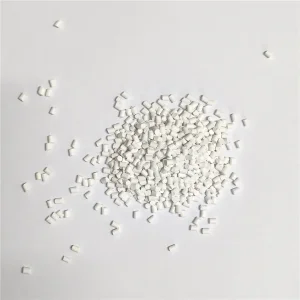
Analyzing global demand, total cost of ownership (TCO), and technical specifications for Black Polyethylene (PE) Cable Compounds and Sheathing Masterbatch suppliers.
The accelerated deployment of 5G fiber-optic networks, high-voltage direct current (HVDC) power transmission interconnections, and renewable solar/wind farm infrastructure has vastly amplified global demand for high-durability outer protective jacketing. Outer cable sheaths act as the primary defense mechanism against hostile environmental stressors, including photo-oxidative degradation from ultraviolet (UV) radiation, severe mechanical abrasion, sub-zero cracking, and moisture ingress.
For cable compounding manufacturers and compounding suppliers, sourcing a cheap cable sheath black PE masterbatch without compromising critical material engineering parameters (such as Environmental Stress Crack Resistance - ESCR, Oxidation Induction Time - OIT, and tensile elongation) represents a vital strategic capability. Procurement teams must navigate raw material volatility while enforcing strict compliance with international standards such as IEC 60502, IEC 60840, and ASTM D1248.
In high-speed cable jacket extrusion lines, the direct addition of neat carbon black powder creates severe environmental contamination, feeding inconsistencies, and mechanical wear on twin-screw extruders. Consequently, utilizing concentrated black masterbatch compounds diluted into virgin or recycled polyethylene (HDPE, MDPE, LLDPE) matrixes has become standard practice.
True cost reduction ("cheap") in industrial polymer processing is achieved not merely by reducing unit price per kilogram, but by maximizing pigment dispersion index and tinting strength. A high-concentration masterbatch formulation—utilizing ultra-fine P-type furnace carbon black engineered by expert manufacturers like Changzhou Jiazhou Plastic Products Co., Ltd.—allows cable extruders to achieve the mandated 2.0% to 2.5% final carbon black content at let-down ratios (LDR) as low as 4% to 6%, significantly driving down volumetric resin expenditure.
Deep technical insights into carrier resin selection, carbon black morphology, antioxidant synergy, and rheological stabilization.
Ultraviolet radiation (waveband 290nm–400nm) induces photo-oxidation in Polyethylene by creating free radicals that cleave polymer chains, resulting in surface embrittlement and catastrophic sheath cracking. To mitigate this, cable sheath black masterbatches utilize specialty P-type Carbon Black featuring primary particle diameters under 20 nanometers.
Smaller particle size increases total specific surface area (m²/g), which exponentially enhances UV absorption performance. When dispersed uniformly with an ISO 18553 rating of < 2.5, carbon black acts as a physical UV screen and radical scavenger, guaranteeing a outdoor operational service life exceeding 25 to 30 years.
Melt Flow Index (MFI) matching between the masterbatch carrier resin and the base sheath compound resin (HDPE / LLDPE) is imperative for continuous extrusion. If the carrier resin exhibits excessively high viscosity relative to the substrate, agglomerates remain intact, creating micro-voids under high-voltage electrical fields.
Changzhou Jiazhou's formulations incorporate specialized linear low-density polyethylene (LLDPE) or bimodal PE carrier systems with optimized shear-thinning characteristics. This guarantees seamless melt blending at processing temperatures up to 260°C without inducing head-pressure spikes or die-buildup (drool) on cable extrusion heads.
During the cross-linking (XLPE jacketing) or high-speed thermoplastic extrusion process, elevated heat and shear stress can degrade the polymer backbone. High-grade cable masterbatches incorporate a synergistic package of primary sterically hindered phenolic antioxidants and secondary phosphite processing stabilizers.
This dual-stage antioxidant system scavenges peroxy radicals during melt processing and neutralizes hydroperoxides during outdoor service, maintaining an Oxidation Induction Time (OIT at 200°C) well exceeding 30 to 60 minutes as measured by Differential Scanning Calorimetry (DSC).
A comprehensive comparative evaluation of raw physical properties, testing standards, and application fit across plastic processing grades.
| Property Benchmark / Parameter | High-Voltage Power Cable Sheath | Telecom & Fiber Optic Jacket | General Purpose Extrusion / Pipe | Standard Commercial Grade |
|---|---|---|---|---|
| Carrier Resin Type | Bimodal LLDPE / MDPE | LLDPE / Metallocene PE | LDPE / HDPE Blend | Recycled PE Carrier |
| Carbon Black Content (%) | 40% – 50% (P-Type) | 45% – 50% (P-Type) | 30% – 40% (Standard) | 30% – 35% (Industrial) |
| Particle Size (nm) | 15nm – 20nm | 18nm – 25nm | 25nm – 35nm | > 40nm |
| Melt Flow Index (190°C/2.16kg) | 2.0 – 8.0 g/10min | 5.0 – 12.0 g/10min | 10.0 – 20.0 g/10min | 15.0 – 30.0 g/10min |
| Dispersion Rating (ISO 18553) | ≤ 1.5 (Superior) | ≤ 2.0 (High Precision) | ≤ 3.0 (Good) | ≤ 4.5 (Acceptable) |
| Oxidation Induction Time (OIT) | > 40 min at 200°C | > 30 min at 200°C | > 15 min at 200°C | N/A |
| Moisture Content (%) | < 0.05% (Max 500 ppm) | < 0.08% (Max 800 ppm) | < 0.15% | < 0.30% |
| Thermal Stability (°C) | 280°C | 260°C | 240°C | 220°C |
Addressing global carbon neutrality goals, halogen-free environmental directives, and closed-loop scrap recycling.
Global regulatory agencies, including the European Chemicals Agency (ECHA), strictly enforce limits on Heavy Metals (Lead, Cadmium, Hexavalent Chromium, Mercury) and Polycyclic Aromatic Hydrocarbons (PAHs) present in plastic compounds. Changzhou Jiazhou's masterbatch lines are certified lead-free, non-toxic, and conform strictly to SVHC (Substances of Very High Concern) guidelines.
Cable manufacturers seeking to incorporate Post-Consumer Recyclate (PCR) or Post-Industrial Recyclate (PIR) resins face challenges with color degradation and mechanical property loss. Utilizing our high-concentration black masterbatch with built-in melt-enhancers allows compounding lines to upcycle up to 40% recycled PE scrap back into non-critical cable jacketing layers.
Moisture entrapment inside masterbatch pellets creates surface micro-blisters and void pockets during high-pressure cable extrusion. Void pockets lead to dielectric breakdown under electrical load. Our specialized vacuum-desiccated underwater pelletizing technology keeps moisture content below 500 ppm, drastically reducing scrap rates during continuous cable production.
16 Years of Manufacturing Excellence, 6,000m² Production Base, and ISO-Certified Quality Assurance.
Founded in 2010, Changzhou Jiazhou Plastic Products Co., Ltd. has grown into a leading B2B exporter of PE color masterbatch, black masterbatch, and filler masterbatch solutions. Operating out of a modernized 6,000 square meter factory in Changzhou, Jiangsu, China, the facility utilizes multi-stage twin-screw extrusion lines equipped with loss-in-weight gravimetric feeders to guarantee absolute batch-to-batch consistency.
With an annual output exceeding tens of thousands of tons, Jiazhou provides flexible lead times (typically 15 days) and customized packaging solutions (25kg moisture-proof valve bags or 1-ton jumbo bags) tailored for international shipping lines.
Quality reliability is the backbone of cable manufacturing. Jiazhou's in-house R&D laboratory conducts comprehensive quality audits for every production batch before release:
Serving over 100+ countries with customized masterbatch compounding, technical on-site assistance, and international logistics efficiency.
Full compliance with REACH SVHC, RoHS 3.0, and FDA non-toxicity guidelines. Products exported to Western markets undergo stringent PAH (Polycyclic Aromatic Hydrocarbons) testing to guarantee safety in human-contact cable applications and eco-conscious infrastructure projects.
Engineered to withstand extreme tropical humidity, high UV index environments, and desert ambient temperatures exceeding 50°C. Formulated with enhanced thermal stabilizers to prevent premature oxidation during extreme outdoor exposure.
Cost-optimized compounding solutions ("cheap masterbatch") designed to lower total raw material expenditure for telecommunication cable drop-wire lines, electrification projects, and corrugated ducting manufacturers across emerging industrial regions.
Direct responses to critical engineering and procurement queries regarding PE masterbatch compounding and cable sheath processing.