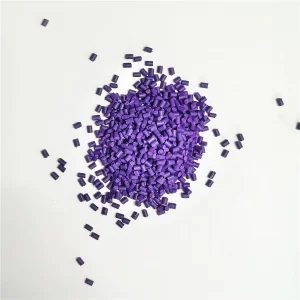
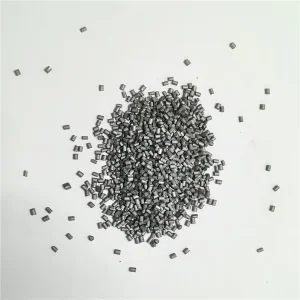
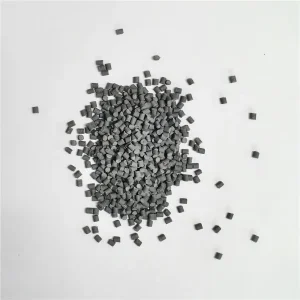
Explore our factory-direct polyolefin masterbatch grades engineered for optimal dispersion, high pigment loading, and structural cost optimization.
In the highly competitive polymer processing ecosystem, evaluating a cheap Calcium Carbonate Masterbatch company & companies requires a technical shift from simple unit purchase price (USD/Ton) to Total Cost of Processed Polymer (TCPP). Calcium Carbonate (CaCO3) filler masterbatch stands as the single most critical additive used globally to reduce resin consumption, accelerate cooling cycles, and enhance dimensional rigidity across Polyethylene (PE) and Polypropylene (PP) matrixes.
Historically, procurement departments perceived the term "cheap" as a compromise on purity or melt dispersion. However, modern polymer compounders—led by advanced chemical manufacturing hubs in Changzhou, Jiangsu—have re-engineered the cost curve. By pairing ultra-fine micronized calcite (1250 mesh to 3000 mesh) with automated twin-screw co-rotating compounding extruders, manufacturers achieve loading levels between 70% to 84% without causing melt fracture, die build-up, or loss of tensile strength.
Global consumption of CaCO3 filler masterbatch is expanding at a CAGR of 6.2% through 2030, driven by the packaging, agricultural film, automotive, and infrastructure piping sectors. B2B purchasers in North America, Europe, the Middle East, and Southeast Asia actively source from certified Chinese suppliers who provide cost-efficient formulations backed by ISO9001 and RoHS certifications.
The performance of calcium carbonate filler in polyolefin extrusion depends on interfacial chemistry. Unmodified calcium carbonate is hydrophilic, exhibiting high surface energy that repels hydrophobic polymer resins such as LLDPE, HDPE, and PP. When unprocessed calcium carbonate is blended into a polymer melt, phase separation occurs, leading to agglomeration, filter clogging, and brittle failure of blown films.
The mechanical properties of the end product—such as dart drop impact strength in blown film or Izod impact resistance in injection molding—are governed by particle size distribution. Leading calcium carbonate masterbatch companies utilize heavy calcium carbonate (GCC) or light calcium carbonate (PCC) with tightly controlled particle distributions:
| Particle Parameter | Standard Masterbatch Grade | High-Speed Blown Film Grade | Impact on Processing & Efficiency |
|---|---|---|---|
| Mesh Size (Grit) | 800 – 1200 Mesh | 2500 – 3000 Mesh | Higher mesh counts reduce extrusion wear and allow micro-thin film blowing down to 10 microns. |
| Average Particle Size (D50) | 3.5 µm – 5.0 µm | 1.2 µm – 1.8 µm | Finer D50 maximizes contact surface area, enhancing tensile strength and flexural modulus. |
| Top Cut Particle Size (D97) | ≤ 15 µm | ≤ 5.0 µm | Prevents screen pack clogging and eliminates web tears during high-speed film extrusion. |
| Whiteness Index (%) | 92% – 94% | ≥ 96.5% | Reduces the required dosage of expensive Titanium Dioxide (TiO2) white pigment. |
| Surface Treatment Rate | 0.8% – 1.2% Stearic Acid | 1.5% – 2.0% Dual Coating | Ensures zero agglomeration, optimal dispersion, and low filter pressure value (FPV). |
A primary physical benefit of integrating high-concentration Calcium Carbonate Masterbatch is its effect on thermal performance. Natural calcium carbonate possesses a significantly higher thermal conductivity (approx. 2.7 W/m·K) compared to virgin Polyethylene (approx. 0.33 W/m·K). During the cooling stage of injection molding or blown film bubble formation, the presence of CaCO3 facilitates rapid enthalpy dissipation. This allows polymer processors to reduce cooling times by 15% to 25%, directly increasing hourly output without secondary machinery investments.
International buyers searching for cheap Calcium Carbonate Masterbatch companies frequently partner with Chinese suppliers like Changzhou Jiazhou Plastic Products Co., Ltd. (operating with 16+ years of specialized manufacturing experience). The economic drivers supporting this market positioning stem from structural industrial advantages:
China holds vast high-purity calcite mineral reserves (whiteness >96%, purity >98.5% CaCO3). Direct integration with local milling facilities drastically cuts raw material transportation costs.
Advanced co-rotating twin-screw extruders with split-feeding systems allow continuous high-volume production, optimizing specific energy consumption (kWh per Ton compounding).
In-house lab evaluations measure Melt Flow Index (MFI), moisture via Karl Fischer titrators, and screen pack Filter Pressure Values (FPV) for every lot before export clearance.
Through optimized logistics infrastructure centered in Changzhou, Jiangsu, manufacturers deliver short 15-day production lead times and streamlined FCL/LCL ocean shipping to over 100 countries globally.
Calcium carbonate masterbatch functions as a cost-reducing and property-modifying additive across major polymer converting methods. The table below highlights engineering dosage recommendations, compatible carrier matrices, and operational impacts:
Target Products: T-shirt bags, garbage bags, agricultural mulch film, courier mailers.
Dosage Rate: 10% – 40% loading.
Engineering Benefits: Enhances bubble stability, eliminates anti-blocking additives, improves film printability, and prevents slippage.
Target Products: Industrial crates, pallets, household furniture, electronic housings, caps.
Dosage Rate: 15% – 50% loading.
Engineering Benefits: Mitigates sink marks, decreases mold shrinkage, improves dimensional stability, and shortens cycle times.
Target Products: HDPE agricultural conduit, double-wall corrugated pipes, PVC/PE structural profiles.
Dosage Rate: 10% – 30% loading.
Engineering Benefits: Boosts ring stiffness, enhances flexural modulus, and optimizes melt pressure stability during extrusion.
When evaluating suppliers, corporate procurement teams should use a structured audit process. Selecting an unverified cheap masterbatch manufacturer risks batch-to-batch inconsistency, die lip buildup, extruder screw wear, and product failures.
The masterbatch industry is evolving to meet sustainability requirements and closed-loop recycling standards. Calcium carbonate is inherently eco-friendly: as a natural mineral filler, its inclusion lowers the overall carbon footprint per kilogram of processed plastic compared to 100% virgin petro-based polymers.
Compounders are developing CaCO3 masterbatches using PLA, PBAT, or PHA carrier resins, allowing 100% compostable flexible packaging that meets EU EN 13432 requirements.
Adding coated calcium carbonate to Post-Consumer Recycled (PCR) polyolefin resins restores mechanical stiffness and offsets density fluctuations inherent in recycled feedstocks.
Next-generation ultrafine calcium carbonate particle technology (<800 nm) enables transparent or highly translucent blown films while maintaining tear resistance.
Select any of our specialized masterbatches below to view technical specifications or request a custom quotation.