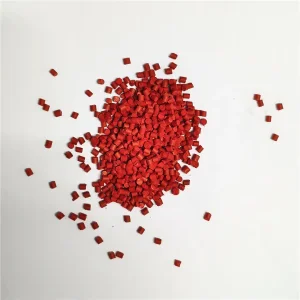
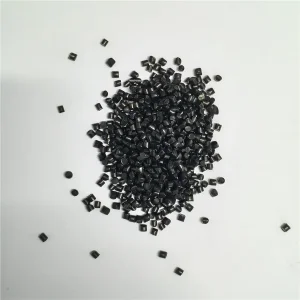
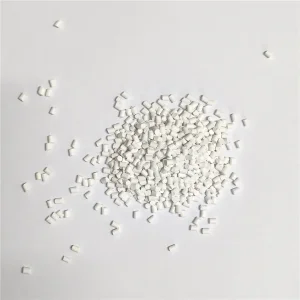
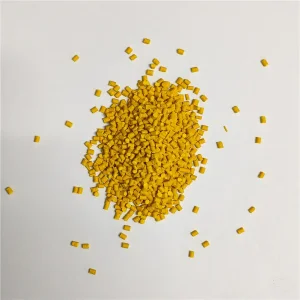
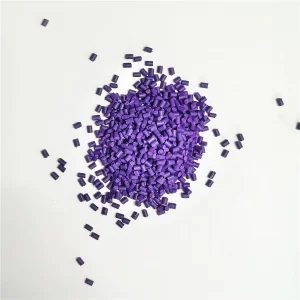
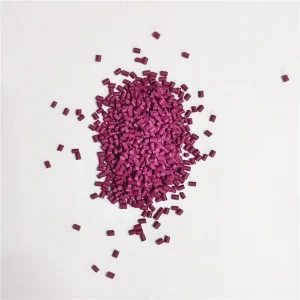
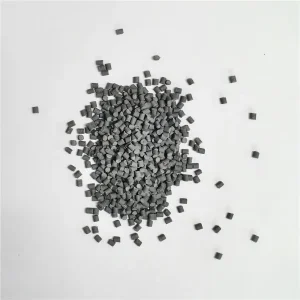
Explore our top-tier masterbatch grades developed for extrusion, blown film, and high-precision injection molding applications worldwide.
Deconstructing the economics and engineering of high-percolation, cost-efficient conductive black polyethylene masterbatch for international B2B manufacturing ecosystems.
In modern polymer processing, the procurement term "cheap conductive black PE masterbatch" no longer denotes low-grade raw materials or compromised electrical performance. Instead, it represents optimized compounding efficiency, lower percolation thresholds, and maximum filler loading achieved via advanced twin-screw co-rotating extrusion tech. By leveraging highly structured Conductive Carbon Black (CCB) and specialized dispersion agents, polymer converters achieve target surface resistivities ($10^3 - 10^6 \, \Omega/\text{sq}$) at reduced let-down ratios (LDR), dramatically dropping overall unit production costs.
Standard anti-static masterbatches rely on migratory chemical additives (such as glycerol monostearate or ethoxylated amines) that depend on atmospheric humidity and degrade over time. In contrast, conductive black PE masterbatch utilizes permanent carbon networks integrated directly into the matrix resin (LDPE, LLDPE, HDPE). This guarantees permanent, humidity-independent electrostatic discharge (ESD) protection, high electromagnetic interference (EMI) shielding, and reliable grounding properties for critical industrial environments.
Understanding how conductive filler structure, specific surface area (BET), and carrier resin rheology determine electrical performance in polyethylene matrices.
Electrical conduction in polymers follows the non-linear Percolation Threshold model. As conductive carbon black particles are blended into virgin PE resin, a critical concentration threshold is reached where isolated carbon aggregates connect to form continuous conductive pathways. Our factory masterbatch formulations are engineered precisely near the optimal percolation plateau, delivering low resistivity while preventing degradation of mechanical strength and melt flow properties.
We utilize extra-conductive carbon black grades featuring high surface area (BET > 800 m²/g) and high Dibutyl Phthalate (DBP) absorption values (> 300 ml/100g). This high particle branching structure creates electron tunneling contacts at significantly lower mass fractions compared to conventional pigment-grade carbon black, guaranteeing superior performance for budget-conscious B2B buyers.
Improper carrier resin selection results in phase separation, surface blooming, or melt fracture during blown film extrusion or injection molding. Our conductive black masterbatches use customized PE carrier resins (MFI ranging from 2.0 to 20.0 g/10min at 190°C/2.16kg) perfectly matched to LLDPE, LDPE, or HDPE end-products to maintain melt viscosity and wall uniformity.
When specifying conductive masterbatches, engineers must distinguish between Surface Resistivity ($\Omega/\text{sq}$, measured via ASTM D257) and Volume Resistivity ($\Omega\cdot\text{cm}$, measured via ASTM D991). For anti-static packaging films, surface dissipation is paramount ($10^6 - 10^9 \, \Omega/\text{sq}$). For heavy-walled explosion-proof piping, high-voltage cable shielding, or electronic IC trays, internal volume conductivity ($10^2 - 10^5 \, \Omega\cdot\text{cm}$) is critical to ensure electrical grounding across the entire cross-section.
| Property Parameter | Test Standard | Conductive Grade (CB-100) | ESD Dissipative Grade (ESD-200) | High-MFI Injection Grade |
|---|---|---|---|---|
| Carbon Black Loading (%) | ISO 3451-1 | 38.0% - 42.0% | 25.0% - 30.0% | 32.0% - 36.0% |
| Surface Resistivity (Ω/sq) | ASTM D257 / IEC 61340 | 10³ - 10⁵ | 10⁶ - 10⁹ | 10⁴ - 10⁶ |
| Volume Resistivity (Ω·cm) | ASTM D991 | 10² - 10⁴ | 10⁵ - 10⁷ | 10³ - 10⁵ |
| Melt Flow Index (190°C/10kg) | ASTM D1238 | 4.5 g/10min | 12.0 g/10min | 18.5 g/10min |
| Density (g/cm³) | ISO 1183 | 1.12 - 1.16 | 1.04 - 1.08 | 1.08 - 1.12 |
| Recommended Let-Down Ratio (LDR) | Internal Spec | 15% - 25% | 8% - 15% | 12% - 20% |
| Thermal Stability (°C) | TGA (10°C/min) | 260°C | 260°C | 280°C |
From hazardous ATEX explosion-proof industrial ducting to micro-electronic component packaging, our tailored masterbatches serve mission-critical manufacturing sectors.
High-grade conductive black PE masterbatch is extruded into thermoformed IC carrier tapes, conductive trays, and ESD protective bags. It prevents static electricity discharge from damaging delicate microchips and printed circuit boards (PCBs) during transit.
In chemical processing plants and underground coal mines, static sparks can cause catastrophic explosions. Co-extruded conductive HDPE pipe layers ensure continuous grounding, fulfilling strict European ATEX directive 2014/34/EU requirements.
Conductive PE is widely used in automotive fuel filler tubes and multilayer plastic fuel tanks. As fuel flows through plastic lines at high velocities, triboelectric charges build up. Conductive masterbatch safely dissipates these charges to the vehicle chassis.
Engineered for high-speed blown film lines without bubble instability or pinholes. Enables cheap production of conductive black garbage bags, electronic component shield film, and heavy-duty industrial shipping bags.
How evolving international ESD regulations and supply chain shifts are driving demand for direct-factory conductive masterbatch sourcing.
International markets enforce strict compliance for conductive plastics. Our masterbatches are formulated strictly in accordance with EU RoHS 3.0 (Directive 2015/863) and REACH Regulation (EC No 1907/2006), eliminating polycyclic aromatic hydrocarbons (PAHs) and restricted heavy metals. For electronics exporters, adhering to global ESD protection benchmarks (ANSI/ESD S20.20 and IEC 61340-5-1) ensures seamless market entry across Western Europe, North America, and East Asia.
While Carbon Nanotubes (CNTs) and Graphene offer ultralow percolation thresholds (<3%), their exorbitant processing and raw material costs limit mass commercial adoption. High-structure Conductive Carbon Black masterbatch remains the undisputed market leader for B2B price-to-performance ratio. It delivers reliable $10^3 - 10^5 \, \Omega\cdot\text{cm}$ conductivity at a fraction of the cost of nano-fillers, making it the preferred choice for industrial plastic manufacturing.
Advancing polymer conductivity through hybrid filler compounding, sustainable carrier matrices, and automated melt-dispersion monitoring.
Developing hybrid masterbatch formulations combining high-structure carbon black with low-cost multi-walled carbon nanotubes (MWCNTs). This synergistic technique reduces overall filler loading by 40%, significantly boosting polymer melt flow and mechanical impact strength while keeping costs low.
Aligning with global ESG mandates by incorporating Post-Consumer Recycled (PCR) HDPE/LLDPE resin carriers into conductive masterbatch production. Special compatibilizers prevent physical degradation, offering zero-carbon conductive compounds for sustainable packaging.
Implementing real-time ultrasonic and optical inline dispersion measurement tools directly on production extruders. This eliminates agglomerate defects (>5 microns), ensuring 100% uniformity in continuous sheet extrusion and micro-wall blown films.
How our integrated Changzhou manufacturing hub delivers premium-grade conductive PE masterbatch at competitive direct-factory pricing.
Our 6,000 m² facility features specialized high-torque co-rotating twin-screw compounding lines configured with custom screw element profiles (kneading blocks, reverse conveying, and side-feed degasification). This precise shear control breaks down carbon black agglomerates down to sub-micron scales without degrading polymer chain length, maximizing conductive network efficiency.
Located in Jiangsu’s premier chemical manufacturing zone, we maintain strategic bulk procurement contracts for prime-grade PE resins (Sinopec, PetroChina) and specialized carbon black fillers. This direct integration eliminates intermediary markups, allowing us to offer market-leading cheap conductive black PE masterbatch prices alongside rigorous ISO 9001:2015 quality control certifications.
Empowering international buyers with customized laboratory testing, Technical Data Sheets (TDS), and seamless global export logistics.
Every masterbatch batch is accompanied by comprehensive Technical Data Sheets (TDS) detailing Melt Flow Index, density, moisture content (<0.15%), and surface resistivity metrics under controlled ambient humidity.
Need customized conductive compounds with modified impact strength or UV stabilization? Our R&D lab provides tailored formulations matched to client base resins and machinery screw profiles.
With direct ocean freight access via Shanghai and Ningbo ports, we provide streamlined export processing, custom packaging (moisture-proof aluminum foil bags), and rapid 15-day lead times to over 100 countries.
Expert technical responses to common engineering queries regarding conductive masterbatch processing, dosage, and compatibility.
Premium color solutions with high pigment loading, superior heat resistance up to 260°C, and exceptional weatherability.