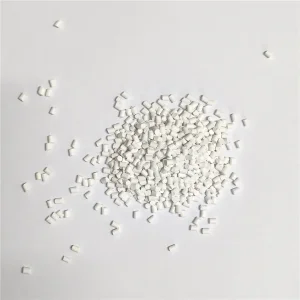
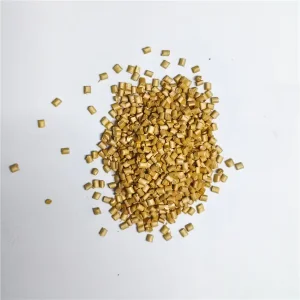
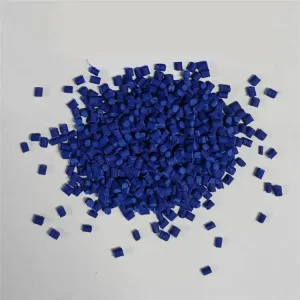
High-dispersion, thermal-stable PE color masterbatches engineered specifically for low filter pressure value (FPV) and high-speed filament drawing lines.
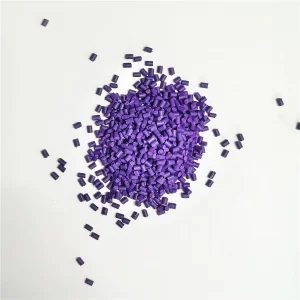
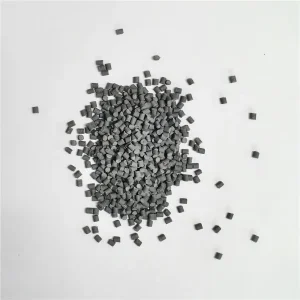
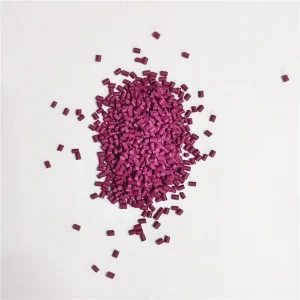
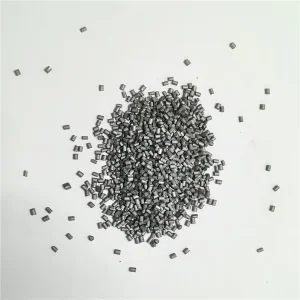
Analysis of polyolefin synthetic fiber dynamics, cost optimization structures, and global supply chain shifts across key industrial regions.
The global synthetic fiber market has undergone a dramatic transformation over the past decade, driven by rising demand for polyolefin nonwovens, shade nettings, industrial geotextiles, and agricultural filaments. Polyethylene (PE), particularly Linear Low-Density Polyethylene (LLDPE) and High-Density Polyethylene (HDPE), serves as a cornerstone polymer due to its superior tensile elasticity, chemical inertness, and cost-efficiency. However, achieving precise coloration and structural durability during high-speed melt spinning requires specialized masterbatches. Searching for cheap fiber drawing PE masterbatch suppliers & manufacturers is no longer merely about finding the lowest nominal price per kilogram—it is a strategic effort to balance unit raw material cost with melt spinning yield performance.
In high-speed fiber drawing processes (where line speeds frequently exceed 800 to 1,500 meters per minute), pigment agglomeration or polymer melt inconsistency results in immediate spinneret clogging, filament breakage, and costly line shutdowns. As a result, global procurement managers are shifting away from traditional low-cost commodity masterbatches toward high-concentration, nano-dispersed PE color concentrates manufactured by specialized vendors in Asia, particularly China. Suppliers like Changzhou Jiazhou Plastic Products Co., Ltd. leverage integrated supply chains, automated twin-screw compounding lines, and refined carrier resin selection to deliver fiber-grade masterbatches that drastically reduce operational cost-per-ton for global fiber extruders.
Why fiber drawing requires fundamentally different masterbatch formulations compared to film blowing or injection molding.
For fiber drawing, the carrier resin’s MFI must closely match or slightly exceed that of the virgin PE resin (typically 12g/10min to 30g/10min at 190°C/2.16kg). Misaligned MFI causes phase separation, melt fracture, and thickness variance across drawn monofilaments.
FPV is the ultimate benchmark for fiber-grade masterbatch quality. Measured in bar/gram of pigment, high-quality fiber masterbatch exhibits an FPV below 1.0 bar/g through a 14-micron screen pack, ensuring zero spinneret clogging during continuous operation.
Pigment agglomerates larger than 2 microns act as structural stress concentrators in thin fibers (5–30 denier), causing immediate tensile failure during high-ratio hot drawing. Nano-milling techniques ensure 98%+ of particles remain under 1 micron.
When extruding fine denier PE fibers, the polymer melt passes through spinnerets containing hundreds of micro-holes with diameters ranging from 0.15 mm to 0.6 mm. Any undispersed pigment cluster, inorganic impurity, or high-molecular-weight crosslinked gel will instantly clog the capillary micro-hole or create a localized defect, leading to filament snapping during the subsequent orientation and stretching process. Therefore, reliable cheap fiber drawing PE masterbatch manufacturers utilize specialized surface-treated organic pigments (such as Phthalocyanine Blue, Quinacridone Red, and High-Structure Carbon Black) combined with hyper-dispersants and low-viscosity PE wax carriers.
| Property Parameter | Standard Injection/Film Grade | Fiber Drawing Grade (Jiazhou Standard) | Impact on Fiber Production |
|---|---|---|---|
| Pigment Loading | 20% - 40% | 40% - 70% High Concentration | Lower let-down ratio required (1% - 3%) |
| Filter Pressure Value (FPV) | > 3.0 bar/g (25 µm filter) | ≤ 0.8 - 1.2 bar/g (14 µm filter) | Extends pack life, prevents filament breakage |
| Particle Size Distribution | d90 < 5.0 microns | d90 < 1.0 micron | Eliminates structural voids in fine denier yarns |
| Thermal Stability | 200°C - 220°C | 260°C - 280°C (Non-degrading) | Prevents color shifting and thermal gas generation |
| Moisture Content | < 0.15% | < 0.03% (Deep Vacuum Dried) | Prevents steam micro-foaming & filament popping |
Where fiber drawing PE masterbatches drive commercial performance across agricultural, industrial, packaging, and consumer sectors.
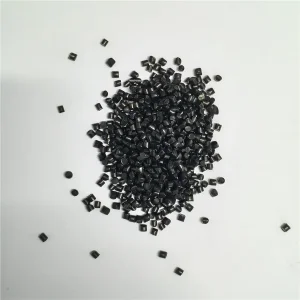
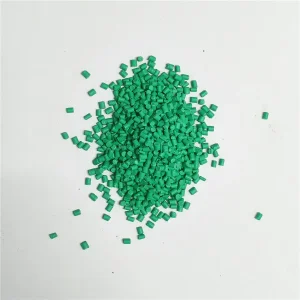
Extruded HDPE flat yarns and monofilaments require high weatherability. Masterbatches formulated with HALS (Hindered Amine Light Stabilizers) and anti-fading PE green/black concentrates ensure 5+ years of outdoor UV resistance in tropical regions like Southeast Asia and the Middle East.
High-tenacity PE monofilaments used in fishing nets and marine ropes demand uniform pigment distribution to retain tensile strain under salt-water exposure and heavy mechanical loading without color leaching or fibrillar degradation.
PE/PP sheath-core bicomponent spunbond nonwovens used in sanitary backsheets require non-toxic, REACH/FDA compliant masterbatches. Low-odour, non-heavy metal color concentrates prevent skin irritation and maintain strict hygiene standards.
PE fibrillated tape yarn for artificial grass requires precise color matching (olive green, field green) and high heat resistance to withstand thermal setting temperatures during tufting and secondary backing processes.
High-opacity white and black PE masterbatches are integrated into blown film extrusion and woven bag tape production, delivering high tensile strength, tear resistance, and complete light-blocking properties.
Heavy-duty civil engineering geotextiles utilize carbon-black dense PE masterbatch to prevent oxidative degradation from soil chemicals, UV exposure, and long-term compressive stress in roadbeds and landfills.
16 Years of Advanced Masterbatch Synthesis, Global Logistics Integrity, and Strict Quality Management Systems.
Founded in 2010, Changzhou Jiazhou Plastic Products Co., Ltd. has established itself as an authoritative leader in China's masterbatch manufacturing sector. Spanning a state-of-the-art 6,000 square meter production facility in Zhonglou District, Changzhou, Jiangsu Province, the company integrates research, custom formulation, scale production, and direct international distribution.
Operating with over 50 dedicated chemical engineers and manufacturing specialists, Jiazhou utilizes co-rotating twin-screw extruders equipped with underwater pelletizing systems to achieve uniform particle geometry. The company’s internal quality assurance protocol mandates multi-stage testing for every production lot:
Jiazhou’s commitment to environmental responsibility and consumer safety is backed by full certification compliance, including ISO 9001 quality management systems, RoHS Directive 2011/65/EU compliance, REACH (EC 1907/2006) registration, and heavy-metal-free validation. Serving B2B clients in over 100 countries across Southeast Asia, Europe, South America, and the Middle East, Jiazhou provides dependable 15-day manufacturing lead times, custom Pantone color matching, and full OEM private labeling capabilities.
Navigating international regulatory frameworks and logistics workflows for frictionless B2B masterbatch procurement.
All Jiazhou fiber drawing masterbatches are certified free of heavy metals (Lead, Cadmium, Mercury, Hexavalent Chromium), Polybrominated Biphenyls (PBBs), and Polybrominated Diphenyl Ethers (PBDEs), satisfying stringent European Union environmental entry mandates.
Direct export documentation, including Certificates of Analysis (COA), Technical Data Sheets (TDS), Safety Data Sheets (MSDS), and Certificate of Origin (Form E, Form F) are systematically provided to optimize customs clearance velocity at destination ports worldwide.
Products are supplied in 25kg moisture-proof heavy-duty PE bags or 1,000kg industrial jumbo bags with aluminum-foil anti-humidity inner liners, guaranteeing pristine resin dryness during long-distance maritime transit.
Emerging innovations: Bio-based carrier resins, multifunctional additive combinations, and AI-driven color matching.
The polyolefin fiber industry is entering a new era of sustainability and technological integration. Next-generation masterbatch development is focused on three critical vectors:
To align with global circular economy goals, research is accelerating into masterbatch carriers formulated from sugarcane-derived Bio-PE and chemically recycled post-consumer LLDPE without compromising melt filtration metrics.
Combining color pigment concentrates with functional performance additives—such as permanent anti-static agents, flame retardants, anti-microbial additives, and long-term UV stabilizers—into a single masterbatch pellet to simplify processing for fiber extruders.
Leveraging neural network algorithms to calculate pigment optical absorption curves, enabling sub-minute precise color matching against digital target files and reducing R&D sample turnarounds down to 24 hours.
Answers to critical questions asked by polymer processing engineers, fiber extrusion plant managers, and global procurement professionals.
Filament breakage is primarily caused by two factors: large pigment agglomerates (d90 > 2 microns) and poor carrier resin compatibility. Standard film or injection-grade masterbatches use lower-grade dispersants and wider particle size distributions, creating structural stress points in drawn fibers. Utilizing a specialized fiber-grade masterbatch with an FPV ≤ 1.0 bar/g eliminates this issue.
Standard let-down ratios for high-concentration fiber masterbatches range between 1.0% and 3.0% by weight depending on the required color opacity and filament denier. Fine denier yarns (< 10 DPF) typically require higher pigment concentration masterbatch at lower dosage rates (1% to 1.5%) to maintain mechanical fiber tenacity.
Polyethylene fiber extruders often operate at elevated temperatures (220°C to 270°C) to reduce melt viscosity and maximize spinning throughput. Standard pigments degrade under these thermal conditions, causing color fading, gas bubble formation, and filament void formation. Fiber-grade masterbatches incorporate thermally stable organic pigments that maintain structural integrity above 260°C.
While PE masterbatches can sometimes be processed in PP matrix resins at very low let-down ratios (under 1.5%), it is generally recommended to use dedicated PP-carrier masterbatches or specialized universal carrier concentrates for fine denier PP fibers to avoid interfacial tension issues and melt phase separation.
Color Masterbatches contain high loadings of organic/inorganic pigments engineered for visual coloration. Filler Masterbatches incorporate surface-modified Calcium Carbonate (CaCO3) or Talc designed to lower raw material costs, reduce polymer shrinkage, and improve mechanical anti-slip performance in woven bag tapes and agricultural nets.
Jiazhou employs automated computer color-matching systems (Datacolor spectrophotometers) and strict ISO 9001 production workflows. Every production lot undergoes comparative spectral analysis against master retention samples, ensuring Delta E values remain consistently below 0.5.
When stored in its original unopened, moisture-proof packaging in a cool, dry warehouse away from direct sunlight, PE fiber masterbatch has a shelf life of 24 months. Pre-drying at 80°C for 2 hours is recommended if bags have been exposed to high ambient humidity prior to extrusion.
Jiazhou offers flexible MOQs starting from 500 kg for custom color matches, with sample matching completed within 3 to 5 working days and full container load (FCL) orders delivered within 15 days.
Explore our broader spectrum of high-concentration color concentrates, white/black masterbatches, and specialty formulations.