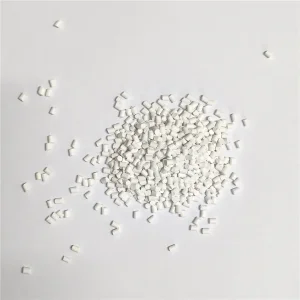
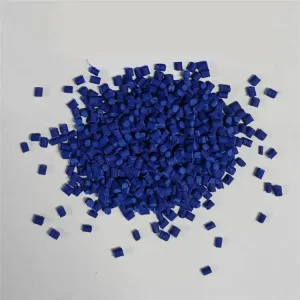
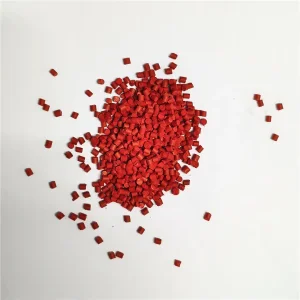
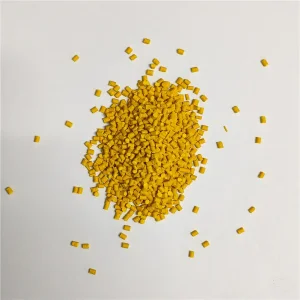
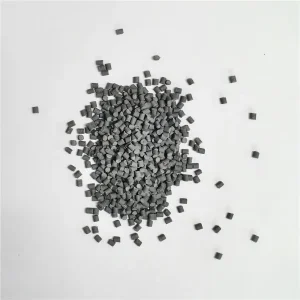
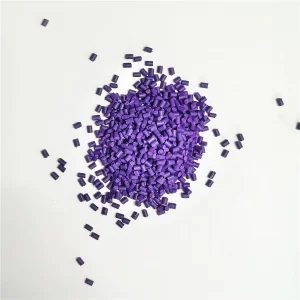
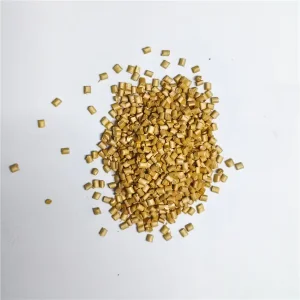
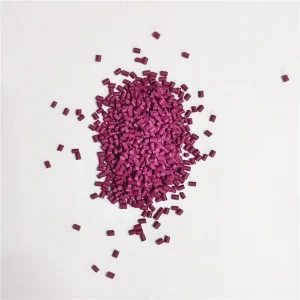
Direct manufacturer supply of high-concentration PE carrier color and filler masterbatches engineered for blown film, extrusion, and injection molding.
Analyzing economic dynamics, titanium dioxide cost-efficiency metrics, and market demand vectors across global polyolefin processing hubs.
In the global flexible packaging market—projected to surpass $250 Billion by 2030—the term "Cheap Film Dedicated White PE Masterbatch" has evolved from indicating low quality to representing optimized unit-cost performance. Procurement managers require low cost-per-ton without sacrificing opacity, dispersibility, or tear strength during high-speed blown film processing.
White masterbatch value depends on Titanium Dioxide (TiO2) efficiency. Premium film-grade formulations utilize 40% to 70% Rutile TiO2 treated with inorganic alumina/silica compounds and organic silanes. This coating ensures maximum refractive index (2.73), high tinting strength, and complete opacity at ultrathin film gauges down to 10 microns.
Using improper carrier resins causes melt fracture, phase separation, and gel formation. Superior suppliers manufacture film-dedicated white masterbatch with virgin LLDPE (Linear Low-Density Polyethylene) or LDPE possessing tailored Melt Flow Indices (MFI 2.0 to 20 g/10min) to match the rheology of host substrate polymers.
Deconstructing the chemistry behind dispersion, interfacial tension reduction, and lacing resistance in high-speed extrusion lines.
Titanium dioxide raw particles possess an average primary particle size of 0.2 to 0.3 microns. Unprocessed TiO2 tends to agglomerate into 10–50 micron clusters, creating visible white specks and pinholes in blown film. Leading suppliers utilize co-rotating twin-screw extruders with high L/D ratios (40:1 to 48:1) equipped with specialized kneading blocks that generate intensive shear fields to break down agglomerates into sub-micron dimensions.
When extruding high-temperature cast films or extrusion coatings (exceeding 280°C), trapped moisture and volatile organic compounds cause "lacing"—thin, pinhole-like streaks across the film. Advanced film-dedicated white masterbatches incorporate low-volatility dispersants and moisture scavengers that remain thermally stable up to 300°C.
To eliminate "sharkskin" or melt fracture effects at high throughput rates, masterbatch formulations include fluoropolymer-based Polymer Processing Aids (PPA). PPA coats the internal walls of the blown film die, reducing wall shear stress and enabling smoother film surfaces without increasing melt temperature.
| Performance Parameter | Standard White Masterbatch | Film-Dedicated White Masterbatch | Technical Impact on Blown Film |
|---|---|---|---|
| TiO2 Crystal Structure | Anatase or Mixed Grade | 100% Rutile (Alumina/Silica Treated) | +40% Weatherability & Superior Tinting Opacity |
| Filter Test Value (EN 13900-5) | > 5.0 bar/g | < 0.8 bar/g | Prevents screen pack clogging; zero bubble breaks |
| Carrier Resin MFI | Generic 5-10 g/10min | Precision LLDPE (MFI 2.0 - 4.5) | Uniform bubble stability and mechanical toughness |
| Lacing Resistance Limit | 220°C - 240°C | 280°C - 310°C | Enables high-speed extrusion coating & thin film cast |
| Heavy Metal Compliance | Basic Commercial Grade | RoHS, REACH, FDA 21 CFR Compliant | Safe for direct food contact and medical packaging |
Engineering targeted performance metrics across diverse commercial and industrial flexible film applications.
Agricultural films require long-term outdoor weatherability. White/black co-extruded films use film-dedicated white masterbatch on the outer layer to reflect solar radiation, reduce soil temperatures, and block UV degradation. Formulations include HALS (Hindered Amine Light Stabilizers) to prevent premature embrittlement under intense sunlight.
For liquid milk pouches, frozen food bags, and snack food barrier films, white masterbatch must adhere to strict organoleptic standards—meaning zero odor or taste migration into food items. Non-toxic, high-opacity white formulations ensure complete light blocking to prevent photo-oxidation of sensitive lipids and vitamins.
Co-extruded courier bags demand complete opacity to ensure privacy and security. The outer white layer relies on high-tinting-strength white PE masterbatch combined with an inner black opacity layer. High tensile strength and impact resistance must be preserved at addition rates between 5% and 12%.
Micro-porous breathable films used in sanitary products and medical protective clothing demand pinhole-free extrusion. White masterbatches engineered for hygiene films feature narrow particle size distributions that pass through ultra-fine melt filtration without creating gel defects.
How Changzhou Jiazhou Plastic Products Co., Ltd. ensures continuous E-E-A-T standards across global supply chains.
Every production lot is subjected to dual-beam spectrophotometer evaluation. Color consistency is maintained within an ultra-tight Delta E threshold (< 0.5 against master target standards), preventing batch-to-batch shade variation on continuous extrusion lines.
By heating masterbatch samples up to 800°C inside atmosphere-controlled muffle furnaces, quality technicians verify exact TiO2 loading percentages with 0.1% precision, guaranteeing that customers receive the precise active pigment content ordered.
Laboratory technicians perform dynamic two-roll mill shear tests to inspect film samples under optical microscopy. Zero undispersed agglomerates larger than 15 microns are permitted, ensuring high bubble stability during blown film extrusion.
Next-generation advancements in eco-friendly polyolefin masterbatch manufacturing.
As global regulations enforce Post-Consumer Recycled (PCR) content targets in plastic packaging, modern white masterbatches are engineered with specialized compatibilizers (maleic anhydride grafted PE) to neutralize dark impurities and yellow tinting inherent in recycled feedstocks.
Flexible film converters are pushing gauge limits down to 8–12 microns to minimize plastic waste. Future white masterbatches utilize nano-coated Rutile pigments that offer 20% higher tinting strength, allowing converters to reduce masterbatch let-down ratios while preserving opacity.
To align with circular economy goals, manufacturers are pioneering bio-based PE carriers derived from sugarcane ethanol, alongside PLA/PBAT-compatible white masterbatches for fully certified industrial compostable films.
Addressing critical technical considerations for blown film processors and purchasing departments.
Explore our full portfolio of high-concentration color and functional masterbatches engineered for extrusion, blown film, and injection molding applications worldwide.