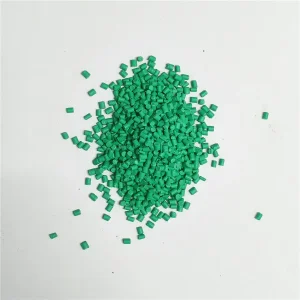
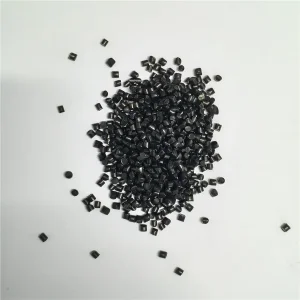
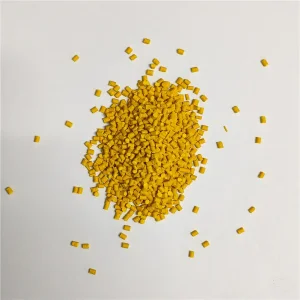
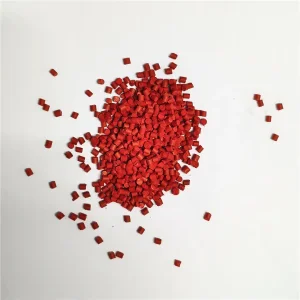
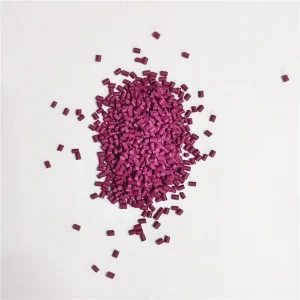
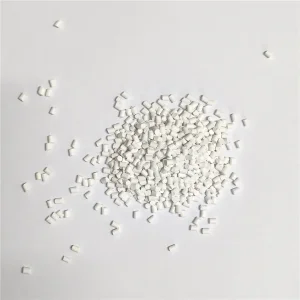
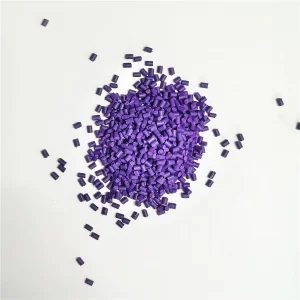
The global demand for high-performance flexible packaging operating under extreme thermal distress has entered a transformative phase. As global cold chain logistics expand into sub-zero agricultural zones, deep-sea fisheries, and arctic pharmaceutical transportation, standard polyethylene (PE) blown films are failing at alarming rates due to low-temperature embrittlement.
Traditional film extrusion relies heavily on standard linear low-density polyethylene (LLDPE) or low-density polyethylene (LDPE) matrices. However, when exposed to cryogenic environments (ranging from -20°C to -50°C), the amorphous polymer chains undergo severe glass transition ($T_g$) constriction. This leads to physical cracking, drop-impact shattering, and loss of tensile yield strength during handling.
Rapid growth in frozen food delivery networks, biopharmaceuticals, and quick-frozen agricultural exports requires heavy-duty polyolefin films capable of surviving multi-stage automated sorting at temperatures below -30°C without pinhole ruptures.
Greenhouse mulching films and silage wraps utilized in northern latitudes demand elevated flexural endurance under extreme seasonal frost cycles, requiring targeted cold-resistant masterbatch additions during high-speed blown film extrusion.
Extruders face dual pressures: reducing film gauge to cut resin costs while simultaneously upgrading physical toughness. Utilizing high-concentration cheap low-temperature PE masterbatch achieves high ROI without degrading mechanical properties.
Achieving ultra-low temperature flexibility in blown film processes requires precise molecular engineering. Our masterbatch technology integrates functionalized polyolefin elastomers (POE), metallocene-catalyzed carrier resins, and nucleating modifiers to suppress crystal growth size during quenching.
By dispersing micro-domains of octene-based polyolefin elastomers ($Tg < -55^\circ\text{C}$) into the PE carrier matrix, our masterbatch acts as an internal shock absorber. It absorbs fracture energy during sudden mechanical impacts in sub-zero environments.
Engineered with a tailored Melt Flow Index ($1.5 \text{ to } 4.5 \text{ g/10min}$ at $190^\circ\text{C}/2.16\text{kg}$), the masterbatch melts uniformly with base virgin resins (LDPE/LLDPE/HDPE), preventing melt fracture, gauge variation, or bubble instability.
Unlike cheap oil-based plasticizers that bleed onto film surfaces over time causing haze and poor printability, our modifier is permanently entangled in the polyolefin matrix, guaranteeing long-term compliance for food contact applications.
| Testing Property | Standard Virgin LLDPE Film | Modified Film with Cold-Resistant Masterbatch | Testing Method Standard |
|---|---|---|---|
| Low-Temperature Dart Drop Impact (-30°C) | 120 grams | 340 grams (+183%) | ASTM D1709 / ISO 7765-1 |
| Brittleness Temperature ($T_b$) | -18°C | -46°C | ASTM D1790 / ISO 974 |
| Elongation at Break (MD/TD at -25°C) | 220% / 350% | 480% / 620% | ASTM D882 |
| Tear Resistance (Elmendorf -20°C) | 8.5 N/mm | 16.2 N/mm | ASTM D1922 |
| Optical Haze (25 Micron Film) | 11.2% | 9.4% (Enhanced Optical Clarity) | ASTM D1003 |
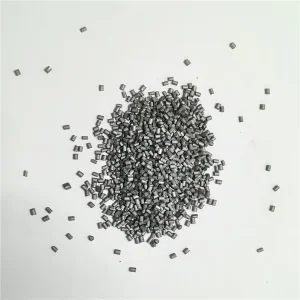
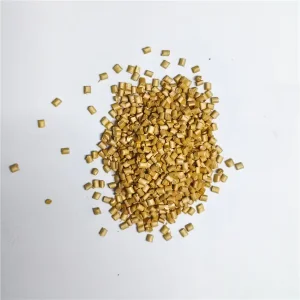
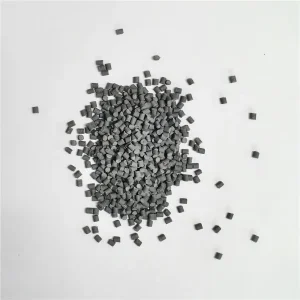
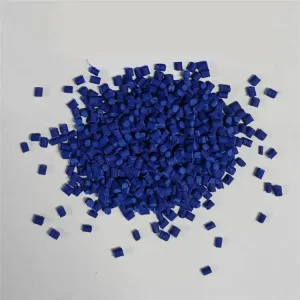
Combines core-shell elastomeric modifiers with high-pigment loading for dual coloring and cold-impact fortification down to -40°C.
Integration of ISCC PLUS-certified bio-PE carriers derived from renewable feedstocks, meeting stringent EU packaging waste directives.
Ultra-low loading (<2%) nano-fillers engineered for sub-zero performance under arctic conditions (-60°C) with zero reduction in film barrier properties.
International procurement managers face severe operational challenges when sourcing masterbatches from overseas manufacturers: batch-to-batch color variance, inconsistent melt viscosity causing extrusion line downtime, and hidden costs associated with high dosage requirements.
While labeled as a "cheap" low-temperature solution, cost-efficiency is achieved through concentrated additive loading (let-down ratio of 2% to 4%). Lower addition rates drastically cut logistics freight costs and warehouse footprint while maintaining peak impact strength.
Engineered for high-output blown film towers operating at speeds >300 m/min. The masterbatch delivers low backpressure, rapid dispersion without un-melted gels, and zero accumulation on die lips (eliminating die-build-up defects).
Supplied in moisture-proof, aluminum-foil vacuum lined 25kg bags or 1000kg bulk octabins. Every shipment includes a Certificate of Analysis (CoA) linked directly to lot-tracked production samples held for 24 months.
Manufactured by Changzhou Jiazhou Plastic Products Co., Ltd. (Established 2010), our 6,000 m² high-tech facility in Jiangsu Province represents 16 years of compounding expertise. Operating 10 high-torque twin-screw extrusion lines with automated gravimetric dosing systems, we ensure absolute chemical stability across all production batches.
Fully verified by third-party testing labs (SGS / Intertek). Compliant with FDA 21 CFR 177.1520, EU Regulation No. 10/2011, RoHS III (Directive 2015/863), REACH SVHC candidate lists, and heavy-metal-free standards (EN 71-3).
Our state-of-the-art laboratory performs rigorous quality audits on every batch: Two-roll mill dispersion testing, Melt Flow Index (MFI) analysis, Thermogravimetric Analysis (TGA), and Cryogenic Impact Testing down to -50°C.
We provide overseas clients with full application engineering: custom color matching via Datacolor spectrophotometers, let-down ratio optimization, and real-time troubleshooting for blown film bubble stabilization.
Expert answers to common engineering questions regarding low-temperature blown film additive integration.
A: Standard PE becomes brittle when ambient temperatures drop below its glass transition region under impact stress. Our cold-resistant masterbatch incorporates ultra-low $T_g$ elastomeric domains (such as specialized POE/mLLDPE blends) that remain flexible at sub-zero temperatures. These micro-domains dissipate mechanical shock energy, stopping micro-cracks from propagating through the blown film.
A: The standard recommended dosage ranges from 2% to 5% depending on the target film gauge and required temperature threshold. For standard packaging operating at -18°C (freezer bags), a 2.5% to 3% dosage is optimal. For severe industrial applications (-40°C deep freeze or heavy-duty agricultural film), a 4% to 5% dosage is recommended.
A: No. Because our carrier resins are closely matched in refractive index and melt rheology to virgin LDPE/LLDPE, optical haze increases are negligible (<1.5%). Furthermore, the non-migratory chemical design ensures zero surface blooming, fully preserving heat-seal strength and corona treatment surface tension for printing and lamination.
A: Yes. In 3-layer or 5-layer co-extrusion systems, the masterbatch can be added selectively to the outer impact-exposed skin layers or core layer to optimize raw material costs while delivering maximum dart-drop impact resistance.