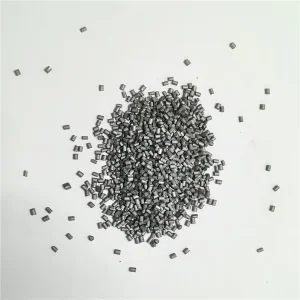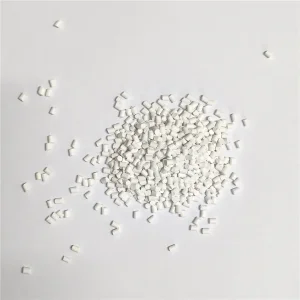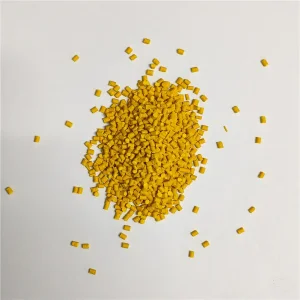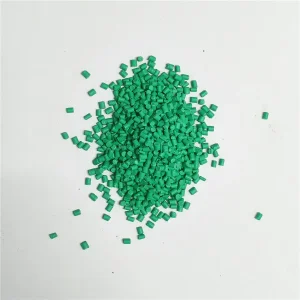
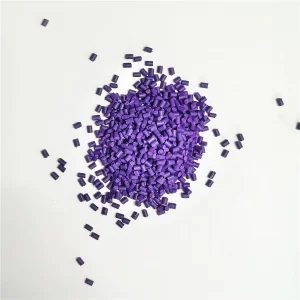
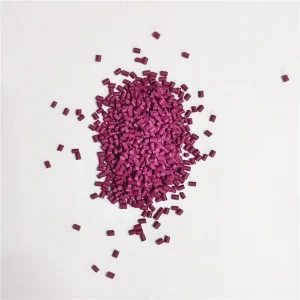
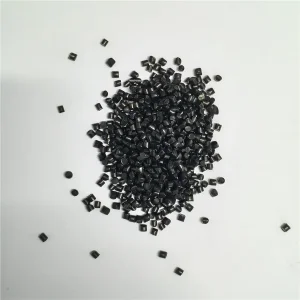
In the global polymer manufacturing and converting sector, Optical Brightener Masterbatch (often categorized as Fluorescent Whitening Agent or FWA Masterbatch) plays a critical role in controlling aesthetic optical properties, suppressing inherent polymer yellowness, and elevating surface brightness. Plastic resins—whether polyolefins like Polyethylene (PE) and Polypropylene (PP), or engineering thermoplastics like PET, Polystyrene (PS), and ABS—naturally exhibit yellow shifts ($b^*$ parameter degradation in the CIE L*a*b* color space) due to thermal history, oxidative degradation, and residual catalyst complexes.
The international demand for cheap yet high-efficiency optical brightener masterbatches has surged significantly over the past decade. This expansion is driven by two major macroeconomic shifts:
Global consumer goods enterprises demand pristine visual whiteness and high clarity in flexible packaging, blow-molded containers, and injection-molded personal care products. Optical brightener masterbatch absorbs invisible ultraviolet radiation (340–390 nm) and re-emits visible blue spectrum light (420–470 nm), physically masking yellow hues and delivering an intense, vibrant white appearance.
With global sustainability directives such as the European Union's Packaging and Packaging Waste Regulation (PPWR) and global ESG benchmarks mandating higher recycled content, processors rely heavily on optical brighteners. Post-consumer recycled (PCR) resin suffers from pronounced thermal discoloration and graying; adding a precision optical brightener masterbatch restores perceived initial brightness and commercial value.
When global enterprise buyers evaluate Cheap Optical Brightener Masterbatch Factories & Suppliers, the strategic advantage of Chinese manufacturing hubs—particularly specialized industrial clusters in Changzhou, Jiangsu—extends far beyond simple labor cost arbitrage. The true competitive edge stems from complete raw material integration, continuous extrusion technology, and rigorous quality systems.
Leading Chinese masterbatch manufacturers maintain direct strategic relationships with primary organic chemical synthesizer facilities producing active fluorescent molecules like OB (2,5-thiophenediylbis(5-tert-butyl-1,3-benzoxazole)) and OB-1 (Optical Brightener 393). By eliminating intermediary distribution layers and sourcing high-purity active powder direct from synthesis loops, factories significantly reduce unit production costs.
Utilizing state-of-the-art co-rotating twin-screw extruders featuring optimized L/D ratios (Length-to-Diameter ratios of 44:1 to 48:1), Chinese plants achieve microscopic dispersion of optical whitening agents within carrier polymers. Efficient thermal dispersion ensures that lower additive dosages yield higher optical performance, passing savings to global buyers.
Dedicated masterbatch production facilities operate high-throughput continuous lines capable of outputting hundreds of metric tons per month. This industrial capacity enables standard lead times of under 15 days, rapid container loading, and optimized FOB/CIF pricing for international procurement managers.
Selecting the correct optical brightener masterbatch requires an understanding of active organic molecules, melting points, lightfastness, and thermal stability. Below is a comprehensive engineering comparison of primary fluorescent whitening agents used in commercial masterbatches:
| Active Chemical Agent | CAS Number | Melting Point (°C) | Max Processing Temp (°C) | Optimal Polymer Substrates | Key Performance Feature |
|---|---|---|---|---|---|
| Optical Brightener OB-1 | 1533-45-5 | 355 – 360°C | ≤ 350°C | Polyester (PET), Nylon (PA), PP, Rigid PVC, PS | Ultra-high thermal resistance, low volatility at high extrusion heat. |
| Optical Brightener OB | 7128-64-5 | 196 – 203°C | ≤ 220°C | PE, Flexible PVC, EVA, ABS, PS, Polycarbonate | Excellent solubility, vibrant blue-white shade, high lightfastness. |
| Optical Brightener KCB | 5089-22-5 | 210 – 212°C | ≤ 240°C | PE/PP blown film, EVA footwear, synthetic leather | Vivid greenish-blue hue, exceptional resistance to gas fading. |
| Optical Brightener KSN | 5242-49-4 | 271 – 275°C | ≤ 300°C | PA, PET, PP fibers, engineering plastic alloys | High migration resistance, superior brightness recovery in recycled plastics. |
Masterbatch formulations leverage tailored carrier matrices—typically Low-Density Polyethylene (LDPE), Linear Low-Density Polyethylene (LLDPE), or Polypropylene (PP)—that perfectly match the melt flow index (MFI) of the host polymer resin. This prevents viscosity drops, phase separation, or screw slipping during processing.
Optical brightener masterbatches are specialized performance additives integrated into a broad spectrum of manufacturing processes worldwide:
In shopping bags, agricultural mulch film, courier bags, and stretch wraps, optical brightener masterbatch eliminates dullness caused by mineral filler additives (like CaCO3 filler masterbatch). It ensures high transparency, crisp film clarity, and uniform surface sheen without plate-out on extrusion dies.
For consumer containers, storage bins, furniture, and electronic enclosures, incorporating optical brighteners enhances the perception of premium quality. White products appear cleaner and brighter, while transparent or translucent items exhibit crystal-clear optical clarity under ambient light.
In PP spunbond non-woven fabrics, PP staple fibers, and polyester filaments, optical brighteners provide brilliant white shade uniformity essential for medical textiles, hygiene products, and industrial filtration media.
As global regulations mandate 25% to 50% Post-Consumer Recycled (PCR) resin integration into consumer packaging, mechanical recycling loops encounter progressive polymer yellowing due to repeat thermal stress. Advanced optical brightener masterbatches are now pre-formulated with synergistic primary and secondary antioxidants (Hindered Phenols & Phosphites) to both neutralize discoloration and prevent degradation during re-extrusion.
Leading Chinese export factories adhere strictly to global chemical safety frameworks:
When evaluating procurement decisions for cheap optical brightener masterbatches, professional B2B buyers must analyze total processing value rather than just initial purchase price per kilogram. A lower active concentration or poorly dispersed masterbatch will result in higher let-down ratios (LDR), increased defect rates, line stoppage, and elevated overall manufacturing costs.
High-quality masterbatches exhibit low FPV ratings (< 1.0 bar/gram according to EN 13900-5), indicating excellent dispersion with no micro-agglomerates that could clog melt pumps or blow film bubble instabilities.
High-concentration masterbatches allow ultra-low LDR dosages (typically 0.5% to 1.5% for general plastics, and 0.05% to 0.2% for high-purity optical grades). This reduces shipping volumes, storage footprint, and material handling costs.
ISO 9001-certified factories utilize automated spectrophotometers to measure Delta E (ΔE < 0.5) against standard masterbatch retention samples, ensuring consistent brightness across production runs.
Established in 2010, Changzhou Jiazhou Plastic Products Co., Ltd. is a specialized manufacturer of high-concentration PE color masterbatches, filler masterbatches, and functional additive masterbatches. Located in Zouqu Town, Zhonglou District, Changzhou, Jiangsu, China, our 6,000 square meter factory operates advanced twin-screw extruders and automated color matching equipment.
With 16 years of expertise, ISO certified quality control, and export partnerships in over 100 countries, Jiazhou provides dependable compounding solutions, OEM color matching, and steady factory-direct pricing for global B2B clients.
Contact our export technical desk for custom masterbatch formulation, technical data sheets (TDS), safety data sheets (SDS), or to request factory sample kits.