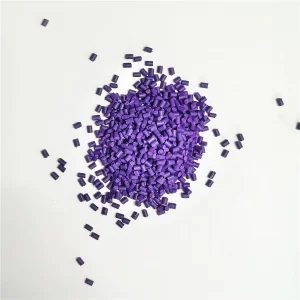
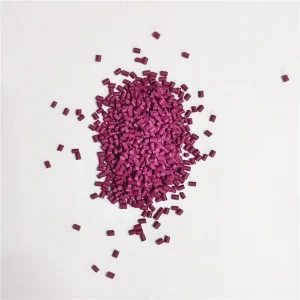
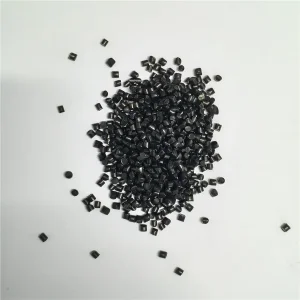
Explore our precision-engineered, high-opacity, and anti-migration PE masterbatches manufactured for high-speed blown film lines and industrial converting applications.
Understanding market economics, raw material dynamics, and technical specifications governing next-generation synthetic label substrates.
The international flexible packaging and label manufacturing sector is undergoing a rapid transition toward high-performance synthetic materials. Polyethylene (PE) plastic label films—encompassing Linear Low-Density Polyethylene (LLDPE), High-Density Polyethylene (HDPE), and multi-layer co-extruded Polyolefin films—have captured significant market share from traditional paper-based self-adhesive labels. Modern FMCG, pharmaceutical, automotive, and logistics industries require labels that possess total water resistance, high tear propagation resistance, chemical inertness, and dynamic conformability for squeezable container applications.
Central to the commercial success of synthetic PE labels is the masterbatch technology utilized during film extrusion. Masterbatch formulations act as the core vector for delivering color opacity, UV stabilization, anti-static discharge, surface printability retention, and mechanical reinforce-ment. As B2B film converters navigate volatile virgin resin pricing, sourcing cost-effective, high-concentration PE label film masterbatches from verified manufacturers—such as Changzhou Jiazhou Plastic Products Co., Ltd. (operating with 16+ years of specialized compounding experience)—has become a decisive strategy for operational margin retention.
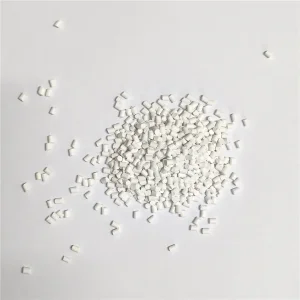
Consumer packaging design increasingly favors fully squeezable HDPE and LLDPE bottles for personal care items (shampoos, lotions, cosmetic tubes). Traditional rigid labels wrinkle or delaminate under deformation. Specialized PE white masterbatches containing highly micronized Rutile Titanium Dioxide (TiO₂) yield unmatched opacity at ultra-thin gauges (down to 40 microns) without sacrificing film elasticity.
Converters face rising overheads. Sourcing "cheap" yet chemically stable masterbatches does not mean compromising quality; it entails maximizing pigment and filler concentration (up to 70% active TiO₂ or 50% organic pigment loads). Higher concentration lowers the required let-down ratio (LDR), directly reducing freight costs per metric ton of processed end-product.
Direct and indirect food contact compliance (FDA, EU 10/2011, RoHS, REACH) dictates that colorants and low-molecular-weight additives do not migrate from the label substrate through the container wall into consumable products. Advanced compounding relies on non-migrative organic pigments paired with high-purity carrier resins.
Achieving zero-defect blown film processing through carrier-matrix compatibility and sub-micron particle shear compounding.
Producing PE plastic label films requires strict control over shear forces, thermal history, and filter pressure values (FPV). Film extrusion dies operate under tight lip clearances (typically 0.8 mm to 1.5 mm). If a masterbatch contains un-dispersed pigment agglomerates exceeding 5 microns, film web tears, pinholes, and severe gauge variation occur immediately.
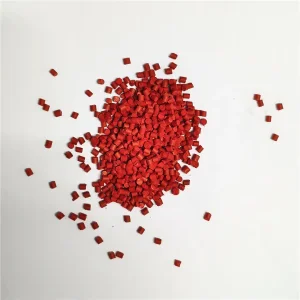
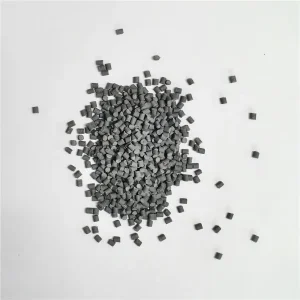
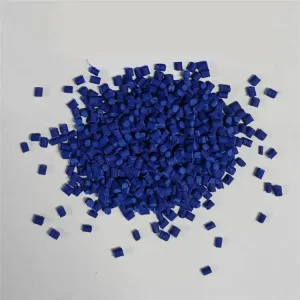
During high-speed co-extrusion, local shear heat inside the twin-screw barrel can push melt temperatures beyond 240°C. Standard commercial colorants undergo thermal degradation, resulting in color shifting, gas emission (causing voids), and severe discoloration. Premium PE color masterbatches—such as Jiazhou’s Red, Black, and Blue series—are fortified with high-heat-fastness organic chromophores (phthalocyanines, quinacridones, and inorganic oxides) combined with secondary phosphite antioxidants to withstand continuous extrusion at up to 260°C.
Synthetic PE labels require secondary converting processes, specifically flexographic, gravure, or UV-curable inkjet printing, followed by pressure-sensitive adhesive (PSA) coating. If a masterbatch relies on low-grade paraffin waxes or excessive metallic stearate lubricants for pigment dispersion, these small molecules blooming to the film surface lower the surface energy below 38 dynes/cm. This leads to ink adhesion failure and label delamination. High-grade PE label film masterbatches utilize high-molecular-weight dispersants that lock within the matrix, preserving surface corona treatment levels above 42 dynes/cm.
| Masterbatch Technical Parameter | Standard Commercial Grade | Jiazhou High-Spec Label Film Grade | Operational Impact on Film Converting |
|---|---|---|---|
| Carrier Resin MFI (190°C/2.16kg) | 2.0 – 5.0 g/10min | 15.0 – 30.0 g/10min (Tailored LLDPE) | Eliminates die drool, lowers melt pressure by 18%. |
| Pigment Dispersion Particle Size | < 5.0 microns | < 0.8 microns (Ultra-Fine) | Prevents film pinholes; supports film down-gauging to 25µm. |
| Filter Pressure Value (FPV) | > 2.5 bar/gram | < 0.5 bar/gram (EN 13900-5) | Extends screen pack change interval by over 300%. |
| Thermal Resistance Rating | 200°C – 220°C | 260°C Continuous Heat Resistance | Zero shade shift across variable extrusion screw speeds. |
| Lightfastness (Blue Wool Scale) | Grade 4 – 5 | Grade 7 – 8 (Maximum Weathering) | Prevents label fading on outdoor industrial chemical drums. |
Tailoring color masterbatch properties to geographically diverse industrial packaging requirements and climate demands.
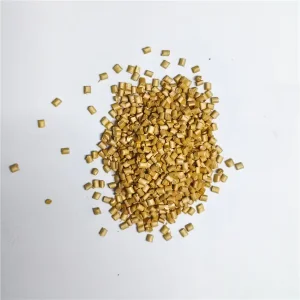
In-Mold Labeling for injection-molded food containers (margarine tubs, ice cream packaging) demands total flatness and zero static charge accumulation during robotic placement. Masterbatches engineered for IML films integrate permanent non-blooming anti-static agents alongside high-opacity white or vibrant metallic pigments (Silver/Gold), ensuring pristine aesthetic integration with the container substrate.
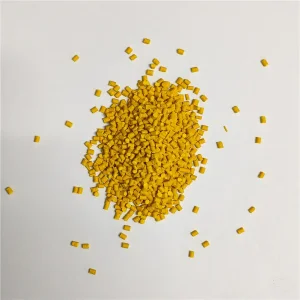
High ambient humidity and severe UV solar radiation in tropical and desert regions degrade standard label films. PE White and Yellow Masterbatches formulated with Hindered Amine Light Stabilizers (HALS) and Rutile TiO₂ prevent chalking, embrittlement, and color yellowing on shipping labels affixed to outdoor chemical storage drums and trans-oceanic freight containers.
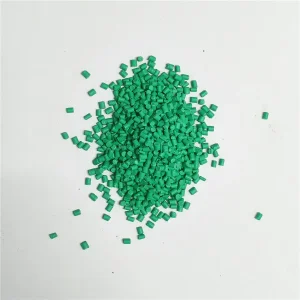
Flexible cosmetic tubes require masterbatches that support extreme bending recovery without stress-whitening. Low-density PE co-extruded label films colored with non-migrative Red, Rose Red, Green, and Purple masterbatches maintain high color saturation through thousands of squeeze cycles, resisting surfactant oil exposure without pigment bleeding.
Direct engineering interventions for eliminating common converting failures in film masterbatch processing.
Problem: Hard gel specks appear under film inspection systems, causing matrix tearing during die-cutting of pressure-sensitive labels.
Root Cause: High-molecular-weight cross-linked polymer degraded inside the masterbatch compounding barrel due to thermal stagnation.
Jiazhou Solution: Continuous twin-screw melt filtering with micro-pellet underwater pelletizing ensures uniform pellet geometry. Incorporating specialized processing aids (PPA) reduces shear degradation and prevents gel formation during blown film processing.
Problem: Microscopic voids or pinholes compromise barrier properties and visual opacity in white PE synthetic paper labels.
Root Cause: Moisture absorption by hygroscopic fillers (such as untreated CaCO₃ or raw TiO₂ pigments) releasing steam at 220°C.
Jiazhou Solution: Hydrophobic surface treatment using hydrophobic silane coupling agents combined with vacuum-degassed extrusion. Jiazhou PE Masterbatches maintain moisture content strictly below 0.05% (500 ppm), eliminating steam pinholes entirely.
Aligning color additive engineering with global sustainability directives, mono-material packaging design, and post-consumer recycling (PCR).
The label and packaging supply chain is facing aggressive legislative targets worldwide (such as the EU Packaging and Packaging Waste Regulation - PPWR). The industry roadmap demands a transition from multi-material non-recyclable structures to fully recyclable mono-material Polyethylene packaging. In this context, the label film must be composed of the exact same resin family (PE) as the underlying container, allowing the entire container-label assembly to be recycled together without manual label stripping.
Masterbatches engineered to disperse effectively into Post-Consumer Recycled (PCR) PE resins. Advanced antioxidant systems neutralize residual contaminants and thermal degradants present in recycled feedstocks, maintaining film bubble stability and color consistency.
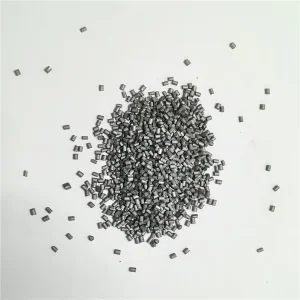
Standard Carbon Black absorbs Near-Infrared (NIR) optical sorting beams at automated material recovery facilities (MRFs), sending black labels to landfills. Jiazhou's NIR-detectable Black Masterbatches allow automated optical sorters to identify and sort underlying PE plastics efficiently.
Developing micro-nano Calcium Carbonate (CaCO₃) masterbatches that induce microscopic voiding (cavitation) during biaxial orientation. This produces synthetic paper-like PE label films with low density (< 0.7 g/cm³), reducing material weight while maintaining high opacity.
Expert technical insights answering B2B buyers' critical inquiries on masterbatch performance, MOQ, custom color matching, and process optimization.
Select from our certified range of high-concentration color, metallic, and filler masterbatches engineered for blown film, injection molding, and profile extrusion.