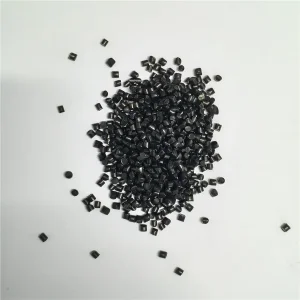
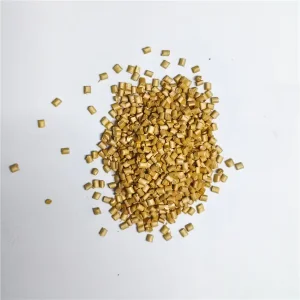
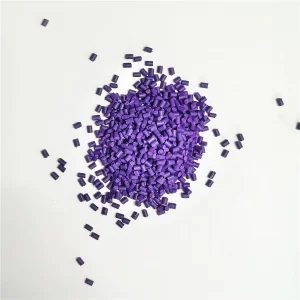
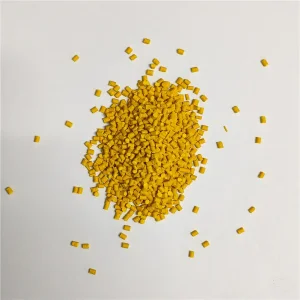
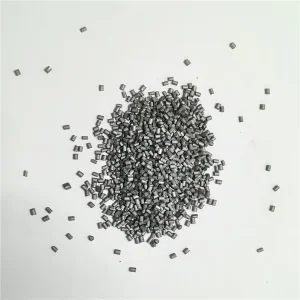
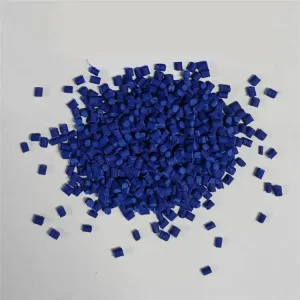
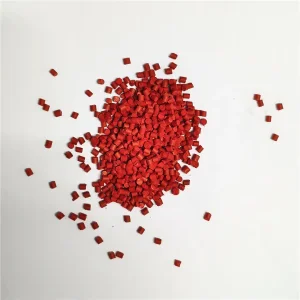
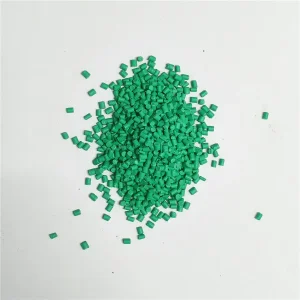
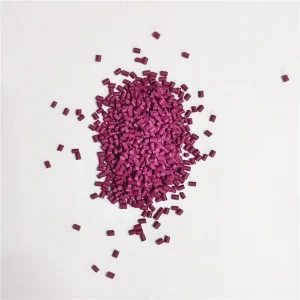
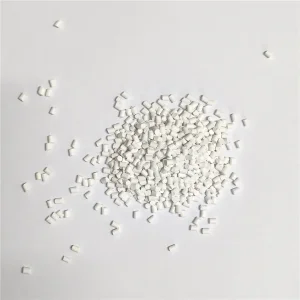
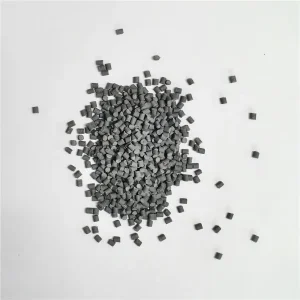
Engineered specifically for high-shear PE profile extrusion, pipe manufacturing, blown film, and technical molding. Formulated for maximum color yield and processing efficiency.
In modern polymer processing, polyethylene (PE) profile extrusion demands meticulous colorant dispersion, strict Melt Flow Index (MFI) alignment, and thermal endurance during continuous melt plasticization. Sourcing a "cheap PE profile extrusion masterbatch" does not imply sacrificing structural integrity or tinting strength. Rather, it represents optimized procurement economics achieved through high pigment loading, reduced addition ratios (let-down ratios), and efficient twin-screw compounding mechanics.
The carrier matrix resin (HDPE, LLDPE, or LDPE) must precisely match the Melt Flow Index (MFI) of the host polymer resin. A mismatched carrier induces melt fracture, interfacial shear instability, and surface phase separation during high-speed extrusion profiles.
Microscopic agglomerates of carbon black or organic pigments cause localized stress concentration points, pinholes, and profile breakage. High-shear twin-screw co-rotating extrusion ensures sub-micron particle distribution without pigment degradation.
True cost optimization relies on high pigment concentration (e.g., 40%–50% carbon black or TiO₂). Higher concentration allows lower let-down ratios (1% to 2%), dramatically reducing per-ton freight fees and unit production costs for plastic processors.
The global PE masterbatch market is expanding at a CAGR of 5.4%, driven by heavy infrastructure investments, agricultural conduit expansion, and high-performance Wood-Plastic Composite (WPC) profiles. Understanding global supply chain dynamics allows buyers to source high-specification masterbatch at direct-from-factory price points.
Asia-Pacific: Accounts for over 45% of global PE profile masterbatch consumption. The boom in municipal water pipes (HDPE 100 grade), agricultural drip irrigation lines, and window framing profiles creates massive demand for UV-stabilized black and white masterbatches.
Europe & North America: Driven by strict environmental regulations (RoHS, REACH, EN 71-3). Demand has shifted rapidly toward post-consumer recycled (PCR) carrier compatibility, non-heavy-metal pigments, and low-VOC functional profile colorants.
Middle East & Africa: Requires high thermal resistance (up to 260°C–280°C) and extreme weatherability due to high solar radiation exposure on outdoor conduit profiles.
Procuring directly from specialized Chinese manufacturers like Changzhou Jiazhou Plastic Products Co., Ltd. eliminates intermediary markups while ensuring direct control over custom masterbatch formulation parameters.
Continuous profile extrusion requires masterbatch formulations that withstand prolonged thermal dwell times inside the extruder barrel without color shift, degradation, or additive blooming.
Low-molecular-weight polyethylene waxes (PE Wax) are incorporated as wetting agents to coat raw pigment nanoparticles (such as Carbon Black P-type or Titanium Dioxide Rutile). This lowers interfacial tension during compounding and guarantees smooth surface finish on extruded profiles.
During profile extrusion, barrel temperatures often reach 200°C to 260°C. Formulations utilize high-heat organic pigments (e.g., Phthalocyanine Blue/Green, Quinacridone Magenta) paired with primary and secondary antioxidant systems (Irganox 1010 / Irgafos 168) to prevent polymer chain scission.
Migrating pigments or low-purity additives bleed to the surface of extruded profiles, causing oily film, dust accumulation, or poor adhesion during secondary painting and printing processes. High-purity, non-migrating pigment matrices prevent blooming under high outdoor ambient temperatures.
Profile extrusion operators frequently encounter processing defects attributable to improper masterbatch choice. Below is an engineering resolution framework designed for polymer processing plant managers.
| Extrusion Defect | Root Physical Cause | Masterbatch Formulation Remedy | Operational Result |
|---|---|---|---|
| Die Drool / Die Accumulation | Low-molecular-weight additive buildup at die exit under high shear rates. | Formulate with high-purity linear low-density carriers and ultra-refined processing aids (fluoroelastomers). | Continuous profile run-time increased by 300%; zero die buildup. |
| Surface Roughness / Sharkskin | Melt elasticity breakdown at the die lip; uneven carrier flow rate. | Match carrier MFI precisely to base PE grade (e.g., LLDPE profile carrier MFI 20). | Ultra-smooth, glossy profile exterior finish. |
| Color Streaking & Banding | Incomplete pigment cluster breakdown inside the extruder screw flight. | Implement high-dispersion masterbatch manufactured via co-rotating triple-flight extruders. | 100% uniform opacity and spectral color consistency (Delta E < 0.3). |
| Plate-out on Calibration Sleeves | Incompatible filler, lubricity additive migration during vacuum calibration. | Utilize hydrophobic surface-treated micro-calcium carbonate and non-migrating pigments. | Clean sizing calibration dies, reducing machine maintenance downtime. |
| Profile Brittleness & Pinholes | Moisture retention in masterbatch or coarse filler agglomerates acting as stress risers. | Enforce twin-screw vacuum degassing during compounding; maintain moisture content < 0.1%. | Maintained flexural modulus and tensile impact strength of end-profile. |
Polyethylene profiles serve diverse global infrastructure and commercial markets. Customizing masterbatch additives to localized environmental stresses ensures maximum profile service life.
Used in underground high-voltage power line conduits and municipal telecommunication profiles. High-concentration HDPE black masterbatch with fine particle size carbon black (20nm–25nm) provides superior UV protection, electrical insulation resistance, and environmental stress crack resistance (ESCR).
Exterior WPC decking, wall cladding, and fencing profiles demand specialized grey, gold, and red PE masterbatches loaded with Hindered Amine Light Stabilizers (HALS). This prevents fading under high UV radiation in desert or tropical climates.
Polyethylene micro-drip tapes and structural greenhouse locking channels require non-toxic, anti-migration yellow, white, and blue masterbatches compliant with agricultural chemical exposure (pesticides, fertilizers).
The plastics industry is undergoing a structural transition toward decarbonization, circular economy mandates, and smart manufacturing. Advanced masterbatch chemistry is leading this transformation.
Developing high-performance color masterbatches utilizing 100% PCR PE carriers without degrading mechanical properties. Novel chain extenders and compatibilizers bridge variance in recycled polymer feedstocks.
Traditional carbon black masterbatches absorb Near-Infrared (NIR) radiation, rendering black profiles undetectable at automated recycling sorting facilities. Future-ready NIR black masterbatches enable full profile circularity.
Integration of closed-loop inline color monitoring during masterbatch production, achieving ultra-tight color tolerances (Delta E < 0.2) and eliminating manual color matching delays for custom profile orders.
Founded in 2010 in Changzhou, Jiangsu Province, Changzhou Jiazhou Plastic Products Co., Ltd. stands as a premier manufacturer of high-concentration PE color masterbatch, filler masterbatch, and tailored additive masterbatches.
Spanning over 6,000 square meters of modern industrial floor space, our facility operates multiple automated, continuous twin-screw extrusion lines equipped with loss-in-weight gravimetric feeders.
Exporting to over 100 countries and regions across Southeast Asia, Europe, the Middle East, South America, and Africa, Jiazhou Masterbatch delivers reliable direct-from-factory solutions.
Answers to key technical and commercial queries regarding PE profile extrusion masterbatch selection, dosing ratios, thermal stability, and procurement economics.
Explore our full color spectrum designed for profile extrusion, injection molding, blown film, and technical compounding applications worldwide.