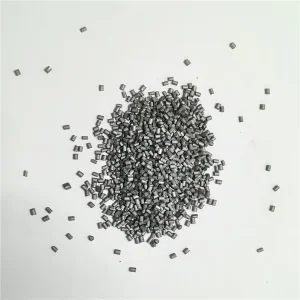
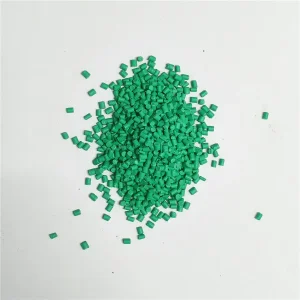
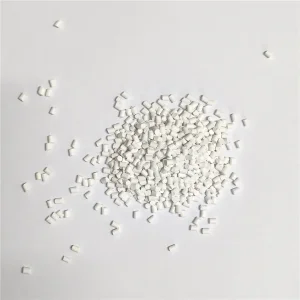
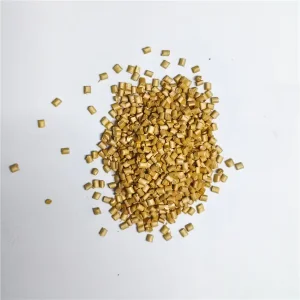
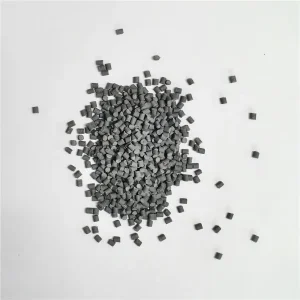
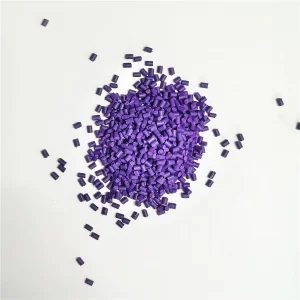
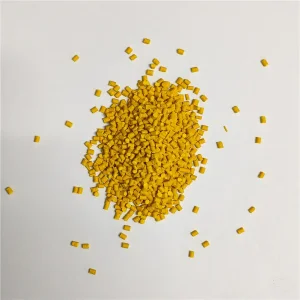
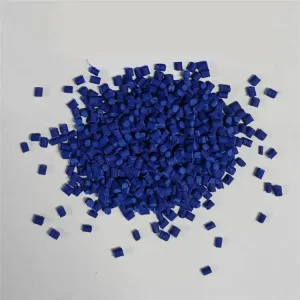
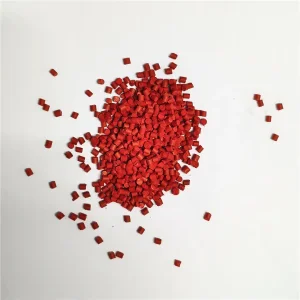
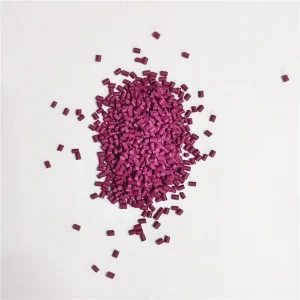
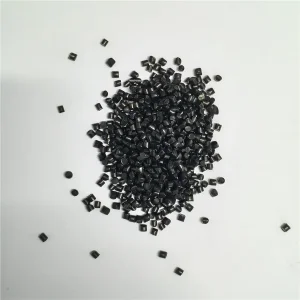
Explore our core series of ultra-dispersive color and additive masterbatches manufactured under strict ISO9001 quality controls.
Analyzing the optical physics, market dynamics, and international procurement trends shaping modern plastic aesthetics.
The global demand for specialized aesthetic polymers has driven the Pearlescent Polyethylene (PE) Masterbatch market into a multi-billion dollar vector within the global plastics additive industry. Pearlescent masterbatches differ fundamentally from standard opaque colorants. They leverage precise optical physics—specifically light refraction, reflection, and wave interference across microscopic platelets of natural or synthetic mica encapsulated within titanium dioxide ($\text{TiO}_2$) or iron oxide ($\text{Fe}_2\text{O}_3$) shells.
In modern industrial applications, brand owners in cosmetic packaging, personal care containers, agricultural films, and automotive interior trims are shifting away from traditional organic pigments. This shift is driven by the desire to achieve a luxury metallic, iridescent, or satin sheen without incurring the environmental hazards, oxidation risks, and high material costs associated with real metal powders (such as bronze or aluminum pastes).
Multi-layer reflection occurs when light strikes micro-mica flakes, producing a depth-of-luster effect that imitates natural sea pearls.
Formulated to meet strict REACH, RoHS, heavy-metal-free, and FDA food-contact standards for safety in global distribution.
Delivers high visual value at low let-down ratios (LDR), offering cost-effective solutions for high-volume conversion processes.
From a commercial standpoint, European and North American buyers often face inflated unit costs when purchasing locally refined pearl masterbatches due to high energy surcharges and complex chemical processing overheads. Consequently, global procurement directors are seeking strategic OEM partnerships with direct Asian manufacturers—specifically within specialized industrial clusters in Jiangsu, China—that can deliver high-concentration pearlescent masterbatches without compromising particle size distribution or dispersion consistency.
Inside Changzhou Jiazhou Plastic Products Co., Ltd. – Operational Scale, Vertical Integration, and Quality Controls.
The label "Cheap Pearlescent PE Masterbatch" does not signify low quality; rather, it reflects optimized manufacturing economics, raw material aggregation, and process automation. Located in Zouqu Town, Zhonglou District, Changzhou, Changzhou Jiazhou Plastic Products Co., Ltd. exemplifies how Chinese masterbatch suppliers achieve cost efficiencies that benefit overseas B2B buyers.
Changzhou's location within the Yangtze River Delta offers immediate access to primary PE carrier resin producers (LDPE, LLDPE, HDPE) and high-purity synthetic mica processors. By sourcing substrates in bulk volumes, material input costs are reduced by 15% to 22% compared to Western counterparts. This enables competitive export pricing while maintaining precise melt flow index (MFI) matching.
Jiazhou operates advanced, continuous twin-screw extruders equipped with gravimetric loss-in-weight feeders. Pearlescent pigments are shear-sensitive; excessive shear breaks the mica flakes, while insufficient shear leads to agglomeration. Our automated thermal control zones maintain processing temperatures within $\pm 1.5^\circ\text{C}$, ensuring complete pigment dispersion without destroying particle geometry.
Every batch undergoes comprehensive testing before shipment: Filter Pressure Value (FPV) testing to ensure mesh cleanliness, spectrophotometer color matching ($\Delta E < 0.5$), and thermogravimetric analysis (TGA) for volatile content. This operational model reduces scrap rates to under 0.3%, translating directly into lower product prices for our client base.
Comprehensive technical data comparing physical properties, thermal thresholds, and application suitability.
| Parameter / Metric | Pearlescent PE Series | High-Opacity White (TiO2) | High-Temp Red / Black | Standard Filler (CaCO3) |
|---|---|---|---|---|
| Carrier Resin | LDPE / LLDPE / HDPE | PE / PP Compatible | Virgin PE Carrier | Recycled / Virgin PE blend |
| Pigment Content (%) | 20% – 40% Pearl Mica | 50% – 70% Titanium Dioxide | 25% – 40% Organic Pigment | 70% – 80% Calcium Carbonate |
| Heat Resistance (°C) | 220°C – 260°C | 260°C – 300°C | 260°C Thermal Limit | 200°C – 240°C |
| Particle Size (μm) | 10 – 60 μm Flakes | 0.2 – 0.4 μm Fine | 0.5 – 1.2 μm Fine | 1.5 – 5.0 μm Mesh |
| Migration Resistance | Grade 5 (Non-migrating) | Grade 5 (Non-migrating) | Grade 4.5 – 5 | N/A |
| Recommended LDR (%) | 1.5% – 4.0% | 1.0% – 3.0% | 1.0% – 3.0% | 5.0% – 30.0% |
| Primary Processing | Blown Film / Injection | Blown Film / Extrusion | Injection / Blow Molding | Film / Sheet Extrusion |
From flexible packaging to rigid blow-molded industrial components.
Widely used in luxury shopping bags, express mailing envelopes, cosmetic film wraps, and agricultural greenhouse covers requiring UV resistance and luster without pinhole defects.
Ideal for shampoo bottles, personal care flasks, and household chemical containers. The uniform orientation of mica platelets eliminates weld-line visibility in multi-cavity molds.
Applied in caps, closures, home appliance housings, and toys. High thermal stability guarantees zero color shift or yellowing at melt temperatures exceeding 240°C.
Innovations transforming polymer coloration for the next decade of manufacturing.
While natural mica remains cost-effective, synthetic fluorophlogopite mica is rapidly gaining traction. Synthetic mica provides higher purity, increased transparency, and stronger metallic reflectivity, avoiding trace heavy-metal contamination often found in mined minerals. Jiazhou integrates synthetic mica into high-end cosmetic masterbatch lines to comply with European safety standards.
As environmental regulations such as the EU Plastic Strategy become stricter, global procurement teams are requesting masterbatches built upon PCR (Post-Consumer Recycled) PE carriers or PLA/PBAT bio-based substrates. Developing low-viscosity masterbatches that disperse evenly into recycled resin streams without causing melt fracture is a key area of technical growth.
A structured checklist for procurement officers to verify masterbatch quality before placing volume orders.
When sourcing masterbatch globally, procuring at a competitive cost requires careful technical evaluation. Below is a checklist for evaluating suppliers during the initial sampling phase:
Clear answers to common questions regarding ordering, formulation, processing, and application engineering.
Select a product to view technical datasheets, MFI specifications, and container loading volumes.