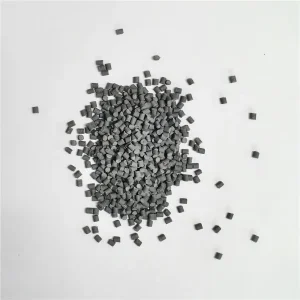
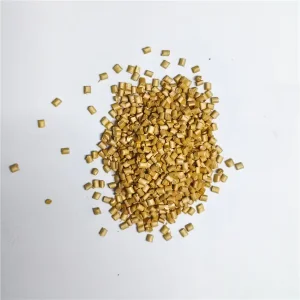
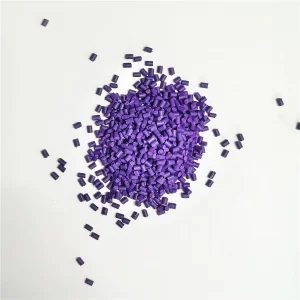
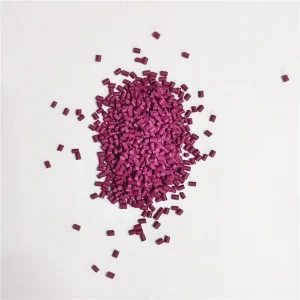
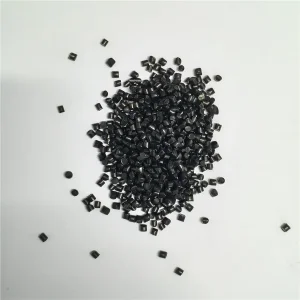
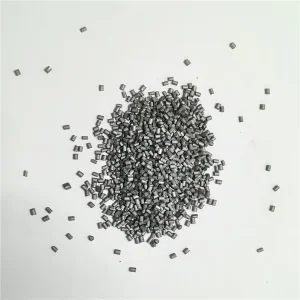
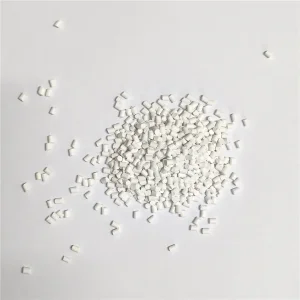
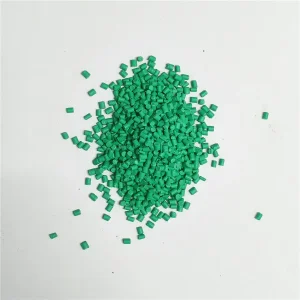
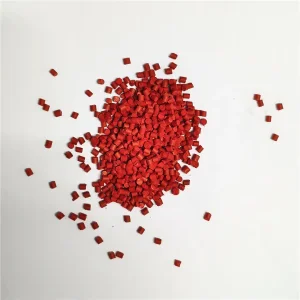
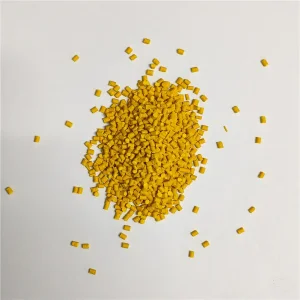
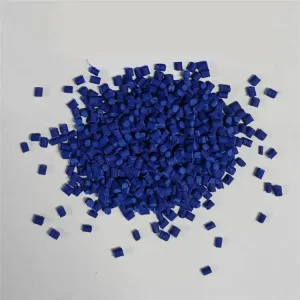
Direct from ISO-certified China manufacturing lines: Premium PE carrier color masterbatches engineered for maximum color strength, thermal endurance, and melt dispersion.
In modern polymer processing, direct raw powder pigment addition presents severe operational hurdles—including dust contamination, uneven dispersion, filter screen clogging, and erratic Delta E color variations. Pigment pellets (commonly categorized as color masterbatches) solve these challenges by encapsulating finely ground organic and inorganic pigments into engineered polymer carriers.
As a leading cheap pigment pellets supplier & manufacturer based in Changzhou, China, Changzhou Jiazhou Plastic Products Co., Ltd. formulates high-concentration Polyethylene (PE), Polypropylene (PP), and universal carrier masterbatches. By pairing carrier resins with tailored Melt Flow Indexes (MFI) matching the target matrix polymer, our pigment pellets homogenize instantaneously during extrusion, blown film, or injection molding cycles.
Global procurement teams analyzing raw material expenditures consistently turn to Chinese masterbatch manufacturers to optimize their Total Cost of Ownership (TCO). The economic advantage of sourcing pigment pellets from our Changzhou manufacturing hub stems from four structural pillars:
Proximity to domestic titanium dioxide (TiO2) producers, premium carbon black plants, and petrochemical refining hubs lowers baseline chemical procurement costs by 15% to 25% compared to Western counterparts.
Advanced dispersing agents (polyethylene wax, zinc stearate, and silane coupling agents) allow active pigment loadings up to 75%. High concentration drastically decreases the recommended dosing ratio (LDR) down to 1%–3%, slashing freight costs per unit mass of pigment.
Micro-pellet format ensures zero dusting, precise volumetric feed control, and instant color changes. Plastic converters report up to a 40% reduction in machine purge times and scrap rates during product changeovers.
Operating a 6,000 m² modern production facility, Jiazhou delivers high-throughput batches within 15-day lead times, backed by immediate access to Shanghai and Ningbo maritime ports for low-cost international sea transport.
Selecting an industrial masterbatch partner requires rigorous vetting against operational performance metrics. Below is an engineering comparison matrix evaluating traditional dry powder pigments, liquid colorants, and modern high-concentration pigment pellets.
| Evaluation Parameter | Raw Dry Pigment Powder | Liquid Colorant Systems | Jiazhou High-Concentration Pigment Pellets |
|---|---|---|---|
| Dosing Accuracy & Handling | Poor (High Dusting, Agglomeration) | Moderate (Requires Specialized Liquid Pumps) | Excellent (Dust-Free, Standard Hopper Feed) |
| Thermal Stability Range | Variable (Pigment Dependent) | 180°C - 220°C (Carrier Volatilization Risk) | 200°C - 300°C (Custom Stabilized Formulations) |
| Color Dispersion Uniformity | Low (Requires High Shear Extruders) | High (Instant Phase Mixing) | Superior (Pre-dispersed via Twin-Screw Technology) |
| Storage & Shelf Life | Hygroscopic, Moisture Sensitive | Settling Risk, Limited Shelf Life | Hydrophobic, Indefinite Shelf Life (Dry Storage) |
| Let-Down Ratio (LDR) Efficiency | Complex Calculations Required | 1.0% - 4.0% | 0.5% - 3.0% (Highly Economical) |
| Compliance & Cleanliness | Cross-Contamination Hazard | Spill Hazard around Equipment | Cleanroom & Food-Contact Grade Compliant |
Exporting plastic products into Europe, North America, and Japan demands complete regulatory alignment. Jiazhou Plastic Products guarantees full compliance with global chemical and environmental frameworks.
Our masterbatches undergo annual testing by independent laboratories (SGS, TUV) ensuring strict freedom from heavy metals (Lead, Cadmium, Mercury, Hexavalent Chromium) and SVHCs (Substances of Very High Concern).
For beverage closures, food container caps, and flexible film packaging, we supply certified non-toxic PE white, blue, and transparent pigment pellets formulated using food-grade virgin resins and approved additives.
Products shipped to high-UV environments (Middle East, Africa, Latin America) receive custom light-stabilizers (HALS) and UV-blockers to prevent color fading, chalking, and polymer embrittlement over extended outdoor exposure.
Pigment pellets from Jiazhou are tailored to match specific polymer transformation processes. Understanding process parameters ensures maximum color yield and physical property preservation.
Applications: Shopping bags, agricultural mulch film, courier bags, heavy-duty shipping sacks.
Technical Requirement: Ultrafine filtration (screen mesh 100-300), zero pinholes, high opacity at micro-thin gauges (< 15 microns).
Applications: Automotive interior panels, crates, home appliances, daily plastic housewares.
Technical Requirement: Low warpage, uniform shrink control, high dimensional stability, rapid dispersion in short cycle times.
Applications: HDPE agricultural irrigation pipes, PPR hot water pipes, PVC profiles.
Technical Requirement: Carbon black particle dispersion < 25 microns for UV protection, long-term hydrostatic strength preservation.
The global plastic colorant market is undergoing a structural shift driven by sustainability directives and automated manufacturing technologies.
Traditional carbon black absorbs Near-Infrared (NIR) radiation, making black plastics invisible to optical sorting equipment at recycling plants. Modern NIR-detectable black pigment pellets enable automated infrared sorting, ensuring compliance with EU circular economy legislation.
To align with global single-use plastic bans, masterbatch manufacturers are introducing PLA, PBAT, and PHA carrier-based pigment pellets that biodegrade seamlessly alongside compostable resins without leaving microplastic residues.
Automated spectrophotometric laboratory algorithms predict color behavior under different light sources (D65, A, TL84), achieving zero metamerism and reducing custom formulation turnaround times to under 48 hours.
Explore our full product catalog for blown film, injection molding, and plastic extrusion applications worldwide.