High-concentration solutions engineered for injection molding, blown film, and pipe extrusion.
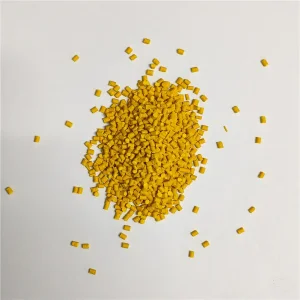
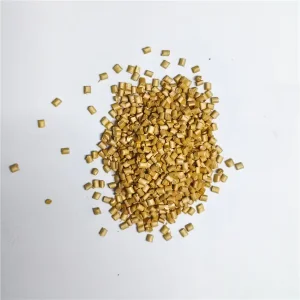
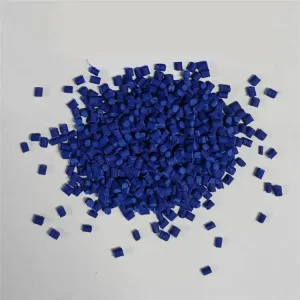
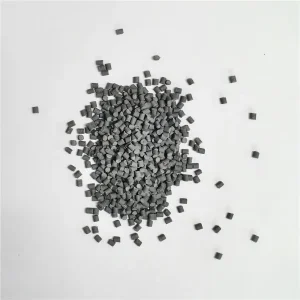
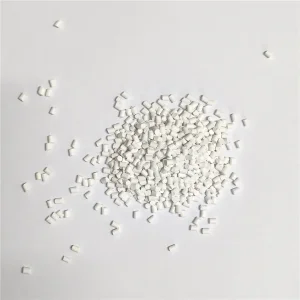
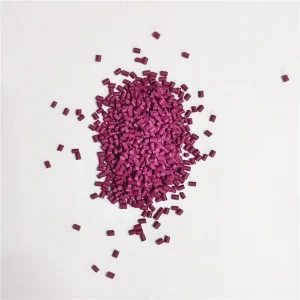
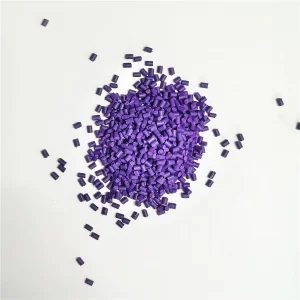
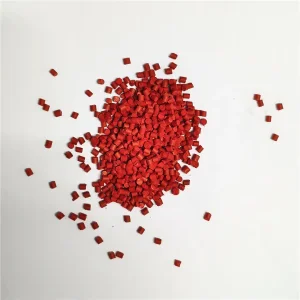
In global thermoplastics compounding and converter operations, purchasing managers frequently search for cheap polymer PE masterbatch companies and manufacturers to offset raw material price volatility. However, standard unit procurement price (USD/kg) represents less than 35% of the operational Total Cost of Ownership (TCO). True economic performance is dictated by pigment dispersion efficiency, carrier resin melt rheology, filter pressure values (FPV), and dosage ratio stability.
Polyethylene (PE) masterbatches—comprising Low-Density Polyethylene (LDPE), Linear Low-Density Polyethylene (LLDPE), and High-Density Polyethylene (HDPE) matrix carriers—serve as the foundational color and functional vector for over 60% of the world's flexible packaging, industrial film, and pressure pipe manufacturing. Selecting a low-cost vendor without strict formulation governance leads to catastrophic operational losses: premature extruder screen pack clogging, die buildup, color streak defects, non-migratory pigment leaching, and structural polymer degradation.
Established in 2010 in Changzhou, perfecting high-loading twin-screw compounding.
Ultra-fine particle dispersion preventing screen pack clogging during high-speed blown film execution.
High heat stability preventing chromophore breakdown during thin-wall injection molding.
Fully compliant with EU REACH, RoHS, FDA food contact, and ISO9001 governance.
Why can top-tier Chinese masterbatch manufacturers supply ultra-high-concentration PE color masterbatch and filler masterbatch at price points 20% to 40% below European or North American chemical conglomerates? The answer lies not in compromised quality, but in upstream petrochemical integration, localized machinery innovation, and cluster supply dynamics concentrated in regions like Changzhou, Jiangsu.
China accounts for a massive share of global synthetic resin production (HDPE/LLDPE) and inorganic pigment synthesis (Titanium Dioxide TiO2, Micronized Calcium Carbonate CaCO3, Carbon Black). Proximity to mega-scale petrochemical plants allows manufacturers like Changzhou Jiazhou Plastic Products Co., Ltd. to acquire virgin carrier resins and surface-treated pigments at direct-contract tariffs.
Modern manufacturing lines utilize high-torque, co-rotating twin-screw extruders operating at optimal L/D (length-to-diameter) ratios of 44:1 to 48:1. This guarantees high-shear dispersion, micro-encapsulation of inorganic pigments, and energy-efficient melt processing, reducing kilowatt-hour consumption per ton by up to 28%.
Located near Shanghai and Ningbo maritime hubs, Changzhou manufacturers streamline containerization, customs brokerage, and door-to-port logistics. Turnaround times for custom-matched Pantone masterbatches are compressed to 15 days, enabling overseas buyers to operate lean inventory strategies.
The key indicator of an authoritative polymer masterbatch manufacturer is its mastery over polymer physics and dispersion thermodynamics. Standard PE color masterbatch is composed of three core ingredients: active colorant/functional additive, primary resin carrier (PE matrix), and dispersing processing aids (wax, coupling agents).
A fundamental flaw in low-grade masterbatches is the use of off-spec or universal recycled carriers. For high-performance processing, the carrier resin must match or possess slightly higher melt flow index (MFI) than the host resin:
| Masterbatch Carrier Type | Host Polymer Compatibility | Typical MFI Range (g/10min, 190°C/2.16kg) | Primary Target Applications |
|---|---|---|---|
| LLDPE (Linear Low-Density) | LDPE, LLDPE, HDPE, PP copolymer | 20 – 45 g/10min | Agricultural blown film, stretch wrap, thin packaging. |
| HDPE (High-Density) | HDPE, PP structural compounds | 7 – 12 g/10min | Blow-molded drums, crates, pressure pipes, geogrids. |
| LDPE (Low-Density) | LDPE, EVA, EBA copolymers | 15 – 30 g/10min | High-gloss injection molding, squeeze bottles, masterbatch base. |
| Specialty Functional Carrier | Metallocene mLLDPE, Polyolefins | 30 – 60 g/10min | Ultra-thin cast film (< 10 microns), non-woven spunbond fabric. |
Inorganic pigments such as Titanium Dioxide (Rutile TiO2) or Carbon Black possess strong inter-particle van der Waals forces that cause agglomeration. Cheap, unrefined masterbatch formulations fail to pass 150-mesh filter screens. High-grade PE masterbatches incorporate stearic acid-coated inorganic fillers, titanate/silane coupling agents, and polyethylene waxes (PE Wax) to achieve sub-micron primary particle separation.
Procuring cheap PE masterbatch from overseas suppliers often introduces regulatory risk for brands entering high-compliance markets such as North America, the European Union, and East Asia. Responsible Chinese manufacturers maintain rigorous quality assurance protocols to guarantee seamless import compliance.
Products must comply with EU REACH (EC 1907/2006) SVHC guidelines and RoHS 3.0 (Directive 2015/863). Formulations are certified free of toxic heavy metals (Pb, Cd, Hg, Cr VI) and restricted phthalate plasticizers, making them safe for consumer goods and electronics housing.
For PE packaging films, food containers, and beverage caps, color formulations utilize non-migratory organic pigments certified under FDA 21 CFR 178.3297. This prevents organoleptic degradation (flavor distortion) and chemical migration into fatty or aqueous foods.
Leading exporters offer complete technical data sheets (TDS), safety data sheets (SDS/MSDS), Spectrophotometric color matching (Delta E < 0.8), and trial samples for machine calibration prior to full-container shipments.
Polymer PE masterbatches engineered by specialized manufacturers perform distinct structural and aesthetic functions depending on the final conversion process:
Applications: Courier express bags, agricultural greenhouse film, shopping bags, shrink wrap.
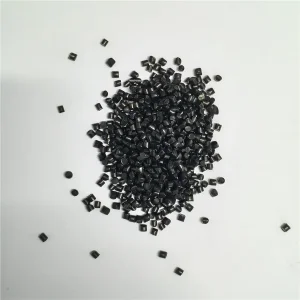
Requirements: Extremely high pinhole resistance, pinhole-free dispersion, excellent drawdown performance down to 8 microns, UV stability (for agricultural mulch), and consistent opacity using high TiO2 white masterbatch or high carbon black masterbatch.
Applications: Houseware containers, industrial crates, toys, caps and closures.
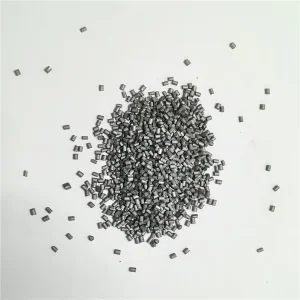
Requirements: Dimensional stability without warpage, minimal impact on polymer shrinkage rate, high heat resistance (up to 260°C), and brilliant aesthetic metallic hues (Gold, Silver, Purple, Rose Red masterbatch solutions).
Applications: HDPE water supply pipes, corrugated conduit, drainage profiles.
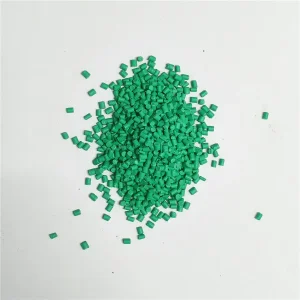
Requirements: Long-term hydrostatic strength retention, weatherability, UV blocking via 20-25% P-type carbon black loading, and non-migratory non-toxic yellow/blue identification masterbatches.
The global plastics industry is undergoing a structural transition driven by decarbonization, extended producer responsibility (EPR) regulations, and circular business models. Masterbatch manufacturers are evolving beyond basic color compounding into advanced material chemistry providers.
To meet brand sustainability targets, masterbatch producers are formulating masterbatches utilizing PCR-HDPE and PCR-LLDPE carriers. These formulations include chain extenders and compatibilizers that restore melt strength and offset thermal degradation in recycled resin streams.
Traditional carbon black masterbatches absorb Near-Infrared (NIR) light used in automated materials recovery facilities (MRF), causing plastic waste to end up in landfills. Next-generation cheap black masterbatches utilize specialty organic NIR-reflective dyes, enabling automated optical sorting of PE packaging.
By integrating nano-CaCO3 and surface-functionalized talc, modern PE filler masterbatches allow converters to introduce up to 40% filler loading without sacrificing film tear strength or dart drop impact resistance, drastically reducing resin raw material costs.
Direct manufacturer supply with high weatherability, thermal stability, and non-fading guarantees.
Addressing technical, commercial, and operational friction points for international procurement teams.