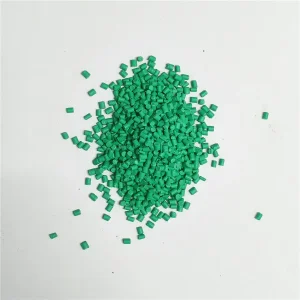
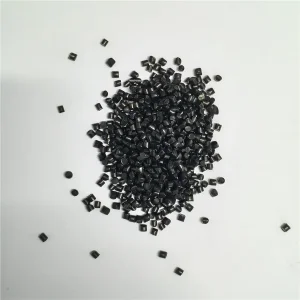
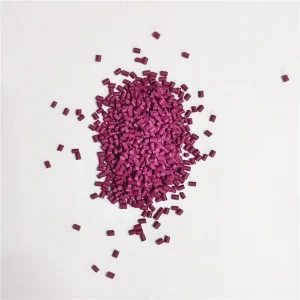
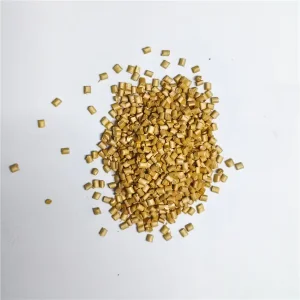
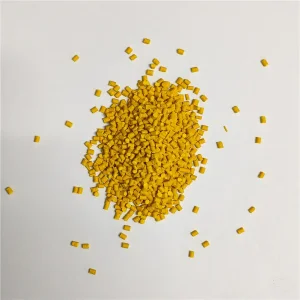
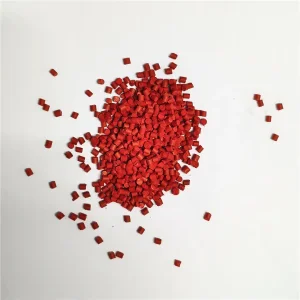
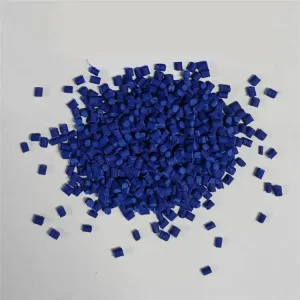
Engineered by Changzhou Jiazhou Plastic Products Co., Ltd. for extreme thermal stability (up to 260°C), zero-migration pigment loading, and precise color dispersion across blown film, injection molding, and profile extrusion.
The global thermoplastic colorant market has experienced a profound shift toward high-efficiency, specialized functional color masterbatches. Among these advanced formulations, Fluorescent Polyethylene (PE) Masterbatch stands out as a critical material vector across high-visibility packaging, industrial warning products, agricultural films, consumer electronics, and fast-moving consumer goods (FMCG). Modern fluorescent masterbatches operate on the photophysical principle of daylight fluorescence: absorbing invisible ultraviolet (UV) radiation (typically in the 300–400 nm band) and short-wavelength visible light, then re-emitting it near-instantaneously as longer-wavelength visible light (450–700 nm). This phenomenon, known as the Stokes Shift, produces visual brightness up to 200% to 300% higher than standard conventional pigments.
As international supply chains optimize for operational cost, regulatory compliance, and thermal resilience, procurement teams increasingly turn to premier manufacturing hubs in China. Top-tier Chinese masterbatch producers, such as Changzhou Jiazhou Plastic Products Co., Ltd. (operating with 16+ years of specialized compounding experience across a 6,000 m² facility), have integrated state-of-the-art co-rotating twin-screw extrusion systems, precise rheology matching, and sub-micron pigment dispersion technologies. This technological integration addresses historical challenges in fluorescent plastic coloration, such as pigment thermal degradation at processing temperatures exceeding 220°C, dye migration, plate-out on extruder screws, and premature light fading under outdoor solar exposure.
Achieving stable fluorescence in a Polyethylene matrix (LDPE, LLDPE, or HDPE) requires rigorous chemical engineering. Organic fluorescent dyes in their raw state exhibit poor thermal stability and tend to migrate rapidly within non-polar polyolefin polymer chains. To overcome this fundamental limitation, leading Chinese manufacturers utilize dye-encapsulated solid-solution resin matrices.
In this architecture, the fluorescent organic chromophore is dissolved into a brittle polymer carrier matrix (such as melamine-formaldehyde or modified polyester resin) at high temperatures. This matrix is subsequently micro-ground into fine pigment particles (typically 1 to 5 microns) before being masterbatched into a prime LLDPE/LDPE carrier resin. The resulting masterbatch guarantees three core performance parameters:
The rigid polymeric encapsulation locks fluorescent dye molecules within microscopic domains, preventing dye diffusion into surrounding plastic substrates or contact surfaces under high pressure.
By controlling shear rates during twin-screw compounding, masterbatches withstand melt processing temperatures up to 260°C without chromophore thermal cracking or color shift.
High filterability index (FPV < 0.5 bar/g) ensures zero filter clogging in ultra-thin film blowing operations (down to 12-micron film thickness) and defect-free injection surfaces.
| Coloration Method | Dispersion Uniformity | Thermal Stability (Max °C) | Dye Migration Risk | Dosing Cleanliness & Automation | Overall Cost Efficiency |
|---|---|---|---|---|---|
| Encapsulated PE Masterbatch | Exceptional (Filter Value < 0.5) | 240°C – 260°C | Zero (Non-migratory grade) | Fully Automated Granular Feeding | High (Minimal scrap, low LDR 1-4%) |
| Dry Pigment Powder Blending | Poor (Agglomeration risks) | 180°C – 200°C | High (Surfactant dependent) | Messy, high dust, manual contamination | Low initial, High operating cost |
| Liquid Color Concentrates | Moderate to High | 200°C – 220°C | Moderate (Screech / Slip issues) | Requires specialized liquid pumps | High equipment capital expense |
China's dominance in the global plastics additives sector is rooted in an unmatched industrial supply ecosystem. Companies such as Changzhou Jiazhou Plastic Products Co., Ltd. represent the pinnacle of this operational model. Situated in Changzhou, Jiangsu Province, Jiazhou operates within China's primary chemical and polymer processing corridor, enjoying immediate access to upstream virgin PE resins, specialty functional additives, and international shipping ports in Shanghai and Ningbo.
The operational efficiencies of modern Chinese masterbatch factories manifest across four strategic pillars:
By sourcing high-purity organic fluorescent pigments directly from regional chemical manufacturers and compounding them in-house with virgin LDPE/LLDPE carriers, factories eliminate intermediary markups, passing 15% to 30% cost savings directly to overseas B2B buyers.
Factory production floors utilize high Length-to-Diameter (L/D 44:1 to 48:1) co-rotating twin-screw extruders equipped with multiple side-feeders and vacuum degassing units. This architecture ensures optimal shear mixing without thermally degrading delicate fluorescent dye complexes.
Every production batch undergoes spectrophotometric color measurement (CIE L*a*b* standard with ΔE < 0.8 tolerance), Melt Flow Index (MFI) testing, moisture content verification (< 0.05%), and thermogravimetric analysis (TGA) to guarantee international compliance.
Standard orders feature an industry-leading 15-day manufacturing lead time. R&D color-matching laboratories can match customer-submitted physical samples or Pantone/RAL numbers within 48 to 72 hours, providing production-ready samples for rapid testing.
Fluorescent PE Masterbatch is engineered for versatility across all major polyolefin processing methods. The table and guidelines below outline optimal let-down ratios (LDR), recommended resin carriers, and processing temperatures for specific downstream applications.
| Processing Method | Target Base Polymer | Recommended LDR (%) | Optimal Processing Temp Range (°C) | Key Quality Indicator |
|---|---|---|---|---|
| Blown Film (Monolayer / Multilayer) | LDPE / LLDPE / mLLDPE | 2.0% – 4.0% | 160°C – 200°C | Zero Gel Count, Bubble Stability, High Tensile Strength |
| Injection Molding | HDPE / PP / LLDPE | 1.5% – 3.0% | 190°C – 250°C | Surface Gloss, Low Warpage, Uniform Fluorescence |
| Extrusion Blow Molding (EBM) | HDPE / LDPE | 2.0% – 3.5% | 175°C – 220°C | Parison Melt Strength, ESCR (Environmental Stress Crack Resistance) |
| Pipe & Profile Extrusion | HDPE (PE80 / PE100) | 2.5% – 4.0% | 180°C – 230°C | Long-Term Hydrostatic Strength, UV Resistance Index |
Global plastic converters and brand owners face increasingly stringent environmental regulations regarding heavy metal limits, volatile organic compound (VOC) emissions, and hazardous chemical bans. Sourcing masterbatch from certified Chinese manufacturers ensures seamless compliance with international markets.
Formulations are 100% free from Lead (Pb), Cadmium (Cd), Mercury (Hg), Hexavalent Chromium (Cr VI), PBBs, and PBDEs, making them suitable for electronic housing applications.
Fully compliant regarding Substances of Very High Concern (SVHC). Raw materials undergo systematic audit tracking to satisfy European Union import criteria.
Strict element migration limits ensure child safety for injection-molded toy components and consumer packaging contact applications.
The masterbatch industry is evolving rapidly alongside circular economy initiatives. Three key trends define the next generation of fluorescent PE color concentrates:
1. PCR (Post-Consumer Recycled) Compatibility: As global legislation mandates 25% to 30% recycled content in plastic packaging, modern fluorescent masterbatches are formulated with specialized compatibilizers and chain extenders. These additives neutralize the yellowing background hue of recycled PCR resins while restoring high-impact fluorescence brightness.
2. NIR-Detectable Fluorescent Markers for Automated Sorting: Municipal recycling plants utilize Near-Infrared (NIR) optical sorters to separate polymers. Advanced fluorescent masterbatches incorporate NIR-reflecting markers, allowing high-speed automated machinery to identify and sort polyolefin resins accurately even when highly pigmented.
3. Heavy-Metal-Free Organic Fluorescent Chemistry: Emerging formulations eliminate traditional formaldehyde-based carrier resins in favor of bio-based or acrylic hybrid encapsulants, further reducing total carbon footprint during extrusion processing.
Technical guidance for polymer engineers, procurement directors, and masterbatch distributors sourcing from China.
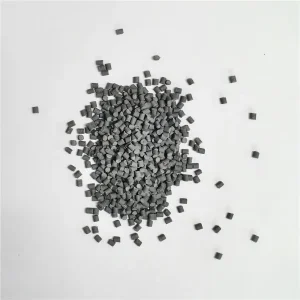
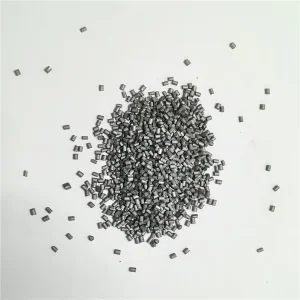
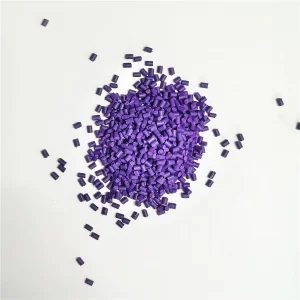
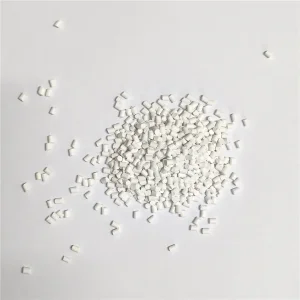
From vibrant yellows and deep blacks to high-opacity whites and functional filler concentrates, select your product specifications below.
Partner directly with an established 16-year masterbatch manufacturer. Request customized samples, technical data sheets (TDS), safety data sheets (SDS), or factory audit access.
No. 4-3, Shengli Road, Buyi, Zouqu Town, Zhonglou District, Changzhou City, Jiangsu Province, China.
Phone / WhatsApp: +86 158 6116 1116
Secondary Line: +86 177 6838 8359