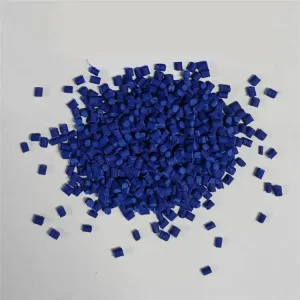
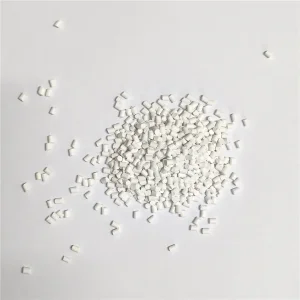
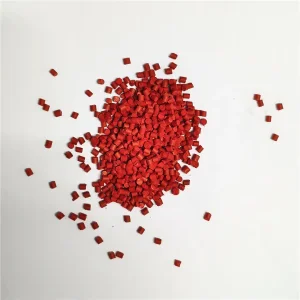
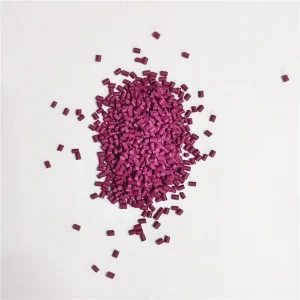
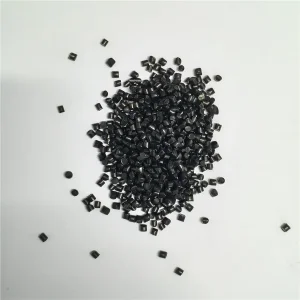
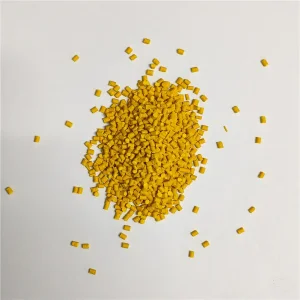
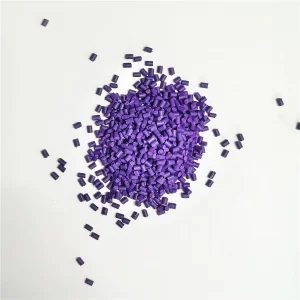
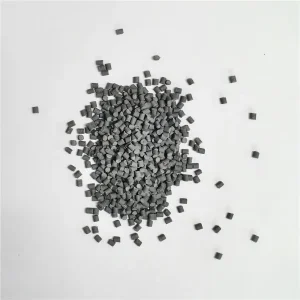
Precision-formulated carrier systems engineered for injection, extrusion, and blow molding compliance.
Engineering Rheological Precision, Surface Integrity, and Thermal Endurance for Global Tier-1 Appliance Manufacturers
The global household appliance industry is undergoing a profound material transition. As consumer expectations for high-gloss visual appeal, structural durability, long-term UV resistance, and environmental safety escalate, OEMs (Original Equipment Manufacturers) and Tier-1 plastic injection molders face complex compounding challenges. The outer housings of modern refrigerators, washing machines, air conditioners, and small countertop appliances demand absolute consistency in color metrics, structural strength, and flame-retardant properties.
Polyethylene (PE) matrix carriers—specifically engineered high-density polyethylene (HDPE) and linear low-density polyethylene (LLDPE) compounds—have emerged as essential masterbatch vehicles. When compounding injection-grade colors for home appliance shells, masterbatches must maintain optimal interfacial adhesion with base resins such as ABS, HIPS, PP, and engineered PE blends. Improper dispersion of pigments or fillers leads to catastrophic surface defects, including flow marks, weld lines, ambient yellowing, and mechanical stress cracking.
Precision engineering of PE masterbatch for home appliance injection requires meticulous control over carrier viscosity, pigment surface treatments, and multi-functional functional additive packages. The compounding matrix developed by Changzhou Jiazhou Plastic Products Co., Ltd. resolves common injection molding failure modes through a structured technical pipeline.
Utilizing narrow molecular weight distribution LLDPE/HDPE carrier matrix ensures that the masterbatch melts 10°C to 15°C below the primary host resin. This optimizes pigment release and eliminates micro-agglomerates during high-speed cavity filling.
Organic and inorganic pigments undergo silane coupling agent coating to improve hydrophobic properties. This prevents pigment migration under high humidity and exposure to household chemicals (detergents, oils, alcohol solutions).
Integration of Hindered Amine Light Stabilizers (HALS) and primary/secondary phenolic antioxidants prevents polymer backbones from chain scission during heat processing up to 260°C and long-term Indoor UV exposure.
| Performance Parameter | Standard Commercial Masterbatch | Jiazhou Appliance-Grade Injection Masterbatch | Testing Protocol Method |
|---|---|---|---|
| Pigment Dispersion Degree | Level 2 - 3 (Visible micro-specks) | Level 5 (Zero agglomerates > 5µm) | ISO 18553 Pressure Filter Test |
| Heat Resistance Limit | 200°C - 220°C | 260°C - 280°C Continuous | DIN EN 12877-2 |
| Color Migration Resistance | Grade 3 (Slight bleeding) | Grade 5 (Zero migration) | ISO 105-E04 Fastness Analysis |
| Heavy Metal Compliance | Basic RoHS (Trace elements) | Strict RoHS 2.0, REACH SVHC, Halogen-Free | ICP-OES Spectrometry |
| Melt Flow Rate Impact | High variance (±25% MFI shift) | Negligible Variance (< 5% MFI delta) | ASTM D1238 (190°C / 2.16kg) |
Procurement directors at international home appliance conglomerates (such as Haier, Midea, Whirlpool, LG, and Bosch) operate under strict vendor qualification frameworks. When sourcing masterbatch from Chinese factories, purchasing managers evaluate suppliers across four core metrics:
In automated assembly lines, a refrigerator door panel molded in January must match perfectly with a side shell molded in June. Jiazhou utilizes computer spectrophotometers (Datacolor 800 series) to enforce a strict tolerance of ΔE < 0.3 against master digital standards, eliminating chromatic dispersion between different production runs.
By maximizing pigment loading (up to 70% titanium dioxide in white masterbatch, or up to 50% high-surface carbon black in black masterbatch), molders can lower the let-down ratio (LDR) to 1.0% - 2.0%. This dramatically reduces shipping weights and raw material procurement costs per finished unit.
Appliance housing panels easily attract ambient dust due to static charge built up during injection ejection. Jiazhou's custom functional PE masterbatches integrate permanent anti-static agents, lowering surface resistivity to 10^9 Ω/sq and keeping showroom displays dust-free.
Global appliance model launches require swift prototyping cycles. Jiazhou maintains a dedicated color matching lab that provides custom Pantone / RAL shade matching within 48 hours, backed by an agile 15-day mass-production lead time for 20ft container shipments.
Established in 2010, Changzhou Jiazhou Plastic Products Co., Ltd. operates as a premier masterbatch compounding enterprise located in Zhonglou District, Changzhou City, Jiangsu Province. Spanning a state-of-the-art 6,000 square-meter production plant, the company integrates advanced German-engineered co-rotating twin-screw extruders and automated underwater pelletizing lines.
Every lot undergoes MFI testing, ash content measurement, moisture titrations (< 0.05%), and two-roll mill dispersion analysis before warehousing.
Formulations fully meet ISO 9001:2015 certification, EU RoHS 2.0 directive, REACH EC 1907/2006 compliance, and FDA food-contact standards where required.
Serving over 100 countries across Southeast Asia, Europe, the Middle East, South America, and Africa with standardized export packing.
Our engineering team works directly with client mold operators to troubleshoot processing anomalies. Whether addressing die build-up, gas marks during high-pressure injection, or color streaking in thin-wall sections, Jiazhou provides customized technical assistance on-site or remotely.
Different household electronic housings require distinct performance characteristics. Jiazhou tailors PE color and filler masterbatch chemistries based on end-use mechanical and optical expectations:
Required Features: High impact strength, detergent chemical stability, zero environmental stress cracking (ESCR).
Recommended Solution: HDPE-based Blue/Grey PE Masterbatch with added antioxidant and anti-vibration mineral fillers (CaCO3 filler masterbatch blends) to enhance structural rigidity and lower resin consumption.
Required Features: Low-temperature impact resistance (-20°C), non-toxic food contact safety, odor-free compounding.
Recommended Solution: High-Concentration PE White Masterbatch with pristine Rutile TiO2, ultra-low volatile organic compound (VOC) carrier systems compliant with FDA and EU food safety codes.
Required Features: High weatherability, UV resistance against sunlight discoloration, thermal stability during exterior exposure.
Recommended Solution: Customized PE Grey/White Masterbatch engineered with UV stabilizers (UV-531 / HALS 770) guaranteeing 5+ years outdoor color fastness without chalking or surface degradation.
Required Features: Metallic visual effects, high surface gloss, thermal resistance to localized heat generation.
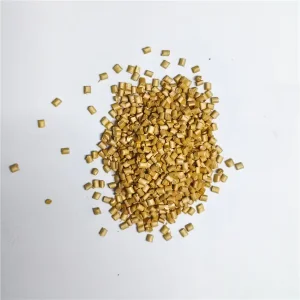
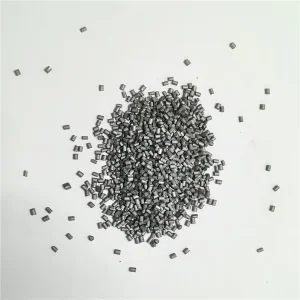
Recommended Solution: PE Silver & PE Gold Masterbatches formulated with non-shearing aluminum/bronze flakes, preventing flow-line boundaries across complex mold geometries.
Technical Response: Yes, provided carrier compatibility is managed. PE carrier has a lower melting point than PP or ABS, which aids in fast dispersion. When added at low percentages (1.0% - 2.0%), LLDPE/PE carriers do not compromise the mechanical tensile properties of PP or ABS shells. However, for 100% optical clarity or high heat distortion applications above 110°C, carrier-matched masterbatches are recommended.
Technical Response: Silver streaks are primarily caused by absorbed moisture in the masterbatch or raw resin. Jiazhou masterbatches are vacuum-dried during production to guarantee moisture content below 0.05%. Molders should ensure masterbatch bags are sealed prior to hopper feeding or utilize dehumidifying dryers at 80°C for 2 hours if stored in high-humidity ambient environments.
Technical Response: Due to our high-concentration pigment loading, the standard LDR ranges between 1% and 3% depending on wall thickness. For thick appliance housings (> 3mm), a 1.5% to 2.0% dosage achieves full opacity. Thin-wall components (< 1.5mm) may require 2.5% to 3.0% dosage for complete light-blocking performance.
Technical Response: We source heavy-metal-free organic pigments and prime virgin PE carriers. Every raw material lot undergoes X-ray Fluorescence (XRF) screening. Third-party testing reports from SGS / TÜV Rheinland are issued annually for all core series (White, Black, Blue, Red, Green, Yellow, Silver), confirming non-detectable levels of Lead, Cadmium, Mercury, Hexavalent Chromium, PBBs, PBDEs, and Phthalates.
Technical Response: Absolutely. Combining 10% - 20% CaCO3 PE Filler Masterbatch with 2% Color Masterbatch in structural parts (like back covers or base frames) increases flexural modulus, reduces molding shrinkage/warpage, speeds up cooling cycles, and significantly lowers net material costs without diminishing surface color appearance.
Technical Response: Clients provide either a Pantone/RAL color code or a 50g physical plastic sample target. Our laboratory formulates a prototype masterbatch batch, molds test chips, evaluates Delta E via spectrophotometer under D65/TL84 illuminants, and dispatches test samples along with a Technical Data Sheet (TDS) within 48 to 72 hours.
Explore our full range of color and functional masterbatches designed for plastic extrusion, injection, and blow molding factories.