Engineered specifically for multi-layer co-extrusion blown film, injection molding, and high-speed extrusion lines.
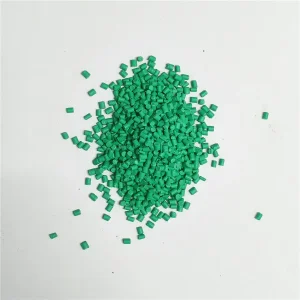
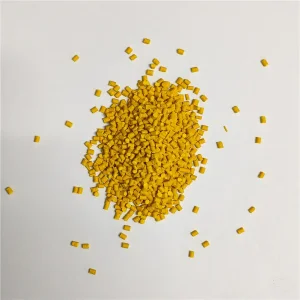
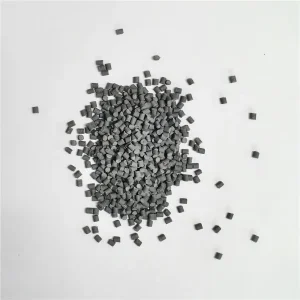
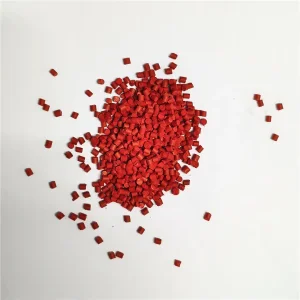
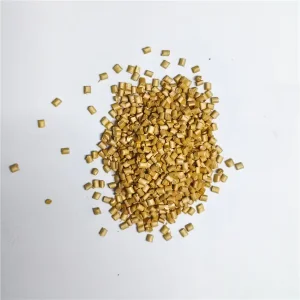
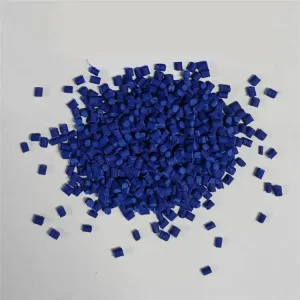
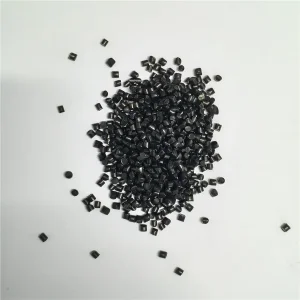
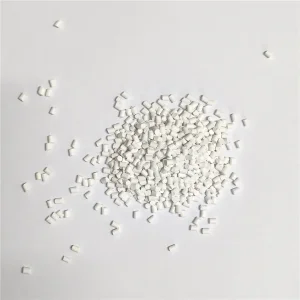
Navigating the shift from single-layer packaging to high-performance, cost-optimized multi-layer polyolefin film structures.
The global flexible packaging market is undergoing a structural transition toward multi-layer co-extrusion technology (ABA, ABC, and 5 to 7-layer structures). Driven by demand in agricultural films, food barrier packaging, and heavy-duty logistics, the market for multi-layer co-extrusion film polyethylene (PE) masterbatches is projected to grow at a CAGR of 6.2% through 2030. Modern film converters are increasingly replacing single-layer extruded films to optimize raw material costs without compromising physical strength.
Multi-layer co-extrusion allows precise placement of additive and color masterbatches. Instead of uniformly dispersing expensive pigments across the entire film thickness, converters isolate high-opacity color pigments or specialized additives into thin skin layers (A and C), while loading high-percentage calcium carbonate ($\text{CaCO}_3$) filler masterbatches into the core layer (B). This engineering approach reduces overall color formulation costs by 18% to 35%.
Global film manufacturers in Europe, North America, Southeast Asia, and the Middle East are shifting masterbatch procurement toward specialized Chinese manufacturers. China’s advanced chemical industrial clusters offer high supply chain integration—combining low-density polyethylene (LDPE), linear low-density polyethylene (LLDPE), metallocene PE (mPE) carrier resins with high-purity titanium dioxide ($\text{TiO}_2$) and organic pigments at unmatched scales.
Resolving melt viscosity mismatch, interfacial instability, die build-up, and pigment migration in co-extruded films.
In multi-layer co-extrusion blown film processes, multiple extruders feed distinct molten polymer streams into a single co-extrusion die block. Achieving perfect film uniformity, bubble stability, and aesthetic clarity requires meticulous carrier resin selection and particle dispersion engineering. As a leading China multi-layer co-extrusion film PE masterbatch supplier, Changzhou Jiazhou Plastic Products Co., Ltd. customizes rheological profiles to eliminate internal shear stress and interfacial delamination.
Masterbatch carrier resins must match or slightly exceed the Melt Flow Index (MFI) of the base polyethylene matrix. For thin ABA film skins ($15–25\,\mu\text{m}$ per layer), carrier MFI is precisely controlled between 2.0 to 12.0 g/10min (190°C/2.16kg) using specialized mPE or LLDPE resins to prevent gel formation and viscosity mismatch.
Poor pigment dispersion leads to film pinholes, low dart impact strength, and bubble tears. Our high-shear twin-screw extruders disperse primary organic and inorganic pigment aggregates down to <1.0 micron particle size, evaluated via Filter Pressure Value (FPV) testing under DIN EN 13900-5 standards ($FPV < 0.5\,\text{bar/g}$).
High-speed multi-layer film lines operate at temperatures reaching 240°C–260°C. Jiazhou color masterbatches utilize thermal-stabilized organic pigments, complex inorganic colorants, and specialized anti-migration additives, guaranteeing zero pigment blooming, color shifting, or dye migration across film layers.
Strategic additive and color allocation in 3-layer ABA/ABC and 5-layer co-extruded films.
The external layer provides optical appeal, weatherability, and printable contact surfaces. Formulations incorporate:
The internal core makes up 50% to 70% of total film thickness. It focuses on mechanical integrity and cost efficiency:
The interior skin contacts food, liquids, or packaged contents. Focuses on sealability and non-toxic compliance:
How Changzhou Jiazhou Plastic Products Co., Ltd. combines smart automated manufacturing with global delivery resilience.
Continuous multi-component gravimetric feeding systems ensure raw pigment powders, additives, and PE carriers are metered with ±0.2% accuracy, guaranteeing batch-to-batch color consistency ($\Delta E < 0.8$).
Equipped with co-rotating twin-screw extruders with specialized screw profiles (kneading blocks, reverse flight elements) ensuring optimal dispersion without thermal degradation of sensitive organic pigments.
Our ISO-certified laboratory conducts X-ray fluorescence heavy metal screening, spectrophotometer Delta E color matching, Melt Flow Index (MFI) analysis, and lab-scale blown film line test extrusions before shipment.
Located in Changzhou, Jiangsu, near major deep-water ports (Shanghai and Ningbo Port). Streamlined customs clearance and agile production enable guaranteed 15-day export lead times to over 100 countries.
Key laboratory testing parameters for international procurement teams and quality assurance engineers.
| Property / Test Parameter | Test Standard Method | Typical Specification Value | Application Significance for Co-Extrusion |
|---|---|---|---|
| Carrier Resin Type | ISO 1043 / ASTM D1600 | LLDPE / mPE / LDPE Matrix | Ensures full miscibility with base packaging grade PE resins. |
| Pigment Loading Content | ISO 3451-1 (Ash Content) | 20% – 75% Weight Base | High pigment density minimizes addition rate (1.0% – 4.0% dosage). |
| Melt Flow Index (MFI) | ASTM D1238 / ISO 1133 (190°C/2.16kg) | 2.0 to 18.0 g/10 min | Matches shear viscosity between skin and core extruders to prevent melt fracture. |
| Filter Pressure Value (FPV) | DIN EN 13900-5 (100 mesh screen) | < 0.5 bar/g | Measures fine pigment dispersion; prevents film pinholes and bubble breaks. |
| Thermal Stability Range | Internal Lab Extrusion / TGA | 220°C – 280°C (30 min) | Prevents color degradation and gas voiding during high-speed extrusion. |
| Moisture Content | ASTM D6980 (Karl Fischer) | < 0.05% (500 ppm) | Eliminates moisture voids, bubble splattering, and lamination failure. |
| Color Difference ($\Delta E^*$) | CIE $L^*a^*b^*$ Spectrophotometer | $\Delta E^* \le 0.8$ vs Standard | Guarantees exact color matching across different production batches. |
| Heavy Metal Compliance | RoHS 2.0 / REACH / FDA 21 CFR | Pb, Cd, Hg, $Cr^{6+}$ Free | Ensures non-toxic compliance for consumer and food-contact films. |
Custom masterbatch formulations optimized for specific end-use film extrusion equipment.
Modern courier envelopes utilize 3-layer co-extrusion: white skin on Layer A for high-contrast barcode printing and aesthetic branding, and deep black on Layer B/C for 100% opacity and privacy. Jiazhou provides paired PE White Masterbatch and PE Black Masterbatch engineered to run synchronously without layer migration or peeling.
Agricultural silver-black light-reflecting films require high weatherability. The silver layer (facing upward) reflects solar radiation and repels insects, while the black layer (facing soil) blocks sunlight to inhibit weed growth. Our PE Silver Masterbatch and PE Black Masterbatch feature advanced anti-oxidants and UV absorbers (UV-531 / HALS 944) for multi-season outdoor lifespan.
Form-Fill-Seal (FFS) bags for petrochemical resins, fertilizers, and construction materials demand high puncture resistance and tear strength under load. Our specialized masterbatches maintain metallocene PE polymer chain integrity, allowing high pigment loading without compromising drop impact or tensile elongation at break ($>600\%$).
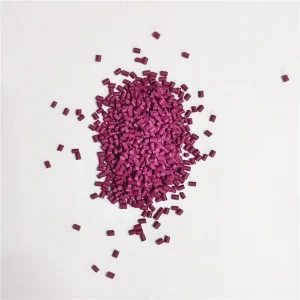
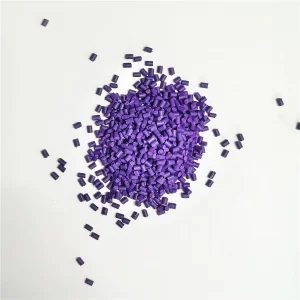
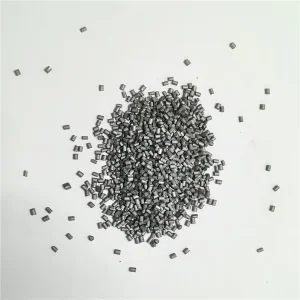
Explore our full spectrum of anti-fading, heat-resistant masterbatches designed for plastic coloring factories globally.
Expert technical solutions for melt instability, dosage optimization, carrier compatibility, and global compliance.
In co-extrusion blown film lines (such as ABA or ABC structures), if the masterbatch carrier resin has an MFI significantly lower than the base PE polymer, it creates melt flow instability and localized high-shear viscosity pockets. This results in visual streaking, gauge variation, and interfacial shear fracture (commonly known as "shark skin"). Matching or slightly exceeding the base resin MFI (typically 2.0 to 12.0 g/10min at 190°C/2.16kg) ensures smooth laminar flow through the spiral mandrel die, uniform layer thickness, and optimal color homogenization.
Single-layer film extrusion forces converters to add expensive titanium dioxide ($\text{TiO}_2$) or color pigments throughout 100% of the film's cross-sectional thickness. In contrast, a 3-layer ABA co-extrusion die isolates color loading to the thin outer skin layers (A-layers, comprising ~30% of total gauge), while incorporating cost-effective PE calcium carbonate ($\text{CaCO}_3$) filler masterbatch into the thick core layer (B-layer, comprising ~70% of total gauge). This strategic allocation reduces costly pigment consumption by up to 35% without losing surface opacity or color brilliance.
Film pinholes and bubble instability in thin-gauge films ($10–25\,\mu\text{m}$) are primarily caused by un-dispersed pigment agglomerates or high moisture content in masterbatches. Changzhou Jiazhou resolves this through continuous high-shear twin-screw compounding and fine melt filtration, achieving a Filter Pressure Value (FPV) below 0.5 bar/g. Furthermore, vacuum-degassing and double-seal aluminum moisture-barrier packaging guarantee moisture levels remain under 0.05% (500 ppm), completely preventing steam bubble voiding during extrusion.
Yes. Modern sustainability mandates require higher percentages of recycled PCR/PIR LLDPE and HDPE content. Our masterbatches are formulated with thermal stabilizers and functional compatibilizers that neutralize yellowing tendencies and cross-linking gels common in recycled resins. Our high-tinting-strength black, white, and color masterbatches effectively mask recycled resin base tone variations, restoring vibrant visual appeal.
All Changzhou Jiazhou color masterbatches and filler masterbatches comply strictly with EU RoHS 2.0 (Directive 2011/65/EU) and REACH (EC 1907/2006) regulations, verifying the total absence of heavy metals (Pb, Cd, Hg, $Cr^{6+}$), polybrominated biphenyls (PBBs), and phthalate plasticizers. Food-grade masterbatch series also conform to US FDA 21 CFR 177.1520 standards for direct food contact packaging.
Due to our high pigment concentration (e.g., 60%–70% $\text{TiO}_2$ in White Masterbatch, 40%–50% Carbon Black in Black Masterbatch), the recommended let-down ratio (LDR) ranges between 1.0% and 4.0% by weight in the skin extruders. For core layer calcium carbonate filler masterbatches, dosage can reach 10% to 35% depending on film strength requirements and extruder screw design.
Clients can provide standard Pantone / RAL color codes or send physical target plastic samples. Our computer-aided spectrophotometer lab develops a precise formulation matched under multiple illuminants (D65, A, TL84). We ship lab-extruded test samples or blown film specimens to overseas buyers for physical approval within 3 to 5 working days prior to mass production.
Masterbatches are packed in heavy-duty 25kg moisture-proof woven polybag packaging with inner PE liners or 1,000kg industrial jumbo bags on wooden pallets. When stored in a cool, dry warehouse environment out of direct sunlight, our masterbatches retain full processing performance and color stability for up to 24 months from the manufacturing date.