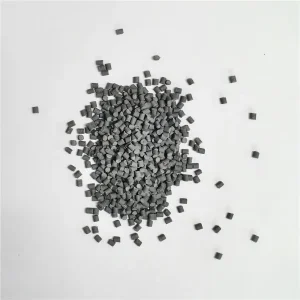
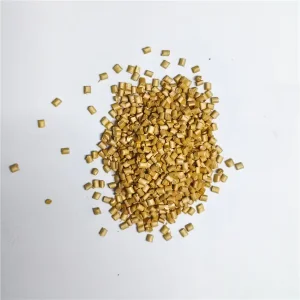
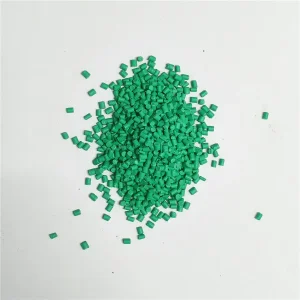
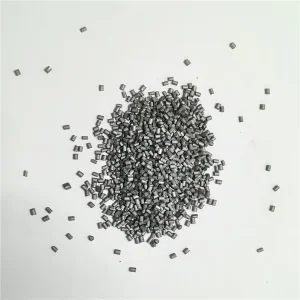
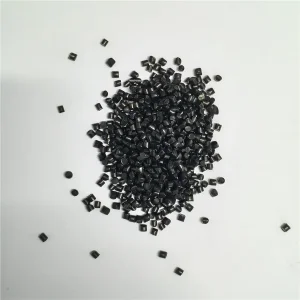
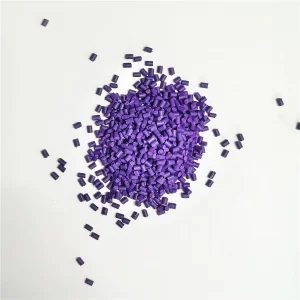
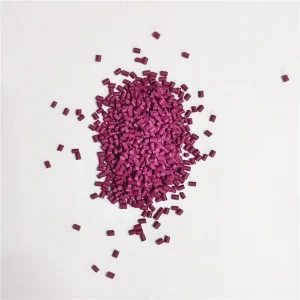
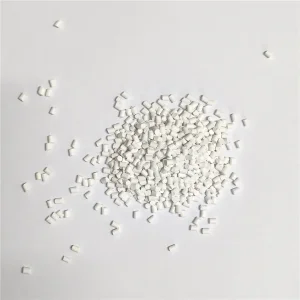
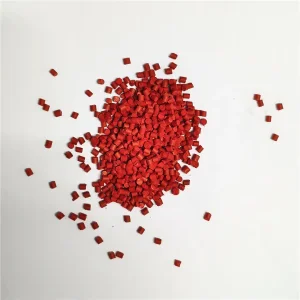
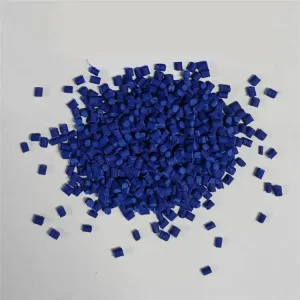
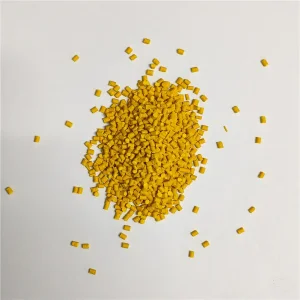
Engineered with high pigment loading, superior matrix dispersion, and thermal stability up to 260°C for global industrial converters.
Understanding market growth dynamics, raw material integration, and why Chinese factories lead the global polyolefin color concentrate supply chain.
The global plastic manufacturing sector is undergoing a profound paradigm shift. As end-use industries—ranging from multi-layer flexible packaging and agricultural mulch films to high-pressure polyolefin piping and precision auto components—demand higher visual appeal, structural longevity, and regulatory compliance, the chemical technology governing PE carrier color pellets (polyethylene masterbatches) has evolved dramatically.
Polyethylene (PE) remains the dominant thermoplastic carrier worldwide due to its excellent flexibility, processability, chemical inertness, and non-polar compatibility across Low-Density Polyethylene (LDPE), Linear Low-Density Polyethylene (LLDPE), and High-Density Polyethylene (HDPE) matrixes. China has established itself as the undisputed manufacturing powerhouse for PE carrier color concentrates, accounting for over 45% of global output. This dominance is propelled by complete upstream chemical integration, state-of-the-art twin-screw extrusion technology, and rigorous automated quality assurance systems.
Integrated supply chains in Jiangsu and regional chemical hubs enable Chinese manufacturers to deliver high pigment loadings (up to 70% concentration) at highly competitive unit costs.
Advanced spectrophotometers and computer-aided color formulation labs allow factories like Changzhou Jiazhou to match precise Pantone/RAL codes within ΔE < 0.5 tolerances.
Modern formulations strictly comply with global environmental mandates including RoHS 2.0, REACH SVHC, FDA food contact standard 21 CFR, and EN71-3 toy safety.
In-depth technical breakdown of Melt Flow Index (MFI) matching, dispersion physics, and polymer matrix integration.
The core challenge in manufacturing high-performance PE carrier color pellets lies in achieving a microscopic balance between pigment particle dispersion and melt rheology compatibility. If the carrier polymer possesses a Melt Flow Index (MFI) significantly lower than the matrix resin, incomplete mixing occurs, yielding surface streaks, pinholes, and reduced tensile strength. Conversely, if the carrier MFI is excessively high, mechanical degradation and phase separation may occur during high-shear blown film or extrusion processing.
| PE Carrier Grade | Target Application | MFI (g/10min @ 190°C, 2.16kg) | Pigment Concentration (% wt) | Thermal Stability (°C) | Filter Pressure Value (FPV) |
|---|---|---|---|---|---|
| LDPE Carrier (Low Density) | Ultra-Thin Blown Film, Shopping Bags | 15 – 45 | 30% – 50% | 240°C – 260°C | < 0.8 bar/g (Fine Mesh) |
| LLDPE Carrier (Linear Low) | Stretch Wrap, Heavy-Duty Sacks, Geomembranes | 20 – 50 | 40% – 60% | 260°C – 280°C | < 1.2 bar/g |
| HDPE Carrier (High Density) | Rigid Injection Molding, Crates, Bottles, Pipes | 7 – 30 | 50% – 70% | 260°C – 300°C | < 1.5 bar/g |
| Specialty Wax / Compatibilizer PE | Engineering Plastics, Masterbatch Concentrate | > 100 (Wax Grafted) | up to 75% | 280°C – 320°C | < 0.5 bar/g (Ultra-pure) |
How leading factories tailor PE color concentrates for specific plastic transformation machinery.
Requirements: Zero agglomerates, extreme dispersion down to sub-micron particle size to prevent film tearing or die lines in high-speed extrusion lines (bubble film, pouch film).
Requirements: Fast cycle times, high dimensional stability, no warping (warpage-free organic pigments), and vibrant aesthetics for housewares, toys, and industrial buckets.
Requirements: Long-term UV stabilization (Carbon Black loading > 40% or hindered amine light stabilizers HALS), high thermal endurance for outdoor HDPE pressure pipes.
Requirements: High dielectric properties, non-migration properties, chemical resistance to plasticizers, and high color consistency across millions of meters.
Key innovation vectors shaping the next decade of Chinese polyolefin color pellet manufacturing.
Traditional carbon black absorbs Near-Infrared radiation, making black plastics invisible to optical recycling sorting systems. Modern Chinese factories are scaling special NIR-transparent black formulations for circular economy compliance.
Integration of sugarcane-derived bio-PE and verified Post-Consumer Recycled (PCR) polyolefin carriers to reduce scope 3 carbon footprints without compromising pigment dispersion or processability.
Implementation of high-shear triple-screw extrusion and nano-scale organic pigment surface modifications. Allows lower let-down ratios (LDR down to 0.5-1.0%), cutting freight and storage expenses significantly.
Expert recommendations from OEM engineers to resolve common defect mechanisms during masterbatch processing.
| Processing Defect | Root Cause Mechanism | Recommended Masterbatch / Technical Remedy |
|---|---|---|
| Color Specks & Unmelted Dots | Inadequate shear rate or MFI mismatch between masterbatch carrier and base resin. | Switch to a high-MFI LDPE/LLDPE carrier masterbatch with optimized organic dispersants (PE wax / EBS). Increase back pressure on screw. |
| Die Accumulation & Build-Up | Low-grade pigment degradation, high moisture content, or excessive low-molecular-weight additives. | Utilize vacuum-degassed PE carrier pellets with ultra-pure inorganic pigments and added Fluoropolymer Process Aids (PPA). |
| Color Fading / Thermal Bleeding | Pigment thermal limit exceeded during prolonged heating cycles (> 250°C). | Select high-temperature resistant inorganic or phthalocyanine-based PE color pellets rated for 260°C–300°C continuous processing. |
| Part Warpage & Shrinkage Distortion | Organic pigment nucleation effect altering polyolefin crystallization rate in injection molds. | Deploy non-nucleating color pellet formulations optimized specifically for high-density polyethylene (HDPE) box and container molding. |
Direct answers to crucial procurement, technical, and regulatory questions from international buyers.
The standard Let-Down Ratio (LDR) for high-concentration PE color masterbatches ranges from 1% to 4% (1:100 to 4:100), depending on the target film thickness or part opacity. For high-opacity white pellets, 2-5% is standard, whereas intensely pigmented black or primary color pellets achieve optimal saturation at 1-2% LDR.
Yes. PE carrier resin possesses broad thermodynamic compatibility with Polypropylene (PP) and Ethylene-Vinyl Acetate (EVA) due to their similar non-polar aliphatic backbone structures. However, for specialized engineering plastics (like ABS, PET, or Nylon), matrix-specific carriers or universal polymer carriers must be used to prevent phase segregation.
When stored in original sealed moisture-barrier bags in a cool, dry, clean environment away from direct sunlight and heat source (< 35°C), PE carrier color pellets have a shelf life of up to 24 months. Hygroscopic functional masterbatches (such as desiccants or anti-fog additives) should be consumed immediately upon opening.
Changzhou Jiazhou employs automated computer matching and dual spectrophotometric verification (Datacolor systems). Every production lot undergoes Melt Flow Index (MFI) testing, Filter Pressure Value (FPV) assessment, and blown film sample pressing to guarantee that batch-to-batch color variation remains strictly within ΔE < 0.5.
We offer an agile 15-day average production lead time for standard export containers. Full OEM services include customized Pantone/RAL shade development, tailored carrier MFI adjustments, anti-UV/anti-static multi-functional additive incorporation, and private label moisture-proof bag packaging.
Select from our extensive catalog of high-performance PE carrier masterbatch products for your extrusion or injection mold lines.