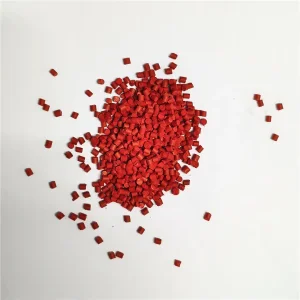
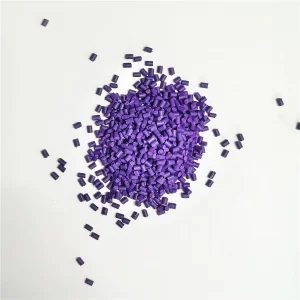
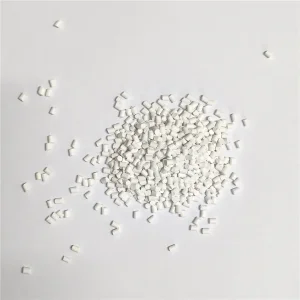
High-dispersion, non-migratory color and performance masterbatches engineered specifically for blow molding, injection extrusion, and food-grade packaging.
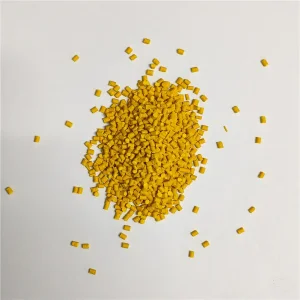
How Chinese production hubs are redefining polymer coloration standards, cost efficiency, and technological dispersion metrics in the global rigid packaging ecosystem.
The global rigid packaging industry relies heavily on Polyethylene (PE)—specifically High-Density Polyethylene (HDPE), Low-Density Polyethylene (LDPE), and Linear Low-Density Polyethylene (LLDPE)—for the production of hollow containers, blow-molded bottles, personal care packaging, agricultural chemical drums, and beverage bottles. Within this multi-billion-dollar supply chain, masterbatch technology serves as the primary mechanism for imparting color, UV protection, anti-static characteristics, and structural integrity to raw resin matrices.
China has established itself as the world's leading epicenter for PE masterbatch manufacturing, transitioning from high-volume standardized production to advanced, specialized additive engineering. Factories located in chemical manufacturing centers such as Changzhou, Jiangsu, utilize state-of-the-art co-rotating twin-screw compounding lines, automated micro-dosing systems, and real-time color spectrophotometry to supply global markets. B2B buyers, plastic converters, and blow molding facilities worldwide increasingly turn to Chinese suppliers not only for cost optimizations but for engineered solutions that resolve complex processing defects like pinholes, melt fracture, pigment migration, and thermal degradation during high-speed extrusion blow molding (EBM) and injection stretch blow molding (ISBM).
Optimizing the ratio of active inorganic (e.g., TiO2, Carbon Black) or organic pigments (e.g., Phthalocyanines) relative to the polymer matrix to maximize opacity while keeping Filter Pressure Value (FPV) below 0.8 bar/g.
Formulated with heat-stable organo-complexes that prevent pigment pyrolysis, discoloration, or polymer chain scission during extended dwell times in extrusion barrels.
Rigidly engineered to eliminate low-molecular-weight additive exudation, preventing color transfer, leaching into liquid contents, and ensuring full compliance with FDA 21 CFR and REACH regulations.
In high-speed PE plastic bottle extrusion, color inconsistency often stems from poor dispersion during melt processing. Masterbatch production requires a dual-stage compounding strategy: initial wetting of primary pigment agglomerates followed by high-shear dispersive mixing in twin-screw extruders. The carrier resin—typically a specialized LDPE or LLDPE grade with a tailored Melt Flow Index (MFI ranging from 8 g/10min to 30 g/10min at 190°C/2.16kg)—must melt slightly prior to the base resin during bottle extrusion. This ensures a uniform, streak-free distribution across the container wall without compromising structural impact strength or top-load capability.
Furthermore, bottle manufacturers face rigorous requirements concerning barrier performance. White masterbatches utilized for dairy or pharmaceutical bottles must incorporate rutile-phase Titanium Dioxide (TiO₂) surface-treated with alumina/silica compounds. This treatment prevents photocatalytic degradation of the plastic container when exposed to ultraviolet light while delivering ultra-high opacity at minimal let-down ratios (LDR of 1% to 4%).
Anticipating regulatory shifts, circular economy demands, and next-generation masterbatch compounding technologies.
Developing specialized masterbatches tailored for post-consumer recycled (PCR) HDPE matrices. Advanced chain extenders and odor-masking additives are incorporated directly into the masterbatch to neutralize recycled plastic impurities.
Eliminating traditional carbon black in black PE bottle formulations. Utilizing Near-Infrared (NIR) reflective pigments allows automated optical sorters at recycling facilities to identify and sort black HDPE bottles efficiently.
Implementation of artificial intelligence spectrophotometric algorithms that adjust pigment dosage dynamically during extrusion based on real-time raw material color fluctuations.
Tailored masterbatch formulations for demanding bottle packaging across key global industries.
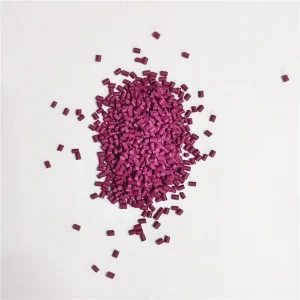
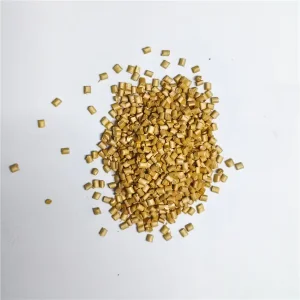
Challenge: Requiring high-luster metallic effects (Gold, Silver, Rose Red) and vibrant tones without compromising blow molding wall uniformity.
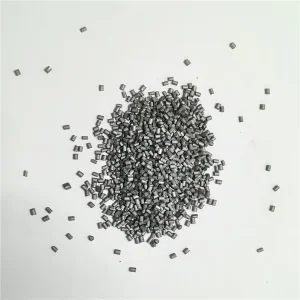
Solution: Custom PE Silver, Gold, and Rose Red Masterbatches utilizing nano-coated mica pigments that align parallel to bottle walls during inflation, creating streak-free metallic finishes.
Challenge: Containers holding harsh solvents or pesticides face severe stress cracking and pigment leaching.
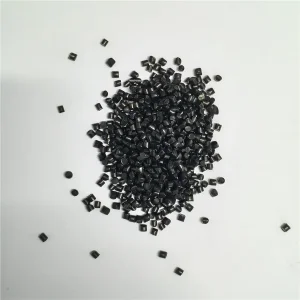
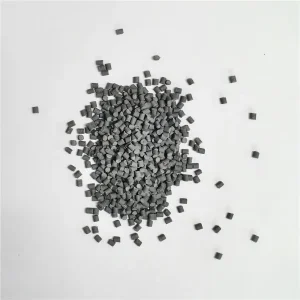
Solution: High-density Yellow, Grey, and Black PE Masterbatches containing non-migratory pigment complexes paired with specialized processing aids to reinforce container structural wall density.
Challenge: Compliance with direct food contact laws, zero odor transfer, and light barrier protection for dairy/beverage shelf-life extension.
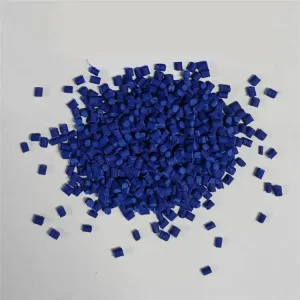
Solution: Food-grade PE White and Blue Masterbatches manufactured under strict ISO-certified clean environments, fully compliant with FDA 21 CFR 177.1520.
16 Years of Excellence in PE Masterbatch & Additive Manufacturing
Established in 2010, Changzhou Jiazhou Plastic Products Co., Ltd. is a leading manufacturer located in Zhonglou District, Changzhou City, Jiangsu Province, China. Spanning over 6,000 square meters of state-of-the-art production facilities, Jiazhou specializes in the research, development, and high-volume production of high-concentration PE color masterbatches, filler masterbatches, and functional additive masterbatches.
Operating multiple automated high-torque twin-screw extrusion lines and equipped with precision testing apparatuses—including melt index testers, spectrophotometers, moisture analyzers, and lab-scale film blow machines—Jiazhou guarantees batch-to-batch color consistency and dispersion accuracy. Serving more than 100 countries across Europe, the Middle East, Southeast Asia, and the Americas, Jiazhou provides comprehensive OEM, private label, and custom Pantone matching services with rapid 15-day delivery turnaround times.
Expert responses to critical procurement, processing, and engineering inquiries regarding PE masterbatches.
Select a product below to review detailed specifications, pigment loading profiles, and factory direct pricing options.