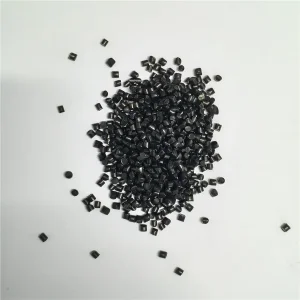
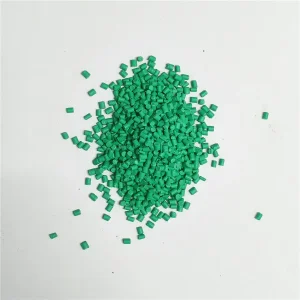
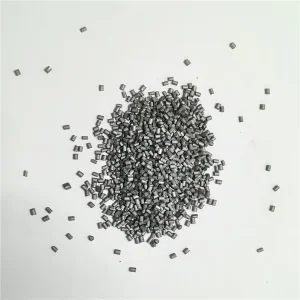
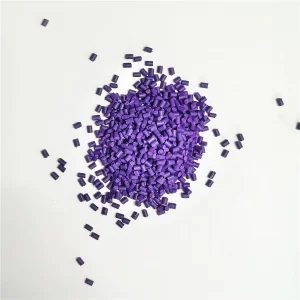
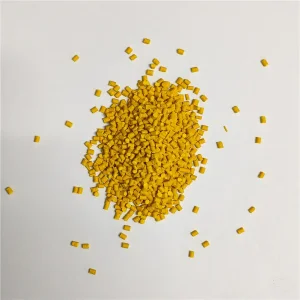
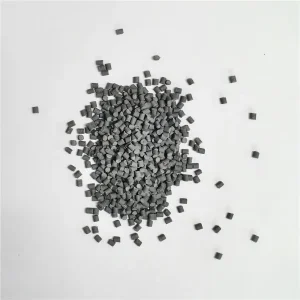
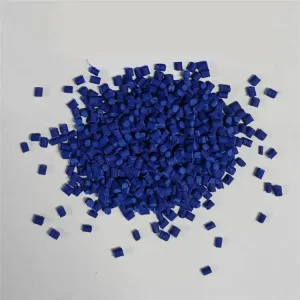
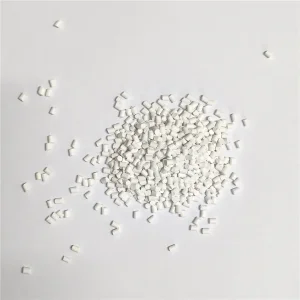
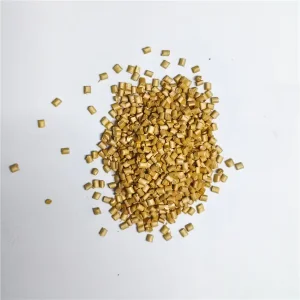
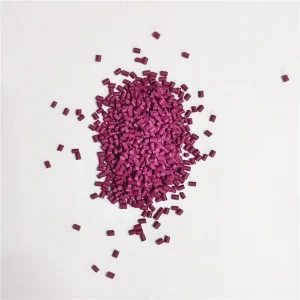
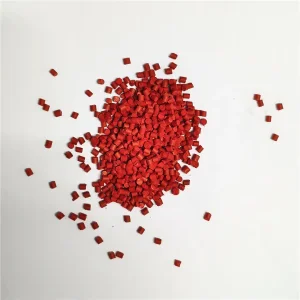
Explore our flagship, industrial-grade masterbatch range formulated with high pigment loading, superior thermal stability, and non-migratory carrier matrices.
Understanding the transition from raw pigment powder blending to engineered macromolecular masterbatch concentrates in modern plastic processing.
The global masterbatch market is projected to reach $16.5 Billion by 2030, expanding at a CAGR of 5.4%. Driven by rigid packaging, agricultural films, and automotive lightweighting, global processors are shifting away from powder pigments due to dust contamination, health hazards, and color inconsistency.
As the premier manufacturing hub, China produces over 35% of the world’s plastic additives. Strategic supply chain integration in Jiangsu province enables manufacturers like Changzhou Jiazhou to source ultra-pure virgin PE resins, inorganic titanium dioxide, and organic pigments at optimized cost structures.
Modern international regulations (REACH, EU Packaging Waste Directive) mandate high recyclability. Advanced masterbatch formulations must preserve the mechanical integrity of Post-Consumer Recycled (PCR) polymers without causing polymer chain degradation or migration during hot-fill applications.
Technical Insight: Replacing dry pigment powders with high-concentration masterbatch concentrates increases extruder throughput by up to 22%, eliminates airborne particulate contamination, and ensures delta E color variation below 0.5 across multi-ton production lots.
Deep dive into the twin-screw compounding process, carrier resin MFI matching, and surface chemistry modification.
Achieving zero pinholes and ultra-smooth surface finish in blown film extrusion requires complete de-agglomeration of primary pigment particles (down to sub-micron scales). Changzhou Jiazhou utilizes continuous co-rotating twin-screw extruders with high length-to-diameter (L/D) ratios of 44:1.
Quantitative analysis of industrial coloring methodologies in plastic processing:
| Parameter | Raw Powder | Liquid Color | PE Masterbatch |
|---|---|---|---|
| Dispersion Index | Poor (Agglomerates) | Moderate | Excellent (<5µm) |
| Dusting & Safety | Severe Hazard | Clean | Dust-Free Pellets |
| Thermal Stability | Variable | Limited (<200°C) | Ultra-High (260°C+) |
| Storage & Shelf Life | Moisture Sensitive | Settling Issues | Stable (24+ Months) |
16 Years of Manufacturing Rigor, State-of-the-Art Production Lines, and Global Export Capability.
Our processing lines utilize loss-in-weight gravimetric feeders capable of maintaining additive dosing precision within ±0.2%. This eliminates color banding and hue fluctuations across continuous extrusion cycles.
Using Datacolor spectrophotometers and CIELAB color space coordinates ($L^*, a^*, b^*$), our lab technicians evaluate color fidelity under multiple illuminants (D65, F12, A) to ensure zero metamerism.
Every lot undergoes Filter Pressure Value (FPV) testing according to EN 13900-5 standards. Low FPV ratings guarantee minimal screen pack clogging and optimal melt cleanliness for ultra-thin film blowing.
Tailored masterbatch formulations optimized for specific thermal profiles, mechanical stresses, and processing machinery.
Designed for LDPE, LLDPE, and HDPE blown films ranging from 10 to 150 microns. Ideal for agricultural greenhouse films, shopping bags, and industrial courier mailers. Delivers high opacity, pinhole-free film surface, and high tear resistance.
Engineered for high-rigidity household goods, electrical enclosures, automotive interior parts, and caps & closures. Formulated with high flow carrier resins that reduce cycle times, prevent part warpage, and ensure isotropic mold shrinkage.
Specifically matched for outdoor HDPE water pipes, corrugated conduits, and architectural profiles. Incorporates P-type carbon black and HALS UV stabilizers to provide weatherability exceeding 20 years without mechanical embrittlement.
Ensuring full regulatory clearance across North American, European, and Asia-Pacific destination markets.
| Regulatory Body / Standard | Compliance Scope | Technical Verification | Target Market Application |
|---|---|---|---|
| FDA 21 CFR 177.1520 | Food Contact Polymers | Heavy-metal free, non-migratory pigment certification | Food packaging, beverage bottle caps, kitchenware |
| EU Directive 10/2011 | Plastic Materials in Contact with Food | Specific Migration Limit (SML) testing verified | European Union food packaging & utensils |
| REACH (EC 1907/2006) | Substances of Very High Concern | SVHC 235+ substances non-detectable screening | All EU industrial export goods |
| RoHS 2.0 (2011/65/EU) | Restriction of Hazardous Substances | Lead, Cadmium, Mercury, Hexavalent Cr free | Consumer electronics & home appliances |
| EN 71-3 Safety of Toys | Migration of Heavy Elements | Acid extractable element limit verification | Children's toys and nursery products |
Advancing polymer additives through smart material engineering, circular economy integration, and multifunctional masterbatch carriers.
Traditional carbon black absorbs Near-Infrared (NIR) radiation, rendering black plastics invisible to optical sorting equipment in recycling centers. Jiazhou's next-gen NIR-detectable masterbatches allow automated sorting machines to identify and recycle black rigid containers effortlessly.
Engineered to address the growing demand for fully compostable packaging, our bio-carrier masterbatch series utilizes Polylactic Acid (PLA) and Polyhydroxyalkanoates (PHA) carriers without compromising thermal tolerance or color brilliance.
Integrating color pigments with functional additives (Color + Anti-static + Anti-UV + Processing Aid) in a single pelletized product, eliminating multi-dosing equipment friction and dosing error rates on client production floors.
Expert answers regarding masterbatch dosing, carrier compatibility, processing parameters, and color matching protocols.
For standard injection molding and heavy-wall profile extrusion, a let-down ratio of 1% to 2% (1:100 to 2:100) is typically recommended. For ultra-thin blown films (under 25 microns) or high-opacity applications, the addition rate ranges from 2% to 4% depending on the required pigment loading and hiding power.
To prevent delamination, drop in tensile strength, or phase separation, the carrier resin of the masterbatch must be chemically compatible with the base polymer. Polyethylene (PE) carrier masterbatches display broad compatibility with LDPE, LLDPE, HDPE, and PP resins. For engineering plastics (ABS, PC, PET), custom carrier matching is essential to maintain thermal and mechanical performance.
During high-speed injection molding or extrusion, melt temperatures can exceed 240°C–280°C. Inferior organic pigments undergo thermal degradation, resulting in color fading, gas venting streaks, or discoloration. Jiazhou masterbatches use high-thermal-grade inorganic and organic pigments capable of resisting thermal breakdown at temperatures up to 260°C without color shift.
Clients submit a target color code (Pantone / RAL) or a physical plastic sample. Our laboratory utilizes computerized spectrophotometry to calculate the exact pigment formulation, produces trial pellets, extrudes sample chips, and provides a trial batch within 3 to 5 business days for customer evaluation and approval.
Browse our full product suite engineered for weatherability, heat resistance, and non-migration properties.