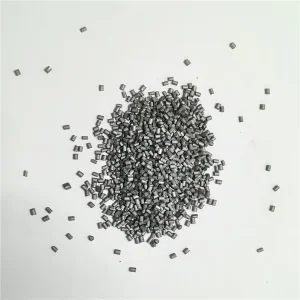
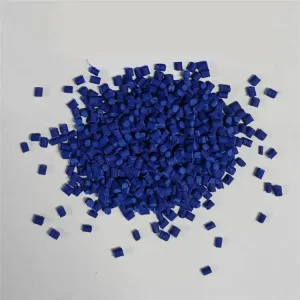
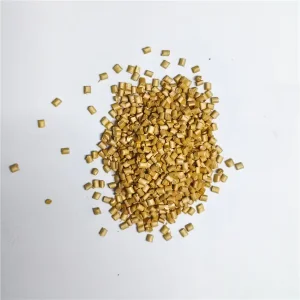
Engineered for extreme thermal stability (up to 260°C), zero pigment migration, and superior interfacial bonding across flexible packaging and label films.
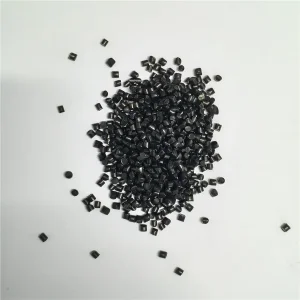
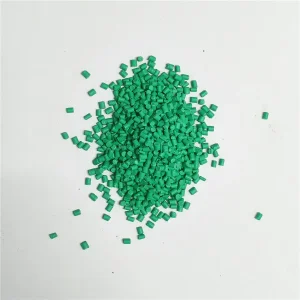
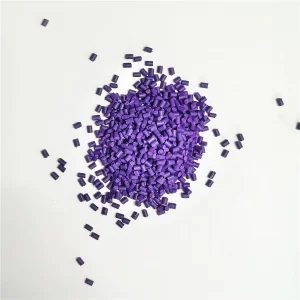
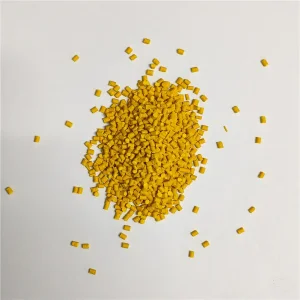
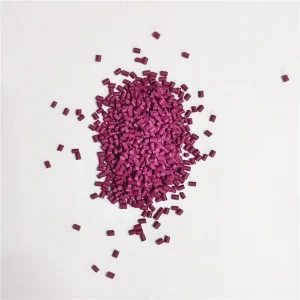
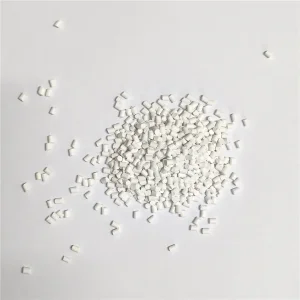
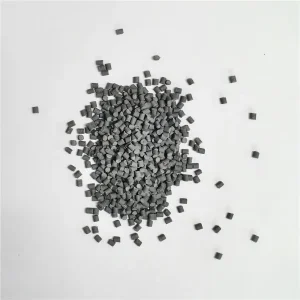
In the rapidly evolving global packaging sector, plastic labels—spanning self-adhesive pressure-sensitive labels (PSL), heat-shrink sleeve films (PETG/PVC/PE), and In-Mold Labeling (IML) containers—represent a multi-billion-dollar market. However, film converters and masterbatch compounders face a persistent technical bottleneck: interfacial adhesion failure and label delamination. Polyethylene (PE), non-polar by nature with a low surface energy of approximately 30 to 32 dynes/cm, inherently resists chemical bonding with inks, UV coatings, and pressure-sensitive acrylic or hot-melt adhesives.
Traditional solutions rely heavily on post-extrusion surface modification such as high-voltage Corona discharge or flame treatment. While corona treatment temporarily elevates PE surface energy to 38–42 dynes/cm by introducing hydroxyl (-OH) and carbonyl (-C=O) polar groups, this surface state suffers from severe hydrophobic recovery and dyne decay during storage. Furthermore, traditional masterbatches formulated with low-quality paraffin waxes, low-molecular-weight carriers, or high slip additive dosages (such as erucamide or oleamide) undergo rapid surface migration. This bloom creates a micro-wax layer that completely destroys ink anchorage and adhesive tackiness.
Changzhou Jiazhou Plastic Products Co., Ltd., leveraging over 16 years of polymer compound engineering, has developed the next-generation High-Adhesion PE Color Masterbatch series. By introducing maleic anhydride grafted polyethylene (MAh-g-PE) coupling matrix chemistry, ultra-fine micronized inorganic nucleation, and non-blooming polar migration inhibitors, our masterbatches actively maintain long-term substrate surface energy while guaranteeing vibrant pigment dispersion across blown film, cast film, and injection molding lines.
Analysis of international B2B buyer search intent reveals critical performance criteria demanded by leading film converters, label printers, and plastic packaging manufacturers across Europe, North America, Southeast Asia, and the Middle East.
B2B buyers require masterbatches that do not accelerate dyne decay. Standard additives migrate to the film skin layer, neutralizing corona charges. High-adhesion PE masterbatch incorporates polar-anchored carrier resins that restrict additive migration, preserving film printability for up to 12 months post-extrusion.
Modern high-speed blown film extruders operate at temperatures exceeding 240°C–260°C and screw speeds over 400 RPM. Buyers seek masterbatch formulations with zero pigment thermal degradation, preventing color shift, streaks, and filter pack clogging during prolonged production runs.
In IML injection molding, the label and container fuse under molten polymer pressure. Masterbatches used in IML films must possess precise Melt Flow Index (MFI) matching to avoid structural warping, bubble entrapment, or adhesion failure at the label-body boundary.
Poorly dispersed pigment agglomerates act as stress concentration points, leading to pinholes in thin label films (15–30 microns) and delamination under peel testing. Jiazhou masterbatches achieve pigment particle dispersion under 0.5 microns via high-shear twin-screw compounding.
Export-oriented packaging suppliers demand absolute compliance with US FDA 21 CFR 177.1520 (food contact), EU No 10/2011, REACH SVHC, Heavy Metal-Free (EN 71-3), and RoHS directives. Jiazhou enforces comprehensive raw material screening to ensure complete regulatory peace of mind.
Overseas buyers seek high-concentration formulations that allow low let-down ratios (LDR of 1%–3%). High pigment loading (up to 70% TiO2 in whites, 45% Carbon Black in blacks, 30-40% organic pigments in colors) reduces freight costs and minimizes inventory holding expenses.
Achieving robust, permanent adhesion between a PE label film substrate and overlying inks or adhesives requires controlling polymer surface thermodynamics. The thermodynamic work of adhesion ($W_{A}$) between a solid polymer surface ($s$) and a liquid ink or adhesive ($l$) is expressed by the Young-Dupré equation:
Where γsd and γld represent the dispersive (van der Waals) surface tension components, and γsp and γlp represent polar hydrogen-bonding components. Polyethylene lacks polar components (γsp ≈ 0 mN/m).
Changzhou Jiazhou's Engineering Solution: Our high-adhesion PE masterbatches utilize a tri-component additive system:
| Property Parameter | Testing Method | Jiazhou High-Adhesion Grade | Standard Market Grade |
|---|---|---|---|
| Carrier Resin Base | ISO 11357 (DSC) | LLDPE / LDPE / MAh-g-PE Complex | Standard LDPE / Recycled PE |
| Melt Flow Index (MFI) (190°C/2.16kg) | ASTM D1238 / ISO 1133 | 5.0 – 25.0 g/10 min (Customizable) | 2.0 – 8.0 g/10 min |
| Heat Resistance Temperature | DIN EN ISO 306 | 260°C – 280°C | 200°C – 220°C |
| Surface Dyne Level Retention | ASTM D2578 | ≥ 42 dynes/cm (Maintained > 6 mos) | 38 dynes/cm (Decays to <34 in 30 days) |
| Pigment Dispersion Particle Size | Microscopy / Filter Pressure Value | < 0.5 µm (FPV < 0.8 bar/g) | > 2.0 µm (FPV > 3.0 bar/g) |
| Volatile Content (105°C) | ASTM D6980 | < 0.15% | > 0.50% |
| Food Contact Compliance | FDA 177.1520 / EU 10/2011 | Certified Pass | Non-Certified / Conditional |
Four-stage compounding engineering behind Jiazhou's high-dispersion, high-adhesion masterbatch pellets.
Pigments, functional polar modifiers, and carrier resins undergo high-shear mixing in computerized gravimetric mixers. Surface moisture is driven off at 105°C under dry vacuum conditions to guarantee zero void formation.
Compounding takes place on high-torque co-rotating twin-screw extruders with an L/D ratio of 48:1. Dedicated kneading blocks apply intense extensional flow to break down pigment agglomerates to sub-micron scale.
The molten polymer stream passes through multi-layer continuous screen changers (up to 200 mesh filtration). This removes un-melted gels, foreign particulates, and oversized pigment clusters before pelletization.
Underwater face-cutting yields perfectly spherical pellets with consistent bulk density. Spherical pellets ensure zero bridging in customer hopper feeds and equal melt rates during high-speed film extrusion.
Established in 2010, Changzhou Jiazhou Plastic Products Co., Ltd. is a specialized enterprise combining polymer research, custom color matching, and large-scale masterbatch manufacturing. Spanning a 6,000 square meter modern production facility in Changzhou, Jiangsu Province, Jiazhou operates state-of-the-art twin-screw extrusion lines with an annual capacity exceeding 20,000 metric tons.
Our products—including high-concentration PE color masterbatches, white TiO2 masterbatches, premium black carbon masterbatches, functional filler masterbatches, and high-adhesion specialty additives—are exported to over 100 countries across Southeast Asia, Europe, South America, the Middle East, and Africa.
Expert engineering responses to common procurement and processing inquiries regarding plastic label masterbatches.
Label delamination in PE films stems primarily from low surface energy (<38 dynes/cm), migration of fast-blooming fatty amide slip agents (e.g., erucamide) creating a non-stick boundary layer, coarse pigment agglomerates acting as stress crack sites, and incompatibility between carrier resin and base substrate polymer. Jiazhou's high-adhesion PE masterbatch combats this by incorporating MAh-g-PE polar coupling agents and zero-blooming lubricant systems.
Standard masterbatches allow unreacted low-molecular-weight species to migrate rapidly to the film surface, neutralizing corona-generated free radicals (-OH, -COOH). Jiazhou utilizes polar-anchored copolymer matrices that physically immobilize low-MW species within the polymer bulk, retarding hydrophobic recovery and maintaining surface dyne levels at ≥42 dynes/cm for over 6 months.
Yes. Our high-adhesion masterbatch series is specifically optimized for IML blown film and cast film lines. By precise control of the Melt Flow Index (MFI) and crystallization behavior, the label film bonds seamlessly with molten injection-molded polypropylene (PP) or polyethylene (PE) containers without blistering, edge curling, or optical distortion.
Thanks to high pigment loading and superior hyper-dispersion, the recommended let-down ratio ranges between 1.0% and 3.0% by weight, depending on target opacity, color intensity, and film thickness (typically 15 to 100 microns). For opaque white label films, a 2% to 4% LDR of our high-TiO2 grade provides full opacity and excellent surface bondability.
Every production batch undergoes automated spectrophotometric color testing (CIELAB color space, ΔE < 0.5), melt index testing (ASTM D1238), and blown film filter pressure testing (FPV). We maintain physical reference retain samples for every order for 3 years to ensure 100% exact color reproduction on repeat orders.
Absolutely. Our R&D color laboratory provides rapid custom color matching according to Pantone, RAL, or customer-provided physical plastic targets. We formulate and ship custom sample pellets within 3 to 5 business days, complete with full technical datasheets (TDS) and safety datasheets (MSDS).
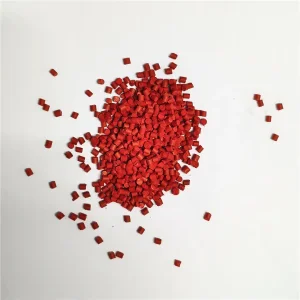
Full array of high-concentration color, metallic, and specialty masterbatches for global plastic injection, blown film, and profile extrusion converters.