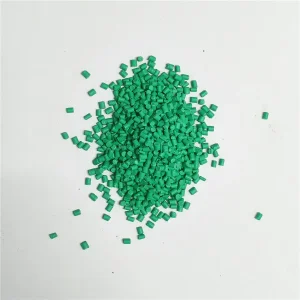
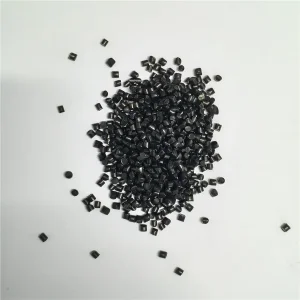
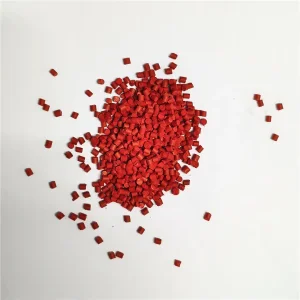
Direct factory supply featuring optimized pigment dispersion, non-migration properties, and international compliance for demanding plastic converting environments.
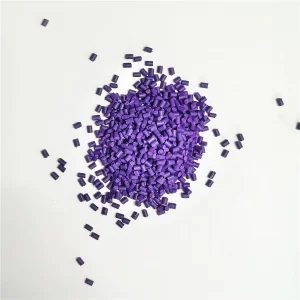
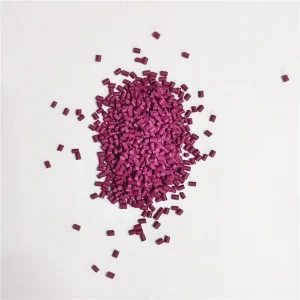
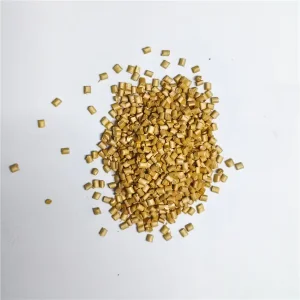
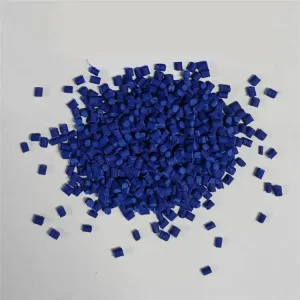
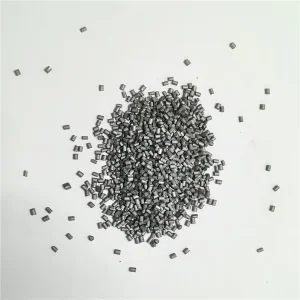
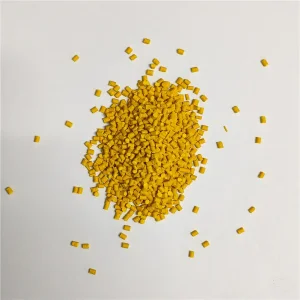
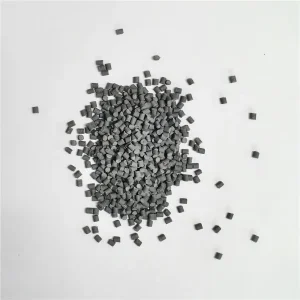
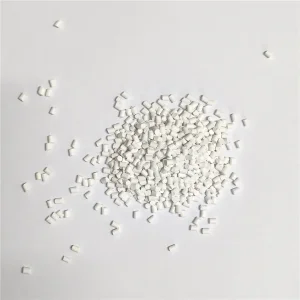
The global thermoplastics market has entered an unprecedented era of precision engineering, where polymer aesthetics, functional thermal stability, and mechanical compliance converge. At the epicenter of this evolution is Polyethylene (PE) Color Masterbatch—a solid additive formulation comprising high-density pigment loads dispersed homogeneously within a compatible Polyethylene carrier resin matrix (typically LLDPE, LDPE, or HDPE). For international plastics processors, tier-one compounding facilities, and high-volume converters, sourcing from an established China Polyethylene Coloring Masterbatch Company & Supplier like Changzhou Jiazhou Plastic Products Co., Ltd. represents a key strategic lever for optimizing yield, minimizing color variance ($\Delta E \le 0.50$), and driving unit-cost efficiencies.
Technical E-E-A-T Assurance: Manufactured under ISO-certified quality control protocols in Changzhou, Jiangsu Province, Jiazhou's polyethylene color masterbatches utilize sub-micron twin-screw dispersion technologies. Every batch undergoes rigorous spectrophotometric evaluation, melt flow index (MFI) verification, and thermogravimetric analysis (TGA) to guarantee processing integrity up to 300°C without polymer degradation.
The global polyethylene color masterbatch market continues to expand rapidly, propelled by accelerating demand across flexible packaging, agricultural mulch films, municipal infrastructure piping (PE100 grades), consumer electronics, and automotive interiors. Modern plastics processing demands far more than basic color matching; converters require masterbatches that preserve the virgin polymer's melt flow behavior while providing specialized features such as UV resistance (Blue Wool Scale 7–8), anti-static behavior, anti-microbial properties, and IR-sortability for post-consumer recycled (PCR) resin streams.
In mature markets across Europe and North America, strict regulatory frameworks including EU RoHS Directive 2011/65/EU, REACH (EC 1907/2006), and US FDA 21 CFR 177.1520 dictate that color additives must be completely free of toxic heavy metals (such as Lead, Cadmium, Hexavalent Chromium, and Mercury) and hazardous diarylide pigments. As a forward-thinking China masterbatch supplier, Changzhou Jiazhou integrates non-toxic organic phthalocyanines, inorganic iron oxides, and high-opacity Rutile Titanium Dioxide ($\text{TiO}_2$) to deliver compliant, environmentally friendly masterbatch solutions to international clients.
Leveraging Changzhou's world-class petrochemical cluster to deliver technical precision, scalable output, and unparalleled cost performance.
Located in the Yangtze River Delta, our facility gains immediate access to virgin PE carrier resins (Sinopec, CNPC, Sabic) and primary pigment synthesizers, drastically reducing raw material procurement lead times and input costs.
Our plant operates high-torque, co-rotating twin-screw compounders configured with continuous side-feeders and underwater pelletizing systems. This ensures high shear dispersion without thermal degradation of sensitive organic pigments.
Equipped with X-Rite CI64 spectrophotometers and computer color matching (CCM) software, our R&D team can replicate custom Pantone, RAL, or physical target samples within 48 hours with a strict color difference tolerance ($\Delta E \le 0.30$).
The operational success of a polyethylene masterbatch during conversion (such as high-speed blown film extrusion at 15–30 microns thickness) relies entirely on pigment dispersion quality. Poorly dispersed pigment agglomerates induce filter pack clogging, web breaks, pinholes, and uneven opacity. Jiazhou's masterbatches employ micro-milled pigment powders pre-treated with specialized hyperdispersants and low-molecular-weight PE wax lubricants. This guarantees micro-level dispersion down to less than 5 microns, eliminating melt fractures and pressure spikes in the extruder barrel.
| Technical Parameter | Test Method / Standard | PE Color Masterbatch Spec | PE White / Black Masterbatch Spec |
|---|---|---|---|
| Carrier Resin Compatibility | ASTM D1238 | LDPE / LLDPE / HDPE Compatible | HDPE / LLDPE Carrier Matrix |
| Pigment / Active Loading | TGA / Gravimetric Analysis | 20% – 50% High Concentration | 40% – 70% ($\text{TiO}_2$ / Carbon Black) |
| Thermal Heat Stability | EN 12877-2 | 220°C – 300°C (Application Dependent) | 260°C – 300°C High Thermal Rating |
| Lightfastness (Weatherability) | ISO 105-B02 (Blue Wool Scale) | Grade 6 to Grade 8 (Maximum) | Grade 7 to Grade 8 (UV Stabilized) |
| Filter Pressure Value (FPV) | EN 13900-5 | < 1.5 bar/g (Fine Film Grade) | < 0.8 bar/g (Ultra-Fine Grade) |
| Melt Flow Index (MFI) | 190°C / 2.16 kg (ASTM D1238) | 5 – 25 g/10 min (Customizable) | 2 – 15 g/10 min (Customizable) |
| Heavy Metal & RoHS Status | ICP-OES / RoHS Directive | Pass (Pb, Cd, Hg, Cr VI Free) | Pass (REACH & FDA Food Contact Ready) |
From micro-thin barrier packaging to heavy-duty infrastructure, our specialized PE masterbatches deliver uniform coloration and structural stability.
Ideal for multi-layer co-extrusion films, agricultural green-house covers, shopping bags, courier express bags, and shrink wrap. Formulated to eliminate gel spots and maintain film puncture resistance.
Optimized for high-speed automated injection molding of housewares, beverage closures, transport crates, and electronic housings. Guarantees fast cycle times and zero shrinkage warp.
Custom formulated with high-purity Carbon Black or blue pigments for HDPE potable water pipes, gas lines, corrugated conduits, and drip irrigation tubing, providing superior UV protection and long term burst strength.
Engineered for consistent wall-thickness distribution in personal care bottles, jerrycans, chemical drums, and automotive fluid reservoirs. Provides flawless surface gloss and chemical resistance.
As global environmental regulations tighten and consumer packaged goods (CPG) brand owners pledge to achieve 100% recyclable or bio-based packaging, the polyethylene color masterbatch sector is experiencing a profound paradigm shift. The conventional approach to masterbatch formulation is giving way to advanced green chemistry innovations, designed to maintain high performance while facilitating plastic recycling and reducing carbon footprints.
For international procurement directors, supply chain managers, and polymer engineers, selecting the right masterbatch vendor involves evaluating technical competence, batch-to-batch consistency, regulatory compliance, and total cost of ownership (TCO). A lower price per kilogram can lead to higher overall production costs if poor masterbatch dispersion causes frequent filter pack replacements, high scrap rates, or color shifting on production lines.
Always evaluate masterbatch efficiency based on Effective Let-Down Ratio (LDR) rather than unit weight cost alone. A 40% concentrated pigment masterbatch run at a 1.5% dosage is far more economical and mechanically sound than a 20% concentrated product run at 4% dosage, as it introduces less carrier resin variance into the base polymer system.
Ensure the Melt Flow Index (MFI) of the masterbatch carrier resin matches or slightly exceeds the MFI of your target processing resin. If the carrier MFI is significantly lower than the virgin resin, complete melting and mixing will be compromised, leading to visible streaking and color swirl.
Reputable China masterbatch suppliers should provide detailed Technical Data Sheets (TDS), Safety Data Sheets (SDS compliant with GHS), Certificate of Analysis (CoA) per lot, RoHS/REACH declarations, and FDA food-contact compliance letters upon request.
Evaluate vendor production capacities, automated compounding equipment, raw material safety stock levels, and proximity to major shipping ports (such as Shanghai or Ningbo Ports) to ensure uninterrupted production schedules during seasonal demand spikes.
Expert responses from our senior polymer chemists and quality assurance engineers regarding PE color masterbatch selection and application.
Polyethylene Color Masterbatch is a solid, pelletized mixture comprising a high concentration of pigments (organic or inorganic) and functional additives encapsulates uniformly within a Polyethylene (LDPE/LLDPE/HDPE) carrier resin. During plastic processing (blown film, injection molding, extrusion), masterbatch granules are blended with natural polymer resin at a specified let-down ratio (typically 1% to 4%). As the mixture passes through the extruder screw, heat and shear melt the carrier resin, releasing and dispersing the pigments evenly throughout the matrix to produce a consistently colored end product.
We implement a strict multi-stage quality control protocol. First, raw pigments are inspected for tinting strength and moisture content. During extrusion, continuous gravimetric loss-in-weight feeders strictly maintain component ratios. Finally, every finished batch is sampled and tested using X-Rite spectrophotometers to measure color space values ($L^*, a^*, b^*$). We guarantee a color deviation tolerance of $\Delta E \le 0.50$ against approved customer target samples, backed by a lot-specific Certificate of Analysis (CoA).
Color streaking and pinholes in blown films (such as 15–25 micron packaging films) are primarily caused by pigment agglomeration, moisture absorption, or MFI mismatch between the masterbatch carrier and the base resin. Using Jiazhou's high-dispersion masterbatches—which feature sub-micron milled pigments, specialized hyperdispersants, and low Filter Pressure Values (FPV < 1.5 bar/g)—eliminates agglomerates and prevents filter clogging and web breaks.
Yes. Our masterbatch formulations are free of heavy metals (Lead, Cadmium, Mercury, Hexavalent Chromium) and satisfy the requirements of EU RoHS 2011/65/EU and REACH Regulations. Specific food-grade color masterbatches are formulated using pigments compliant with US FDA 21 CFR 177.1520 and EU Regulation (EU) No 10/2011 for safe application in food packaging, beverage caps, and daily consumer products.
Absolutely. Our advanced computer color matching laboratory can formulate precise color matches based on Pantone codes, RAL color standards, or physical plastic samples submitted by clients. We provide custom masterbatch sample pellets within 48 to 72 hours for trial extrusion or injection molding on your production lines.
When stored in its original, unopened moisture-proof packaging in a cool, dry, and ventilated warehouse out of direct sunlight, Jiazhou PE masterbatch has a shelf life of 24 months. For moisture-sensitive applications such as thin blown film extrusion, pre-drying the masterbatch at 70°C–80°C for 1 to 2 hours prior to processing is recommended if bags have been exposed to high humidity environments.
Explore our full line of specialized masterbatches engineered for injection molding, blown film co-extrusion, and profile processing.