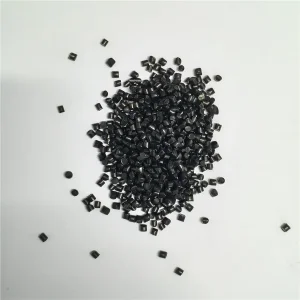
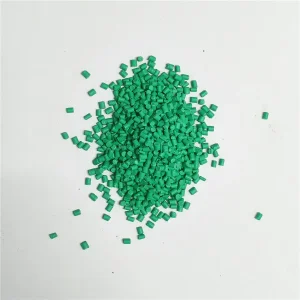
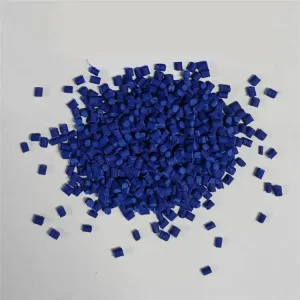
Direct access to primary export-grade masterbatch formulations produced by leading manufacturing facilities in Changzhou, China.
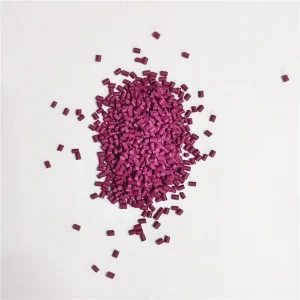
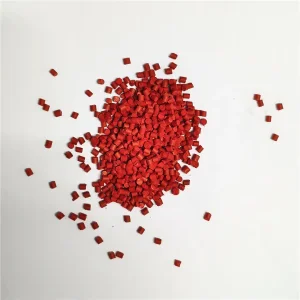
In modern thermoplastics processing, achieving vibrant red hues in Polyethylene (PE) resins requires mastering interfacial chemistry, rheological compatibility, and thermal stabilization.
The global demand for high-performance Red Polyethylene (PE) Masterbatch has evolved beyond simple aesthetic coloration. Contemporary industrial converters in agricultural packaging, automotive components, consumer electronics, and pressure piping require red concentrate formulations that resist severe thermal shear during processing and maintain long-term lightfastness under extreme ultraviolet exposure.
At the core of premier Chinese masterbatch manufacturing lies advanced continuous twin-screw extrusion technology. Manufacturers like Changzhou Jiazhou Plastic Products Co., Ltd. leverage high-aspect-ratio screw elements to ensure complete de-agglomeration of micro-pigment particles. Organic red pigments—such as Quinacridone Red (Pigment Red 122), PR48:2 (Barium Lake), PR57:1 (Lithol Rubine BK), and high-heat DPP Red (Pigment Red 254)—naturally exhibit high cohesive energy and tend to cluster. Improper dispersion leads to filter clogging during film blowing, surface specks, and reduced tensile strength in finished products.
Formulated with specialized heat stabilizers that prevent pigment degradation and shade shifting up to 260°C during high-speed film blowing and multi-cavity injection molding.
Engineered pigment-carrier interfaces eliminate dye bleeding, plate-out, and surface bloom in flexible film packaging, multi-layer co-extrusion, and food-grade containers.
Incorporates HALS (Hindered Amine Light Stabilizers) and UV absorbers, providing outdoor resistance rated up to Grade 7-8 on the Blue Wool Scale for long-life outdoor applications.
Evaluating technical parameters of China Red PE Masterbatches against global industrial standards.
| Masterbatch Grade Code | Primary Pigment System | Pigment Content (%) | Heat Resistance (°C) | Light Fastness (1-8 Scale) | Recommended Applications |
|---|---|---|---|---|---|
| PE-RED-260-HD | DPP Red (PR254) / Azo Hybrid | 40% - 50% | 260°C | Grade 7 - 8 | HDPE Pipe Stripes, Outdoor Crates, Automotive Parts |
| PE-ROSERED-240 | Quinacridone Magenta (PR122) | 30% - 40% | 240°C | Grade 6 - 7 | Cosmetic Bottles, Premium Blown Film, Toys |
| PE-RED-ECON-220 | Rubine BK (PR57:1) | 35% - 45% | 220°C | Grade 4 - 5 | Single-use Shopping Bags, General Extrusion |
| PE-RED-UV-260 | Organic Red + HALS UV System | 30% - 35% | 260°C | Grade 8 | Agri Silage Film, Greenhouse Tarpaulins |
| PE-RED-FOOD-250 | FDA/EU Compliant High-Purity Red | 40% | 250°C | Grade 7 | Beverage Caps, Food Container Closures |
To guarantee zero bubble breakage in ultra-thin blown films (down to 8 microns), China high-grade masterbatch manufacturers test batches according to EN 13900-5. A low FPV (< 1.5 bar/g) confirms fine micro-dispersion with pigment particle sizes consistently maintained below 2 micrometers.
Utilizing high-concentration red masterbatch (40-50% pigment loading) allows injection molders and film extruders to lower down-stream addition ratios (let-down ratios from 1% to 2%), yielding significant reductions in freight costs, storage footprint, and overall raw material spending.
China’s manufacturing ecosystem has transitioned from low-cost volume production to advanced compounding precision, serving international polymer converters with reliable, certified color solutions.
The global masterbatch market, valued at over USD 12 Billion, relies heavily on Asian manufacturing centers for consistent supply of specialty color masterbatches and filler masterbatches. China has emerged as the primary global hub for Polyethylene masterbatch manufacturing, driven by robust domestic supply chains for virgin carrier resins (LDPE, LLDPE, HDPE), synthetic waxes, and organic pigment synthesis.
Industrial plastic converters in Europe, North America, Southeast Asia, and the Middle East are increasingly establishing long-term B2B procurement pipelines with established Chinese manufacturers. Modern suppliers in regions like Changzhou, Jiangsu, operate automated dosing lines, optical sorters, and computer-controlled spectrophotometers (Datacolor systems) to ensure color consistency across multi-ton production lots.
Dominates the flexible film, stretch hood, and shipping bag sectors. High opacity red masterbatches provide brand distinction and light barrier properties for perishable product packaging.
Red wavelength-selective agricultural films utilize custom masterbatches to modify solar spectra, promoting crop growth rates and shielding soil from invasive weeds.
Used extensively for safety marking pipes (gas, fire sprinkler networks, power conduits), warning tapes, and heavy-duty blow-molded industrial drums.
Optimizing processing parameters across various plastic molding methods ensures maximum color yield and physical property retention.
Key Challenge: Film tear, pinholes, and gauge variation caused by pigment agglomerates.
Solution: Utilize high-dispersion PE Red Masterbatch (MFI 15-25 g/10min). Recommended Let-Down Ratio (LDR): 1.5% to 3.0%. Processing temperatures should be maintained between 170°C and 210°C to achieve a smooth surface gloss and stable bubble geometry.
Key Challenge: Warpage, differential shrinkage, and flow mark defects in thin-walled containers.
Solution: Formulate with non-nucleating red organic pigments. High-flow PE carrier matrix prevents structural distortion while delivering uniform color coverage across complex mould geometries at barrel temperatures of 220°C to 260°C.
Key Challenge: Parison sag, streak formation, and environmental stress cracking (ESCR).
Solution: Incorporate broad-molecular-weight PE carrier red masterbatches. Provides high melt strength during parison drop, ensuring uniform wall thickness and zero degradation of chemical resistance properties.
Key Challenge: Long-term thermal aging and outdoor weathering degradation.
Solution: Co-extrude outer color layers with specialized UV-stabilized red masterbatch formulations. Meets strict ISO 4427 and ASTM standards for municipal utility pipe color coding.
Meeting international environmental and health safety directives is essential for global trade seamless clearance.
Leading Chinese supplier Changzhou Jiazhou Plastic Products Co., Ltd. maintains strict quality management systems (ISO 9001:2015 certified) spanning raw material intake, twin-screw compounding, and final palletized bag inspection. Every batch of color masterbatch is evaluated for color space values (CIE L*a*b*), Melt Flow Index, density, and moisture content (< 0.15%).
100% free of heavy metals (Lead, Cadmium, Hexavalent Chromium, Mercury) and SVHCs (Substances of Very High Concern), fully compliant with EU Directives 2011/65/EU and EC 1907/2006.
Specialized food-contact red masterbatches use non-migratory pigments approved under US FDA 21 CFR 178.3297 and European Regulation (EU) No 10/2011 for direct food contact applications.
State-of-the-art laboratory equipped with spectrophotometers for rapid custom color matching against Pantone, RAL, or physical plastic sample plaques within 48 hours.
Advancing sustainable polymers through bio-carriers, smart sorting compatibility, and nano-composite dispersion.
Development of red color masterbatches utilizing PLA, PHA, and recycled PE carriers (rPE) to support circular economy initiatives and carbon reduction mandates worldwide.
Formulating red masterbatches with Near-Infrared (NIR) reflective pigments, allowing automated sorting systems at recycling facilities to accurately identify and recover polyolefins.
Leveraging sub-micron surface modification techniques to increase pigment loading up to 60% without compromising melt rheology or mechanical strength of target polymers.
Expert technical answers to high-intent questions concerning red PE masterbatch selection and application.
High concentration PE color concentrates engineered for film, injection molding, blowing film, and extrusion processes.