Engineered for High Flowability, Thermal Stability, and Superior ESCR Performance in Rotational Molding & Processing
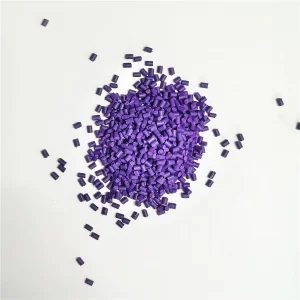
Cheap High Concentration PE Purple Masterbatch Anti-fading Stable Color for Blown Film Injection Extrusion Plastic Coloring Factories, Factory
View Technical Details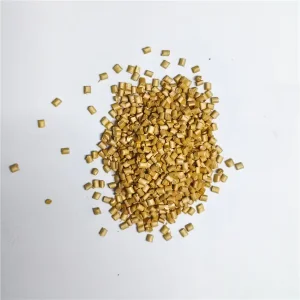
Cheap High Concentration PE Gold Masterbatch Anti-fading Heat Resistant for Injection Blown Film Extrusion Plastic Coloring Companies, Suppliers
View Technical Details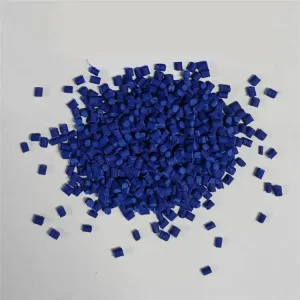
High-Quality High Concentration Blue Masterbatch PE Carrier for Plastic Injection Blowing Film Coloring Companies, Supplier
View Technical Details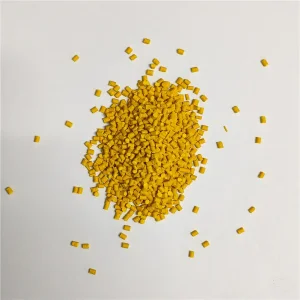
China High Concentration PE Yellow Masterbatch Non-toxic Anti-migration for Blown Film Injection Extrusion Coloring Supplier, Manufacturers
View Technical Details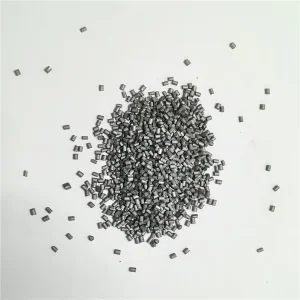
Custom High Concentration PE Silver Masterbatch Anti-fading High Weather Resistance for Blown Film Injection Extrusion Plastic Coloring Companies, Manufacturer
View Technical Details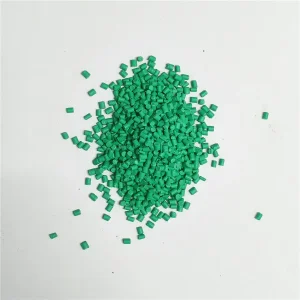
High-Quality High Concentration PE Green Masterbatch Anti-fading Heat Resistant for Injection Blown Film Extrusion Plastic Coloring Factories, Manufacturers
View Technical Details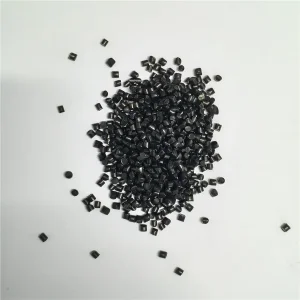
Cheap High Concentration PE Black Masterbatch Eco-friendly 260°C Heat Resistant for Blown Film Injection Extrusion Plastic Coloring Company, Manufacturers
View Technical Details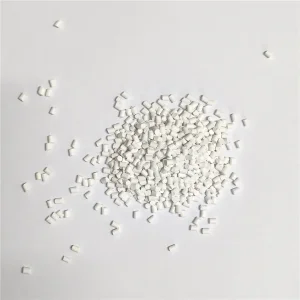
China High Concentration PE White Masterbatch Non-toxic Weather Resistant for Injection Molding Blown Film Extrusion Plastic Coloring Suppliers, Supplier
View Technical DetailsUnderstanding the Rheological, Thermal, and Structural Requirements of Polyethylene Masterbatches in Large Hollow Container Manufacturing
Unlike conventional high-pressure plastic processing technologies such as injection molding or blown film extrusion, rotational molding (rotomolding) operates under zero shear rate and hydrostatic pressure conditions inside a heated, biaxially rotating mold. The plastic material, typically Linear Low-Density Polyethylene (LLDPE) or High-Density Polyethylene (HDPE), must melt, fuse, and form a continuous bubble-free wall layer purely through thermal conduction and gravity flow.
Consequently, color masterbatches engineered for rotomolders in China and worldwide must possess exceptionally low melt viscosity, superior melt flow index (MFI) matching, and zero particle agglomeration to prevent localized stress concentration points.
Large containers—ranging from 500-liter residential water storage units to 30,000-liter industrial chemical tanks—are subjected to perpetual hydrostatic pressures, outdoor environmental fluctuations, and aggressive chemical contact. Standard pigment carriers often disrupt the crystalline lattice of polyolefins, leading to premature cracking under stress.
Leading China rotational molding large container PE masterbatch manufacturers utilize specialized metallocene-catalyzed LLDPE/HDPE carrier resins combined with proprietary Hindered Amine Light Stabilizers (HALS) to preserve long-term structural integrity and pass rigorous 1000+ hour ASTM D1693 ESCR testing.
Expanding Applications across Energy, Agriculture, Water Management, and Maritime Infrastructure
Rapid urbanization across Africa, Southeast Asia, and Latin America has driven exponential demand for multi-layer vertical and horizontal PE storage tanks. Inner layers demand non-toxic, food-grade white PE masterbatches, while outer layers incorporate heavy UV-8 black or blue masterbatches to inhibit algae growth.
For chemical processing plants handling acids, alkalis, and industrial effluents, rotomolded containers rely on high-density PE color masterbatches formulated with organic pigments that exhibit complete chemical inertness and zero leaching characteristics under aggressive pH levels.
Modern precision farming relies heavily on tractor-mounted spray tanks, liquid fertilizer bladders, and transport drums. Color masterbatches used in these vessels must withstand intense agricultural chemical exposure alongside continuous UV radiation in equatorial and arid regions.
Rotomolded marine buoys, dock floats, and navigation aids require high-visibility international orange, yellow, and red color masterbatches. These masterbatches must pass severe salt-spray corrosion tests and maintain chromaticity under intense ocean surface reflection.
Heavy-duty IBC inner liners require high-impact resistance masterbatch formulations. The addition of conductive carbon black PE masterbatches enables anti-static hazardous material transport in explosion-proof logistics environments.
Underground septic tanks, inspection chambers, and municipal waste management bins require dark grey and black masterbatches engineered for sub-surface earth load strain, microbial resistance, and long-term soil moisture stability.
Comparative Analysis of Rotational Molding Powder Masterbatch vs Standard Extrusion Granules
| Parameter Benchmark | Rotational Molding Large Container PE Grade | Standard Injection Molding Grade | Blown Film Masterbatch Grade |
|---|---|---|---|
| Carrier Polymer MFI | 3.5 – 7.0 g/10min (ASTM D1238) | 12.0 – 25.0 g/10min | 1.0 – 2.5 g/10min |
| Particle Form & Size | Micro-pellets or 350-micron pulverant | 2.5mm Standard Granule | 2.0mm Cylindrical Granule |
| Thermal Oven Endurance | 30–45 mins @ 280°C (Zero Shear) | 15–30 secs @ 220°C (High Shear) | 30–60 secs @ 200°C (High Shear) |
| Pigment Dispersion Index | < 0.5 Bar/g Filter Test Equivalent | Standard Visual Dispersion | Micro-screen Filter Qualified |
| UV Stabilization Matrix | Synergistic HALS (UV-8 / UV-24 Minimum) | Optional / Application-based | Basic UV Stabilizers |
| Impact Resistance Retention | > 95% ARM Low-Temp Impact Strength | Not Measured for Impact | Tensile Yield Oriented |
When producing 10,000-liter chemical storage tanks, any microscopic pigment agglomerate acts as a stress notch. Under hydrostatic pressure, micro-voids expand into catastrophic wall failure. Advanced Chinese manufacturers employ twin-screw co-rotating extrusion compounding followed by underwater micro-pelletizing or cryogenic grinding to ensure that every individual masterbatch particle disperses homogeneously into the base LLDPE powder without altering the cycle mold heating duration.
End-to-End Processing Architecture for Rotomolders and Plastic Compounding Plants
Modern rotomolding technology frequently uses drop-box systems or multi-layer mold charges to build composite container walls:
Rotomolding factories face a technical choice between direct dry-blending pigment powders or using pre-compounded masterbatch pellets/powders:
Pioneering Eco-Friendly Polyethylene Masterbatches for Next-Generation Green Manufacturing
Global environmental mandates now require rotational molders to incorporate 20% to 50% PCR polyolefins into non-critical container lines. Custom China PE masterbatches are formulated with specialized compatibilizers and chain extenders to restore yellowing indices and rebuild the impact strength of recycled PE bases.
In high-temperature zones like the Middle East and Australia, dark containers absorb extreme solar thermal energy, softening the structural PE wall. Specialized Near-Infrared (NIR) reflective masterbatches allow dark-colored tanks to remain up to 15°C cooler under direct sunlight.
Aligning with REACH, RoHS, and global environmental directives, modern PE masterbatches eliminate lead chromate and cadmium-based pigments entirely. Advanced organic azo and phthalocyanine pigments deliver high color opacity without environmental toxicity.
Tailoring Additive Formulations to Geographic Weather Conditions and Industrial Demands
Primary Threat: Extreme UV Radiation (220+ kLY/year) & Thermal Degradation (50°C Ambient).
Masterbatch Solution: High-density TiO2 white or carbon black masterbatch reinforced with dual HALS (Hindered Amine Light Stabilizer) and phenolic anti-oxidant complexes to prevent surface chalking and thermal degradation during long mold cycles.
Primary Threat: Sub-Zero Freezing Temperatures (-40°C) & Low-Temp Brittle Fracture.
Masterbatch Solution: High-impact LLDPE carrier masterbatch utilizing elastomeric modifiers. Ensures containers pass ARM (Association of Rotational Molders) dart drop test at freezing temperatures without cracking.
Primary Threat: High Humidity, Saline Corrosion, and Bio-Fouling.
Masterbatch Solution: Antimicrobial silver-ion additive masterbatch combined with non-fading phthalocyanine green and blue pigments to maintain structural buoyancy and cleanliness.
The Evolution of Smart Masterbatch Functionalization in Industrial Plastic Processing
Integration of nano-calcium carbonate and graphene micro-flakes into masterbatch compounds to achieve thin-wall rotational molding. This technology reduces container weight by up to 15% while maintaining equivalent wall burst pressure and hoop stress capacity.
Development of micro-encapsulated functional additives within PE carriers that release protective anti-oxidants when micro-cracks form under extreme mechanical shock, extending the service life of industrial IBC totes and chemical tanks beyond 25 years.
Expert Engineering Solutions for Common Rotational Molding Defects and Procurement Inquiries
Pinholes occur primarily due to a Melt Flow Index (MFI) mismatch between the base resin and the masterbatch carrier, or the presence of volatile moisture in the pigment matrix. Standard injection-grade masterbatches use low-MFI resins that fail to melt completely at zero shear pressure, trapping air between powder particles. Rotomolding-grade masterbatches utilize micro-pulverized, high-MFI carriers (MFI 3.5–7.0) with zero moisture content to ensure complete thermal bubble evacuation during the oven heating cycle.
Poorly dispersed pigment particles or low-grade paraffin wax dispersants create micro-voids and stress concentration points along the polymer grain boundaries. Under hydrostatic liquid load, stress concentrates at these points, leading to premature brittle failure. High-quality China rotational molding large container PE masterbatches use linear low-density carrier resins compounded with nano-dispersion technology, preserving over 95% of the base resin's natural ESCR value (ASTM D1693).
For single-layer tanks, an LDR of 2.0% to 4.0% is standard, depending on the pigment concentration. For multi-layer tanks, the outer protective layer typically uses 3.0% UV-stabilized masterbatch, while the inner layer uses 1.5% to 2.0% food-grade white masterbatch. Pre-colored powders or high-concentration micro-pellet masterbatches allow exact dosing without risking color streaking.
Solar UV radiation breaks carbon-carbon polymer chains via photo-oxidation, leading to surface embrittlement, discoloration, and structural wall failure. Masterbatches formulated with Hindered Amine Light Stabilizers (HALS UV-8 or UV-24) act as free-radical scavengers, terminating the degradation cascade. This enables large polyethylene containers to withstand up to 20,000 hours of continuous outdoor sunlight exposure (UV20+ rating).
While dry-blending micro-pulverized masterbatch powder directly into base LLDPE powder is common for standard water tanks, heavy-duty industrial chemical tanks benefit from high-shear twin-screw extrusion compounding before pulverization. Compounding ensures 100% pigment encapsulation, eliminating localized wall weakness and micro-porosity.
Global B2B procurement teams should verify ISO 9001 quality management systems, ISO 14001 environmental compliance, FDA 21 CFR food-contact safety compliance, REACH heavy-metal non-toxicity certificates, RoHS environmental safety, and third-party lab reports for Melt Flow Index (ASTM D1238) and Oxidation Induction Time (OIT ASTM D3895).
Full Palette of High-Concentration Colorants & Performance Additive Masterbatches for International Buyers
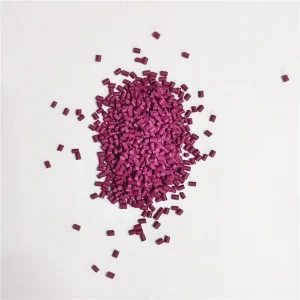
Cheap High Concentration PE Rose Red Masterbatch Anti-fading Heat Resistant for Blown Film Injection Extrusion Plastic Coloring Company, Supplier
View Technical Details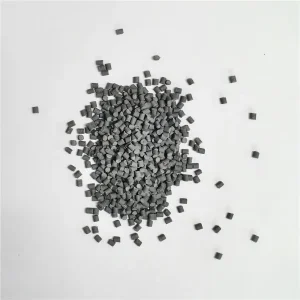
China High Concentration PE Grey Masterbatch Non-migration Heat Resistant for Blown Film Injection Extrusion Plastic Coloring Suppliers, Supplier
View Technical Details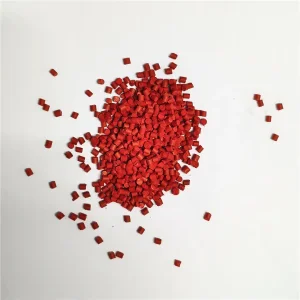
Cheap High Concentration PE Red Masterbatch Bright Color 260°C Heat Resistant for Blown Film Injection Extrusion Coloring Factories, Factory
View Technical Details
Cheap High Concentration PE Black Masterbatch Eco-friendly 260°C Heat Resistant for Blown Film Injection Extrusion Plastic Coloring Company, Manufacturers
View Technical Details
China High Concentration PE White Masterbatch Non-toxic Weather Resistant for Injection Molding Blown Film Extrusion Plastic Coloring Suppliers, Supplier
View Technical Details
High-Quality High Concentration Blue Masterbatch PE Carrier for Plastic Injection Blowing Film Coloring Companies, Supplier
View Technical Details
China High Concentration PE Yellow Masterbatch Non-toxic Anti-migration for Blown Film Injection Extrusion Coloring Supplier, Manufacturers
View Technical Details
High-Quality High Concentration PE Green Masterbatch Anti-fading Heat Resistant for Injection Blown Film Extrusion Plastic Coloring Factories, Manufacturers
View Technical Details16 Years of Dedicated R&D Excellence in Masterbatch Formulation, Compounding, and Global Export Supply
Operating out of a modern 6,000 square meter facility in Changzhou, Jiangsu Province, China, Changzhou Jiazhou Plastic Products Co., Ltd. houses advanced co-rotating twin-screw extrusion lines, underwater pelletizers, and cryogenic micro-pulverization mills dedicated to rotomolding polymer preparation.
Our systematic quality assurance protocols cover raw material melt flow verification, spectrophotometer color matching, moisture content determination, and dispersion testing for consistent batch-to-batch quality.
Serving over 100 countries and regions worldwide, Jiazhou Masterbatch has established long-term B2B partnerships across Europe, North America, Southeast Asia, and the Middle East. With an agile 15-day average order lead time, full OEM/ODM color matching capabilities, and ISO-certified processes, we ensure your plastic processing lines run at peak thermal efficiency and maximum profitability.