Browse our core range of high-concentration color and functional masterbatches manufactured for extreme dispersion and thermal stability.
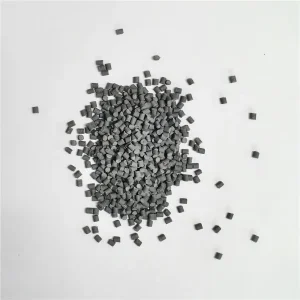
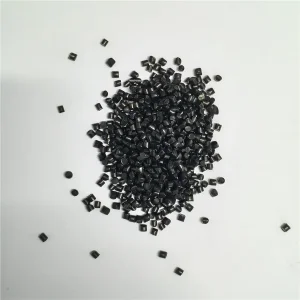
An authoritative evaluation of percolation threshold dynamics, carbon structure selection, and rheological balancing in custom conductive PE compound production.
In modern industrial polymer processing, mitigating electrostatic charge accumulation is critical across semiconductor packaging, underground mining ventilation, hazardous chemical containment, and automotive fuel delivery systems. Standard virgin Polyethylene (PE)—whether LDPE, LLDPE, or HDPE—possesses a high surface resistivity ($10^{14}$ to $10^{16} \ \Omega/\text{sq}$), making it an extreme electrical insulator susceptible to explosive electrostatic discharge (ESD) and airborne particulate contamination.
As a leading Custom Conductive Black PE Masterbatch Producer Company & Supplier, Changzhou Jiazhou Plastic Products Co., Ltd. formulates specialized carbon-black concentrated masterbatches designed to transform insulating polyolefins into predictable dissipating ($10^6 - 10^9 \ \Omega/\text{sq}$) or highly conductive ($10^2 - 10^5 \ \Omega/\text{sq}$) functional polymers.
Key Engineering Metric (Percolation Threshold): Electrical conductivity in carbon black-filled PE is governed by percolation theory. Conductivity occurs when conductive filler aggregates form a continuous 3D conductive network within the insulating polymer matrix. Our proprietary twin-screw compounding process optimizes the shear history to achieve percolation at lower carbon loading, preserving the native mechanical properties (tensile strength and elongation at break) of the base resin.
Achieving stable electrical conductivity without compromising melt flow index (MFI) or inducing surface roughness requires deep material science expertise. The conductive network is determined by three core variables:
Why global electronics OEMs and film extruders rely on Changzhou Jiazhou's advanced compounding infrastructure in Jiangsu, China.
Our facility operates high L/D ratio (48:1 and 52:1) twin-screw compounders equipped with side feeders and multi-stage degassing systems to eliminate volatile moisture and micro-agglomerates.
Gravimetric loss-in-weight feeders guarantee precise feeding tolerances within ±0.2% for conductive additives, eliminating resistivity drift across long production runs.
Located in Changzhou, Jiangsu, we benefit from direct access to world-class petrochemical refining hubs, raw carbon stocks, and Shanghai Port logistics for 15-day order turnaround.
Compare engineered parameters for our standard anti-static, ESD dissipating, and hyper-conductive polyolefin masterbatch grades.
| Grade Series | Target Application | Surface Resistivity (Ω/sq) | Volume Resistivity (Ω·cm) | MFI (g/10min @ 190°C/2.16kg) | Carrier Polymer |
|---|---|---|---|---|---|
| Jiazhou Conductive-ESD 100 | Anti-Static Packaging & Blown Film | 10⁶ – 10⁹ | 10⁵ – 10⁸ | 4.5 – 8.0 | LLDPE / LDPE |
| Jiazhou Conductive-MID 300 | Electronic Trays & Extruded Sheet | 10⁴ – 10⁶ | 10³ – 10⁵ | 2.0 – 5.0 | HDPE / LLDPE |
| Jiazhou Conductive-MAX 500 | IC Carrier Tapes & Cleanroom Drums | 10² – 10⁴ | 10¹ – 10³ | 1.0 – 3.5 | PE / Modified EVA |
| Jiazhou Custom Pipe-Spec | Mining & Chemical Antistatic Pipes | 10³ – 10⁵ | 10² – 10⁴ | 0.5 – 1.5 | Bimodal HDPE |
How advanced nanotechnology, non-sloughing requirements, and circular packaging directives are driving conductive masterbatch formulation.
Traditional carbon black compounds tend to shed particulate matter under mechanical friction, contaminating sensitive micro-electronic chips and semiconductor wafers. Jiazhou's low-sloughing conductive masterbatch encapsulates carbon networks within high-tenacity polymer binders, passing ISO Class 1 to Class 5 cleanroom particle generation standards.
With global mandates demanding monomaterial recyclability (PCR/PIR streams), our conductive PE compounds are designed for 100% compatibility with standard Polyethylene recycling loops. Unlike chemical anti-static agents that wash off, carbon-based conductive networks retain stable properties across multiple re-melt cycles.
For ultra-thin blown films (<25 microns) where conventional high carbon loading impairs bubble stability and tear strength, we develop hybrid conductive masterbatches integrating multi-walled carbon nanotubes (MWCNTs) with conductive furnace black to reach low resistivity at total filler loadings under 8%.
Migratory anti-static additives rely on ambient atmospheric moisture to form a conductive surface layer, failing in low-humidity environments (<12% RH). Carbon black masterbatches create permanent electrical pathways unaffected by relative humidity, ambient temperature, or prolonged storage shelf-life.
From semiconductor logistics to hazardous mining environments, explore how custom conductive PE masterbatch solves operational challenges.
Products: Conductive IC carrier tapes, ESD protective bags, injection-molded component trays, anti-static tote boxes.
Technical Demand: Surface resistivity of $10^4 - 10^6 \ \Omega/\text{sq}$ to prevent static discharge from destroying sensitive microchips during high-speed automated pickup and placement (SMT lines).
Products: Underground coal mine ventilation ducts, conductive HDPE gas extraction pipes, anti-static drainage tubes.
Technical Demand: High structural hoop strength combined with surface resistance below $3 \times 10^8 \ \Omega$ (meeting ATEX directives and coal mine safety certifications) to eliminate explosive spark hazards caused by airborne dust friction.
Products: Conductive intermediate bulk containers (IBC tanks), 200L chemical drums, conductive jerrycans for volatile solvents.
Technical Demand: Permanent volume conductivity ($10^3 - 10^5 \ \Omega\cdot\text{cm}$) ensuring rapid electrostatic grounding during high-velocity liquid chemical filling and transport.
Our step-by-step custom compounding methodology ensures perfect compatibility with client processing equipment and downstream product specifications.
No single masterbatch formula fits all plastic converter machinery. A blown film extruding line running thin 20-micron LDPE bags requires vastly different melt rheology than a heavy-duty injection molding press manufacturing thick-walled ESD shipping crates. Changzhou Jiazhou employs a 5-step custom manufacturing roadmap:
We define your exact surface ($\Omega/\text{sq}$) or volume ($\Omega\cdot\text{cm}$) electrical thresholds based on industry standards (ASTM D257, IEC 60093, ANSI/ESD S20.20).
We match the carrier matrix (LDPE, LLDPE, HDPE, EVA, PP) precisely to your base substrate resin to guarantee 100% interfacial bonding and zero phase separation.
Using twin-screw shear controls and melt viscosity modifiers, we tailor the Melt Flow Index to avoid extruder back-pressure buildup or die-droop during high-speed runs.
Every custom batch undergoes Filter Pressure Value (FPV) testing to ensure micro-dispersion of conductive particles down to the sub-micron scale.
Key quality assurance criteria international material buyers must evaluate when sourcing conductive polyolefin compounds from China.
Ensure your supplier provides third-party laboratory test reports (SGS, TÜV, Intertek) verifying compliance with EU RoHS Directive 2011/65/EU and REACH (SVHC list). Our conductive masterbatches are non-heavy metal, halogen-free, and REACH compliant for seamless European and North American market import.
High surface area conductive carbon black is inherently hygroscopic. Absorbed atmospheric moisture creates pinholes, bubbles, and electrical voids during film extrusion. Jiazhou packages all conductive compounds in heavy-duty aluminum foil barrier bags (25kg net) or 500kg moisture-sealed jumbo bags with desiccants.
Fluctuations in carbon dispersion cause erratic electrical performance across extruded sheets. We inspect every production lot with four-point probe surface resistivity meters and melt flow indexers, delivering formal Certificates of Analysis (COA) with each ocean container shipment.
We support global polymer converters with rapid 5kg sample dispatch via international air couriers (DHL/FedEx) for die trials, followed by scalable LCL or FCL shipments (minimum order 500kg) with 15-day factory dispatch.
Expert technical responses to common questions regarding conductive black masterbatch selection, processing, and application performance.
Depending on the initial carbon black concentration and your target electrical resistivity, let-down ratios typically range between 15% to 45%. For anti-static ESD packaging ($10^6 - 10^8 \ \Omega/\text{sq}$), an LDR of 15%-25% is standard. For high-conductivity applications ($10^3 - 10^5 \ \Omega/\text{sq}$), an LDR of 30%-40% is recommended. Our engineering team can provide precise dosing formulas based on your base resin MFI.
Standard black masterbatch utilizes pigment-grade carbon black (e.g., N330 or pigment black 7) primarily for color opacity and UV protection, possessing high electrical resistance. Conductive black masterbatch utilizes specialized primary conductive carbon black featuring ultra-high surface areas, high DBPA absorption structures, and specialized dispersion chemistry designed to build continuous electron-conducting pathways.
At elevated carbon loadings, polymer ductility, elongation at break, and impact strength can decrease. However, Changzhou Jiazhou mitigates this by using highly structured conductive additives that lower the required percolation threshold weight percentage, paired with elastomeric carrier modifiers (such as EVA or metallocene LLDPE) to preserve film flexibility and dart drop impact strength.
Our PE carrier conductive masterbatches feature high thermal resistance up to 260°C. Standard processing temperatures range from 160°C to 230°C depending on whether you are running blown film, sheet extrusion, or injection molding. We recommend pre-drying conductive masterbatches at 80°C for 2 hours if stored in high-humidity ambient environments prior to processing.
Yes. While Polyethylene (PE) is our primary carrier matrix, Changzhou Jiazhou produces custom conductive masterbatches using Polypropylene (PP), Polystyrene (PS), EVA, and universal carrier formulations tailored to your specific engineering resin substrate.
Surface resistivity ($\Omega/\text{sq}$) should be measured using a calibrated concentric ring electrode or four-point probe surface resistivity meter according to ASTM D257 or IEC 60093 standards. For volume resistivity ($\Omega\cdot\text{cm}$), cross-sectional samples should be tested using conductive silver paint contacts under controlled ambient temperature ($23 \pm 2^\circ\text{C}$) and relative humidity ($50 \pm 5\%$).
High-concentration pigment masterbatches engineered for injection molding, blown film, and compounding lines worldwide.
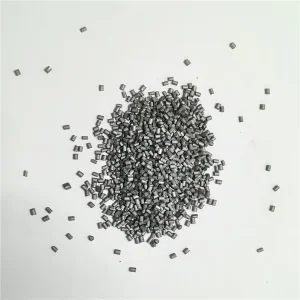
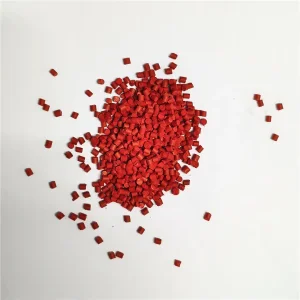
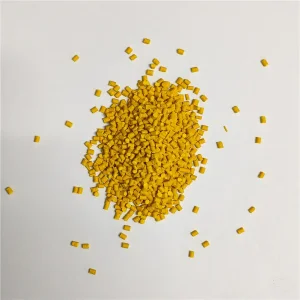
Request custom resistivity samples, technical datasheets (TDS), or direct factory-gate quotation for your specific polymer compounding projects.
Request Technical Consultation & Samples