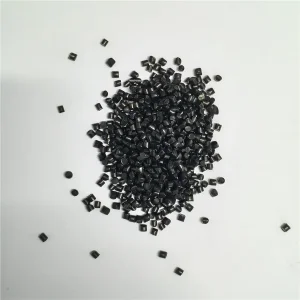
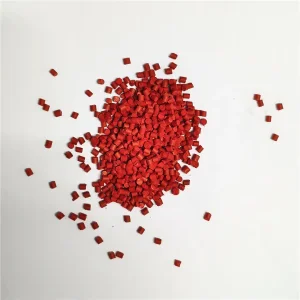
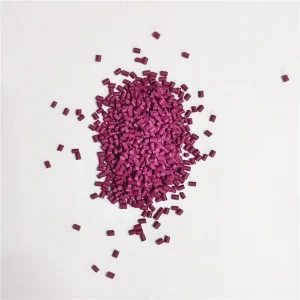
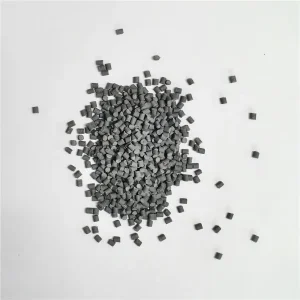
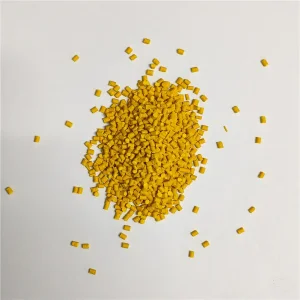
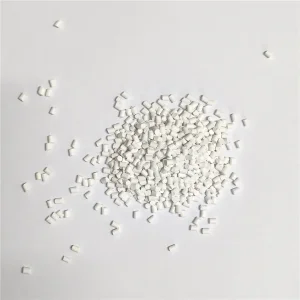
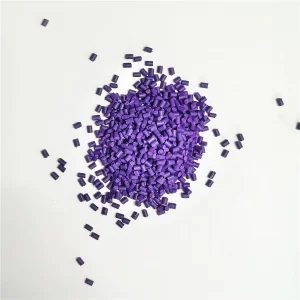
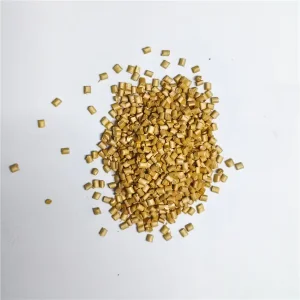
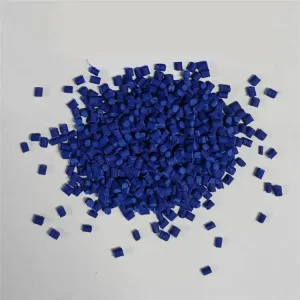
Engineered for extreme thermal endurance (260°C+), anti-UV outdoor stability, and flawless melt-dispersion across polyolefin film, blow molding, and injection lines.
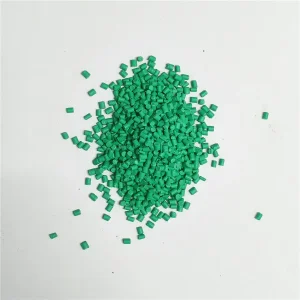
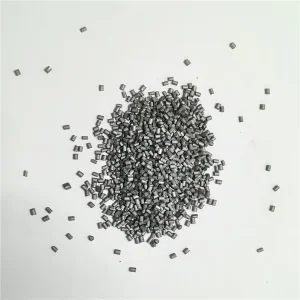
In global polyolefin processing—spanning Low-Density Polyethylene (LDPE), Linear Low-Density Polyethylene (LLDPE), and High-Density Polyethylene (HDPE)—color stability under prolonged ultraviolet (UV) irradiation and high processing thermal stress represents a primary engineering benchmark. When end-use plastic articles are deployed outdoors or subjected to severe thermo-oxidative environments, uninhibited chromophores within conventional pigments undergo photo-oxidation. This process breaks down molecular conjugated bonds, leading to chalking, embrittlement, and severe color shifting (high Delta E values).
Custom fade resistant PE masterbatches engineered by world-class China factories synthesize high-purity organic and inorganic pigment formulations with specialized carrier resins, synergistic Hindered Amine Light Stabilizers (HALS), and UV absorbers (UVA). By precisely matching the melt flow index (MFI) of the masterbatch carrier with the matrix polymer, manufacturers eliminate internal shear heat spikes during extrusion and injection molding, maintaining chromatic integrity up to 260°C–300°C.
Many procurement specifications confuse Lightfastness (resistance to spectral radiation alone, measured on the 1–8 Blue Wool Scale) with Weatherability (resistance to sunlight, humidity, thermal cycling, and atmospheric pollutants, measured on the 1–5 Grey Scale via ASTM G155 Xenon Arc exposure). Premium fade resistant PE masterbatches optimize both dimensions simultaneously through dual-encapsulation pigment technology.
Utilizing triple-screw co-rotating extrusion systems, pigment particles are nano-milled down to sub-micron agglomerates (< 0.5 µm), preventing micro-voids, pinholes in thin blown films, and localized light absorption hotspots.
Incorporation of high-molecular-weight HALS (e.g., Chimassorb 944 / Tinuvin 622) traps free radicals generated by photo-oxidation, preserving structural polymer chain integrity over 5 to 10 years of continuous sunlight exposure.
Advanced surface modification ensures inorganic oxides (such as Rutile TiO₂ and Complex Inorganic Color Pigments - CICPs) do not bloom, bleed, or migrate during high-temperature processing at 260°C+.
Rigorous laboratory evaluations conducted under ISO 4892-2 and ASTM D2565 specifications demonstrate the superior operational boundaries of custom PE masterbatch formulations.
| Performance Metric | Standard Specification | Fade Resistant Masterbatch Standard | Industrial Application Impact |
|---|---|---|---|
| Carrier Resin Compatibility | ISO 1133 / ASTM D1238 | Virgin LLDPE / LDPE / HDPE (MFI: 2 - 20 g/10min) | Prevents phase separation, streaking, and viscosity mismatch. |
| Lightfastness (Blue Wool Scale) | ISO 105-B02 | Grade 7 to 8 (Maximum scale rating) | Guarantees minimal color shift under intense UV outdoor conditions. |
| Heat Resistance (°C) | EN 12877-2 | 260°C – 300°C (Dwell time: 5 minutes) | Prevents thermal discoloration during hot runner injection & blown film. |
| Color Tolerance (ΔE*) | CIE L*a*b* (ISO 11664-4) | ΔE * < 0.50 (Batch-to-Batch consistency) | Ensures identical shade matching across large production runs. |
| Pigment Dispersion Quality | DIN EN 13900-5 (Filter Pressure) | FPV < 0.8 bar/g (Mesh size 14 µm) | Eliminates filter clogging and thin-film tear rates. |
| Heavy Metal & Chemical Safety | RoHS 3.0 / REACH SVHC / FDA 21 CFR | 100% Lead, Cadmium, Hexavalent Chromium Free | Complies with global food contact and eco-packaging legislation. |
Why leading global polyolefin converters partner with specialized China factories (such as Changzhou Jiazhou Plastic Products Co., Ltd.) to scale production efficiency and cut material costs.
China's polymer processing infrastructure has evolved into a global epicenter of high-tech masterbatch compounding. Strategic manufacturing clusters in Jiangsu and Zhejiang provinces integrate raw material synthesis, precision color matching labs, and international logistically optimized ports. This ecosystem yields distinct competitive capabilities for international B2B buyers:
China factories maintain direct supply partnerships with premier organic pigment synthesizer plants and titanium dioxide (TiO₂) sulfate/chloride process refineries. This raw material security eliminates supply chain bottlenecks and guarantees consistent chemical purity across high-volume orders.
Modern Changzhou production facilities deploy automated gravimetric dosing loss-in-weight feeders, high-torque twin-screw compounders, and underwater pelletizing systems. Human error in pigment-to-carrier ratio dosing is virtually reduced to zero.
Through high-throughput continuous processing lines, Chinese manufacturers achieve lower per-kilogram energy and operational costs. These savings are directly passed on to overseas procurement partners without sacrificing ISO 9001/14001 compliance.
Key evolutionary directions driving masterbatch R&D over the next decade: Sustainability, NIR Sorting Compatibility, and Smart Functional Additives.
Traditional carbon black masterbatches absorb NIR spectra, rendering black plastic waste invisible to automated recycling sorting machines. Next-generation fade resistant black masterbatches utilize specialty organic pigments that allow NIR reflection, driving closed-loop circular economy compliance in Europe and North America.
To meet strict global recycled content mandates, leading Chinese masterbatch factories have formulated fade resistant lines utilizing Post-Consumer Recycled (PCR) HDPE and Post-Industrial Recycled (PIR) LLDPE carriers, reducing the overall product carbon footprint (PCF) by up to 45%.
Designed for outdoor agricultural geomembranes, architectural sheeting, and outdoor furniture. These advanced masterbatches reflect solar heat radiation in the near-infrared spectrum, keeping surface temperatures up to 15°C cooler and preventing heat-induced mechanical degradation.
Tailored chemical compounding meets the exact physical and environmental demands of diverse downstream manufacturing sectors.
Greenhouse films require continuous resistance to intense UV radiation and agrochemical pesticides (sulfur and chlorine compounds). Fade resistant masterbatches incorporating high-performance nickel quenchers and HALS extend film operational life from 12 to 36 months under high-radiation desert environments.
HDPE containment liners, irrigation pipes, and water reservoirs are exposed to constant sunlight. Masterbatches formulated with micro-particle carbon black or inorganic green/grey pigments prevent environmental stress cracking (ESCR) and surface oxidation.
Large-scale rotomolded chemical storage tanks and public stadium seats demand vibrant aesthetic retention over decades. Custom color masterbatches utilize lightfastness Grade 8 pigments that resist color leaching, acid rain, and extreme temperature fluctuations.
FFS (Form-Fill-Seal) heavy-duty sacks for fertilizers and building materials are often stored outdoors in logistics yards. Fade resistant PE masterbatch guarantees brand logo integrity, warning label readability, and structural film strength.
From exterior trim components to durable consumer outdoor toys, masterbatch formulations must maintain low odor, low volatile organic compound (VOC) emissions, and exact color matching against OEM reference plaques.
Telecommunication and power distribution cables deployed overhead require weathering protection. Specialized black and colored masterbatches ensure dielectric stability while preventing UV-induced micro-fracturing of the outer PE jacket.
Standard Operating Procedures (SOP) for global purchasing managers evaluating China custom masterbatch suppliers.
When sourcing fade resistant PE masterbatch for high-speed manufacturing lines, global enterprise buyers must enforce rigorous quality control benchmarks. Working with certified manufacturers like Changzhou Jiazhou Plastic Products Co., Ltd. ensures seamless compliance across the following operational audits:
Expert technical answers addressing common masterbatch formulation, processing, and procurement inquiries.
The standard let-down ratio typically ranges between 1% and 4% by weight, depending on the wall thickness of the end article, desired opacity, and pigment concentration. For thin blown films (under 30 microns), a 2% to 3% dosage of high-concentration masterbatch is standard. For thick-walled injection molded products, 1.5% to 2% is often sufficient to achieve complete opacity and outdoor lightfastness Grade 7+.
Matching the masterbatch carrier resin with the host polymer matrix is essential. For PE processing, an LLDPE carrier resin with a higher Melt Flow Index (MFI) than the base polymer ensures optimal melting, rapid wetting, and uniform pigment particle dispersion without causing structural delamination, mechanical weakening, or surface haze.
Inorganic pigments (such as iron oxides, complex inorganic color pigments, and titanium dioxide) offer exceptional weatherability (Blue Wool 8), high opacity, and extreme thermal stability up to 300°C+, but limited color brightness. Organic pigments offer vivid, high-chroma hues but require specialized UV stabilizers and thermal encapsulation to prevent fading under intense long-term outdoor sunlight.
Yes. Formulations designed for food packaging strictly incorporate FDA 21 CFR-compliant pigments, heavy-metal-free additives, and non-migrating UV stabilizers. Factories issue comprehensive Migration Test Reports and Certificates of Analysis (COA) to confirm suitability for direct food contact applications.
When stored in original moisture-proof aluminum foil or PE valve bags in a cool, dry, ventilated warehouse below 30°C, high-quality PE masterbatch maintains its technical properties and processing performance for up to 24 months from the manufacturing date.
Buyers provide a target Pantone code (e.g., Pantone 18-1664 TPX) or physical plastic plaque sample along with details on processing machinery, base polymer grade, wall thickness, and outdoor exposure requirements. Custom formulation laboratories usually dispatch matching masterbatch granules within 3 to 5 business days for trial extrusions.
Explore our full line of non-migration, highly stable PE color masterbatches engineered for injection molding, blown film, and pipe extrusion factories.