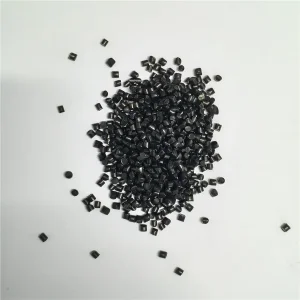
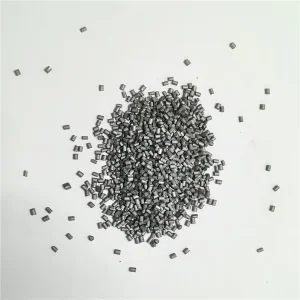
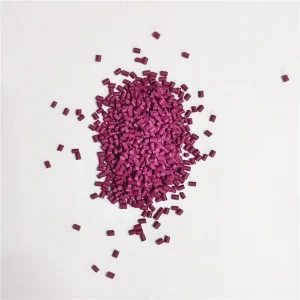
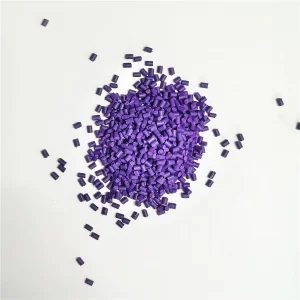
Engineered for extreme dispersion, thermal resistance up to 260°C, and rigorous RoHS/REACH compliance across global manufacturing lines.
An in-depth analysis of carbon black jetness, particle morphology, dispersion physics, and melt flow rheology for global plastic converters.
In modern polymer processing, achieving ultra-high optical density (jetness) while maintaining mechanical integrity, melt flow index (MFI) stability, and surface homogeneity is a paramount engineering challenge. Carbon black masterbatches are not merely physical mixtures of pigment and resin; they are highly sophisticated dispersion systems engineered to prevent agglomeration, optimize UV absorption, and withstand extreme thermal shear during processing.
Primary carbon black particle size (15nm – 25nm) dictates light absorption efficiency. Finer particles yield deeper jetness (higher L* value pitch blackness) but require immense shear force during twin-screw compounding to prevent primary aggregate re-agglomeration.
Utilizing high-purity virgin LLDPE/LDPE carrier resins ensures perfect thermodynamic compatibility with host polymers. Matched Melt Flow Index (MFI) prevents phase separation, pinholes, and melt fracture during ultra-thin film blowing.
High blackness masterbatch formulated with P-type specialty carbon black provides near 100% absorption across UV-A and UV-B spectrums, protecting agricultural films and pressure pipes from polymer chain scission.
At Changzhou Jiazhou Plastic Products Co., Ltd. (established in 2010), our 16 years of manufacturing research demonstrates that masterbatch quality is governed by the Filter Pressure Value (FPV). High carbon black concentration (typically 40% to 55% by weight) introduces extreme melt viscosity. Without customized dispersion aids—such as low-molecular-weight polyethylene waxes and specialized coupling agents—carbon black agglomerates remain intact, leading to premature screen pack clogging, reduced tensile strength, and visual surface defects in final extruded profiles.
Through our proprietary co-rotating, high-torque twin-screw extrusion lines, Jiazhou masterbatches achieve complete wetting and micro-dispersion of carbon black aggregates. This engineering precision delivers superior tinting strength at lower dosage ratios (let-down ratios from 1% to 4%), providing global plastic converters with substantial material cost savings.
Tailored masterbatch formulations for demanding structural, agricultural, packaging, and infrastructure plastic applications.
For municipal water networks, gas transmission, and industrial conduits, carbon black masterbatch must meet stringent international pipe standards. Jiazhou's high-blackness PE masterbatch provides uniform particle dispersion with < 25nm furnace black, satisfying ISO 4427 criteria for long-term hydrostatic strength, thermal stability (OIT > 20 min at 200°C), and resistance to stress cracking.
High-speed blown film lines (courier bags, garbage bags, agricultural mulch film) demand zero gel counts and ultra-low filter pressure values. Our masterbatch eliminates pinholes, fish-eyes, and tear line vulnerabilities, ensuring high opacity, tear strength, and flawless heat-sealing capabilities even at ultra-low gauge thickness.
Used in landfill liners, mining leach pads, and water reservoirs, HDPE geomembranes are continuously exposed to severe weather, chemical leachates, and solar radiation. Jiazhou masterbatches incorporate specialized antioxidant packages (Irganox/Irgafos blends) coupled with high-grade carbon black to yield 25+ years of environmental stress crack resistance (ESCR).
Under-the-hood components, interior trims, and structural housings require deep jetness paired with flawless surface finish. Our masterbatch reduces sink marks, prevents surface blooming, and tolerates continuous mold processing temperatures up to 260°C without gas generation or mold buildup.
| Grade Code | Carbon Black Content (%) | Carrier Resin | MFI (190°C / 2.16kg) | Filter Pressure Value (FPV) | Primary Application |
|---|---|---|---|---|---|
| Jiazhou-BK UltraJet 50 | 50% High-Jetness Furnace | Virgin LLDPE | 15 g/10min | < 0.8 bar/g (DIN EN 13900-5) | High-End Blown Film, Courier Bags |
| Jiazhou-BK Pipe Standard | 40% P-Type Carbon Black | HDPE / PE100 | 4 g/10min | < 1.2 bar/g | Pressure Pipes, Cable Sheathing |
| Jiazhou-BK MoldTech 45 | 45% High Dispersion | LDPE / Universal PE | 25 g/10min | < 1.5 bar/g | Injection Molding, Crates, Automotive |
| Jiazhou-BK Eco-Mulch 35 | 35% Standard Furnace | Recycled / Virgin PE | 10 g/10min | < 2.5 bar/g | Agricultural Mulch Film, Trash Liners |
Strategic supply chain integration, rigorous batch-to-batch testing, and competitive enterprise procurement.
Located in Zouqu Town, Zhonglou District, Changzhou, Jiangsu Province, Changzhou Jiazhou Plastic Products Co., Ltd. benefits from China's most advanced chemical manufacturing corridor. Positioned adjacent to world-class petrochemical refineries and international deep-water ports (Shanghai and Ningbo), Jiazhou integrates upstream raw material sourcing directly with automated twin-screw compounding lines.
Spanning over 6,000 square meters, our ISO-certified production facility operates high-speed, co-rotating compounding systems equipped with loss-in-weight gravimetric feeders. This ensures precise dosing of pigments, additives, and carriers down to a tolerance of ±0.2%. Our workforce of 50+ specialized technicians operates under strict standard operating procedures (SOPs) to guarantee zero contamination across production switches.
Prevents formula drift during continuous production runs, maintaining absolute consistency in carbon black loading and melt viscosity.
Every batch is tested to ensure moisture content remains strictly below 0.05%, preventing steam bubble formation and film breakage during processing.
Continuous melt pressure monitoring screens out micro-gels, ensuring flawless performance on high-speed extrusion lines.
Global enterprises sourcing from China require absolute regulatory certainty. All Jiazhou Black PE Masterbatches fully comply with:
Optimizing Total Cost of Ownership (TCO), navigating sustainable circularity, and adoption of NIR-detectable black masterbatches.
In global masterbatch procurement, raw resin cost per kilogram is only one metric. The true operational cost is governed by efficiency ratio and scrap rates. Substandard masterbatches cause frequent die build-up, line stoppages for screen pack changes, unstable film bubble dynamics, and high scrap percentages. By choosing high-dispersion Jiazhou black masterbatch, converters experience:
As international regulations push toward a circular economy, conventional carbon black presents a major recycling barrier. Standard carbon black absorbs Near-Infrared (NIR) radiation emitted by automated optical sorting systems in recycling plants, causing black plastics to be misidentified as residual waste and landfilled.
In response to global sustainability trends (2026–2030), Jiazhou is pioneering NIR-Detectable Black Masterbatches utilizing non-reflecting specialty pigments. These advanced formulations allow black plastic packaging to be correctly detected, sorted, and recycled in modern Material Recovery Facilities (MRFs). Furthermore, our R&D team provides Post-Consumer Recycled (PCR) PE carrier options, enabling brand owners to meet stringent recycled-content mandates without sacrificing mechanical strength or deep visual jetness.
Direct technical answers from our engineering team for polymer processors and procurement managers.
The optimal let-down ratio depends on the wall thickness and opacity requirement of the final product. For standard injection molding, 1% to 3% is typical. For ultra-thin blown film (under 15 microns) or UV-stabilized pressure pipes, a let-down ratio of 2% to 4% is recommended to achieve maximum jetness and UV protection.
Smaller carbon black particle sizes (15nm – 25nm) provide higher optical density (deeper jetness) and superior UV absorption. However, smaller particles are more difficult to disperse. Larger particle sizes (30nm – 60nm) offer easier dispersion and lower viscosity but lower jetness. Jiazhou utilizes proprietary dispersion technology to deliver fine-particle jetness with easy-flow processing characteristics.
Every production lot undergoes rigorous laboratory testing including Melt Flow Index (MFI) measurement, Filter Pressure Value (FPV) testing according to DIN EN 13900-5, moisture analysis via Karl Fischer titration, and spectrophotometer color matching under standard D65 illuminant.
Yes. While Polyethylene (PE) carrier resin exhibits broad compatibility with Polypropylene (PP) and olefinic copolymers, we also offer custom formulations engineered with universal carriers or specific PP/PCR carriers to ensure maximum mechanical property retention.
When stored in original sealed packaging in a cool, dry, and sheltered warehouse away from direct sunlight, Jiazhou masterbatches have a recommended shelf life of 24 months. Because PE is hydrophobic, pre-drying is generally not required unless exposed to humid ambient conditions.
Absolutely. We offer tailored sample development based on target Pantone/RAL codes or physical plastic samples. Samples (typically 1kg - 5kg) can be dispatched within 3–5 business days for customer laboratory testing.
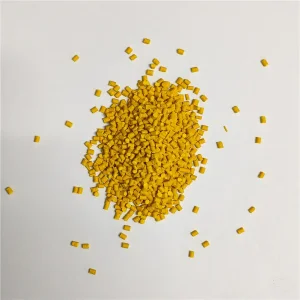
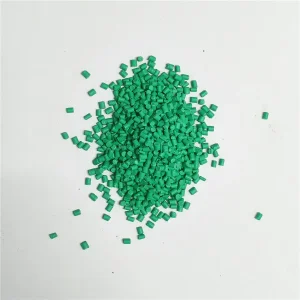
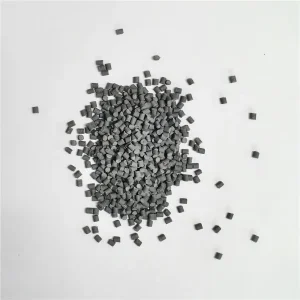
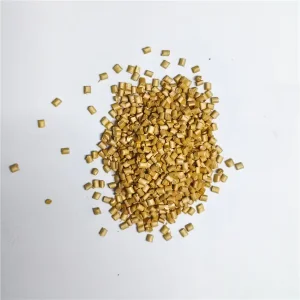
From vibrant color concentrates to cost-reducing filler masterbatches, Changzhou Jiazhou is your 1-stop manufacturing partner.