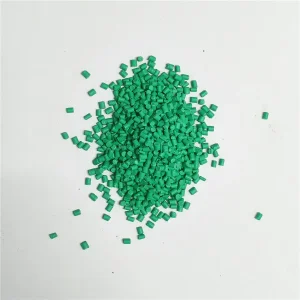
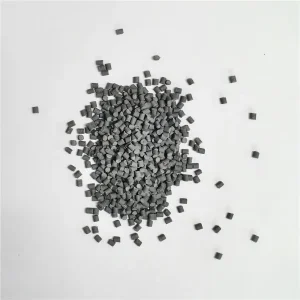
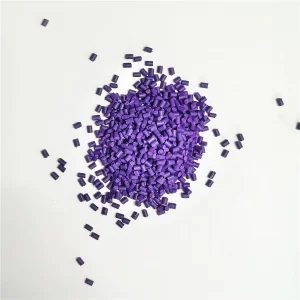
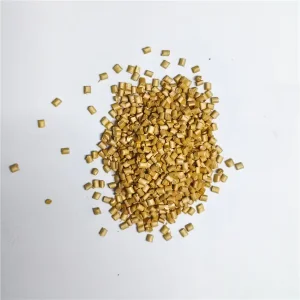
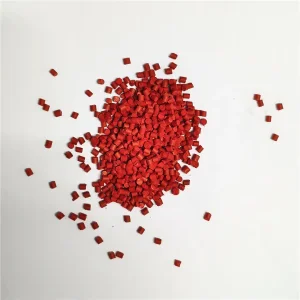
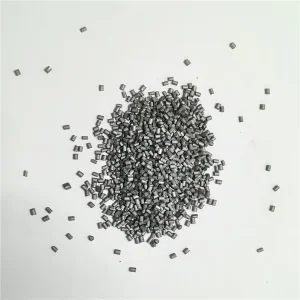
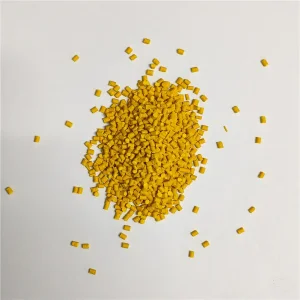
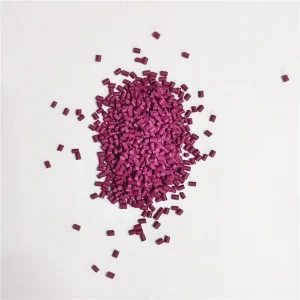
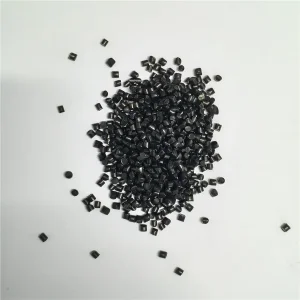
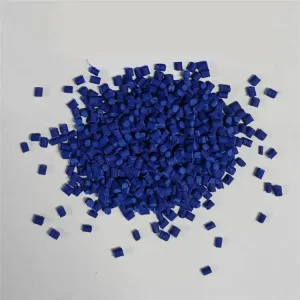
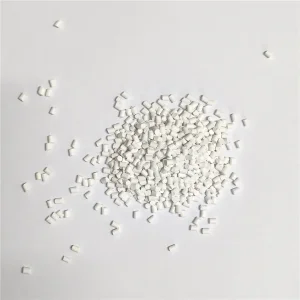
Formulated with non-migratory carrier matrices, exceptional thermal resistance (up to 260°C), and verified acid/alkali resistance for blown film and injection molding.
In modern chemical, agricultural, and civil engineering infrastructure, polyethylene (PE) polymers—specifically High-Density Polyethylene (HDPE), Linear Low-Density Polyethylene (LLDPE), and Low-Density Polyethylene (LDPE)—serve as the foundational matrix for fluid conveyance, waste containment, chemical storage containers, industrial packaging, and agricultural films. However, exposure to aggressive chemical media, including concentrated inorganic acids (hydrochloric acid, sulfuric acid, nitric acid), strong alkaline solutions (sodium hydroxide, potassium hydroxide), and reactive industrial effluents, imposes critical stress on un-stabilized polymer chains.
Without specialized functional additives, standard PE polymers undergo environmental stress cracking (ESC), thermo-oxidative degradation, pigment leaching, and polymer backbone chain scission. Leading global procurement officers, extrusion engineers, and chemical plant operators are increasingly shifting away from basic commodity colorants toward highly specialized Acid And Alkali Resistant PE Masterbatches. These engineered masterbatches not only impart vibrant, stable color pigmentations but also integrate passive micro-barriers and chemical-passivating agents that preserve the structural integrity and mechanical yield strength of the final plastic product.
The performance of chemical-resistant masterbatches relies heavily on the physical chemistry of the pigment particles and the carrier resin melt index (MFI). When conventional masterbatches are subjected to acidic or alkaline environments, reactive colorants (such as calcium-lacquered azo pigments or untreated carbonate fillers) react chemically with hydrogen ions ($H^+$) or hydroxyl ions ($OH^-$). This reaction leads to severe discoloration, chalking, surface embrittlement, and phase separation.
To maintain absolute color stability and mechanical barrier properties, masterbatch manufacturers must strictly select inert, high-fastness organic and inorganic pigments. Phthalocyanine complexes (Copper Phthalocyanine Blue 15:3, Green 7), Isoindolinone Yellows, Quinacridone Magentas, and high-purity Carbon Blacks (with low volatile content) demonstrate zero chemical reactivity when exposed to 30% $H_2SO_4$ or 40% $NaOH$ over extended immersion tests (ASTM D543).
| Masterbatch Chemical Attribute | Standard Masterbatch Formulation | Jiazhou Acid & Alkali Resistant PE Masterbatch | Industrial Application Benefit |
|---|---|---|---|
| Carrier Resin Compatibility | Recycled or mismatched Melt Flow Index PE | Virgin LLDPE/HDPE carrier matched to host resin MFI | Prevents delamination, pinholes, and melt fracture during extrusion |
| Acid Resistance Rating (pH 1-6) | Class 2-3 (Fading / Leaching within 48h) | Class 5 (Zero color shift after 1000h immersion) | Ideal for chemical packaging, agricultural fertilizer containers |
| Alkali Resistance Rating (pH 8-14) | Class 2 (Surface chalking & degradation) | Class 5 (Zero degradation under 40% NaOH) | Crucial for industrial wastewater pipes, mining geomembranes |
| Heat Processing Window | 180°C - 220°C | Up to 260°C continuous processing | Supports high-speed blown film & thin-wall injection molding |
| Pigment Dispersion Index | Standard laboratory twin-screw shear | Ultra-fine twin-screw micro-dispersion (< 5 microns) | Eliminates filter pack clogging and film bubble breakage |
The dispersion process is executed on state-of-the-art, high-torque co-rotating twin-screw extruders featuring specialized screw element configurations (kneading blocks, reverse conveying elements, and vacuum degassing zones). Achieving sub-micron pigment dispersion eliminates micro-agglomerates. Micro-agglomerates act as stress-concentration points where acidic solutions penetrate the polymer matrix, causing premature mechanical failure.
High-molecular-weight additives prevent active color pigments and functional stabilizers from bleeding into liquid chemical contents.
Formulated to endure thermal processing cycles during deep-draw molding, high-temperature extrusion, and complex film blow molding.
Strictly engineered to satisfy RoHS, REACH SVHC, Heavy-Metal-Free regulations, and international industrial safety protocols.
Acid and alkali resistant PE masterbatches are deployed across diverse global sectors where material failure poses environmental hazards or financial liabilities. Below are key industrial applications where specialized masterbatches deliver critical information gain and structural value:
Intermediate Bulk Containers (IBC), 200L blow-molded chemical drums, and jerrycans holding concentrates require robust interior and exterior chemical endurance. Acid-resistant masterbatch ensures zero structural degradation and no pigment leaching during long-term storage.
Mining heap leaching operations utilize copper/gold extraction fluids containing strong sulfuric acid or cyanide solutions. HDPE geomembranes colored with specialized black and silver masterbatches resist long-term chemical attack, UV exposure, and mechanical puncture.
Sewer pipes encounter biogenic sulfuric acid formed by hydrogen sulfide gas emissions. Masterbatch-enhanced HDPE corrugated pipes maintain internal smoothness, preventing chemical corrosion and hydrogen blistering throughout 50+ year service lives.
The next decade of polyolefin masterbatch manufacturing is defined by two converging pressures: strict environmental sustainability mandates and extreme technical operating requirements. Advanced masterbatch suppliers are pioneering several technological breakthroughs:
As global directives mandate the inclusion of Post-Consumer Recycled (PCR) HDPE and LLDPE into packaging and piping, masterbatch formulators must address the intrinsic chemical impurities and degraded molecular chains of recycled resins. Modern acid/alkali resistant masterbatches now incorporate multifunctional chain extenders and passive radical scavengers that rebuild the mechanical cross-linking of PCR resins while providing defense against chemical attack.
By introducing exfoliate nanoclays and functionalized graphene oxide flakes into the PE carrier matrix, chemical diffusion paths are extended exponentially (tortuous path effect). This reduces acid/alkali permeation rates through thin-wall blow-molded containers by up to 45%, offering unprecedented protection for sensitive chemical formulations.
Established in 2010, Changzhou Jiazhou Plastic Products Co., Ltd. stands as a premier manufacturer of high-concentration PE color masterbatches, filler masterbatches, and chemical-resistant additive compounds. Operating a 6,000 square meter standardized production facility in Zouqu Town, Changzhou City, Jiangsu Province, Jiazhou integrates advanced R&D color laboratories, precision spectrophotometry, and continuous twin-screw compounding lines.

16 years of specialized manufacturing experience, export footprints covering over 100 countries across Europe, the Americas, Middle East, and Southeast Asia. Certified ISO 9001 quality management system with full batch-to-batch traceability.
Detailed engineering insights addressing common procurement and processing queries.
Testing is conducted per ASTM D543 standards. Formulated plastic specimens are fully immersed in test chemicals (e.g., 10%-30% $H_2SO_4$, 10%-40% $NaOH$, conc. $HCl$) at specified temperatures (23°C to 50°C) for 100 to 1,000 hours. Evaluation parameters include mass change, tensile strength retention, surface gloss, and Delta E color change.
Due to our high pigment concentration engineering, standard addition rates range from 1.0% to 4.0% depending on film thickness or wall thickness of the injection-molded part. For thin blown films (< 25 microns), a 1.5% to 2% dosage provides complete opacity and UV/chemical protection.
No. Jiazhou matches the carrier resin rheology closely with the customer's base resin grade (typically MFI 0.3 to 20 g/10min at 190°C/2.16kg), ensuring uniform dispersion without modifying mechanical strength or causing extrusion backpressure spikes.
Yes. Our R&D team provides custom matching according to Pantone, RAL, or physical sample targets. We verify that all pigments used in custom color matching possess high acid/alkali fastness (Rating 5) prior to production scaling.
High-concentration formulas manufactured under strict ISO standards for worldwide B2B supply.