High-concentration PE masterbatch formulations tested for thermal stability, non-migration, and low dosage efficiency across global film extrusion lines.
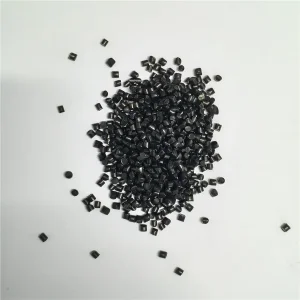
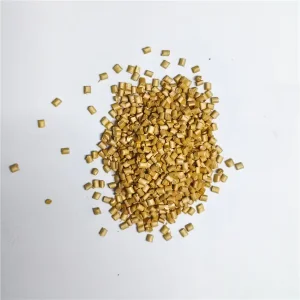
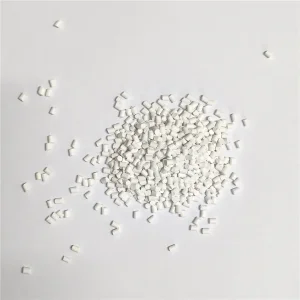
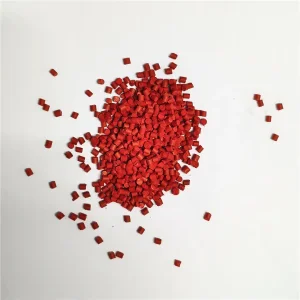
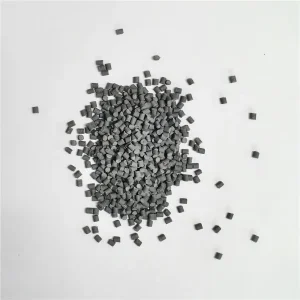
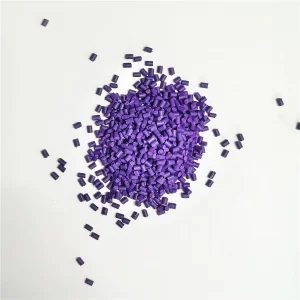
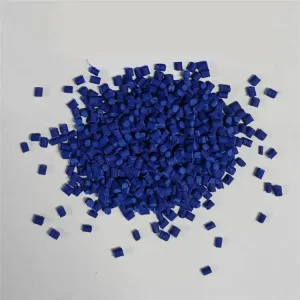
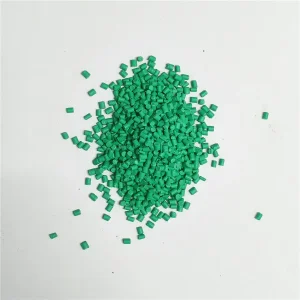
An engineering analysis of kinetic surface friction reduction, inorganic spacer dispersion, and migration dynamics in polyethylene flexible film conversion.
In polyethylene (PE) film extrusion, thin polyolefin substrates naturally exhibit strong adhesion to themselves due to Van der Waals forces, smooth surface topography, and electrostatic attraction. This phenomenon, known as blocking, severely degrades film handling, converting efficiency, bag opening speed, and high-speed automated packaging performance.
Anti-Block Slip PE Film Masterbatch solves this dual challenge through a multi-functional additive matrix. Slip additives—typically high-purity primary fatty acid amides such as Erucamide ($C_{22}H_{43}NO$) or Oleamide ($C_{18}H_{35}NO$)—exhibit controlled incompatibility with the non-polar PE polymer matrix. Upon extrusion cooling, these organic molecules migrate (bloom) to the film surface, creating a microscopic lubricating layer that drastically lowers the Coefficient of Friction (COF).
Concurrently, inorganic anti-blocking agents—such as synthetic amorphous silica, natural calcined kaolin, or micronized talc—act as physical spacers. Distributed homogeneously within the molten low-density polyethylene (LDPE) or linear low-density polyethylene (LLDPE) carrier resin, these microscopic mineral particles generate sub-micron surface roughness.
By reducing the real contact area between adjacent film layers without scattering substantial visible light, state-of-the-art masterbatch formulations achieve a dynamic Equilibrium Coefficient of Friction ($COF < 0.20$) while maintaining internal film clarity (Haze $< 2.5\%$). This delicate balance prevents film blocking during reel winding, storage in high-ambient-temperature environments, and high-speed form-fill-seal (FFS) converting.
E-E-A-T Technical Insight: Premium anti-block slip masterbatch relies on tightly controlled particle size distribution (D50 ~ 3.5 - 4.5 µm). Bimodal silica particle distribution eliminates microscopic pinholes during blown film orientation while preventing filler-agglo-plateout on extruder die lips during long continuous manufacturing runs.
Why Tier-1 global packaging converters partner with China's leading masterbatch processing hubs for high-volume, reliable polymer additive compounding.
Utilizing high-torque, co-rotating twin-screw compounders with L/D ratios of 44:1 to 48:1. Advanced segment screw configurations ensure high shear melt homogenisation, preventing organic slip thermal degradation while completely dispersing silica agglomerates.
Every masterbatch lot undergoes rigorous laser diffraction particle size analysis (Malvern Mastersizer) and Filter Pressure Value (FPV) testing (EN 13900-5) to verify flawless melt filterability down to 10-micron screens.
Located in Changzhou, Jiangsu, Changzhou Jiazhou Plastic Products Co., Ltd. benefits from direct integration with premium petrochemical monomer synthesis and high-purity oleochemical refining networks, delivering 15-25% cost optimization to buyers.
Navigating circular economy demands, high-speed automated lines, and regulatory compliance in modern plastic film manufacturing.
Global sustainability mandates (such as the EU Packaging and Packaging Waste Regulation) require flexible packaging to transition from multi-layer un-recyclable laminate structures (PET/PE, PE/PA) to 100% Mono-Material Polyethylene structures (BOPE/MDO-PE).
High-performance anti-block slip masterbatches are specifically engineered to remain fully compatible with mechanical recycling streams. They do not degrade during melt re-granulation, enabling post-consumer recycled (PCR) PE resins to maintain consistent COF values in secondary packaging applications.
Modern vertical and horizontal FFS machinery operates at speeds exceeding 150-200 packages per minute. At these velocity levels, erratic friction causes film necking, misaligned heat sealing, and costly line jams.
Advanced Erucamide-based slip masterbatch systems maintain precise dynamic friction stability under high thermal seal-bar conditions ($140^\circ\text{C}-180^\circ\text{C}$), ensuring uniform film tracking, clean pouch formation, and zero downtime.
Tailored additive formulation matrices designed for specific polyolefin film converting operations worldwide.
| Application Field | Polymer Substrate | Masterbatch LDR % | Target COF (µd) | Key Technical Requirement |
|---|---|---|---|---|
| Heavy-Duty Agricultural & Fertilizer Bags | LLDPE / HDPE Blends | 2.5% – 4.0% | 0.25 – 0.35 | High static friction stability for pallet stacking; anti-blocking under high ambient outdoor storage temperatures. |
| High-Clarity Lamination Packaging Films | LDPE / MDO-PE | 1.0% – 2.0% | 0.15 – 0.20 | Ultra-low haze (<2.0%), zero optical distortion, non-interference with polyurethane adhesive lamination bonds. |
| Frozen Food & Deep-Freeze Packaging | mLLDPE / EVA | 1.5% – 3.0% | 0.18 – 0.22 | Rapid slip migration at sub-zero temperatures (-20°C); resistance to seal-layer additive migration retardation. |
| Hygiene & Breathable Backsheet Films | PE / Calcium Carbonate | 2.0% – 3.5% | 0.20 – 0.25 | Excellent dispersion, low pinhole formation, non-toxic food contact / skin contact compliance (FDA / EU 10/2011). |
| E-Commerce Courier Express Envelopes | Co-Ex Co-extruded LDPE/HDPE | 2.0% – 3.0% | 0.16 – 0.20 | Smooth machine feeder slip, opacity retention when combined with high concentration Black Masterbatch inner layers. |
Corona discharge treatment increases surface energy for printing ink adhesion, but can cause organic slip amides to re-orient into the bulk polymer matrix. Our formulations incorporate stabilized slip chemistries that preserve printability without losing surface COF.
Uncoated mineral anti-blocking fillers frequently cause die-lip buildup (plate-out), leading to film optical lines and tear risks. Jiazhou utilizes surface-passivated synthetic silicas to extend extrudate run-times up to 72+ continuous hours.
Fully compliant with US FDA 21 CFR 177.1520, EU Regulation No 10/2011, REACH, and RoHS directives, guaranteeing heavy-metal-free, non-toxic, safe performance for direct food contact applications.
A comprehensive checklist for international procurement teams evaluating Masterbatch Suppliers.
From single-layer carrier systems to complex co-extrusion masterbatch grades, explore our certified product catalog.
Expert technical responses to common engineering, procurement, and polymer processing queries.
A: Oleamide ($C_{18}$) has a shorter molecular chain and migrates rapidly to the film surface within 6 to 12 hours, making it ideal for fast-converting applications. However, it can bloom excessively or volatilize during high-temperature processing. Erucamide ($C_{22}$) possesses a longer carbon chain, migrating more slowly and steadily (24 to 48 hours), delivering superior thermal stability (up to 260°C) and long-term slip performance without causing surface oiliness or haze spikes.
A: Excessive organic slip additive migration can reduce surface energy (dynes/cm) and impede solvent-based ink wetting or polyurethane adhesive bonding during lamination. To prevent this, masterbatch dosage must be calibrated precisely (typically 1.0% – 2.0% LDR), or specialized secondary amides / non-migratory permanent slip agents should be incorporated into the corona-treated outer skin layer during 3-layer or 5-layer co-extrusion.
A: Synthetic amorphous silica features a refractive index ($n \approx 1.45-1.46$) closely matching that of Low-Density Polyethylene ($n \approx 1.51$), resulting in minimal visible light refraction and scattering (Haze < 2.0%). Natural talc contains minor mineral impurities and irregular particle plate geometry, which causes elevated haze and lower total luminous transmittance in optical packaging films.
A: The typical recommended LDR ranges from 1.5% to 3.0% depending on film thickness, extrusion layer distribution (monolayer vs co-ex ABA structure), target Coefficient of Friction ($COF$), and ambient storage temperatures. For thin blown films (<25 microns), an LDR of 2.0% typically achieves a dynamic COF below 0.20.
A: Anti-block slip masterbatch should be stored in original moisture-proof aluminum-barrier or PE bags in a cool, dry warehouse below 30°C, away from direct sunlight. Under optimal conditions, the technical shelf life exceeds 12 to 24 months. Pre-drying at 70°C for 2 hours is recommended if stored in high-humidity ambient environments.