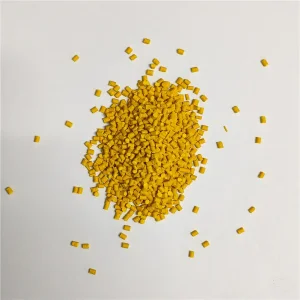
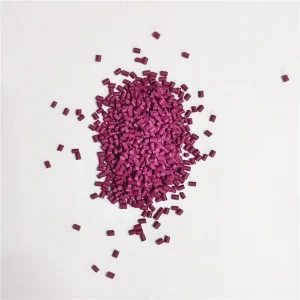
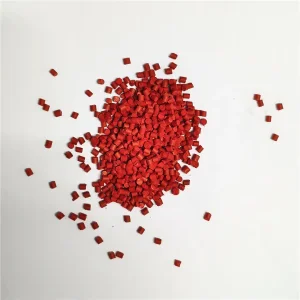
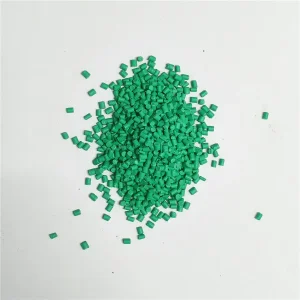
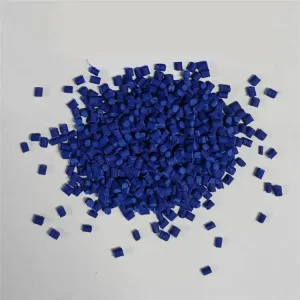
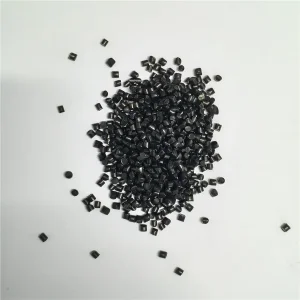
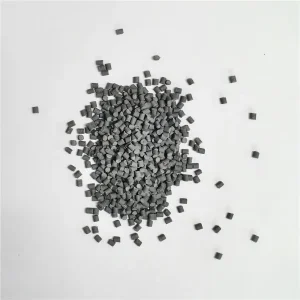
Explore our flagship non-toxic, heat-resistant, and high-dispersion masterbatch formulations designed for blown film, injection molding, and complex industrial extrusion profiles.
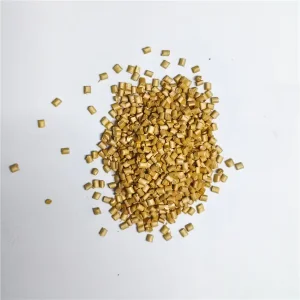
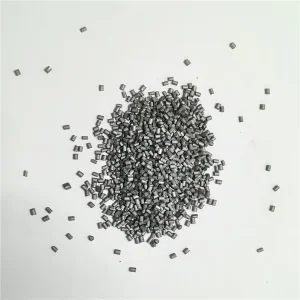
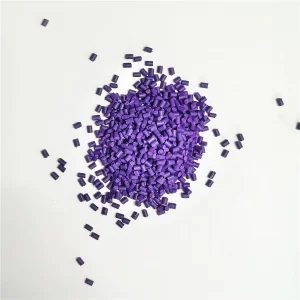
Understanding triboelectric charge generation in Polyethylene (PE) matrices and the advanced physical chemistry required to achieve permanent surface resistivity control.
Polyethylene (LDPE, LLDPE, HDPE) exhibits an extremely high surface resistivity (typically ~1016 Ω/sq), making it an exceptional electrical insulator. During processing, converting, or handling, friction causes triboelectric charging. Without targeted additive modification, static charges accumulate, leading to dust attraction, severe electrostatic discharge (ESD) risks in electronics packaging, and operational hazards in explosive environments.
Standard anti-static PE masterbatches utilize internal migratory surfactants such as ethoxylated fatty amines, glycerol monostearate (GMS), or alkanesulfonates. These amphiphilic molecules migrate from the bulk PE matrix toward the polymer surface, orienting their hydrophobic tails inward while drawing ambient moisture to the hydrophilic heads. This forms a microscopic conductive aqueous film that rapidly dissipates static charge (decaying $10^{16}$ to $10^{9}$–$10^{11}$ Ω/sq).
For cleanroom, semiconductor, and long-term shelf-life applications, traditional migratory agents risk outgassing or chemical contamination. Our advanced factory formulates Inherently Dissipative Polymers (IDPs) using polyether-block-amides (PEBA) or ionomer networks. IDPs construct a co-continuous polymer network inside the PE matrix, delivering instant, humidity-independent ESD protection without migration or surface bloom.
Technical Performance Insight: Surface resistivity ($\Omega/\text{sq}$) drops exponentially based on additive loading rates and relative ambient humidity. Our high-concentration PE masterbatches are optimized to achieve uniform decay times under 0.1 seconds per MIL-STD-3010C Test Method 4046 standards.
| Classification | Active Additive Mechanism | Surface Resistivity Scope | Humidity Dependence | Primary Industrial Target |
|---|---|---|---|---|
| Fast-Acting Migratory | Glycerol Monostearate (GMS) / Fatty Amides | 1010 – 1012 Ω/sq | High (Requires RH > 40%) | Blown packaging film, disposable logistics bags |
| Long-Term Migratory | Ethoxylated Alkylamines / Sulfonates | 109 – 1011 Ω/sq | Moderate (Effective RH > 25%) | Agricultural films, storage drums, heavy containers |
| Permanent IDP (Non-Migratory) | Polyether Copolymers / Polyurethane-blocks | 108 – 1010 Ω/sq | Zero (Independent of humidity) | Semiconductor packaging, cleanroom trays, medical devices |
| Conductive Network Grade | Specialty Conductive Carbon Black / CNTs | 103 – 106 Ω/sq | Zero (Independent of humidity) | Explosive chemical liners, ESD-safe automotive parts |
As global industrial automation, microelectronics production, and e-commerce packaging expand rapidly, anti-static functional masterbatch technology is undergoing radical evolutionary shifts.
The rapid proliferation of 5G infrastructure, electric vehicles (EVs), and advanced microchips has elevated ESD protection requirements globally. Component packaging requires non-corrosive, non-outgassing PE bags and trays. Industrial procurement is shifting heavily from standard anti-static films toward permanent, ultra-clean masterbatches verified under ANSI/ESD S20.20 certifications.
Strict regulatory updates across North America (FDA 21 CFR) and Europe (EU No 10/2011 & REACH) demand amine-free anti-static additive systems. Furthermore, global converters are integrating recycled PE (PCR/PIR resins), requiring masterbatches engineered with exceptional thermal stability and compatibility to counteract contaminants in recycled matrices.
Modern high-speed multi-layer blown film lines run at speeds exceeding 500 kg/hr. Standard anti-static additives often cause die build-up (screw slip) or compromise optical transparency and heat-sealing strength. Modern formulations incorporate synergistic slip-antistat hybrid combinations to maintain maximum extrusion throughput.
Changzhou Jiazhou Plastic Products Co., Ltd. combines 16+ years of specialized masterbatch manufacturing with Changzhou’s world-class chemical industrial ecosystem.
Our 6,000 m² modern manufacturing plant operates multi-stage high-torque twin-screw extrusion lines with precise loss-in-weight feeders. This guarantees a hyper-uniform dispersion of active anti-static agents and pigments into the PE carrier resin, eliminating microscopic agglomerations that cause film tears or pinholes.
Every batch undergoes strict QC inspection: Melt Flow Index (MFI) verification, differential scanning calorimetry (DSC), surface resistivity testing across humidity-controlled chambers, and thermal stability checks up to 260°C. We strictly follow ISO9001 standards to maintain absolute batch-to-batch consistency.
Leveraging direct access to primary petrochemical refineries in East China and efficient port logistics, Changzhou Jiazhou offers premier quality masterbatch solutions at highly competitive factory-direct pricing, backed by an agile 15-day export lead time for global buyers.
From microchip protective films to heavy-duty chemical packaging, our anti-static PE masterbatch is engineered to excel across demanding manufacturing processes.
Integrated during blown film extrusion of LDPE/LLDPE pink or transparent shielding bags. Prevents static charge buildup during transit, safeguarding sensitive integrated circuits, PCBs, and microelectronic devices against dielectric breakdown.
Used in chemical powder bags, bulk FIBC liners, and fuel tank blow-molded containers. Dissipates triboelectric sparks instantly, preventing disastrous dust explosions or combustion during high-speed pneumatic filling operations.
Eliminates surface static dust pick-up on optical sheets, building wrap materials, and agricultural greenhouse covers. Ensures optical clarity and surface cleanliness throughout long-term outdoor exposure.
A technical roadmap designed for procurement directors, polymer engineers, and factory managers to systematically source high-performance masterbatches.
Determine required surface resistivity ($\Omega/\text{sq}$), target ambient relative humidity range, and expected shelf-life. Specify whether the final application involves food contact (FDA/EU compliance) or cleanroom conditions requiring amine-free formulations.
Ensure carrier resin compatibility. The masterbatch carrier resin must possess a slightly higher Melt Flow Index (MFI) than the host resin (LDPE, LLDPE, HDPE, or PP) to guarantee rapid melting, homogeneous shear mixing, and streak-free film extrusion.
Establish dosage parameters. Typical addition rates range between 2% and 5% depending on wall thickness and target decay time. Our technical engineering team provides custom dosage models to optimize cost-per-ton ratios without over-dosing.
Clear, authoritative technical answers addressing common queries from global B2B buyers regarding anti-static PE masterbatch performance.
Fast-acting migratory masterbatches use low-molecular-weight surfactants (like GMS or fatty amides) that travel to the surface over 24–48 hours, absorbing ambient moisture to dissipate charge. Permanent anti-static masterbatches use Inherently Dissipative Polymers (IDPs) that form a permanent conductive polymer network inside the PE matrix. Permanent grades work instantly, are independent of humidity, do not bloom or wash off, and last for the lifetime of the product.
Standard migratory anti-static agents rely on airborne humidity to form a surface conductive layer; when humidity drops below 30% RH, their effectiveness decreases. However, Changzhou Jiazhou’s advanced non-migratory IDP and ethoxylated formulation blends are engineered to maintain reliable static dissipation down to 15% RH, ensuring all-weather compliance for international shipping.
When added at recommended let-down ratios (2% to 4%), our high-dispersion PE masterbatch maintains optical transparency and clarity. Because of our high-purity carrier resins and optimized additive chemistry, Corona treatment printability and heat-sealing performance remain fully uncompromised on blown film lines.
Yes. All masterbatches produced by Changzhou Jiazhou strictly adhere to EU RoHS and REACH SVHC standards. We offer specialized amine-free, food-grade anti-static masterbatches that satisfy FDA 21 CFR 177.1520 and EU No 10/2011 mandates for direct food contact packaging.
Our PE masterbatch carrier and active additives are thermally stabilized to withstand extrusion temperatures up to 260°C (500°F) without thermal degradation, discoloration, or outgassing during high-temperature injection molding or cast film extrusion.
Masterbatches should be stored in a dry, cool environment below 35°C away from direct sunlight. Unopened moisture-barrier bags have a shelf life of 12 to 24 months. Standard pre-drying is generally not required, though pre-drying at 70°C for 2 hours is recommended if stored in high-humidity conditions.
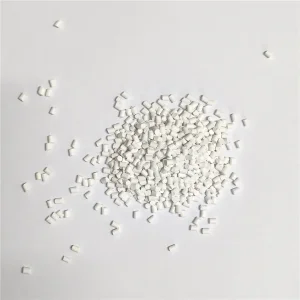
Discover our comprehensive collection of color, black, white, and specialized functional masterbatches manufactured in Changzhou, China.