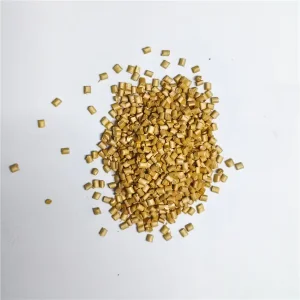
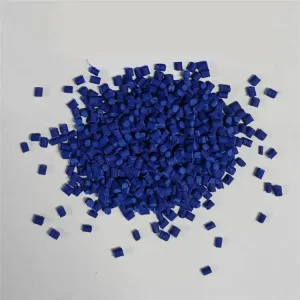
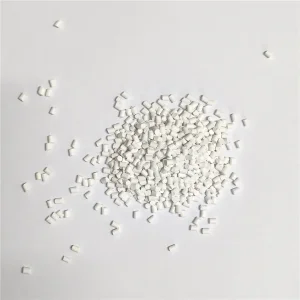
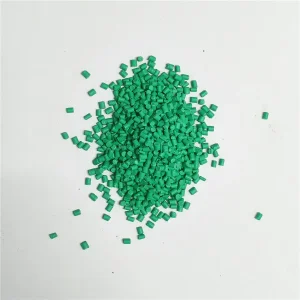
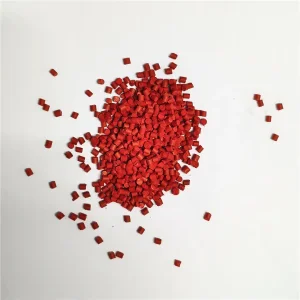
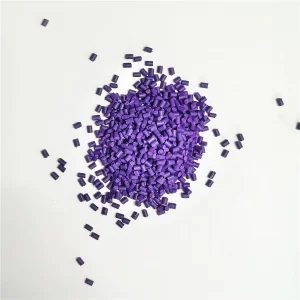
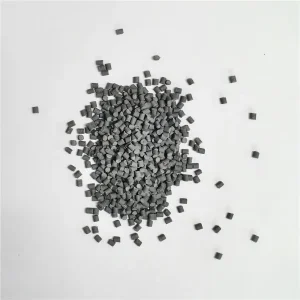
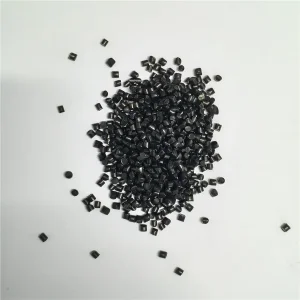
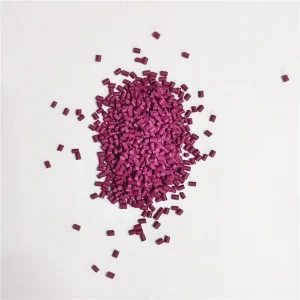
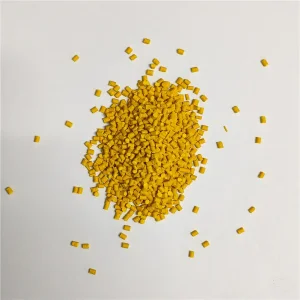
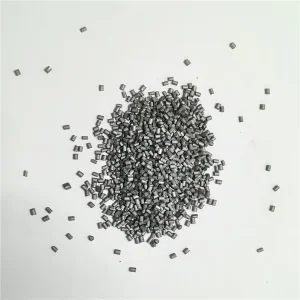
Explore our high-concentration carrier-specific color concentrates engineered for thermal stability up to 260°C–300°C, zero-migration, and fast color tone calibration.
China's masterbatch ecosystem synthesizes advanced twin-screw co-rotating extrusion, upstream raw material integration, and rigorous rheological testing to deliver unmatched cost-performance metrics.
Utilizing high-torque continuous twin-screw compounding machines, top-tier Chinese manufacturers achieve organic pigment loadings up to 40% and inorganic (TiO₂/Carbon Black) loadings reaching 70%. This extreme concentration minimizes carrier dilution, ensuring optimal Melt Flow Index (MFI) retention during end-product processing.
Modern production facilities utilize specialized polyethylene (LDPE, LLDPE, HDPE), polypropylene (PP), and engineering thermoplastic resins (PET, ABS, PA) as precise carrier matrix bases. This guarantees perfect interfacial bonding, zero phase separation, and uniform pigment particle shear dispersion down to sub-micron scales.
By leveraging computer-aided color matching (CCM) coupled with Datacolor spectrophotometers, factory technicians ensure batch-to-batch color tolerance levels of ΔE < 0.3. This eliminates shade variance across massive production runs, serving automotive and consumer electronic standards.
Different polymer transformation processes demand dedicated rheological properties. Our color masterbatches are engineered specifically to prevent filter net clogging, die build-up, and surface pinholes.
Film blowing requires ultra-high pigment dispersion to prevent structural weak points, streaks, or optical inclusions in thin gauges down to 10 microns. Our PE color pellets incorporate hyper-dispersant waxes and non-migratory UV stabilizers, assuring excellent sealability and opacity for courier bags, greenhouse films, and food-grade barrier films.
Fast cycle times in injection molding require masterbatches with rapid melt dynamics and zero warp contribution. Engineered for crates, daily household plastics, and electronics housings, our pellets melt uniformly alongside base polymers, maintaining strict dimensional tolerance without distorting molded part geometry.
HDPE and PP pipe extruders mandate long-term weatherability and pressure-resistance. Incorporating high-purity carbon black (P-type/N220) and inorganic metal oxides, our pellets offer superior environmental stress crack resistance (ESCR) and thermal protection during long continuous extrusion runs.
Spunbond PP and PET fiber manufacturing requires filterability through fine screen packs (down to 15-25 microns). Our micro-pellet formulations undergo continuous pressure filter testing (FPV), guaranteeing smooth spinning without filament breakage or spinneret build-up.
| Color Masterbatch Type | Carrier Resin Base | Pigment Content | Heat Resistance (°C) | Light Fastness (Blue Wool Scale) | Recommended Let-Down Ratio (LDR) |
|---|---|---|---|---|---|
| PE White Concentrate | LDPE / LLDPE | 60% – 75% Rutile TiO₂ | 280°C | 7 – 8 | 1% – 4% |
| PE Black Masterbatch | HDPE / LLDPE | 30% – 50% Carbon Black | 300°C | 8 | 1% – 3% |
| Chromatic Masterbatches | PE / PP / Universal | 20% – 40% Organic/Inorganic | 240°C – 260°C | 6 – 7 | 2% – 5% |
| Metallic / Pearl Masterbatch | PE / PP | 15% – 30% Specialty Effect | 220°C – 240°C | 6 | 2% – 4% |
As global environmental directives like the EU Plastics Strategy and US FDA recycled content mandates take effect, masterbatch formulations are evolving rapidly to support circular supply chains.
Traditional carbon black masterbatches absorb Near-Infrared (NIR) radiation, rendering black plastic packaging unidentifiable in automated optical sorting plants. Next-generation NIR-detectable black masterbatches utilize specialty dyes that reflect infrared signatures, enabling full recyclability of black rigid containers and film waste.
To reduce scope 3 carbon footprints, suppliers are integrating Post-Consumer Recycled (PCR) polyolefins and bio-polyethylene (derived from sugarcane) as carrier matrices. These formulations provide identical melt dynamics to virgin resins while helping brands meet stringent sustainability benchmarks.
Modern processors minimize compounding steps by combining color pigments with active additives in a single masterbatch pellet. Popular combinations include Color + Anti-Static, Color + UV Inhibitor, and Color + Anti-Frictional Slip Agents.
International procurement of polymer color concentrates requires rigorous vendor evaluation. Our manufacturing operations strictly adhere to transparent quality verification protocols.
Every production batch undergoes ICP-OES chemical analysis to certify compliance with RoHS 3.0 (EU 2015/863), REACH SVHC standards, and FDA 21 CFR food contact regulations. Materials are verified free from heavy metals such as lead, cadmium, mercury, and hexavalent chromium.
MFI mismatch between carrier masterbatch and base resin causes severe processing defects. Our engineering laboratory measures carrier melt flow rates according to ASTM D1238 / ISO 1133 standards, ensuring precise rheological alignment with your specific resin melt profile.
To eliminate surface splay, voiding, or foaming in finished plastic goods, moisture levels in masterbatch pellets are tightly controlled to < 0.15% via Karl Fischer titration. Thermogravimetric analysis (TGA) verifies exact inorganic filler ash content per lot.
Browse additional high-concentration color pellet solutions for specialized film extrusion, injection molding, and compound masterbatching.
Expert insights addressing common engineering challenges in plastic coloring, dosage calculations, carrier selection, and supplier quality validation.
Request tailored Pantone color matching, technical datasheets (TDS), safety datasheets (MSDS), and competitive bulk pricing from our senior technical engineering team.