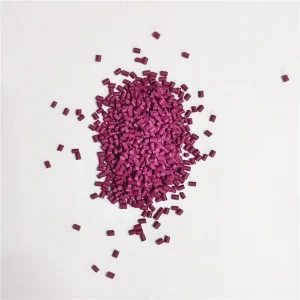
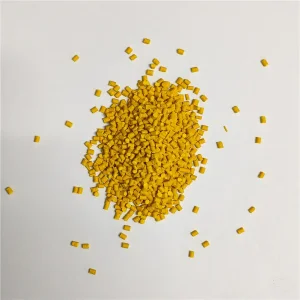
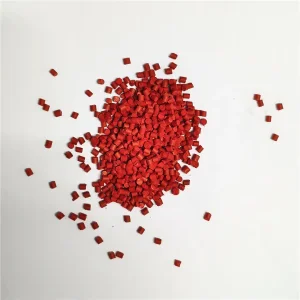
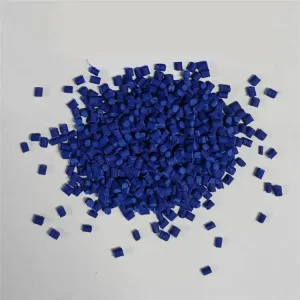
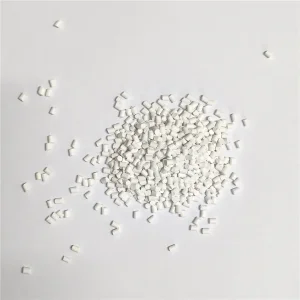
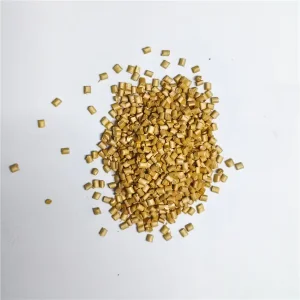
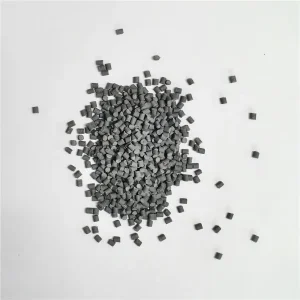
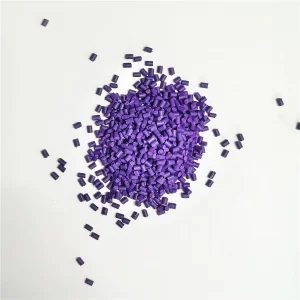
High-concentration PE carrier formulations engineered for high-speed fiber drawing, blown film, and injection applications.
Understanding the molecular dynamics of High-Density Polyethylene (HDPE) monofilaments under severe solar radiation and marine salinity.
Polyethylene fishing nets, aquaculture containment webs, and agricultural shade netting operate under continuous solar bombardment. Solar ultraviolet (UV) radiation—specifically the UV-A (315–400 nm) and UV-B (280–315 nm) spectrums—excites chromophoric impurities inside the virgin polyethylene matrix. This photon absorption initiates free-radical chain reactions, leading to hydroperoxide formation, polymer chain scission, cross-linking, and rapid degradation of mechanical tensile strength.
Without specialized additive masterbatch intervention, extruded HDPE monofilaments experience severe embrittlement within 3 to 6 months of open ocean deployment. Tensile elongation drops rapidly, leading to net snapping, gear loss, microplastic shedding, and high commercial losses for commercial fishing fleets and aquaculture farms.
Hindered Amine Light Stabilizers (HALS) do not absorb UV radiation; instead, they operate via the Denisov Cycle. HALS convert into nitroxyl radicals (R-NO•), which actively scavenge alkyl (R•) and peroxy (ROO•) radicals, stopping degradation loops in monofilaments.
Benzotriazoles and Hydroxyphenyl-triazines absorb incoming UV photons, converting harmful radiation into low-energy thermal radiation. When combined with HALS, a synergistic shield forms across both outer fiber skins and core polymer matrices.
Primary (hindered phenols) and secondary (phosphites) antioxidants suppress thermal degradation during high-speed monofilament drawing (extrusion temperatures up to 260°C), protecting active HALS molecules from early thermal consumption.
Empirical performance improvements validated by accelerated Xenon-Arc (ISO 4892-3) weathering and field trials in high-UV marine zones.
Addressing processing challenges in monofilament drawing, tape yarn extrusion, and high-speed melt spinning.
Producing fishing net monofilaments requires a high-draw ratio (typically 1:8 to 1:10) to align polymer chains and maximize tenacity. Introducing masterbatches with poor carrier dispersion or unmatched Melt Flow Index (MFI) causes immediate process instability: frequent strand breakage, filter screen pack clogging, die-drool accumulation, and uneven filament diameter variations (denier fluctuation).
At Changzhou Jiazhou Plastic Products Co., Ltd., our anti-aging drawing PE masterbatches are formulated with virgin low-density (LDPE) or linear low-density (LLDPE) carriers possessing melt flow characteristics precisely calibrated to target HDPE/PP extrusion resins.
| Parameter | Standard Commercial Masterbatch | Jiazhou Anti-Aging Drawing PE Masterbatch | Benefit to Net Extruders |
|---|---|---|---|
| Carrier MFI Matching | Generic high-MFI PE carrier | Tailored melt index (0.5 – 4.0 g/10min) | Zero phase separation; smooth drawing at high draw ratios |
| Dispersion & Filtering | Coarse additive agglomerates (>25 µm) | Sub-micron dispersion via twin-screw compounding | Prevents spinneret clogging & reduces screen pack changes |
| HALS Volatility | Low-molecular weight HALS (blooming risk) | Polymeric / High-MW HALS blend (non-blooming) | No additive migration or leaching into ocean water |
| Thermal Tolerance | Degrades above 220°C | Stable up to 260°C extrusion temperature | Maintains active UV scavenging capacity post-extrusion |
| Color Fastness (Blue/Green/Black) | Grade 4-5 Organic Pigments | Grade 7-8 High Weatherability Pigment Complex | No color fading under intense prolonged solar exposure |
How Changzhou Jiazhou leverages regional polymer clusters, scaled production, and rigorous quality assurance.
Founded in 2010 in Zouqu Town, Changzhou, Jiangsu, Jiazhou Plastics operates a modernized 6,000 m² production facility equipped with high-torque co-rotating twin-screw extruders and automated gravimetric dosing systems.
Direct integration with major East Coast chemical supply lines enables seamless raw material sourcing. We maintain standardized inventory for primary UV masterbatch grades, guaranteeing 15-day shipping readiness worldwide.
Every export lot undergoes comprehensive laboratory testing: Spectrophotometer color matching, Melt Flow Rate (MFR) testing, Ash Content verification, and Pressure Filter Value (FPV) screening.
Meeting international marine safety standards and environmental regulations across major global maritime zones.
Global net manufacturers and commercial fishery buyers face stringent regulatory landscapes regarding chemical leaching and ocean pollution. Jiazhou Anti-Aging Drawing PE Masterbatches comply fully with global compliance protocols:
Designed for Chilean salmon farming cages subject to high UV index and constant ocean current friction. High tensile strength retention ensures security against cage breaches.
Formulated for Vietnam, Indonesia, and Philippines shallow-water gillnets exposed to extreme tropical humidity, seawater salinity, and high ambient temperatures.
Custom shade netting, hail protection webs, and windbreak monofilaments requiring high solar endurance up to 140–180 KLY (Kilo Langley) radiation levels.
Sub-zero cold flex resistance combined with long-term UV protection for heavy-duty safety netting, logistics slings, and marine harbor rigging.
How next-generation polymer additive formulations are driving sustainability, bio-compatibility, and extended lifecycle ROI.
By extending monofilament service life from 2 years to 5+ years, degraded net shedding is drastically reduced. Superior anti-aging formulations directly prevent macro and micro-plastic fragmentation in oceans.
Integrating Anti-Aging UV scavengers, Anti-Fouling surface modifiers, and custom color pigments into a single high-concentration masterbatch granule to simplify extruder dosing operations.
Advanced HALS systems engineered to survive mechanical recycling processes, allowing post-consumer fishing nets to be re-granulated into secondary industrial plastic products without radical breakdown.
Explore our full line of functional PE color masterbatches engineered for extrusion, blown film, and injection molding.
Expert answers on dosage ratios, drawing performance, custom color matching, and global delivery SLA.
The standard recommended let-down ratio ranges between 2.0% and 5.0% depending on the required KLY radiation resistance rating, monofilament denier thickness, and targeted geographical deployment zone (e.g., tropical high-UV vs. temperate zones).
No. Our anti-aging PE masterbatch is subjected to sub-micron dispersion milling and low-pressure filter testing (FPV). The carrier resin melt flow index (MFI) is matched specifically to fiber-grade HDPE/PP to ensure zero strand breakage even at draw ratios up to 1:10.
We utilize high-molecular-weight polymeric HALS complexes that exhibit minimal water extraction and near-zero blooming. Unlike low-molecular-weight UV additives, our formulation remains anchored inside the PE polymer matrix throughout years of seawater exposure.
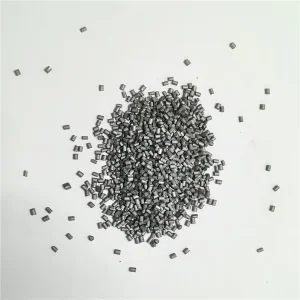
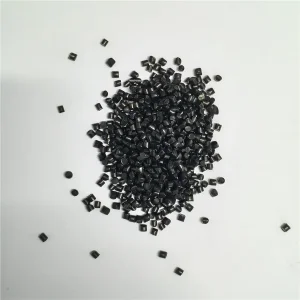
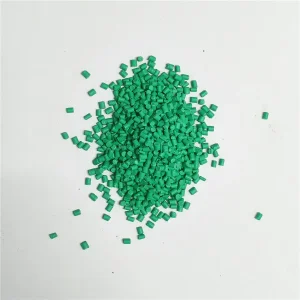
Yes. We offer precise Pantone / RAL custom color matching combined with tailored UV stabilizer loadings. Common fishing net shades include Marine Blue, Aqua Green, Dark Black, Emerald, and Silver Metallic.
Every shipment includes a Certificate of Analysis (COA) detailing Melt Flow Rate, Dispersion Rating, Moisture Content (<0.15%), and Specific Gravity. Accelerated Xenon-Arc test reports (ISO 4892-3) and RoHS/REACH compliance documentation are available upon request.