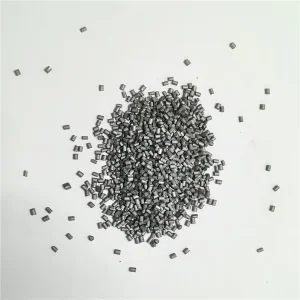
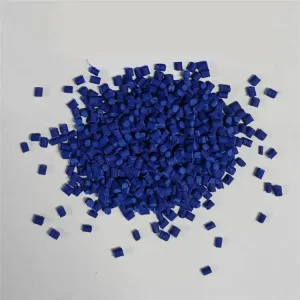
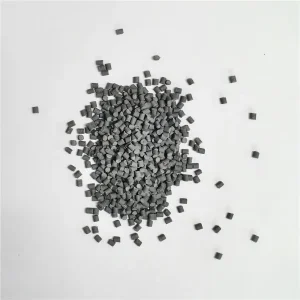
Engineered for blown film extrusion, injection molding, and complex food packaging systems demanding exceptional dispersion and thermal stability.
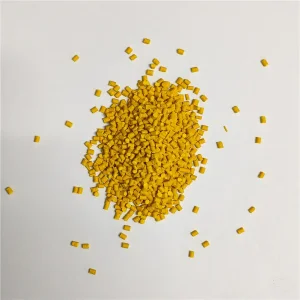
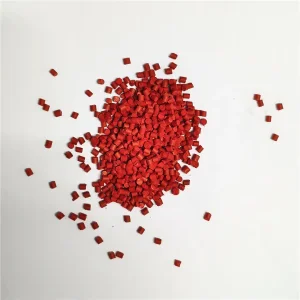
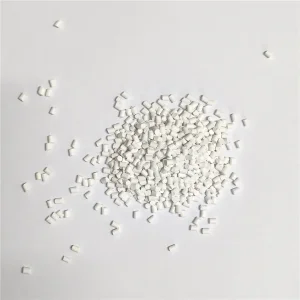
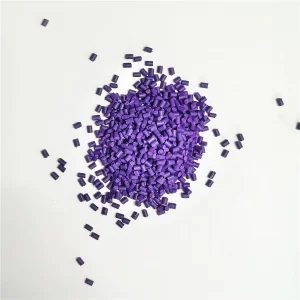
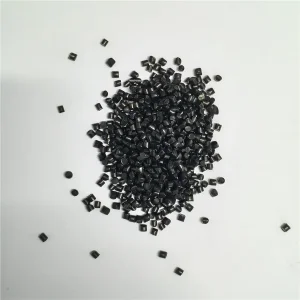
In the rapidly expanding global flexible packaging ecosystem, the demand for high-performance food bag blown film white masterbatch is undergoing a structural transformation. Driven by stringent global food safety standards, increased shelf-life expectations, and high-speed automated pouch-making machinery, film converters no longer evaluate masterbatch simply on basic opacity. Sourcing leads in North America, Europe, Asia-Pacific, and the Middle East prioritize multi-layered functional parameters including Filter Pressure Value (FPV), organoleptic neutrality, titanium dioxide (TiO2) crystal morphology, and non-migration properties.
Food contact applications—ranging from multi-layer co-extruded milk pouches, frozen food bags, vacuum seal bags, to dry snack packaging—require white masterbatches that deliver high opacity at extremely thin gauges (often under 25 microns) without compromising the mechanical integrity of the host polymer network. The industry shift toward mono-material polyethylene (PE) recyclable structures has further elevated the technical requirements for carrier resin compatibility. Manufacturers must formulate white masterbatches using prime-grade LLDPE or LDPE carrier resins with melt flow indexes (MFI) precisely calibrated to match high-density and linear low-density blown film extrusion lines.
The selection of Titanium Dioxide morphology dictates both opacity efficiency and UV weathering performance. For premium food bag blown films, Chloride-process Rutile TiO2 is the gold standard. Rutile crystals exhibit a higher refractive index (2.73) compared to Anatase (2.55), granting superior light scattering efficiency. This allows film extruders to achieve complete visual opacity at lower let-down ratios (LDR), preventing die-lip buildup and reducing total energy consumption during extrusion.
Furthermore, Rutile TiO2 crystals utilized in Changzhou Jiazhou's high-concentration white masterbatch undergo proprietary inorganic surface treatments (Alumina/Silica encapsulation) and organic hydrophobic surface passivations. This coating prevents photocatalytic degradation under store display lighting, inhibiting yellowing and polymer chain scission over extended storage periods.
Microscopic agglomerates of TiO2 are the primary cause of film pinholes, web breaks, and gel defects during ultra-thin film blowing. Changzhou Jiazhou employs continuous high-shear twin-screw compounding extruders equipped with specialized mixing elements to breakdown pigment agglomerates into primary particle sizes (approx. 0.2 to 0.3 microns).
Our premium food bag blown film white masterbatches are controlled under stringent EN 13900-5 testing protocols, ensuring a Filter Pressure Value (FPV) of less than 0.5 bar/gram (using a 25-micron screen mesh). This guarantees smooth continuous extrusion through fine mesh screens without pressure spikes or premature equipment wear.
| Parameter / Property | Jiazhou Food-Bag Grade White Masterbatch | General Purpose Industrial White Masterbatch | Test Method / Protocol |
|---|---|---|---|
| TiO2 Content & Type | 60% - 70% Rutile (Chloride Process) | 40% - 50% Anatase / Rutile Blend | ISO 3451-1 (Ash Content) |
| Carrier Resin Compatibility | 100% Virgin LLDPE / LDPE (Food-Contact MFI) | Recycled LDPE or Low-Grade Off-spec PE | ASTM D1238 (Melt Flow Rate) |
| Filter Pressure Value (FPV) | ≤ 0.5 bar/g (25μm mesh filter) | > 2.5 bar/g | EN 13900-5 Quality Standard |
| Whiteness Index (WI) | L* ≥ 98.5, a* ≤ -0.2, b* ≤ 1.2 | L* ≤ 94.0, b* ≥ 3.5 (Slightly Yellow) | CIE L*a*b* Spectrophotometer |
| Food Contact Safety Compliance | FDA 21 CFR 177.1520 & EU 10/2011 Compliant | Non-compliant / Non-certified | SGS / Intertek Heavy Metal & Migration |
| Thermal Processing Stability | Stable up to 280°C (Zero Smoke / Odor) | Degrades at > 220°C (Causes Odor) | Thermogravimetric Analysis (TGA) |
Formulated exclusively using raw ingredients listed under the United States Food and Drug Administration (FDA) regulations for direct and indirect food contact plastics, ensuring safety across dry, liquid, and fatty food packaging.
Strict adherence to European Union plastic food contact regulations. Regular Overall Migration Limits (OML) and Specific Migration Limits (SML) testing confirm compliance across all food simulant types.
Processed with ultra-pure additives to prevent off-flavor or off-odor transfer to sensitive consumables such as dairy products, drinking water films, and infant formula bags.
Completely free of heavy metals (Lead, Cadmium, Mercury, Hexavalent Chromium), Polybrominated Biphenyls (PBBs), Polybrominated Diphenyl Ethers (PBDEs), and Substances of Very High Concern (SVHC) under EU REACH.
Advanced surface passivation prevents pigment extraction or migration when in contact with edible oils, organic acids, or alcohol-containing food formulations.
Achieving flawless film aesthetics while operating high-speed blown film co-extrusion lines (up to 3-layer, 5-layer, or 7-layer POD lines) demands careful calibration of extrusion parameters. Below are operational benchmarks for deploying Changzhou Jiazhou's high-opacity white masterbatch:
Maintain barrel temperatures between 170°C and 220°C depending on resin density (LDPE vs. LLDPE). Avoid localized thermal spikes above 270°C to prevent additive vapor volatility.
Optimized for BUR settings between 2.0:1 and 3.5:1. High loading TiO2 masterbatch stabilizes bubble orientation without causing gauge variation or bubble flicker.
Maintain a balanced Frost Line Height (typically 1.5 to 2.5 times die diameter) to ensure full crystalline optical development and uniform opacity across the web width.
| Observed Defect | Root Technical Cause | Corrective Action Protocol |
|---|---|---|
| Specks & Pinholes in Thin Film | Pigment agglomeration or poor filter pressure value in masterbatch | Switch to Jiazhou Low-FPV (<0.5 bar/g) white masterbatch; inspect filter screen mesh. |
| Die Lip Buildup (Drool) | Low molecular weight wax additives or thermal degradation | Utilize Jiazhou high-purity virgin PE carrier white masterbatch with optimal MFI matching. |
| Color Streaking / Uneven Whiteness | Inadequate melt homogenization in extruder barrel | Increase back pressure by using finer screen packs or adjust screw shear mixing zones. |
| Film Brittleness / Poor Tear Strength | Incompatible carrier resin or high inorganic filler contamination | Replace filler-laden masterbatch with 100% Rutile TiO2 PE-based food grade masterbatch. |
As global legislation moves toward mandates for Post-Consumer Recycled (PCR) content in packaging, masterbatch technology must evolve. Changzhou Jiazhou is actively engineering next-generation additives designed to maintain food-grade compliance while supporting circular plastic economies.
Maximizing TiO2 efficiency up to 75% loading with micro-dispersed waxless carrier formulations. Enables film downgauging down to 12 microns for barrier pouch laminates.
Incorporating functional chain-extenders and anti-yellowing stabilizers directly into white masterbatches to neutralize degradation markers in PCR-polyethylene streams.
Development of white masterbatches utilizing certified PLA, PBAT, and PHA carrier matrix systems for fully home-compostable food bags and organic waste liners.
Based in Changzhou, Jiangsu Province, Changzhou Jiazhou Plastic Products Co., Ltd. operates a 6,000 square meter standardized production base. Operating 16 high-speed twin-screw masterbatch production lines, the facility achieves a stable monthly manufacturing capacity exceeding 2,500 metric tons, serving converters across 100+ export destinations worldwide.
Supplied in 25kg heavy-duty PE moisture-proof bags or 1.2-ton aluminum foil barrier jumbo bags, preventing ambient moisture absorption during multi-week ocean transit.
Every production lot undergoes dual-stage spectrophotometric testing (CIE L*a*b*) and Melt Flow Index verification. Certificates of Analysis (COA) accompany every shipment.
Full custom formulation capabilities. R&D technical engineers match specific Pantone/RAL target colors or adjust carrier MFI to exact customer extruders within 72 hours.
For standard white food packaging bags requiring solid opacity, a Let-Down Ratio (LDR) of 2% to 5% is recommended when using our 60%-70% TiO2 white masterbatch. For ultra-thin films under 20 microns or high-barrier co-extruded films, LDR can be optimized based on target L*a*b* spectrophotometric values.
No. Because our food bag white masterbatch is manufactured with pure virgin PE carrier resins matching low-density melt profiles without low-molecular-weight paraffin wax contamination, heat-seal strength and hot-tack performance remain unaffected at high pouch-forming speeds.
Lacing is typically caused by moisture absorbed on the TiO2 surface evaporating at high die temperatures (>240°C). Our masterbatches undergo vacuum desiccation during double-twin-screw extrusion and are packaged immediately in hermetically sealed moisture-barrier bags to guarantee moisture content below 0.05%.
Yes. Every export lot is accompanied by a Certificate of Analysis (COA). Furthermore, comprehensive annual testing reports from accredited laboratories (SGS / Intertek) for FDA 21 CFR 177.1520, EU 10/2011, RoHS, and REACH compliance are available upon request for quality audits.
Absolutly. While PE carriers are standard for polyolefin food bags, our R&D team custom-formulates white masterbatches using Homo-PP, Random Copolymer PP, PLA, or PBAT carrier matrices to align seamlessly with client raw material specifications.