Engineered specifically to withstand intense thermal processing without discoloration, degradation, or structural impairment.
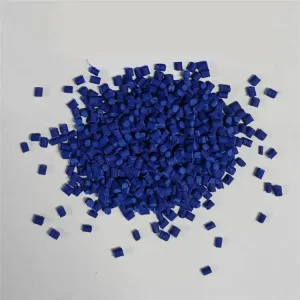
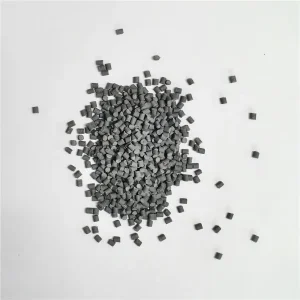
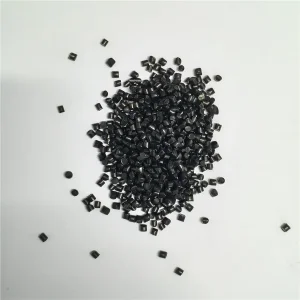
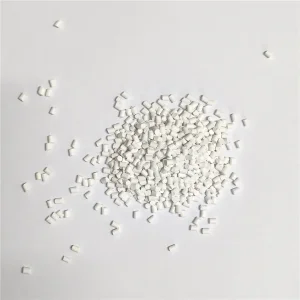
An authoritative analysis of polymer degradation mitigation, pigment thermal endurance chemistry, and matrix rheology matching.
In modern thermoplastic processing—including high-speed extrusion blow molding, cast film production, and heavy-duty injection molding—melt temperatures frequently surpass 220°C and can reach up to 300°C depending on cycle times and shear stress levels. Standard low-density polyethylene (LDPE) or linear low-density polyethylene (LLDPE) carrier resins undergo thermal-oxidative degradation when exposed to such extreme conditions. This reaction is initiated by free-radical formation, leading to chain scission, cross-linking, surface defect blooming, and drastic color shift (metamerism).
High-Temperature Resistant Polyethylene Masterbatch solves this fundamental engineering challenge by integrating multi-component stabilizer systems. These systems utilize primary hindered phenolic antioxidants combined with secondary phosphite costabilizers. This combination effectively traps alkoxy and alkyl-peroxy radicals before they initiate polymer backbone cleaving. Consequently, the melt flow index (MFI) remains structurally stable across multiple thermal cycles.
The heat endurance of a color masterbatch is primarily governed by the molecular structural integrity of its organic or inorganic pigment phase. Standard organic pigments (such as low-grade azo pigments) suffer thermal decomposition at temperatures exceeding 200°C, causing gas generation, pinholes in blown films, and loss of color opacity. Premium heat-resistant masterbatches strictly employ heat-stabilized complex inorganic color pigments (CICP), quinacridones, phthalocyanines, and high-performance isoindolinones.
| Pigment Family | Thermal Limit (°C) | Lightfastness (Blue Wool Scale) | Migration Resistance | Primary Application Target |
|---|---|---|---|---|
| Inorganic Titanium Dioxide (Rutile) | > 300°C | 8 (Maximum) | Class 5 (Non-Migrating) | High-opacity white films, outdoor pipe extrusion |
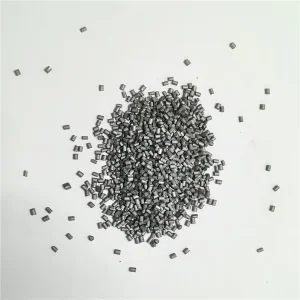
| Carbon Black (High surface area) | > 320°C | 8 (Maximum) | Class 5 (Non-Migrating) | UV-stabilized geomembranes, cable jacketing |
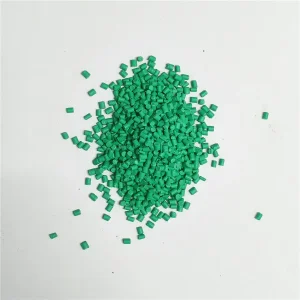
| Phthalocyanine Blue / Green | 280°C – 300°C | 7 - 8 | Class 5 (Non-Migrating) | High-pressure injection crates, industrial totes |
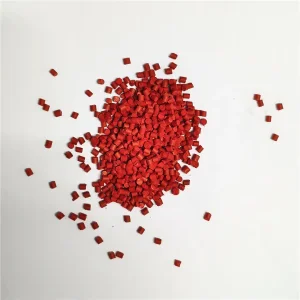
| Quinacridone Red / Magenta | 260°C – 280°C | 7 | Class 4 - 5 | Consumer packaging, thermoformed food trays |
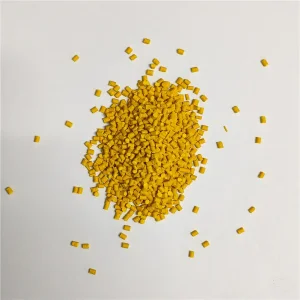
| Isoindolinone Yellow / Metallic Gold | 260°C – 280°C | 7 - 8 | Class 4 - 5 | Cosmetic packaging, high-end blow molded bottles |
Achieving flawless dispersion without agglomeration requires carrier resin matching. If the Melt Flow Index (MFI) of the masterbatch carrier does not align with the base virgin resin (e.g., LLDPE, HDPE, or PP), phase separation occurs during extrusion. This leads to surface roughness, reduced dielectric strength, and mechanical failure in structural parts. Advanced manufacturers utilize narrow molecular weight distribution (MWD) metallocene LLDPE carriers grafted with polar wetting agents. This approach minimizes filter pressure value (FPV < 0.5 bar/g), allowing smooth passage through fine-mesh melt screens during high-speed film extrusion.
Key drivers shaping high-temperature masterbatch procurement across North America, Europe, Asia-Pacific, and emerging manufacturing hubs.
With electric vehicle (EV) architectures operating at elevated voltage and heat levels, automotive wire harnesses require high-temperature orange, black, and red PE jacketing masterbatches that maintain color coding and insulation integrity past 150°C continuous service.
Extreme desert and tropical solar exposure subjects pond liners and greenhouse films to severe heat and UV stress. Masterbatches enriched with HALS (Hindered Amine Light Stabilizers) and heat-resistant pigments prevent premature film embrittlement.
Modern multi-layer blown film lines run at line speeds exceeding 400 m/min. Shear heat generated in high-output extruders degrades basic colorants, necessitating masterbatches with optimized thermal viscosity windows.
Why leading global plastics processors partner with Changzhou-based masterbatch specialists to optimize Total Cost of Ownership (TCO).
Changzhou masterbatch manufacturing facilities leverage high-torque co-rotating twin-screw extruders equipped with liquid-injection cooling barrels. This allows ultra-high pigment loading (up to 75% in TiO2 white masterbatches) with uniform shear dispersion, drastically lowering energy consumption per ton produced.
Precision loss-in-weight gravimetric feeders eliminate human error in formulation mixing. Real-time digital monitoring ensures consistent melt density, preventing batch-to-batch shade variation (ΔE < 0.3) for critical enterprise buyers.
Situated in Jiangsu Province, Changzhou provides direct proximity to major petro-chemical olefin refiners and Shanghai/Ningbo ports. This cluster advantage minimizes raw material transit costs and guarantees rapid container shipment turnaround within 7 to 14 days.
Detailed operational guidelines for optimizing heat-resistant masterbatch integration across diverse plastic conversion processes.
Target Products: Courier express bags, food contact barrier film, heavy-duty agricultural sacks.
Recommended Dosage: 1.0% – 4.0% depending on required opacity.
Processing Temperature: 180°C – 240°C.
Technical Requirement: Zero pinhole formation, non-migrating pigments, smooth bubble stability without die-buildup.
Target Products: Industrial logistics crates, automotive trim, household electrical enclosures.
Recommended Dosage: 1.5% – 3.0%.
Processing Temperature: 220°C – 280°C.
Technical Requirement: Low warpage, resistance to thermal sink marks, uniform color dispersion across large complex mold geometries.
Target Products: HDPE water pressure pipes, corrugated conduit, telecommunication ducting.
Recommended Dosage: 2.0% – 5.0%.
Processing Temperature: 190°C – 250°C.
Technical Requirement: Superior Carbon Black / Pigment dispersion (Grade 1 rating), high OIT (Oxidative Induction Time), UV weatherability.
Strict adherence to international environmental regulations, food safety standards, and rigorous laboratory testing.
Enterprise buyers sourcing masterbatches for international distribution must satisfy multi-jurisdictional environmental and safety directives. Premium heat-resistant PE masterbatches undergo rigorous third-party testing (SGS, TUV, Intertek) to certify complete compliance with:
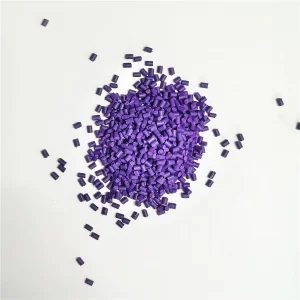
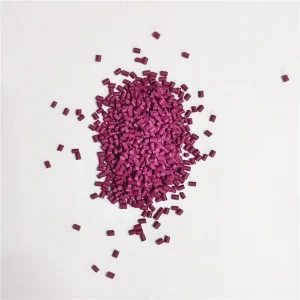
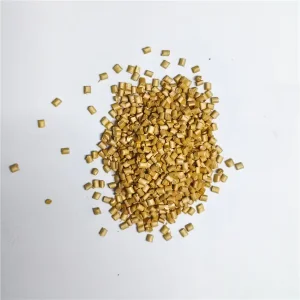
Select your target color formulation engineered for heat stability, weather resistance, and non-migration performance.
Expert technical answers regarding heat stabilization, carrier compatibility, dispersion quality, and custom matching.
High-temperature resistance is achieved through a dual optimization approach: selecting complex inorganic pigments or heat-stabilized organic pigments (DIN EN 12877-2 compliant) and incorporating primary phenolic + secondary phosphite antioxidant systems. This prevents both pigment discoloration and thermo-oxidative chain degradation of the PE carrier polymer during prolonged processing residence times.
If the Melt Flow Index (MFI) of the masterbatch carrier does not match the virgin polymer, poor interfacial mixing occurs. This manifests as color streaks, surface haze, pinholes in blown film, and reduced impact strength in molded parts. Our PE masterbatches utilize narrow MWD LLDPE carriers engineered for seamless compatibility with LLDPE, HDPE, and PP resins.
Typical dosage ranges between 1.0% and 4.0% by weight depending on wall thickness, opacity requirements, and processing method. For thin blown films (under 25 microns), a 2% to 3% addition rate provides complete hiding power, whereas heavy-section injection molded parts can achieve vivid color at 1% to 1.5% dosage due to higher pigment concentration.
Every production batch undergoes computerized spectrophotometer color testing (CIELAB system) to enforce a strict Delta E threshold (ΔE < 0.5 against master reference samples). In addition, loss-in-weight gravimetric dosing and automated twin-screw extrusion guarantee consistent pigment loading across all production shifts.
Yes, specific formulations within our white, blue, yellow, and red masterbatch lines are certified compliant with FDA 21 CFR 177.1520 and EU Regulation No 10/2011. These grades are formulated without heavy metals, phthalates, or primary aromatic amines, making them suitable for food containers and agricultural packaging.
Absolutely. Our R&D laboratory provides precise color matching against Pantone, RAL, or physical plastic target samples within 3 to 5 business days. Our engineers select specific heat-stable pigment combinations tailored to your processing temperatures and end-use requirements.
Direct factory supply from Changzhou, China. Request technical datasheets, SDS documentation, or custom sample formulations for your trial runs.