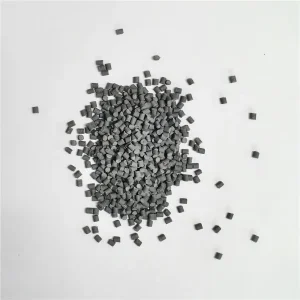
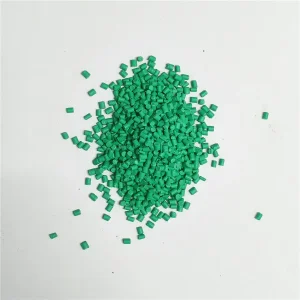
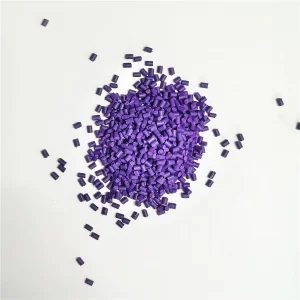
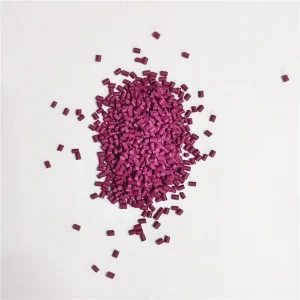
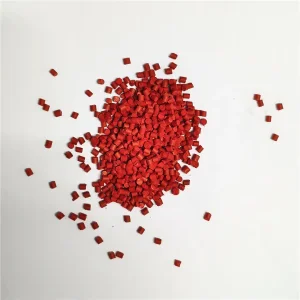
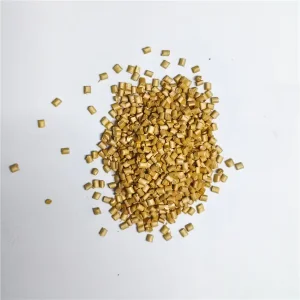
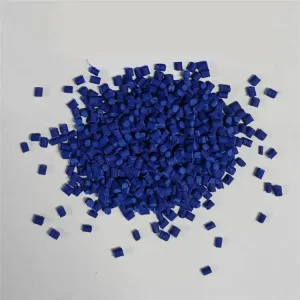
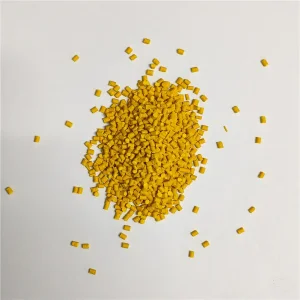
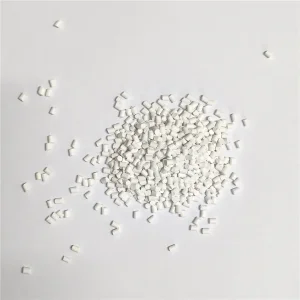
Explore our top industrial-grade color & functional masterbatches engineered for maximum dispersion index and thermal stability.
In the contemporary global plastics converting sector, white masterbatch represents the single largest volume segment of functional colorants. Historically, processors relied heavily on traditional high-pigment formulations containing 60% to 70% virgin Rutile Titanium Dioxide ($\text{TiO}_2$) to achieve necessary opacity, L* lightness, and UV scattering. However, dynamic shifts in global titanium ore supply chains, escalating raw material volatility, and stringent carbon footprint regulations have forced compounders and end-use manufacturers to seek smarter, highly optimized alternatives.
Enter the technical breakthrough: Low Titanium Dioxide White PE Masterbatch. Engineered through advanced particle size engineering, multi-carrier synergy, and functional mineral extender integration, low-$\text{TiO}_2$ masterbatch formulations achieve equivalent or superior optical opacity and tinting strength while reducing pure $\text{TiO}_2$ loading by 15% to 35%. Changzhou Jiazhou Plastic Products Co., Ltd., bringing 16+ years of specialized compounding heritage, stands at the forefront of this industrial transformation—delivering high-performance, cost-effective white masterbatches tailored for polyethylene (PE) blown film extrusion, injection molding, and blow molding applications worldwide.
Information Gain Key Insight: Reducing titanium dioxide content is not merely about adding filler. True low-$\text{TiO}_2$ technology optimizes light scattering via Mie Theory kinetics, pairing micro-fine coated Barium Sulfate ($\text{BaSO}_4$) or engineered calcined kaolin with surface-treated Rutile $\text{TiO}_2$ to prevent pigment agglomeration, lower die-lip buildup, and increase melt flow efficiency.
Achieving pristine whiteness ($L^* > 96.5, a^*: -0.5 \text{ to } 0.2, b^*: -1.0 \text{ to } 0.8$) while reducing pure titanium dioxide requires a sophisticated understanding of physical optics and polymer rheology.
Rutile $\text{TiO}_2$ possesses a exceptionally high refractive index ($n = 2.73$), making it the most effective white pigment available. Light scattering efficiency peaks when the crystal particle size is exactly half the wavelength of visible light (approx. 0.20 to 0.30 microns). In standard high-loading masterbatches, individual $\text{TiO}_2$ particles crowd together, causing optical "crowding effects" where light scattering efficiency drops per unit mass.
Jiazhou’s Low Titanium Dioxide technology utilizes specialized surface dispersants (alkoxy silanes and organic fatty acid complexes) paired with micro-spacer extenders. These spacers physically maintain optimal distance between $\text{TiO}_2$ particles, preventing agglomeration and maximizing single-particle light refraction. This means 40% $\text{TiO}_2$ with engineered spacing can match the opacity performance of a traditional 55% unoptimized $\text{TiO}_2$ formulation.
To replace a portion of $\text{TiO}_2$ without introducing yellowish undertones or reducing melt stability, specific inorganic extenders are introduced:
Direct comparative breakdown showing how Low $\text{TiO}_2$ White Masterbatch compares against conventional white masterbatch systems.
| Performance Parameter | Standard High-TiO2 Masterbatch | Jiazhou Low-TiO2 White Masterbatch | Procurement & Processing Benefit |
|---|---|---|---|
| Titanium Dioxide Concentration | 60% – 70% Pure Rutile | 35% – 50% Rutile + Spacing Matrix | 15% – 25% Raw Material Cost Reduction |
| Opacity & Film Coverage (50µm) | Benchmark Baseline (100%) | 98% – 102% Relative Opacity | Zero visual light transmission loss |
| Filter Pressure Value (FPV) | 1.5 – 2.5 bar/g | < 0.8 bar/g | Significantly cleaner screen packs, fewer line stops |
| Melt Flow Index (MFI @ 190°C/2.16kg) | 5 – 12 g/10min | 15 – 28 g/10min (Tailored) | Faster cycle times, reduced extrude pressure |
| Die Lip Buildup / Lacing | Moderate to High at high speed | Negligible / Ultra-low volatile residue | Eliminates frequent die cleaning on film lines |
| Thermal Stability | 260°C | Up to 300°C | Prevents yellowing during high-temp extrusion |
How Changzhou Jiazhou Plastic Products Co., Ltd. integrates smart manufacturing, precision compounding, and export resilience for global buyers.
Our Changzhou facility operates state-of-the-art twin-screw extrusion lines equipped with multi-component loss-in-weight gravimetric feeders, guaranteeing batch-to-batch weight accuracy within ±0.15%.
Every production batch undergoes automated spectrophotometer verification against Pantone and Datacolor master references. We enforce strict CIELAB tolerance limits ($\Delta E < 0.3$).
Situated in the heart of Jiangsu's industrial belt near Shanghai and Ningbo ports, Jiazhou guarantees rapid raw material sourcing and consistent 15-day export lead times across 100+ countries.
Tailored carrier formulations compatible with LLDPE, LDPE, HDPE, and PP resin matrices across major industrial conversion processes.
Optimized for ultra-thin shopping bags, agricultural mulch films, food packaging laminates, and express courier bags. Prevents pinholes, micro-voids, and bubble instability during high-speed blowing.
Designed for home appliances, daily consumer items, food storage containers, caps, and closures. Delivers rapid crystallization, uniform color dispersion, and zero warping in complex molds.
Engineered for multi-layer milk bottles, chemical containers, cosmetics bottles, and PE pressure pipes requiring high environmental stress crack resistance (ESCR) and smooth wall finishes.
Expert answers to common engineering, procurement, and technical queries regarding Low Titanium Dioxide White PE Masterbatch.
Our low-$\text{TiO}_2$ masterbatch utilizes engineered micro-spacing technology (incorporating micro-fine Barium Sulfate and surface-treated extenders) to prevent titanium dioxide particle agglomeration. By maintaining optimal inter-particle distance, light scattering efficiency per gram of $\text{TiO}_2$ is maximized according to Mie Scattering kinetics, allowing 40-50% $\text{TiO}_2$ loadings to achieve equivalent film opacity to conventional unoptimized high-loading grades.
On the contrary, it decreases extrusion pressure. High concentrations of raw $\text{TiO}_2$ can cause severe abrasion and volatile buildup (lacing) at high temperatures. Our formulation incorporates coated extenders and processing aids that significantly lower the Filter Pressure Value (FPV < 0.8 bar/g), keeping screen packs cleaner and dramatically reducing die-lip buildup during high-speed film blowing.
Yes. All raw materials—including carrier resins, rutile $\text{TiO}_2$, and functional extenders—comply strictly with FDA 21 CFR 177.1520, EU No 10/2011, RoHS 2.0, and REACH regulations. They are heavy-metal-free, non-toxic, and fully certified for food contact packaging, dairy films, and medical plastic items.
Typical recommended let-down ratios range from 1% to 4% depending on film thickness and desired opacity. For standard blown film (30–60 microns), a 2% to 3% addition rate provides complete coverage. For thin-wall injection molding, 1% to 2% is typically sufficient.
Absolutely. While our standard carrier resin utilizes prime LLDPE/LDPE suitable for general polyolefin processing, we offer custom formulations using HDPE, PP, EVA, or Metallocene (mPE) carriers to match your precise MFI and processing temperature envelope.
We provide free 1kg–5kg testing samples along with complete Technical Data Sheets (TDS) and COA documents within 3 business days. Commercial orders are typically manufactured and dispatched within 10 to 15 calendar days from our Changzhou plant.
Select from our comprehensive lineup of weather-resistant, non-migration color and white masterbatches.
Partner with Changzhou Jiazhou Plastic Products Co., Ltd. Request technical datasheets, optical test reports, or custom sample matching for your specific processing line.
Contact Our Chemical Engineers