Engineered for blown film extrusion, injection molding, and continuous industrial profile manufacturing.
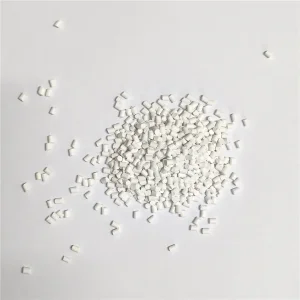
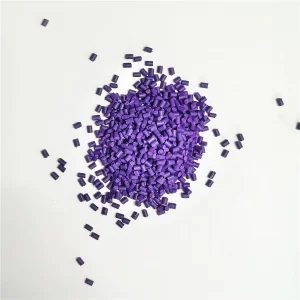
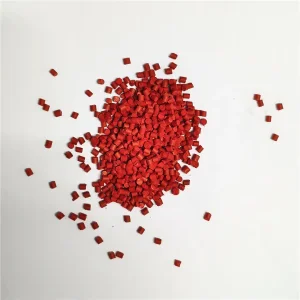
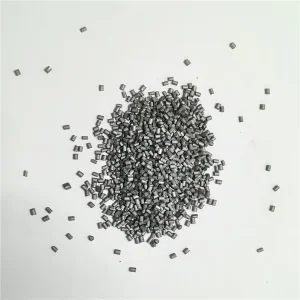
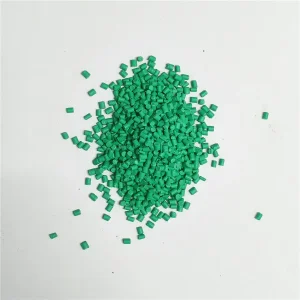
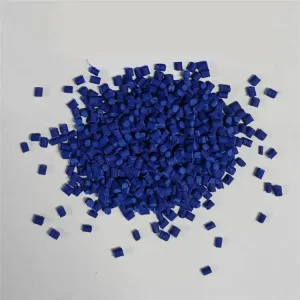
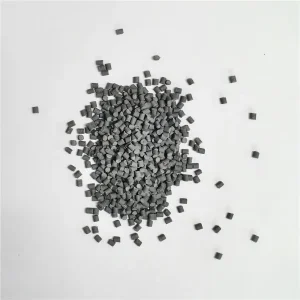
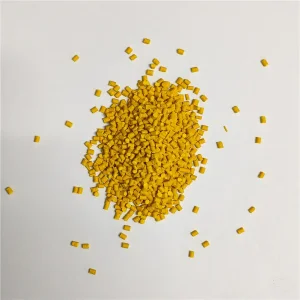
Analysis of polyethylene carrier chemistry, thermal gravimetric stability, and pigment micro-dispersion kinetics in modern B2B polymer converting.
In the contemporary global plastics manufacturing industry, PE-based color masterbatches serve as the technical backbone for polymer coloration across blown film, injection molding, profile extrusion, and blow molding processing technologies. A Polyethylene (PE) masterbatch is a concentrated mixture of high-performance organic or inorganic pigments, specialty additives (such as UV stabilizers, primary/secondary antioxidants, and processing aids), and a tailored virgin polyethylene resin carrier—typically Low-Density Polyethylene (LDPE), Linear Low-Density Polyethylene (LLDPE), or High-Density Polyethylene (HDPE). The technical selection of a dedicated PE carrier ensures perfect thermodynamic compatibility and melt flow index (MFI) matching when introduced into base polyolefin substrates.
The global demand for high-concentration color masterbatch has undergone a structural transformation. Driven by stringent environmental regulations, demands for elevated lightfastness (Weathering Resistance Grades 6-8 on the Blue Wool Scale), and reduced dosing ratios (let-down ratios as low as 1% to 3%), industrial converters can no longer rely on commoditized color concentrates. Advanced masterbatch manufacturing requires extreme control over shear rates within twin-screw co-rotating extruders, precise pigment surface wetting, and sub-micron particle size distribution.
Without meticulous carrier selection and dispersion optimization, color masterbatches can cause severe downstream defects during high-speed processing, such as pinhole formation in thin blown packaging films (down to 10 microns), filter clogging (high Filter Pressure Value - FPV), color streaking, and degradation of mechanical properties (tensile strength and elongation at break). B2B procurement professionals must analyze the complete rheological and thermal profile of masterbatches supplied by qualified manufacturing partners.
How continuous gravimetric dosing, automated spectrophotometry, and raw material integration ensure cost competitiveness and batch-to-batch consistency.
Modern masterbatch production in top-tier Chinese facilities utilizes multi-component loss-in-weight gravimetric feeding systems. This technology ensures raw pigment powder, PE carrier resin pellets, and dispersant waxes are introduced with micro-gram accuracy (variance < 0.2%), preventing batch-to-batch shade shifts.
Extrusion lines feature optimized Length-to-Diameter (L/D) ratios ranging from 40:1 to 48:1. Special kneading block elements impart intense distributive and dispersive mixing, de-agglomerating pigment clusters into individual primary particles without degrading the PE polymer backbone.
Quality control integrates automated spectrophotometers operating under CIELAB color space protocols. Every lot undergoes computer color matching (CCM) verification to maintain Delta E (ΔE) values below 0.5 against target Pantone/RAL master samples.
The table below outlines technical metrics comparing high-grade industrial PE color masterbatches engineered for high-performance applications.
| Masterbatch Category | Pigment Concentration (%) | Melt Flow Index (g/10min @ 190°C/2.16kg) | Heat Resistance (°C) | Filter Pressure Value (FPV) (bar/g) | Primary Application Field |
|---|---|---|---|---|---|
| High-Opacity PE White | 60% - 70% Titanium Dioxide (TiO₂) | 5.0 - 15.0 | 280°C - 300°C | < 0.3 | Multilayer Blown Packaging Film, Milk Film |
| High-Jetness PE Black | 40% - 50% Carbon Black | 2.0 - 10.0 | 260°C - 280°C | < 0.5 | Drip Irrigation Pipes, Geomembranes, Cable Sheath |
| Standard Organic Color | 20% - 40% Organic Pigment | 8.0 - 25.0 | 240°C - 260°C | < 0.8 | Injection Molded Housewares, Toys, Caps |
| Special Effect Metallic/Silver | 15% - 30% Metallic Pigment/Mica | 12.0 - 30.0 | 220°C - 250°C | < 1.5 | Cosmetics Packaging, High-End Containers |
China's fully integrated chemical ecosystem—spanning local synthesis of phthalocyanines, quinacridones, titanium dioxide, and specialty wax dispersants—provides an unassailable supply chain advantage. Coupled with robust freight infrastructure in key industrial zones like Jiangsu Province (Changzhou), Chinese masterbatch factories deliver rapid turnarounds (standard 15-day lead times), enabling global buyers to maintain lean safety stock levels while mitigating global inflation risks.
Navigating complex international standards: RoHS, REACH, FDA food contact clearance, and heavy metal testing protocols.
International buyers across North America, Europe, the Middle East, and Southeast Asia operate within distinct regulatory environments. When sourcing PE-based masterbatches, enterprise procurement teams require comprehensive compliance documentation to ensure finished plastic goods pass customs clearance and consumer safety testing.
Masterbatches intended for food packaging (such as milk bottles, stretch hood films, and food containers) must utilize non-toxic, non-migrating pigments and carriers. Compliance with FDA 21 CFR 177.1520 and EU Directive 10/2011 ensures overall migration limits (OML) and specific migration limits (SML) of heavy metals or aromatic amines remain well below legal thresholds.
To meet EU RoHS 2.0 (Directive 2011/65/EU) and REACH (EC No 1907/2006) SVHC (Substances of Very High Concern) standards, masterbatches must be certified free of lead (Pb), cadmium (Cd), mercury (Hg), hexavalent chromium (Cr VI), PBBs, PBDEs, and restricted phthalate plasticizers. High-quality factories execute regular ICP-OES testing on every pigment batch.
Outdoor plastic installations—such as agricultural greenhouse films, HDPE pressure pipes, and municipal trash bins—require masterbatches formulated with Hindered Amine Light Stabilizers (HALS) and UV absorbers. Formulations are tested under Accelerated Weathering Testers (QUV) and Xenon Arc exposure to guarantee color retention over 5 to 20 years.
Optimizing rheology, dispersion, and thermal stability across major industrial plastic processing lines.
Technical Requirement: Extremely low Filter Pressure Value (FPV), minimal gel count, high dispersion.
In blown film extrusion (down to 10-15 μm thickness), undispersed pigment agglomerates lead to film bubble rupture, pinholes, and reduced dart impact strength. High-grade PE masterbatches utilize ultra-fine micronized pigments treated with specialized hyper-dispersants to guarantee smooth bubble stability and high opacity.
Technical Requirement: Low warpage, dimensional stability, short cycle times.
Certain organic pigments (such as Phthalo Blue 15:3) can induce nucleation in HDPE melt, causing anisotropic shrinkage and part distortion. Masterbatch manufacturers formulate non-warping PE color masterbatches using non-nucleating organic or inorganic pigments combined with flow-enhancing low-molecular-weight carriers.
Technical Requirement: Long-term hydrostatic strength, environmental stress crack resistance (ESCR).
PE pipe extrusion (ISO 4427 / EN 12201 standard) demands black masterbatch with carbon black particle size < 25 nm and loading of 2.0% to 2.5% in the final compound. This ensures optimal UV protection and prevents oxidative thermal degradation during 50+ years of operational service life.
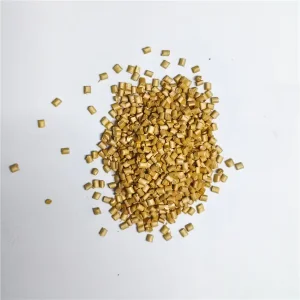
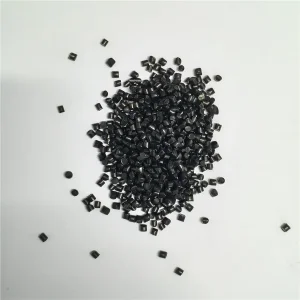
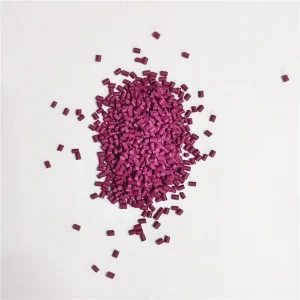
Browse our complete high-concentration PE masterbatch series designed for international industrial buyers.
NIR-detectable black pigments, Post-Consumer Recycled (PCR) PE carrier integration, and micro-particle free dispersant systems.
The transition toward a global circular plastics economy is reshaping masterbatch formulations. Traditional black masterbatches utilizing carbon black absorb Near-Infrared (NIR) radiation used in automated Materials Recovery Facility (MRF) optical sorting systems, causing black plastic waste to be routed directly to landfills.
Leading Chinese manufacturers have developed NIR-sortable black PE masterbatches using specialized organic black dyes and inorganic spinels. These allow automated sorting sensors to detect the underlying Polyethylene polymer signature, enabling high-purity recycling streams for rigid and flexible PE waste.
To meet corporate ESG goals and EU mandatory recycled content quotas, custom masterbatches can be formulated using up to 50% Post-Consumer Recycled LLDPE/HDPE carriers. Thermal stabilizers and melt-rebuilders are compounded into the masterbatch matrix to counteract resin degradation during re-processing.
Replacing conventional petroleum-derived PE waxes with bio-based renewable waxes derived from plant oils enhances processing sustainability while offering superior pigment wetting, lower volatiles generation during high-temperature extrusion, and reduced carbon footprint.
Expert insights addressing common engineering challenges, let-down ratios, carrier compatibility, and global logistics.
Elevate your plastic manufacturing with high-concentration PE color masterbatches engineered for maximum color yield, superior thermal stability, and flawless dispersion. ISO certified, fully REACH/RoHS compliant, and shipped globally.