Discover our premium range of precision-formulated polyethylene carrier color masterbatches designed for injection molding, blown film, and high-speed profile extrusion.
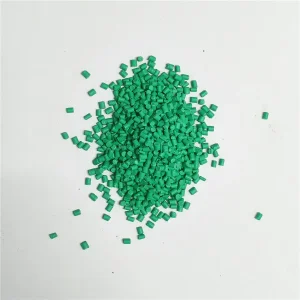
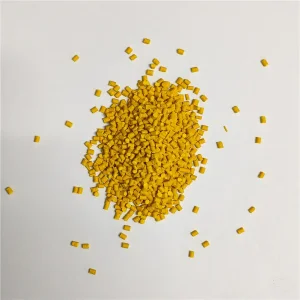
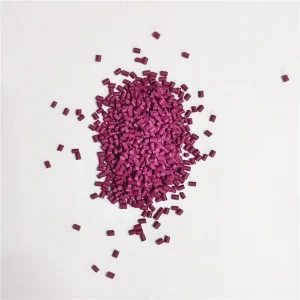
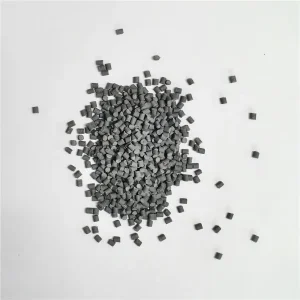
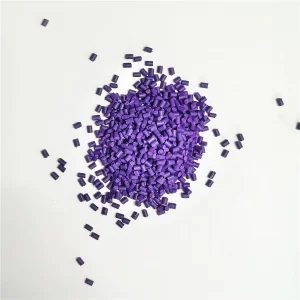
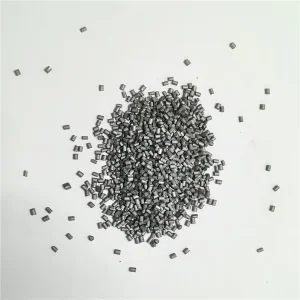
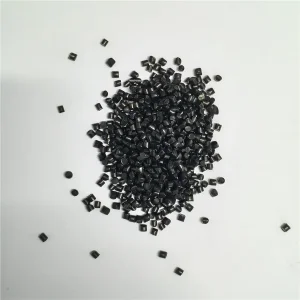
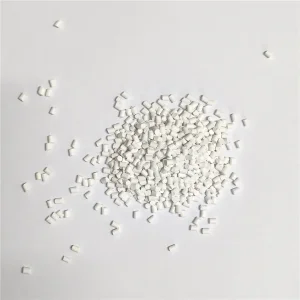
How next-generation polyethylene carrier systems are revolutionizing global polymer conversion, color dispersion, and circular economy compliance.
In modern industrial polymer processing, the selection of the masterbatch carrier resin is the single most critical factor influencing downstream melt rheology, phase integration, and final mechanical integrity. Polyethylene (PE) carrier pigment pellets have rapidly evolved from traditional color concetrates into highly specialized, multifunctional polymer additives. As global plastic manufacturers push the boundaries of high-speed extrusion, ultra-thin film blowing, and complex injection geometry, the demand for engineered PE pigment pellets with precise Melt Flow Index (MFI) matching has reached an all-time peak.
Through twin-screw co-rotating high-torque extrusion, organic pigment loadings now reach up to 50-60%, while inorganic and titanium dioxide ($TiO_2$) content can surpass 70-75% without agglomeration.
Elimination of heavy metals, toxic plasticizers, and aromatic amines ensures complete safety for food-contact packaging (FDA & EU 10/2011 compliance) and eco-conscious agricultural films.
Formulated with custom antioxidant packages and thermal stabilizers capable of enduring processing temperatures up to 260°C – 300°C without color shifting or polymer degradation.
A analytical framework for procurement directors, polymer engineers, and quality assurance specialists when evaluating PE carrier masterbatch manufacturers.
Procuring raw PE carrier pigment pellets on the global stage requires looking beyond initial unit cost per metric ton. Global buyers in North America, Europe, the Middle East, and Southeast Asia must evaluate suppliers based on the total cost of ownership (TCO), operational stability, and raw material compatibility. Below are the critical technical evaluation metrics:
| Procurement Metric | Technical Parameter | Impact on Downstream Processing | Industry Benchmark |
|---|---|---|---|
| Dispersion Quality (Filter Pressure Value) | FPV < 1.0 bar/g (Fine Filter Mesh) | Prevents filter clogging, minimizes film breakage, eliminates micro-pinholes in thin blown films. | ISO 13900-5 Standard |
| Color Consistency ($\Delta E$) | CIELAB Spectrophotometry ($\Delta E < 0.5$) | Ensures exact batch-to-batch color match across multi-factory global production runs. | DIN 6174 Compliant |
| Melt Flow Index (MFI) Matching | Custom MFI from 2.0 to 45 g/10min | Prevents screw slippage, uneven color streak formation, and internal stress buildup. | ASTM D1238 Standard |
| Thermal Degradation Limit | 260°C – 300°C Resistance | Maintains vibrant hue and gloss during high-speed, elevated-temperature injection cycles. | HDT / Vicat Testing |
| Non-Migration & Anti-Fading | Class 7-8 Lightfastness (Wool Scale) | Prevents pigment bleeding into adjacent materials, ensuring long-term outdoor weatherability. | ISO 105-B02 Standard |
By enforcing these strict technical benchmarks during supplier audits, enterprise buyers can drastically lower scrap rates, decrease extrusion downtime, and improve total product yields by up to 14.5%.
How Changzhou Jiazhou Plastic Products Co., Ltd. combines smart manufacturing automation with robust supply network agility.
As the core hub of global plastic masterbatch production, China’s manufacturing ecosystem has undergone a dramatic transformation toward Industry 4.0 automation. Leading suppliers, such as Changzhou Jiazhou Plastic Products Co., Ltd. (operating with over 16 years of direct manufacturing experience in Jiangsu Province), leverage digitalized compounding infrastructure to deliver superior quality control and rapid lead times.
Computer-controlled continuous gravimetric feeders ensure pigment-to-carrier ratios are met with micro-gram accuracy, eliminating human error and batch variations.
Strategic proximity to major petrochemical refining centers (Sinopec, Sabic) ensures continuous supply of virgin PE carrier resins at highly competitive cost structures.
Streamlined order scheduling, state-of-the-art twin-screw lines, and direct access to Shanghai/Ningbo ports guarantee reliable 15-day order turnaround for export shipments.
Formulated for seamless dispersion across diverse plastic processing machinery and aggressive operational environments.
Essential for agricultural film, courier bags, shopping bags, and industrial stretch wrap. Provides high opacity, anti-blocking performance, and puncture resistance even at ultra-thin gauges (down to 10 microns).
Optimized for daily plastic consumer goods, automotive interior trim, storage crates, and electronic housings. Delivers high surface gloss, uniform dimensional stability, and zero warpage in complex molds.
Formulated for HDPE municipal water pipes, gas pipelines, and corrugated conduit. Ensures uniform carbon black dispersion or vibrant color coding with exceptional long-term hydrostatic strength.
Explore our full line of non-toxic, heat-resistant, anti-migration color masterbatches formulated for global plastic manufacturers.
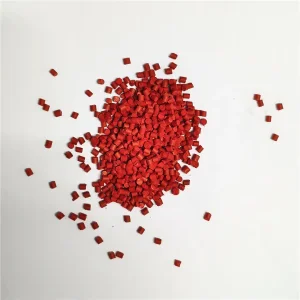
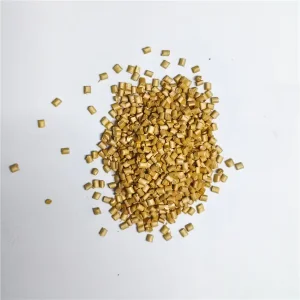
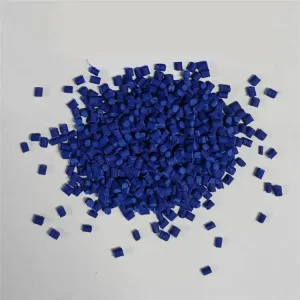
Detailed technical answers to common queries regarding PE carrier pigment pellets, dispersion mechanics, and custom color matching.
Universal carriers often rely on low-molecular-weight waxes or secondary resins that compromise the structural integrity, impact resistance, and tensile strength of the host polyolefin matrix. A dedicated PE carrier (LDPE/LLDPE/HDPE matched to your target resin) guarantees 100% thermodynamic and rheological compatibility, preventing phase separation, surface blooming, and mechanical weakening in final molded or extruded products.
We utilize automated gravimetric dosing systems coupled with Datacolor spectrophotometer testing under multiple illuminants (D65, A, F11). Every production lot undergoes real-time melt flow testing and injection plaque pressing to verify color density, hue angle, and opacity before packaging and release.
Due to our high pigment loading technology (up to 75% pigment concentration), our recommended LDR typically ranges from 1% to 4% depending on product wall thickness, required opacity, and application type. For thin film blowing, an LDR of 1.5% to 2.5% is usually sufficient to achieve full color saturation.
Yes. Our non-toxic, anti-migration masterbatches are formulated using pigments and carrier resins that comply strictly with FDA 21 CFR, EU Regulation 10/2011, REACH, and RoHS directives, making them safe for food packaging, medical device housings, and children's toys.
Absolutely. Our R&D technical lab provides custom color matching based on Pantone codes, RAL standards, or physical target samples provided by the customer. Sample formulation and lab matching press plaques are typically completed within 3 to 5 business days.