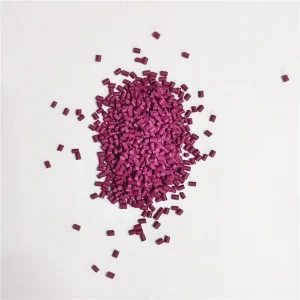
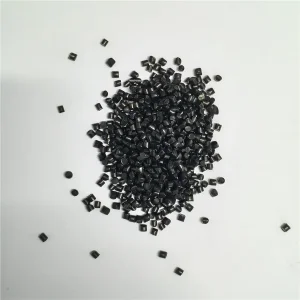
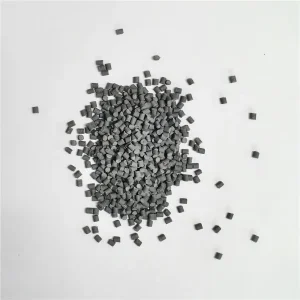
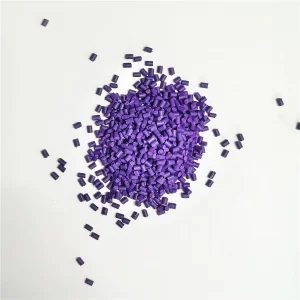
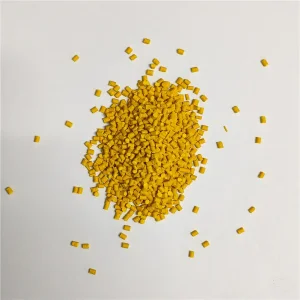
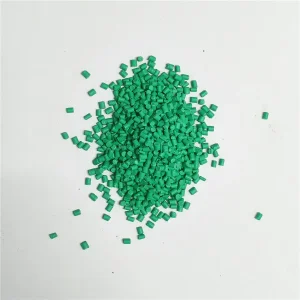
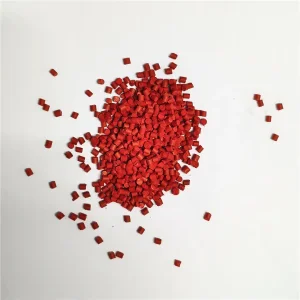
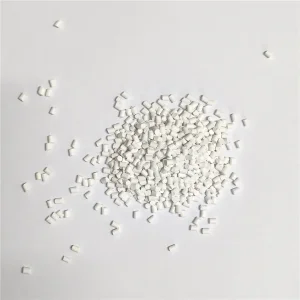
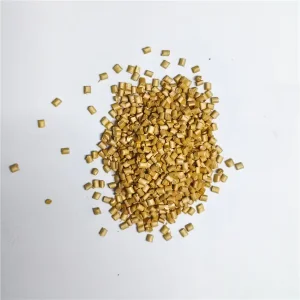
Engineered for extreme thermal stability, zero migration, and uniform color dispersion across high-speed extrusion lines.
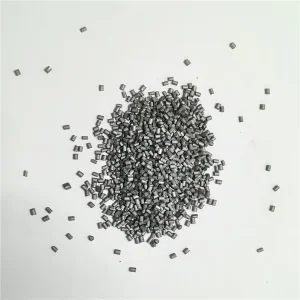
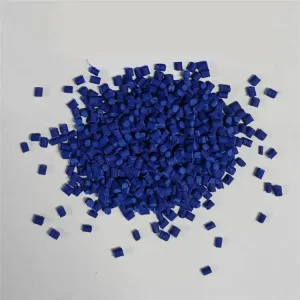
In modern plastic conversion processes, the compatibility between the organic pigment system and the Polyethylene (PE) polymer matrix determines the mechanical integrity of the end-product. A premium PE Colouring Masterbatch relies on exact Melt Flow Index (MFI) matching. If the carrier resin’s viscosity deviates significantly from the virgin LDPE, LLDPE, or HDPE substrate, interfacial shear failure occurs during high-speed blown film processing.
Our state-of-the-art compounding architecture utilizes low-molecular-weight virgin carrier polymers modified with specialized dispersion agents (such as micronized polyethylene waxes and fluoroelastomer processing aids). This engineering guarantees that pigment aggregates are sheared down to nanoscale dimensions (100–300 nm), suppressing filter pack pressure spikes during film extrusion and eliminating pinhole defects.
Thermally induced chemical degradation poses a primary bottleneck in high-temperature injection molding (operating at 240°C–300°C). Conventional low-grade pigments undergo molecular structure breakdown, leading to severe color shift (evaluated via CIELAB color space where ΔE > 1.5). Furthermore, small-molecule pigment migration causes plate-out on metal molds and blooming on product surfaces.
Our formulation engineering integrates high-performance inorganic compounds (Titanium Dioxide Rutile grade, Furnace Carbon Black) alongside sterically hindered organic pigments (Phthalocyanine Blues/Greens, Quinacridones). Coupled with phenolic primary antioxidants (Irganox 1010) and phosphite secondary stabilizers (Irgafos 168), our color masterbatches provide continuous thermal stability up to 260°C–300°C without volatile gas generation or surface migration.
Exploring the strategic supply chain benefits, technological scale, and chemical processing capabilities of Changzhou, Jiangsu's polymer hubs.
Chinese masterbatch processing facilities have transitioned from legacy single-screw kneaders to co-rotating twin-screw extruder lines with high length-to-diameter (L/D) ratios ranging from 44:1 to 52:1. Featuring multi-zone volumetric liquid injection, side-feed dispersion split systems, and underwater pelletizing technologies, these machines achieve high-shear homogenization without degrading high-molecular-weight polymer chains.
Operating within the Sino-Pacific petrochemical corridor grants direct access to primary monomer producers (Sinopec, PetroChina) and specialized pigment chemical plants. Bulk raw material procurement of LDPE, LLDPE, and titanium dioxide minimizes production overheads. This vertical integration allows Chinese manufacturers to offer industrial-grade products with high cost-to-performance ratios while maintaining rigorous ISO 9001 and ISO 14001 compliance.
Modern Changzhou manufacturing centers house computer-assisted color matching systems equipped with X-Rite CIELAB spectrophotometers. Overseas OEM clients can request custom tint formulations by supplying RAL, Pantone, or physical target swatches. Advanced lab technicians calculate pigment loading recipes, simulate shear conditions on lab-scale blown film towers, and verify lightfastness (Blue Wool Scale 1–8) prior to full-scale production.
Optimized masterbatch formulations tailored to specific conversion equipment, cooling rates, and end-use mechanical demands.
| Processing Method | Target End Product | Technical Challenge | PE Masterbatch Solution | Key Performance Indicator |
|---|---|---|---|---|
| Blown Film Extrusion | Agricultural Mulch Film, Express Courier Bags, Food Packaging | Film bubble instability, dielectric breakdown, gel formation, pinholes. | High-dispersion PE Black/White & Color Masterbatch with organic UV absorbers. | Filter Pressure Value < 0.1 bar/g; zero surface gels down to 15 microns. |
| Injection Molding | Automotive Interior Trims, Industrial Crates, Household Appliances | Mold shrinkage variance, differential warpage, weld-line opacity drops. | Non-nucleating pigments formulated with low-shrinkage carrier resins. | Isotropic dimensional tolerance; melt flow rate matching (10–25 g/10min). |
| Extrusion Pipe & Profile | HDPE Water Pressure Pipes, Telecom Conduit Cable Sheaths | Long-term hydrostatic pressure loss, UV-induced environmental stress cracking (ESCR). | 20%–25% P-type Carbon Black masterbatch combined with HALS light stabilizers. | Carbon Black dispersion grade ≤ 3; ISO 4427 compliance for drinking water. |
| Blow Molding | Chemical Jerrycans, Cosmetic Bottles, FMCG Containers | Environmental stress cracking at bottle neck/seams, pigment migration into liquid content. | Heavy-metal-free, FDA & RoHS compliant food-contact grade PE masterbatch. | Migration testing compliance (EU 10/2011); zero dye extraction under acidic testing. |
Modern manufacturing demands multifunctional performance. Rather than dosing separate additive batches, global converters favor combo-masterbatches containing both colorants and functional additives. Our plant produces combined UV-stabilized, anti-static, anti-block, and flame-retardant PE masterbatches, streamlining dosing operations for film extruders.
With global regulations mandating Post-Consumer Recycled (PCR) plastic integration (e.g., EU Packaging Directive), converters struggle with recycled resin yellowing and mechanical degradation. Our specialized color masking PE masterbatches incorporate optical brighteners and radical scavengers, allowing processors to blend up to 50% PCR content without degrading visual brand aesthetics.
Essential technical metrics for B2B sourcing managers, polymer engineers, and quality control auditors.
Verify that the manufacturer uses 100% prime virgin low-density polyethylene (LDPE) or linear low-density polyethylene (LLDPE) carrier resin. Recycled or off-spec carrier resins introduce unreacted oligomers, leading to smoke emission at high processing temperatures and reduced impact strength in finished molded parts.
Industrial-grade masterbatches feature high pigment loads (e.g., 40%–70% TiO2 for white masterbatches, 30%–50% Carbon Black for black masterbatches, and 20%–40% organic pigments for color masterbatches). High active loading allows lower LDR usage (typically 1% to 3%), directly reducing freight overhead and unit manufacturing costs.
Ensure complete documentation support: REACH (Registration, Evaluation, Authorisation and Restriction of Chemicals), RoHS (Restriction of Hazardous Substances Directive), Heavy Metal Content (EN 71-3 for toys), and FDA 21 CFR food contact compliance certificates must be verified per production batch.
Expert insights covering masterbatch selection, processing parameters, and troubleshooting common extrusion issues.
The standard Let-Down Ratio (LDR) ranges between 1% and 4%, depending on the target opacity, color intensity, wall thickness, and processing method. For thick-walled injection molded products (wall thickness > 3mm), an LDR of 1% to 2% is typically sufficient. For ultra-thin blown films (15–30 microns), an LDR of 2.5% to 4% is recommended to ensure complete optical coverage and shade uniformity.
While PE carrier resin exhibits excellent universal dispersion in Polypropylene (PP) matrix due to their shared polyolefin chemistry, caution is advised when processing with engineering plastics such as PS, ABS, or PET. Using PE masterbatch in non-polyolefin polymers can cause delamination, lower tensile strength, and reduced impact resistance due to thermodynamic polymer phase separation. We recommend using matrix-matched carriers (e.g., universal SAN carriers or dedicated PP carriers) for non-polyolefin resins.
Color streaks and speckles stem from un-plasticized masterbatch particles or pigment agglomerates caused by insufficient extruder backpressure or poor melt homogenization. Solutions include: (1) Increasing extruder backpressure by adding finer screen packs (e.g., 80/100 mesh); (2) Optimizing screw temperature profiles to increase melt shear strength; and (3) Selecting masterbatch grades verified with a low Filter Pressure Value (FPV ≤ 0.1 bar/g).
When stored in its original moisture-proof aluminum-laminated packaging in a cool, dry, well-ventilated warehouse (temperatures below 35°C), high-quality PE color masterbatch maintains its chemical properties and color performance for up to 24 months. For hygroscopic functional color masterbatches (such as anti-static or moisture-absorbent combinations), pre-drying at 80°C for 2 hours is recommended if stored for over 12 months.
Select from our certified high-concentration masterbatch formulations engineered for global B2B procurement requirements.