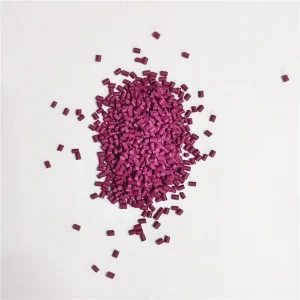
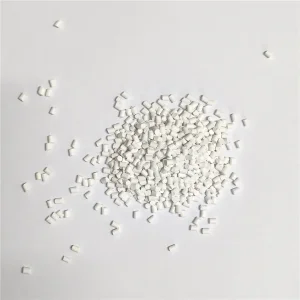
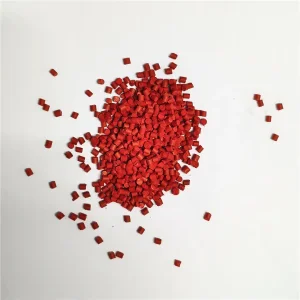
Precision-compounded for high electrical volume resistivity, heat resistance up to 260°C, and exceptional pigment dispersion in wire, cable, and structural insulation processing.
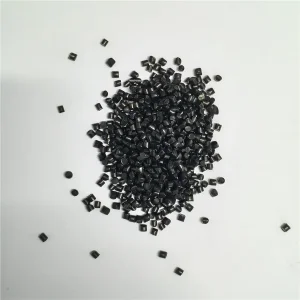
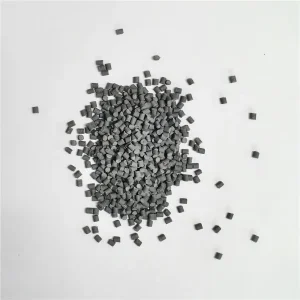
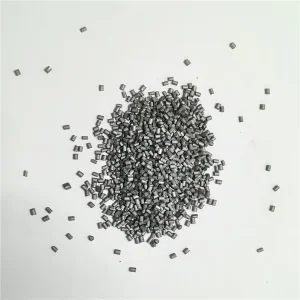
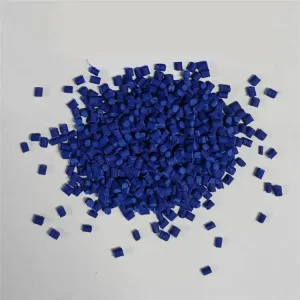
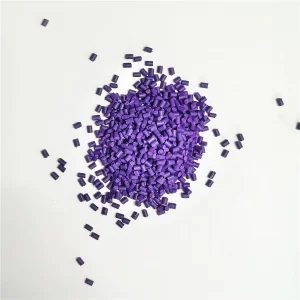
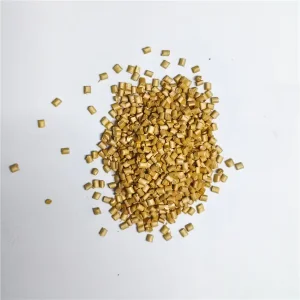
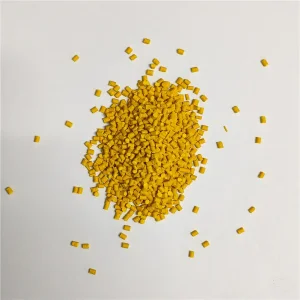
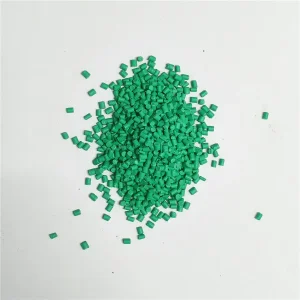
Understanding the critical interface between low-density polyethylene (LDPE), linear low-density polyethylene (LLDPE), high-density polyethylene (HDPE), and sub-micron functional additives in modern electrical insulation systems.
Polyethylene insulation parts demand exceptionally low dielectric constant ($\varepsilon_r \approx 2.25 - 2.35$) and minimal dissipation factor ($\tan \delta < 0.0005$). Premier masterbatch formulations utilize specialized surface-treated organic and inorganic pigments stripped of ionic impurities, heavy metals, and residual moisture. By mitigating micro-void formation during extrusion or injection molding, our PE masterbatch prevents dielectric breakdown under high-voltage gradient stress.
Processing consistency depends heavily on rheological compatibility between the carrier resin and the base polyolefin matrix. Our custom-formulated PE insulation masterbatches feature tightly controlled Melt Flow Indices ($2.0\text{ to }45\text{ g/10min}$ at $190^\circ\text{C}/2.16\text{kg}$), matching matrix viscosity precisely to avoid melt-fracture, shark-skinning, phase separation, or localized stress concentration in thin-walled insulation sleeves and extruded pipes.
Agglomerates larger than 5 micrometers act as mechanical notch sites and dielectric stress concentrators. Utilizing twin-screw continuous compounding equipment operating at shear rates above $1000\text{ s}^{-1}$, our factory achieves a pigment dispersion rating of Grade 1-2 (according to ISO 18553), ensuring homogenous color density, non-migration, and complete thermal stability up to $260^\circ\text{C}$.
| Property Parameter | Testing Standard | PE Insulation Masterbatch Spec | Industrial Value Benefit |
|---|---|---|---|
| Carrier Resin Compatibility | ASTM D1238 / ISO 1133 | 100% Virgin LDPE / LLDPE / HDPE Carrier | Zero phase separation; seamless fusion with matrix |
| Pigment / Active Additive Load | ISO 3451-1 (Ash Content) | 30% – 70% High Concentration | Reduced dosing ratios (1% to 4%), lowering TCO |
| Heat Fastness / Stability | DIN EN 12877-2 | 240°C – 260°C for 5 minutes | No thermal degradation during high-speed extrusion |
| Light Fastness (Blue Wool Scale) | ISO 105-B02 | Grade 7 – 8 (Exceptional Weathering) | Prevents color fading in outdoor power fittings |
| Volume Resistivity | IEC 60093 / ASTM D257 | > 1016 Ω·cm | Preserves electrical insulation safety integrity |
| Moisture Absorption Rate | Karl Fischer / ASTM D6869 | < 500 ppm (0.05%) | Eliminates micro-foaming, voids, and wire pinholes |
SEO & Engineering Gain: When sourcing PE insulation parts masterbatch, selecting a carrier resin that precisely matches the melt index of your primary polymer is vital. Mismatched viscosity results in poor dispersion, local dielectric breakdown, and mechanical embrittlement in structural insulation components.
Architecting next-generation polymer additives to withstand extreme high-voltage requirements, halogen-free sustainability mandates, and ultra-high-frequency 5G/6G signal environments.
As power transmission networks transition to Extra High Voltage (EHV) and High Voltage Direct Current (HVDC) systems, standard thermoplastic PE is replaced by Cross-linked Polyethylene (XLPE). Future masterbatches must withstand peroxide decomposition reactions during the continuous vulcanization (CV) tube process ($200^\circ\text{C}-300^\circ\text{C}$ under nitrogen pressure) without inhibiting the crosslinking density or generating volatile byproducts that impair treeing resistance.
Integrating surface-modified functional nanofillers—such as nano-silica ($\text{SiO}_2$), nano-alumina ($\text{Al}_2\text{O}_3$), and organo-clays—into PE masterbatch formulations represents the cutting edge of polymer physics. These nanoparticles act as space charge traps, significantly suppressing space charge accumulation under DC electric fields while boosting thermal conductivity to dissipate localized ohmic heat.
Global environmental regulations (RoHS 3.0, REACH SVHC) are driving the phase-out of brominated and chlorinated flame retardants in insulation parts. Modern masterbatches integrate micro-encapsulated aluminum trihydroxide (ATH), magnesium hydroxide (MDH), and intumescent phosphorus-nitrogen synergy systems, achieving UL 94 V-0 ratings while preserving high melt ductility and mechanical flexibility.
To support corporate ESG mandates and carbon-neutral initiatives, premier masterbatch manufacturers are introducing mass-balanced bio-based polyethylene (derived from sugarcane ethanol) and chemically recycled post-consumer resin (PCR) carriers. These eco-friendly solutions match the virgin polymer performance metrics down to the molecular weight distribution (MWD).
Tailored formulations engineered for heavy-duty industrial, automotive, telecom, and civil engineering infrastructure.
Specifically engineered for medium and high-voltage power cables, where dielectric insulation integrity is paramount. Masterbatches utilize chemical-grade low-ash pigments that prevent localized electron treeing and withstand continuous conductor operating temperatures up to 90°C and emergency overload spikes up to 130°C.
Electric vehicle (EV) powertrains require high-voltage orange and color-coded PE/XLPE insulation sleeves capable of enduring automotive vibrations, fluid exposure (engine oil, coolants), and severe thermal cycling (-40°C to +150°C) without micro-cracking or color shift.
For high-frequency telecommunication cables, foam-polyethylene insulation requires masterbatches with zero nucleating interference. Our specialized additives ensure precise foam cell size distribution (expansion ratios up to 70-80%), preserving high velocity of propagation (VP) and minimal signal attenuation.
Closed-cell PE thermal insulation jackets for heating, ventilation, and plumbing pipes demand non-migratory masterbatches with high opacity, thermal radiation reflection, and environmental stress crack resistance (ESCR) tested according to ASTM D1693.
Injection-molded structural PE parts used inside electrical transformers and switchgears require high stiffness, non-conductive filler matrices, and dimensional stability under continuous mechanical load and oil immersion.
Extreme marine environments demand maximum resistance to water-treeing, hydrostatic pressure, and saline corrosion. Masterbatch additives incorporate specialized hydrophobic passivators ensuring ultra-long operational lifespans exceeding 30 years.
Empowering international OEM manufacturers with complete regulatory documentation, custom color matching, and localized technical support.
Every masterbatch batch leaving our facility is accompanied by comprehensive compliance certification, empowering seamless international market entry:
Achieving perfect color consistency across multiple global manufacturing sites requires scientific precision. Our spectrophotometer lab utilizes Datacolor 800 hardware to execute matching protocols:
Leveraging Changzhou's world-class chemical industrial cluster, automated twin-screw extrusion, and digital quality monitoring to deliver uncompromised value.
Our modern Changzhou plant integrates loss-in-weight gravimetric feeders connected directly to multi-zone co-rotating twin-screw extruders. This eliminates human weighing error, maintaining additive dosing accuracy within $\pm 0.1\%$ across continuous 50-ton production runs.
Located near major ocean port infrastructure (Shanghai and Ningbo Ports), our facility guarantees streamlined logistics. Raw material buffers and scalable production capacity ensure standard and custom masterbatch orders ship within 15 calendar days.
Extrusion lines feature real-time melt pressure transducers, online viscosity monitoring, and high-speed optical pellet sorters that automatically reject discolored or oversized granules, guaranteeing 100% pellet shape and purity uniformity.
Polymer carrier MFI inspection, pigment particle size analysis, and moisture KF titration.
Gravimetric blending and twin-screw extrusion under controlled temperature zones.
Micro-pellet cutting ensuring spherical geometry and zero dust or die-face buildup.
Final lab verification of heat stability, volume resistivity, and $\Delta E$ color accuracy.
Mitigating supply chain risks, optimizing Total Cost of Ownership (TCO), and establishing vendor audit protocols for high-reliability masterbatch sourcing.
Evaluating masterbatch procurement solely on per-kilogram unit price often leads to hidden manufacturing costs. High-concentration masterbatches with superior dispersion reduce overall operational cost through three main drivers:
Global procurement teams auditing masterbatch factories should evaluate the following key technical capabilities:
Expert technical responses regarding processing parameters, electrical performance, non-migration properties, and custom compounding.
The recommended let-down ratio typically ranges from 1.0% to 4.0% depending on the active pigment loading, wall thickness of the insulated part, and desired opacity. For thin-walled wire sleeving or high-density color coding, a 2% to 3% addition rate generally yields complete opacity and optimal color strength without compromising mechanical tensile properties.
When properly formulated with high-purity organic pigments and non-conductive carriers, masterbatch addition has a minimal impact on the dielectric constant ($\varepsilon_r \approx 2.28$). However, using low-grade inorganic fillers or carbon black with high ionic impurity levels can elevate the dissipation factor. Our insulation-grade masterbatches undergo rigorous dielectric testing to ensure electrical loss remains negligible.
Yes. Our premium PE masterbatch series utilizes heat-stabilized organic pigments paired with thermally robust processing antioxidants. These additives prevent thermal degradation, color fading, and polymer chain scission during high-temperature injection molding or high-speed blown film/extrusion processes operating at temperatures up to 260°C.
Pigment migration and surface blooming occur when low-molecular-weight colorants dissolve into the polyolefin matrix and crystallize on the surface. We utilize high-molecular-weight, solvent-insoluble organic pigments and inorganic oxides coupled with tailored carrier resins that permanently lock color molecules within the polymer crystal lattice.
Moisture present in masterbatch pellets vaporizes during extrusion, causing micro-voids, steam bubbles, and surface pinholes in electrical insulation sheathing. Micro-voids create localized ionization discharge under high voltage (partial discharge), rapidly destroying the insulation. Our masterbatches are vacuum-dried and packed in moisture-proof aluminum-barrier packaging.
Yes. We supply specialized masterbatch grades tailored for peroxide or silane cross-linkable PE compounds. These formulations contain non-interfering additives that do not react with organic peroxides (such as DCP) or moisture-cure catalysts, ensuring target crosslinking density is fully achieved.
We employ a computerized color matching and quality control system utilizing spectro-photometric analysis. Every production batch is sampled and tested against standard physical master samples under standardized illuminants (D65, A, F11). We guarantee color variation remains strictly within a tight $\Delta E < 0.5$ tolerance limit.
Masterbatches are supplied in 25 kg multi-wall moisture-proof bags (heavy-duty PE inner liner or aluminum foil laminated bag), packed 1.0 to 1.25 metric tons per pallet. Store in a cool, dry, ventilated warehouse away from direct sunlight. Unopened packages maintain full shelf-life for 24 months from the date of manufacture.
Direct factory supply with worldwide shipping, custom formulation engineering, and OEM private labeling services.