Engineered specifically for HDPE/LDPE rigid container blow molding, extruded film, and injection molding applications with superior melt flow matching.
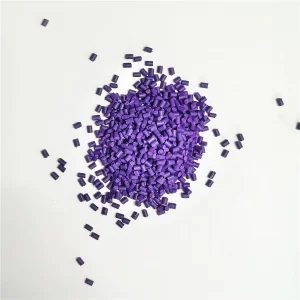
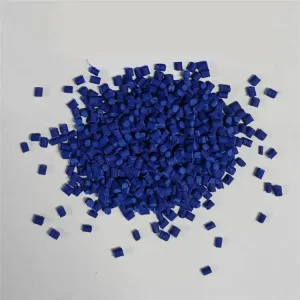
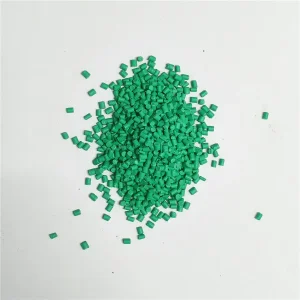
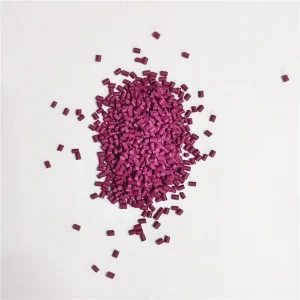
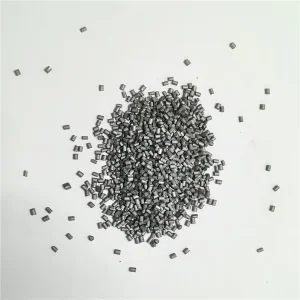
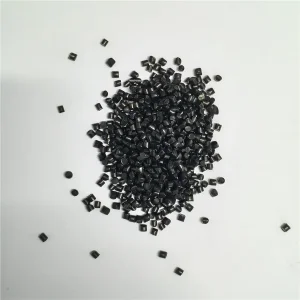
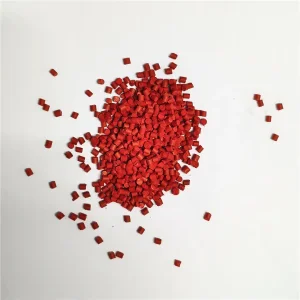
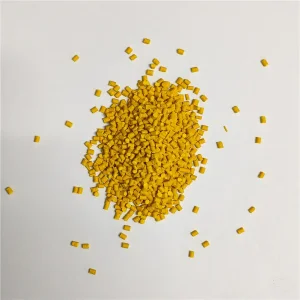
As fast-moving consumer goods (FMCG) packaging transitions toward circular economy frameworks, high-density polyethylene (HDPE) laundry detergent bottles represent one of the most demanding polymer conversion sectors globally.
Modern liquid detergent, fabric softener, and bleach formulations contain aggressive anionic and non-ionic surfactants. Standard colorants often alter the Environmental Stress Crack Resistance (ESCR) of HDPE bottles, leading to micro-fissures during transport. Sourcing directors require color masterbatches formulated with specific carrier resin grades that maintain structural polymer integrity under ASTM D1693 test conditions.
With brand owners targeting 25% to 50% Post-Consumer Recycled (PCR) content in rigid packaging, color consistency becomes a major operational hurdle. Post-consumer HDPE resin typically exhibits a yellowish or greyish base tint. High-opacity TiO2-based white masterbatches and high-chroma color masterbatches are essential to mask recycled resin variability without overwhelming the extrusion processing window.
Laundry bottles stored in humid, bright retail environments face severe atmospheric exposure. Low-grade organic pigments tend to migrate (bloom) to the container surface or undergo color shifting due to nitrous oxide gas fading in warehouses. Premier procurement teams demand pigment packages with lightfastness ratings ≥ 7 (Blue Wool Scale) and heat stability exceeding 260°C.
Solving chemical migration, streak formation, and die-build-up through state-of-the-art polymer chemistry and compounding precision.
In extrusion blow molding (EBM) of multi-layer household chemical bottles, mismatching the melt flow index of the masterbatch carrier resin against the base HDPE grade (e.g., 5502XA or 5602) causes melt fracture, shark-skin surfaces, and wall thickness irregularity. Changzhou Jiazhou Plastic Products Co., Ltd. utilizes custom low-density polyethylene (LDPE) and linear low-density polyethylene (LLDPE) carrier systems with precise MFI tuning (2.0 to 20.0 g/10min under ISO 1133). This ensures rapid, homogeneous dispersion within the extruder barrel at lower shear temperatures, suppressing thermal degradation.
Agglomerates in masterbatch pellets are the primary cause of pinholes, weak spots, and premature ESCR failure in laundry bottle handles and seam lines. Our compounding lines incorporate co-rotating twin-screw extruders with high L/D ratios (44:1) and specialized kneading elements. Pigment particles are micronized to sub-micron dimensions, achieving a Pressure Filter Value (FPV) well below standard industry thresholds. This guarantees flawless surface gloss, zero streaking, and uniform wall strength.
| Performance Attribute | Standard Commercial Masterbatch | Jiazhou Laundry Bottle Grade Masterbatch | Industrial Test Standard |
|---|---|---|---|
| Carrier Resin Compatibility | Generic Recycled / Off-spec PE | Virgin LLDPE / HDPE Matched Carriers | ISO 1133 (MFI Matching) |
| Heat Resistance | 180°C - 200°C | 260°C - 300°C | DIN EN 12877-2 |
| Lightfastness (Wool Scale) | Grade 4 - 5 | Grade 7 - 8 | ISO 105-B02 |
| Surfactant / ESCR Impact | Causes Polymer Degradation | Neutral / Zero-Impact Formulation | ASTM D1693 (10% Igepal CO-630) |
| Heavy Metal Compliance | Varies / Minimal Tracking | Full RoHS, REACH, FDA 21 CFR Compliant | XRF / ICP-OES Spectrum Analysis |
When manufacturing multi-layer laundry detergent containers (e.g., 3-layer ABA structures), applying our high-opacity masterbatch solely to the outer layer (30% shell thickness) reduces total colorant costs by up to 40% while preserving 100% color vibrancy and barrier performance.
Anticipating regulatory shifts, circular packaging legislation, and next-generation plastic processing requirements.
Transitioning from standard carbon black to Near-Infrared (NIR) reflective black and dark colorants, enabling automated optical sorting machines at recycling plants to identify and sort HDPE detergent bottles.
Replacing fossil-based PE carriers with ISCC PLUS certified bio-based polyethylene derived from sugar cane or tall oil, reducing the net carbon footprint of the masterbatch by up to 70%.
Incorporating functional molecular cages (e.g., modified cyclodextrins) into color masterbatches to trap residual post-consumer recycled plastic odors during the high-temperature extrusion stage.
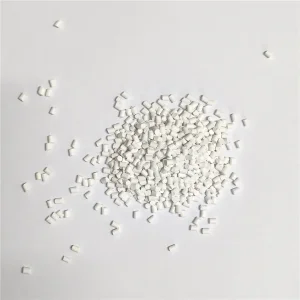
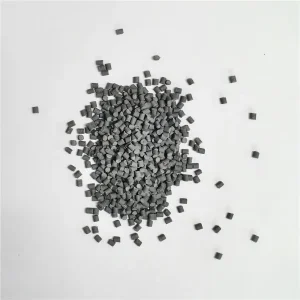
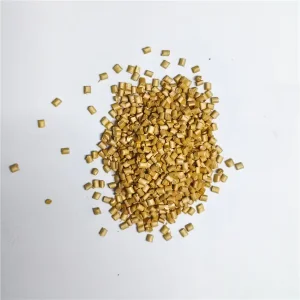
Manufacturing spherical micro-pellets (diameter < 1.2mm) to ensure flawless volumetric dosing accuracy at low let-down ratios (LDR), preventing color fluctuation in high-speed blow molding machinery.
Founded in 2010 in Changzhou, Jiangsu Province, Changzhou Jiazhou Plastic Products Co., Ltd. has established itself over 16 years as a premier B2B manufacturer of high-concentration PE color masterbatches, filler masterbatches, and functional additive packages. Operating from a state-of-the-art 6,000 square meter production center, our facility houses 10 continuous twin-screw extrusion compounding lines equipped with loss-in-weight gravimetric feeders.
Our quality control lab features Datacolor spectrophotometers, melt flow indexers, dynamic capillary rheometers, and two-roll laboratory mills. Every production batch undergoes rigorous Delta E (ΔE) color matching, heat stability testing up to 260°C, and moisture content analysis (<0.05%) prior to release. Certified under ISO 9001 quality management systems, our products are exported to more than 100 countries across Europe, North America, Southeast Asia, and the Middle East.
Expert technical insights regarding PE laundry bottle masterbatch selection, processing optimization, and performance standards.
ESCR is critical for household chemical bottles containing aggressive surfactants. Low-grade masterbatches often use low-molecular-weight waxes or incompatible low-end carriers that concentrate stress at the amorphous regions between HDPE polymer crystals. Furthermore, poor pigment dispersion creates physical notch points where micro-cracks originate. Jiazhou's laundry bottle masterbatches use high-molecular-weight virgin PE carriers and sub-micron micronized pigments, ensuring zero negative impact on ASTM D1693 ESCR performance.
Due to our high pigment loading concentrations (up to 70% titanium dioxide in white masterbatch, and 30%-50% high-chroma organic pigments in color masterbatches), the standard recommended let-down ratio is between 1.0% and 4.0%. For single-layer bottles requiring extreme opacity, a 3% to 4% LDR is recommended. For multi-layer co-extrusion (ABA/ABC structure), an LDR of 2% to 3% in the outer skin layer delivers ideal aesthetic results at lower overall formulation costs.
Yes. All colorants, organic/inorganic pigments, and carrier additives selected for our high-concentration masterbatches undergo thermal stability testing in accordance with DIN EN 12877-2. They exhibit thermal degradation resistance up to 260°C–300°C without color shifting, gas emission, or melt index distortion during high-speed blow molding or injection molding runs.
We offer custom spectrophotometric color matching within 48 to 72 hours. B2B buyers can provide a physical plastic sample, target Pantone/RAL code, or spectral reflectance data. Our R&D laboratory uses Datacolor computerized color-matching software to formulate a precise recipe, producing sample plaques and trial pellets evaluated under D65, A, and TL84 light sources to eliminate metamerism.
Standard production lead time is 15 business days from order confirmation. Masterbatch pellets are packaged in heavy-duty moisture-proof 25kg PE/Kraft paper bags, UV-stabilized stretch-wrapped on ISPM-15 compliant heat-treated wooden or plastic pallets (1.0 to 1.2 metric tons per pallet). Bulk 1,000kg jumbo octabin bags are also available upon request.
High-dispersion masterbatches manufactured for blown film, sheet extrusion, and injection molding applications worldwide.
Request technical datasheets (TDS), safety datasheets (MSDS), or custom sample matching for your rigid blow molding production lines. Our technical sales engineers respond within 12 hours.
Request Technical Consultation & Samples