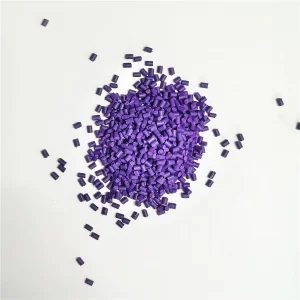
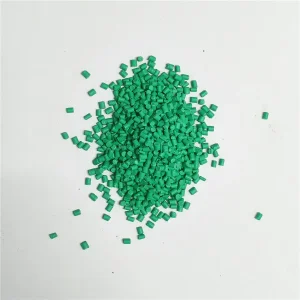
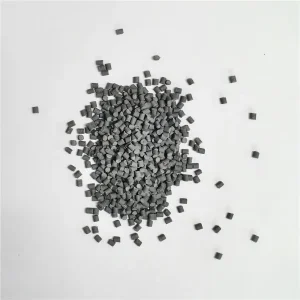
High-concentration PE masterbatches engineered for blown film, injection molding, and complex profile extrusion across global industrial markets.
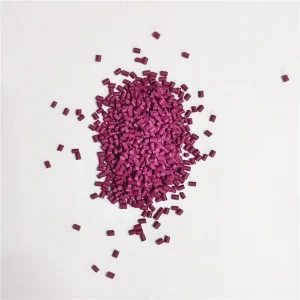
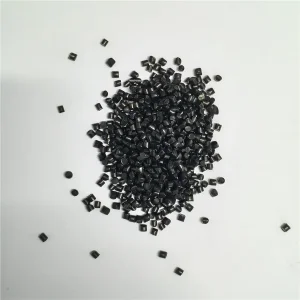
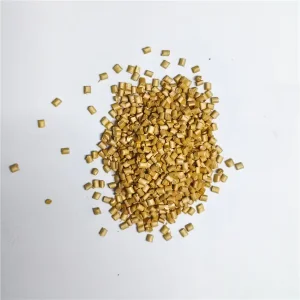
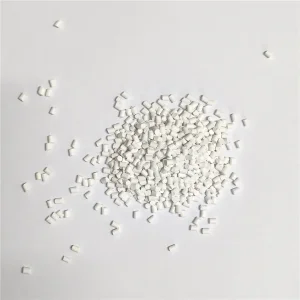
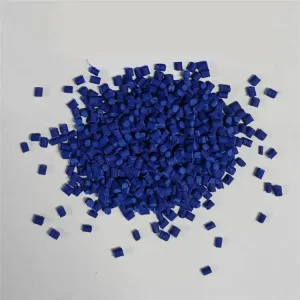
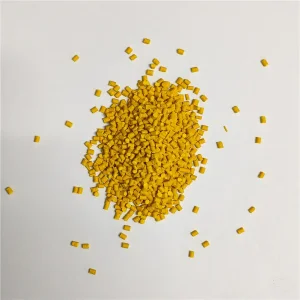
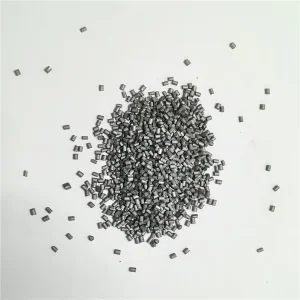
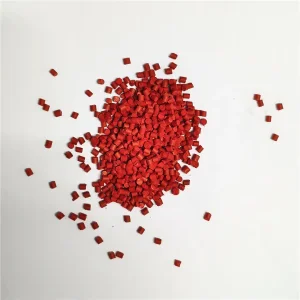
Understanding the physics of thermoplastic carrier matrix matching, shear rate optimization, and dispersion mechanics in Polyethylene pigment compounding.
In the modern plastics processing landscape, selecting the ideal Polyethylene (PE) pigment compound supplier requires a rigorous evaluation of polymer chemistry, rheological matching, and interfacial energy dynamics. Polyethylene compounds act as key colorants and performance enhancers in thermoplastic converting processes such as blown film co-extrusion, continuous profile extrusion, and high-speed injection molding. Achieving uniform color strength while preventing mechanical degradation of the base resin requires engineered masterbatches formulated with matching Melt Flow Index (MFI) carriers, optimized pigment loading ratios, and advanced surface-active wetting agents.
Formulated with virgin Low-Density Polyethylene (LDPE) or Linear Low-Density Polyethylene (LLDPE) carrier resins engineered to perfectly mirror the viscosity profile of target virgin substrates, eliminating melt fracture and flow lines.
Utilizing high-shear twin-screw co-rotating extrusion compounding to de-agglomerate pigment particles down to sub-micron scales, reducing Filter Pressure Value (FPV) and eliminating surface pinholes in ultra-thin blown films.
Thermally stabilized using secondary antioxidants (phosphites) and primary hindered phenols, protecting organic and inorganic pigment complexes from thermal degradation up to continuous processing temperatures of 260°C to 300°C.
The table below highlights key performance attributes of precision-formulated PE pigment compounds across primary polyolefin processing methods.
| PE Masterbatch Category | Base Carrier Matrix | Pigment Concentration (%) | Processing Method | Heat Stability (°C) | Primary Industrial Application |
|---|---|---|---|---|---|
| High-Opacity White PE Masterbatch | LLDPE / LDPE (MFI 20-30) | 60% - 70% Titanium Dioxide (Rutile) | Blown Film / Cast Film | 280°C - 300°C | Lamination Films, Milk Packaging, Agricultural Mulch |
| High-Tint Black PE Masterbatch | HDPE / LLDPE Carrier | 40% - 50% High Surface Area Carbon Black | Pipe Extrusion / Injection Molding | 260°C - 280°C | HDPE Pressure Pipes, Geomembranes, Automotive Crates |
| Vibrant Color PE Masterbatch | LDPE Carrier (MFI 15-25) | 20% - 40% Organic / Inorganic Pigments | Injection / Blow Molding | 240°C - 260°C | Daily Consumer Packaging, Toys, Industrial Drums |
| Metallic & Specialty Effect Compound | Metallocene LLDPE | 15% - 30% Treated Aluminum / Mica Flakes | Injection Molding / Extrusion | 220°C - 250°C | Cosmetic Containers, High-End Household Appliances |
Technical Insight: Poor dispersion in color masterbatch production is the leading cause of structural weakness and melt fracture in polyethylene blown films. By utilizing specialized hyper-dispersants and low-molecular-weight polyethylene waxes (Mw 1,000–4,000 g/mol), Changzhou Jiazhou Plastic Products guarantees superior pigment wetting, preventing screen pack blinding during high-output film extrusion lines.
Economic efficiency, raw material sourcing resilience, and let-down ratio (LDR) optimization in international polyolefin manufacturing.
The global market for polyolefin colorants and masterbatches is expanding rapidly, driven by the growth of flexible packaging, municipal water piping infrastructure, lightweight automotive components, and consumer goods. B2B plastic converters worldwide face tight operational margins and strict customer demands for color consistency (Delta E < 0.5 under D65 illuminant). Sourcing high-concentration PE pigment compounds from reliable suppliers like Changzhou Jiazhou provides a key competitive edge by minimizing total procurement costs and optimizing the Let-Down Ratio (LDR).
High-concentration pigment loading permits let-down ratios as low as 1% to 2% (1:50 or 1:100 dosage), significantly reducing freight expenses, storage footprints, and overall cost-per-kilogram of finished plastic products.
Leveraging direct relationships with tier-1 pigment manufacturers (BASF, Clariant, Chemours Rutile Titanium Dioxide, Cabot Carbon Black), securing stable raw material supply and batch-to-batch chemical stability.
Every production batch undergoes automated spectrophotometric testing, Melt Flow Index analysis (ISO 1133), and Filter Pressure Value validation (EN 13900-5) prior to global dispatch.
As international trade standards evolve, global converters are replacing dry pigment powders with pre-dispersed granular PE compounds. Dry pigments present operational challenges, including dust contamination, equipment cleaning downtime, worker safety hazards, and inconsistent dispersion. Granular masterbatches eliminate airborne contamination, seamlessly integrating into automated gravimetric dosing systems used on modern injection molding and extrusion machinery.
Customized masterbatch formulations tailored to specific polyolefin manufacturing methods and performance criteria.
Used in heavy-duty shipping sacks, courier bags, agricultural films, and barrier food packaging. Masterbatches are engineered with ultra-clean LLDPE carriers and micronized TiO2 or organic pigments to prevent bubble instability, necking, and film tearing down to 10-micron thicknesses.
Tailored for daily plastic household items, industrial logistics crates, pallets, and automotive interior panels. Formulations incorporate non-nucleating color pigments to prevent dimensional warping, post-molding shrinkage, and differential sink marks in large-format molded parts.
Specially engineered black masterbatches loaded with fine-particle P-type Carbon Black (< 25 nm particle size) ensuring UV resistance, thermal aging stability, and hydrolytic resistance compliant with ISO 4427 / EN 12201 standards for HDPE pressure pipes.
Pioneering eco-friendly carrier systems, PCR plastic color enhancement, smart functional add-mixtures, and nano-composite dispersion technologies.
Maximizing pigment loading up to 75% while maintaining ideal melt rheology via specialized hyper-dispersants and synthetic waxes.
Developing specialized masterbatches tailored to neutralize yellowish and grayish off-tones in Post-Consumer Recycled (PCR) polyolefins.
Combining vibrant colorants with Hindered Amine Light Stabilizers (HALS UV-blockers), anti-static, and anti-block additives in single-dose pellets.
Transitioning to bio-PE and fully biodegradable carrier resins (PLA/PHA blends) for zero-carbon plastic conversion and circular economies.
Ensuring seamless export compliance with FDA, EU Food Contact, REACH SVHC, and RoHS directives across global markets.
Formulated in strict adherence to FDA 21 CFR 177.1520 and EU Commission Regulation No 10/2011 for food contact plastics, ensuring heavy-metal-free and low-migration compliance.
Free from lead, cadmium, hexavalent chromium, mercury, PBBs, PBDEs, and phthalates, fully compliant with EU Directive 2015/863 (RoHS 3) and SVHC lists.
Equipped with Datacolor spectrophotometers to perform rapid color matching according to Pantone or RAL standards within 48 to 72 hours.
Expert answers to key technical questions regarding polyethylene masterbatch procurement, processing parameters, and quality verification.
The standard recommended Let-Down Ratio (LDR) typically ranges between 1% and 4% depending on the final application's opacity requirements and wall thickness. For thin blown films (< 25 microns), an LDR of 2% to 4% is common for high opacity. For thick-walled injection molding, an LDR of 1% to 2% yields exceptional color strength and uniform dispersion.
The carrier resin matrix must closely match or possess a higher Melt Flow Index (MFI) than the base polymer substrate. Utilizing an LDPE/LLDPE carrier ensures excellent compatibility with HDPE, LLDPE, and PP resins, preventing interfacial phase separation, delamination, impact degradation, or tensile strength reduction in extruded or molded components.
Jiazhou high-concentration PE pigment compounds are engineered to withstand processing temperatures ranging from 220°C up to 300°C depending on the pigment system (organic vs. inorganic). Thermal stability is tested according to DIN EN 12877 standards, guaranteeing zero discoloration or thermal degradation during extended barrel residence times.
Pigment migration occurs when low-molecular-weight colorant molecules bloom to the plastic surface. We prevent migration by utilizing high-molecular-weight organic pigments (such as phthalocyanines and quinacridones) and inorganic metal oxides, combined with complete polymer encapsulation. Migration resistance is certified via solvent contact tests (ISO 105-X12).
Yes. Our color-matching laboratory utilizes computer-controlled spectrophotometers to match target colors from physical plastic samples, Pantone numbers, or RAL codes. We provide pre-production sample pellets accompanied by Delta E optical tolerance reports within 3 to 5 working days.
Every shipment is dispatched with a Certificate of Analysis (COA) specifying MFI, moisture content, and dispersion metrics. Furthermore, compliance declarations for RoHS 3 (EU 2015/863), REACH SVHC, FDA food contact (21 CFR 177.1520), and EN 71-3 toy safety standards are available upon request.
High-concentration, anti-fading, and heat-resistant Polyethylene masterbatches for global plastic injection, extrusion, and blown film manufacturers.